

 Se i rommet
 Del som digitalt kort
 Del
Del
 Detaljer
 Studentguide

 Last ned
 Liknende objekter
 Røntgen
 Lysbildefremvisning
 Besøksstatistikk
Reading the Bible
 Acrylic On Canvas
- WallArt
- Dutch Golden Age Painting
 1645
1645 60.0 x 46.0 cm
 Louvre
 Les mer
Giclée / Kunsttrykk
Giclée- eller lerretsprint av museumskvalitet med rask produksjon og fleksible valgmuligheter for etterbehandling. ( Bestill håndmalt reproduksjon Gå til digitalt bilde)




P118B Nkr10

P118H Nkr10

P118W Nkr10

P438Z Nkr10

P508JH Nkr12

P508YH Nkr12

P805H Nkr10

P805Z Nkr10

P919BZ Nkr10

P919G Nkr10

P919XJ Nkr10

P959ZH Nkr10

P968JZ Nkr12

W106C Nkr8

W218G Nkr10

W218JH Nkr8

W218Y Nkr10

W307PJ Nkr10

W316G Nkr10

W316PJ Nkr8

W316Y Nkr10

W398PJ Nkr8

W4111J Nkr10

W500HY Nkr15

W500JH Nkr15

W692G Nkr12

W849H Nkr8

W940BG Nkr15

W953PJ Nkr8




Velg mellom våre forhåndsdefinerte størrelser som bevarer kunstverkets opprinnelige proporsjoner.

Type the width and the height you need, to fit your frame or your wall. A print can only be cut, never made bigger than the picture, so a size with a different shape loses a part of the image. We send you a digital mockup to approve before we print anything. The picture shown on this page does not show the real cut — only the mockup does.
Verdensomspennende levering () på 2 uker i stedet for standard 4/5 uker. (14 October)

Gratis ekspressfrakt over hele verden

Lerretsduk av høykvalitets lin

Full transportforsikring

Garanti for refusjon av toll og importavgifter

Garantert fargeekthet

100 dagers returrett ved fabrikasjonsfeil

100% pengene tilbake-garanti

Mengderabatt
 Glassalternativet er kun tilgjengelig i størrelser under 110 cm

Reading the Bible
Giclée / Kunsttrykk
Format på reproduksjon
-


Totalpris
Nkr 748
A Moment of Quiet Contemplation: Unveiling Gerrit Dou’s “Reading the Bible”
Gerrit Dou's "Reading the Bible," painted in 1645, isn’t merely a portrait; it’s a carefully constructed tableau of domestic piety and profound introspection. The scene unfolds within a modestly furnished room – a chair, a potted plant, two vases, and a simple bowl offering a glimpse into the everyday life of a Dutch family. Yet, it's the central figures, a man absorbed in scripture and a woman seated beside him, that immediately draw the eye, radiating an aura of serene engagement. Dou’s masterful manipulation of light and shadow, characteristic of his “fijnschilder” style, elevates this intimate moment to something far more resonant – a meditation on faith, family, and the quiet power of shared devotion.
Dou's technique is remarkably detailed, almost obsessively so. He employs a meticulous layering of glazes, building up color gradually to achieve an astonishing level of realism and luminosity. Notice how the light streams through the window, illuminating the man’s face and hands as he pores over the Bible, while casting subtle shadows across the woman's features. This chiaroscuro effect isn’t simply decorative; it serves to emphasize the drama within the scene – the intensity of his concentration juxtaposed with her quiet attentiveness. The textures are equally convincing: the rough weave of the chair upholstery, the delicate leaves of the plant, and the sheen on the woman's dress all contribute to a palpable sense of presence.
The Leiden Fijnschilder and the Pursuit of Perfection
Gerrit Dou was a pivotal figure in the Dutch Golden Age, belonging to the esteemed group known as the “Leiden fijnschilders.” This collective of artists distinguished themselves through their commitment to painstaking detail, refined technique, and an almost photographic realism. Unlike many of their contemporaries who favored grand historical or mythological subjects, the fijnschilders focused on intimate genre scenes – everyday moments of domestic life, portraits of ordinary people, and still lifes brimming with subtle nuances. Dou’s work embodies this ethos perfectly; he sought not to simply depict reality but to capture its essence with unparalleled precision and emotional depth.
Born in Leiden in 1613, Dou's artistic journey was shaped by his apprenticeship under Rembrandt van Rijn. While absorbing the master’s innovative use of light and shadow, Dou quickly developed a distinct style – one characterized by an extraordinary level of polish and a meticulous attention to detail that bordered on obsessive. He famously employed a unique method for achieving this precision: using a concave lens and convex mirror to create a magnified image of his subject, allowing him to render every minute detail with astonishing accuracy.
Symbolism and the Values of Early Modern Dutch Society
Beyond its technical brilliance, “Reading the Bible” is rich in symbolic meaning. The act of reading scripture represents a cornerstone of early modern Dutch society – a time when religious observance was deeply ingrained in daily life. The couple’s quiet contemplation suggests a shared commitment to faith and family values. The woman's presence isn’t merely decorative; she embodies domesticity, piety, and the nurturing role within the household. The room itself, though modest, speaks volumes about their status – a comfortable space dedicated to intellectual and spiritual pursuits.
Furthermore, the inclusion of objects like the potted plant and the vases hints at the importance of nature and beauty in Dutch culture. These elements contribute to a sense of harmony and balance within the scene, reflecting the ideals of the Golden Age. The painting, therefore, offers a window into the values and beliefs that shaped 17th-century Holland – a society deeply committed to faith, family, and the pursuit of excellence.
Bringing “Reading the Bible” Home: A Reproduction for Today
OriginalUniqueArt is proud to offer high-quality reproductions of Gerrit Dou’s "Reading the Bible," capturing the artist's remarkable skill and evocative atmosphere. Whether you are an art collector, interior designer, or simply someone seeking a piece that embodies quiet contemplation and timeless beauty, this reproduction provides a stunning tribute to one of the Dutch Golden Age’s most accomplished painters. Available in various sizes and on premium archival paper, it is a perfect addition to any home or office – a reminder of the enduring power of faith, family, and artistic mastery.
Spørsmål og svar
Kan jeg bruke utvidet virkelighet (AR) for å se "Reading the Bible" av Gerrit Dou i rommet mitt?
"Reading the Bible" har en forhåndsvisning med utvidet virkelighet: AR-forhåndsvisning-siden til kunstverket viser det i ditt eget rom på en kompatibel enhet.
Hvem har skapt "Reading the Bible", og hvilken stil er det i?
Bak "Reading the Bible" står Gerrit Dou og Dutch Golden Age Painting-bevegelsen.
Hvilken følelse formidler Dutch Golden Age Painting-verket "Reading the Bible"?
Innenfor Dutch Golden Age Painting-retningen er "Reading the Bible" nedtegnet med en Reflective tone.
Kunstnerbiografi
biografien til en produktiv maler
Gerrit (Gérard) Dou, en fremtredende skikkelse innen det nederlandske gullalderens malerkunst, ble født 7. april 1613 i Leiden, Nederland. Han gikk bort 9. februar 1675 og etterlot seg en imponerende arv av ekstremt detaljerte og polerte malerier som fortsetter å trollbinde kunstelskere over hele verden.kunstnerisk stil og spesialisering
Gerrit Dous kunstneriske stil er preget av en nitid og forseggjort behandling, ofte med sjangermotiver og trompe l'oeil-malerier i form av "nisjer". Hans mestring av chiaroscuro er særlig bemerkelsesverdig, noe som kommer tydelig frem i hans nattscener opplyst av stearinlys. Denne unike kombinasjonen av ferdigheter førte til hans tette tilknytning til Leiden-fijnschilderne.bemmerkelsesverdige verk og samlinger
The Astronomer by Candlelight, et maleri som viser Dous ekspertise i å fange lysets subtiliteter, kan finnes på OriginalUniqueArt.com. Leiden Collection, New York, et anerkjent kunstmuseum, stiller ut verk av Gerrit Dou sammen med andre betydningsfulle kunstnere. For mer informasjon om samlingen, besøk The Leiden Collection, New York: en omfattende guide på OriginalUniqueArt.com.innflytelse og ettermæle
Gerrit Dous innflytelse kan spores i hans elever, inkludert Frans van Mieris den eldre og Gabriël Metsu. Hans arbeid har også blitt stilt ut i ulike museer, slik som Museum Huis ten Bosch i Haag, Nederland, som huser en imponerende samling av europeisk kunst fra det 16. til det 18. århundre.- viktige fakta: * født: 7. april 1613, Leiden, Nederland * død: 9. februar 1675 * fremtredende verk: The Astronomer by Candlelight, sjangermotiver og nattscener i stearinlysglød * påvirket: Frans van Mieris den eldre, Gabriël Metsu og andre
- anbefalt lesing: * Gerrit (Gérard) Dou på OriginalUniqueArt.com * Nederlandsk gullalder-maleri på Wikipedia
konklusjon
Gerrit (Gérard) Dous bemerkelsesverdige bidrag til den nederlandske gullalderen har etterlatt et uutslettelig spor i kunsthistorien. Hans fengslende malerier, karakterisert av sine intrikate detaljer og mesterlige bruk av lys, fortsetter å inspirere både kunstnere og kunstentusiaster. For å utforske flere av hans verk og andre betydningsfulle kunstnere, besøk OriginalUniqueArt.com.
Gerrit Dou
1613 - 1675 , Nederland
Kort om kunstneren
- Artistic Movement Or Style: Fijnschilder (Fine Painting)
- Artists Or Movements Influenced By This Artist: ['Frans van Mieris the Elder']
- Artists Who Influenced This Artist: ['Rembrandt van Rijn']
- Date Of Birth: April 7, 1613
- Full Name: Gerrit Dou
- Nationality: Nederlands
- Notable Artworks:
- The Astronomer by Candlelight
- Portrait of an Old Woman
- Place Of Birth: Leiden, Netherlands
Relaterte artikler

Golden Age Reflections: Dutch Baroque Painting & Cultural Innovation
Explore the Dutch Golden Age of painting! Discover key artists like Vermeer & ter Borch, their innovative techniques, and the rich cultural context behind these Baroque masterpieces. Learn about collecting & appreciating this iconic art period.
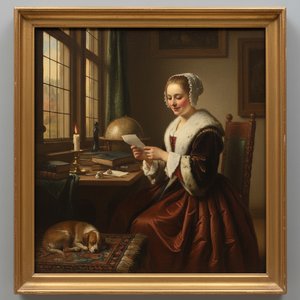
Gerrit Dou: Intimacy & Light in the Dutch Golden Age
Explore the exquisite world of Gerrit Dou, a master of Dutch Golden Age painting. Discover his intimate genre scenes, signature use of light, and lasting legacy. Learn about collecting Dou's works & their value.

De 10 Mesterverkene som Definerte den Nederlandsk Gyldne Tidsalder – Kunst & Interiør
Oppdag de 10 ikoniske mesterverkene fra den nederlandske gullalderen! Lær om Rembrandt, Vermeer og andre store kunstnere. Finn inspirasjon til klassisk interiørdekorasjon og kjøp museumskvalitets reproduksjoner på OriginalUniqueArt.com.
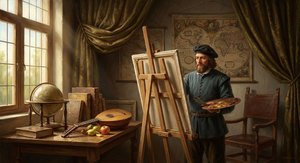
Illuminating Realism: Exploring the Dutch Golden Age of Painting (1600-1700)
Explore the Dutch Golden Age of painting (1600-1700) with OriginalUniqueArt. Discover Rembrandt, Vermeer & other masters. Learn about techniques, history & find museum-quality reproductions.

Golden Light & Dutch Skies: The Timeless Magic of Dutch Golden Age Landscapes
Discover the breathtaking beauty of Dutch Golden Age landscapes. Explore the mastery of light, chiaroscuro, and 17th-century realism through an expert art history lens, celebrating the enduring legacy of the Dutch Masters for discerning collectors and art lovers.


