

 Se i rommet
 Del som digitalt kort
 Del
Del
 Detaljer
 Studentguide

 Last ned
 Liknende objekter
 Røntgen
 Lysbildefremvisning
 Besøksstatistikk
Dead Cock
 Acrylic On Canvas
- WallArt
- Baroque
 57.0 x 40.0 cm
 Museo del Prado
 Les mer
Giclée / Kunsttrykk
Giclée- eller lerretsprint av museumskvalitet med rask produksjon og fleksible valgmuligheter for etterbehandling. ( Bestill håndmalt reproduksjon Gå til digitalt bilde)




P118B Nkr10

P118H Nkr10

P118W Nkr10

P438Z Nkr10

P508JH Nkr12

P508YH Nkr12

P805H Nkr10

P805Z Nkr10

P919BZ Nkr10

P919G Nkr10

P919XJ Nkr10

P959ZH Nkr10

P968JZ Nkr12

W106C Nkr8

W218G Nkr10

W218JH Nkr8

W218Y Nkr10

W307PJ Nkr10

W316G Nkr10

W316PJ Nkr8

W316Y Nkr10

W398PJ Nkr8

W4111J Nkr10

W500HY Nkr15

W500JH Nkr15

W692G Nkr12

W849H Nkr8

W940BG Nkr15

W953PJ Nkr8




Velg mellom våre forhåndsdefinerte størrelser som bevarer kunstverkets opprinnelige proporsjoner.

Skriv inn bredden og høyden du trenger, slik at den passer til din ramme eller vegg. Et trykk kan kun beskjæres, aldri gjøres større enn bildet, så et format med en annen form vil miste en del av motivet. Vi sender deg en digital mockup for godkjenning før vi trykker noe som helst. Bildet som vises på denne siden viser ikke den faktiske beskjæringen — det er kun mockuppen som gjør det.
Verdensomspennende levering () på 2 uker i stedet for standard 4/5 uker. (23 October)

Gratis ekspressfrakt over hele verden

Lerretsduk av høykvalitets lin

Full transportforsikring

Garanti for refusjon av toll og importavgifter

Garantert fargeekthet

100 dagers returrett ved fabrikasjonsfeil

100% pengene tilbake-garanti

Mengderabatt
 Glassalternativet er kun tilgjengelig i størrelser under 110 cm

Dead Cock
Giclée / Kunsttrykk
Format på reproduksjon
-


Totalpris
Nkr 760
A Silent Testament: Gabriel Metsu’s “Dead Cock”
Gabriel Metsu's "Dead Cock," painted circa 1659-1660, is not merely a still life; it’s a profoundly unsettling meditation on mortality, vulnerability, and the fleeting nature of beauty. This small panel, measuring just 57 x 40 cm, housed within the Museo del Prado in Madrid, commands attention with its stark simplicity and unnerving realism. It depicts a recently deceased rooster, meticulously rendered with an almost clinical precision – feathers ruffled, skin subtly flushed, and feet delicately positioned on a simple wooden hook. Yet, it’s precisely this meticulous detail that elevates the painting beyond a straightforward depiction of death; Metsu forces us to confront the raw, unvarnished truth of decay.
Metsu's artistic trajectory is notoriously complex, defying easy categorization. He was a “highly eclectic artist,” as art historian Arnold Houbraken noted, moving seamlessly between history paintings, portraits, and genre scenes – often blending influences from various masters like Rembrandt and Jan Steen. This versatility is particularly evident in "Dead Cock," which draws upon elements of both Dutch Baroque realism and the more emotionally charged style of Flemish artists. The composition itself is deceptively straightforward: a single subject dominating the frame, bathed in a muted, almost somber light that emphasizes its vulnerability. The dark background serves to heighten the rooster’s presence, creating a dramatic contrast that underscores its stillness.
The Symbolism of Mortality and Loss
The symbolism embedded within “Dead Cock” is layered and open to interpretation. The rooster itself – traditionally associated with masculinity, vitality, and heraldry – becomes an emblem of loss and the inevitable decline of life. Its recent demise is palpable; the subtle discoloration of its skin hints at the swiftness of death, while the carefully arranged feathers suggest a deliberate attempt to preserve some semblance of dignity in the face of oblivion. The hook, a simple, utilitarian object, serves as a stark reminder of the rooster’s fate – suspended between life and death, a poignant symbol of suspension itself.
Furthermore, the painting's context within Metsu’s oeuvre—his penchant for depicting solitary women engaged in domestic activities—adds another layer of meaning. The rooster’s vulnerability mirrors the fragility of human existence, echoing themes often explored in his genre scenes. It’s a quiet lament on the transient beauty of life and the inevitability of decay, rendered with an almost unnerving stillness.
Technique and Artistic Nuances
Metsu's technical skill is undeniable. He masterfully employs chiaroscuro – the dramatic contrast between light and shadow – to sculpt the form of the rooster, creating a sense of three-dimensionality that belies its small scale. The meticulous rendering of feathers, with their individual textures and subtle variations in color, demonstrates an extraordinary level of detail and observation. The use of oil paint allows for a rich, luminous quality, capturing the delicate sheen of skin and the subtle reflections on the rooster’s plumage.
Notably, Metsu's work was often characterized by a deliberate lack of overt sentimentality. He avoided dramatic gestures or exaggerated expressions, instead opting for a quiet, understated realism that invites contemplation. This restraint is particularly evident in “Dead Cock,” where the painting’s power lies not in its emotional intensity but in its ability to evoke a profound sense of melancholy and reflection.
A Reproduction Worth Cherishing
OriginalUniqueArt offers meticulously hand-painted reproductions of Gabriel Metsu's "Dead Cock," capturing the essence of this haunting masterpiece. Each reproduction is created by skilled artists using archival-quality materials, ensuring that the colors and details faithfully replicate those of the original painting. Whether displayed in a formal gallery setting or incorporated into a personal collection, this reproduction provides a tangible connection to one of the most enigmatic figures of the Dutch Golden Age – a silent testament to the beauty and fragility of life.
Spørsmål og svar
Hvordan beskrives fargepaletten i "Dead Cock" av Gabriel Metsu?
"Dead Cock" av Gabriel Metsu bruker en Earthy fargepalett. Paletten oppsummerer verkets overordnede fargekarakter.
Hvilken følelse formidler Baroque-verket "Dead Cock"?
Innenfor Baroque-retningen er "Dead Cock" nedtegnet med en Melancholic tone.
Hva er "Dead Cock" laget med, og i hvilken stil?
"Dead Cock" av Gabriel Metsu kombinerer Acrylic On Canvas-teknikken med Baroque-stilen. Teknikk og stilretning beskriver verkets utførelse og estetiske uttrykk.
Kunstnerbiografi
**et liv preget av kunstnerisk utforskning**
gabriël metsu, en nederlandsk maler, levde et liv preget av kunstnerisk utforskning og innovasjon. Født i 1629, legemliggjorde Metsus arbeid selve ånden i den nederlandske gullalderen, en periode viden kjent for sin enorme kunstneriske produksjon. Denne biografien dykker ned i livet og verkene til denne gåtefulle skikkelsen, hvis bidrag til kunstverdenen fortsetter å fascinere oss den dag i dag.**tidlig liv og påvirkninger**
Metsu ble født i 1629 som sønn av jacques metsu, en billedvever og maler som opprinnelig kom fra hainault. Denne eklektiske bakgrunnen påvirket sannsynligvis gabriels tidlige interesse for mangfoldige kunstneriske teknikker. Familiens flytting til leiden, der metsu vokste opp, eksponerte ham for et rikt spekter av kulturelle impulser som formet hans fremtidige blikk.**en kunstnerisk karriere i endring**
Metsus karriere var preget av en motvilje mot å binde seg til én enkelt stil eller teknikk, noe som ga ham tittelen "en svært eklektisk kunstner." Hans virke strakte seg over historiemalerier, stilleben, portretter og sjangermalerier. Det er verdt å merke seg at av hans 133 verk er kun 14 daterte, noe som etterlater mange mysterier rundt hans kreative prosess.- rembrandt van rijn sin innflytelse på metsus tidlige arbeid er tydelig, særlig i hans bruk av lys og farge.
- metsus flytting til amsterdam i 1655 markerte et betydelig skifte i hans stil, med et større fokus på hjemlige interiører og sjangerscener.
- hans opplæring under michiel van musscher og joost van geelm reflekterer hans dype forankring i det kunstneriske fellesskapet.
**bemerkelsesverdige verk og et varig ettermæle**
Metsus malerier portretterte ofte unge kvinner, markedsscener og eldre mennesker, med inspirasjon hentet fra populære emblemer og symbolikk. Et fremragende eksempel er fjærkrehandleren, som på mesterlig vis viser hans bruk av symbolsk språk. sentrale verk:- det syke barn (ca. 1664), som reflekterer metsus beundring for vermeers arbeid.
- portrett av familien hinlopen, et mesterverk som forener sjangermaleriet med portrettkunsten.
**museer og samlinger**
Metsus verk kan i dag finnes i en rekke museer, inkludert rijksmuseum i amsterdam. For mer informasjon om hans kunst og for å utforske andre malere fra den nederlandske gullalderen, besøk /no/art/show/art-d3c627-no/ for en omfattende oversikt. konklusjon: gabriel metsus liv og kunst er et vitnesbyrd om den innovative ånden i den nederlandske gullalderen. Hans eklektiske stil, selv om den til tider er gåtefull, har etterlatt et uutslettelig spor i kunsthistorien. Etter hvert som vi fortsetter å avdekke mer om hans liv og virke, blir vi påminnet om den dype innvirkningen han hadde på utviklingen av vestlig kunst.- for en dypere forståelse av den nederlandske gullalderen, se [https://en.wikipedia.org/wiki/dutch_golden_age_painting](https://en.wikipedia.org/wiki/dutch_golden_age_painting).
- utforsk flere av metsus verk og hans samtidiges arbeider på [https://OriginalUniqueArt.com/@/gabriel-metsu](https://OriginalUniqueArt.com/@/gabriel-metsu).
**referanser:**
- the house of orange-nassau historic collection trust (haag, nederland), [https://OriginalUniqueArt.com/@@/a@d3ccx5](https://OriginalUniqueArt.com/@@/a@d3ccx5).
- van gogh museum (nederland) - et fristed for kunstelskere, [https://OriginalUniqueArt.com/@@/a@d3c8x3](https://OriginalUniqueArt.com/@@/a@d3c8x3).
- nederlandsk gullalder-maleri, [https://en.wikipedia.org/wiki/dutch_golden_age_painting](https://en.wikipedia.org/wiki/dutch_golden_age_painting).

Gabriel Metsu
1629 - 1667 , Nederland
Kort om kunstneren
- Artistic Movement Or Style: Dutch Golden Age painting
- Artists Or Movements Influenced By This Artist: ['Michiel van Musscher']
- Artists Who Influenced This Artist:
- Rembrandt van Rijn
- Johannes Vermeer
- Date Of Birth: 1629 Leiden
- Date Of Death: 1667 Amsterdam
- Full Name: Gabriel Metsu
- Nationality: Dutch
- Notable Artworks:
- The Sick Child
- Poultry Seller
- Portrait of the Hinlopen Family
- Place Of Birth: Leiden Netherlands
Relaterte artikler

Dante Gabriel Rossettis 25 Mesterverk: Kunst, Symbolikk og Skjønnhet for Ditt Hjem
Utforsk de 25 mest ikoniske maleriene av Dante Gabriel Rossetti! Oppdag symbolisme, romantikk og viktoriansk skjønnhet i Pre-Raphaelittenes mesterverk. Finn kunsttrykk & reproduksjoner for ditt hjem på OriginalUniqueArt.com.

De 10 Mesterverkene som Definerte den Nederlandsk Gyldne Tidsalder – Kunst & Interiør
Oppdag de 10 ikoniske mesterverkene fra den nederlandske gullalderen! Lær om Rembrandt, Vermeer og andre store kunstnere. Finn inspirasjon til klassisk interiørdekorasjon og kjøp museumskvalitets reproduksjoner på OriginalUniqueArt.com.

Gabriel Metsu: Illuminating Dutch Daily Life with Exquisite Detail
Explore the captivating world of Gabriel Metsu, a leading Dutch Golden Age painter. Discover his exquisite genre scenes, masterful realism, and insightful social commentary. Learn about key works & his lasting legacy.
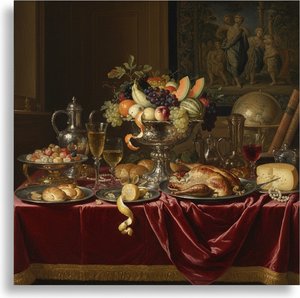
Abraham Hendricksz van Beyeren: Pioneering Dutch Still Life & the Banquet Tradition
Explore the captivating world of Dutch Golden Age still life with Abraham van Beyeren. Discover his innovative techniques, symbolic banquet scenes & lasting influence on art history. Learn about collecting these masterpieces.

Golden Light & Dutch Skies: The Timeless Magic of Dutch Golden Age Landscapes
Discover the breathtaking beauty of Dutch Golden Age landscapes. Explore the mastery of light, chiaroscuro, and 17th-century realism through an expert art history lens, celebrating the enduring legacy of the Dutch Masters for discerning collectors and art lovers.


