

 Forhåndsvisning
 Send
Send Del
Del
 Vis detaljer
 Utskriftsvennlig guide

 Last ned bilde
 Liknende objekter
 Røntgenundersøkelse
 Lysbildefremvisning
 Q&A
Q&A Statistikk
Duet
 Oil
Oil- WallArt
- Dutch Golden Age
 1658
1658- Early Modern
 31.0 x 24.0 cm
 Staatliches Museum
 Vis hele teksten
Få en utskriftsklar fil som går langt utover forhåndsvisningen på nett. Hvert digitale bilde vi selger er hentet fra en høyoppløselig master i vår database – vanligvis mellom 5 000 og 15 000 piksler bred – slik at du kan trykke stort, beskjære tett eller gjenskape fine detaljer med full trygghet.
Ingen filer forlater studioet vårt uten å bli bearbeidet. En digital ekspert kontrollerer fargene mot det originale maleriet og korrigerer dem ved behov, for deretter å forbedre klarhet og detaljrikdom med profesjonelle retusjeringsverktøy — alltid tro mot kunstnerens penselstrøk og stil. Resultatet er et bilde som fremstår som selve maleriet, ikke som en skann med filter.
Du godkjenner før ferdigstilling: vår ekspert sender bildet på e-post til din vurdering innen 72 timer. Ikke fornøyd? Be om forbedringer eller korrigeringer, eller be om refusjon dersom kvaliteten ikke svarer til forventningene.
Dette er kvaliteten forlag, designstudioer, gallerier og trykkerier stoler på.
Digitalt bilde
Last ned en høyoppløselig fil til personlig bruk, utskrift og kreative prosjekter. ( Bytt til trykk Kjøp håndmalt maleri)
Inkludert i alle bestillinger av digitale bilder
Ekspert på digital levering, garantert
Når du velger OriginalUniqueArt.com, får du ikke bare et bilde – du mottar et profesjonelt etterbehandlet digitalt kunstverk, skapt med presisjon og med en garantert tilfredshetsgaranti. Her er alt som automatisk følger med din bestilling:

Rask levering på e-post
Din høyoppløselige digitale bildefil sendes til din e-post innen 72 timer etter bestilling – klar til umiddelbar bruk.

KI-forbedret digital fil
Ditt kunstverk blir profesjonelt optimalisert ved hjelp av avanserte AI-verktøy og manuell redigering, noe som sikrer maksimal detaljrikdom, klarhet og fargegjengivelse.

Gratis livslang nyutlevering
Har du ved et uhell slettet eller mistet filen din? Ingen bekymring – vi sender den på nytt når som helst, helt gratis.

Ingen importavgifter – noen gang
Nyt ditt kunstverk umiddelbart uten toll, avgifter eller leveringskostnader – digitale nedlastinger er alltid avgiftsfrie.

Garantert fargenøyaktighet
Vi sikrer at det digitale bildet gjenspeiler de originale fargene så nøyaktig som mulig ved hjelp av profesjonelle verktøy og fargehåndtering.

100 dagers fornøydhetsgaranti
Hvis du ikke er fornøyd med ditt digitale bilde, vil vi revidere det eller refundere 100% innen 100 dager – uten spørsmål.

100% Penggaranti
Ikke fornøyd? Få full refusjon innen 100 dager etter at du har mottatt din digitale fil – uten spørsmål.

Rabatt ved storkjøp
Kjøp 3 bilder, spar 10% - Kjøp 5, spar 15% - Kjøp 10+, spar 20%. Ideelt for kreative prosjekter, gallerier og byråer.
A Symphony of Light and Detail
In the quiet intimacy of a seventeenth-century Dutch interior, Frans van Mieris the Elder captures a moment of profound musical connection in his masterpiece, Duet. This exquisite work serves as a quintessential example of the fijnschilder style, a technique where the artist’s brushwork becomes nearly invisible, leaving behind only the breathtaking reality of texture and light. As we gaze upon the scene, we are transported to an era of refined elegance, where the soft glow of candlelight or filtered daylight dances across the polished wood of a harpsimchord and the rich, crimson folds of a lady's gown. The painting is not merely a depiction of a musical performance; it is a sensory experience that invites the viewer to hear the delicate pluck of strings and feel the hushed reverence of the room.
The composition centers on a woman lost in the rhythmic flow of her music, her posture poised and graceful. Beside her, a companion watches with an intensity that suggests a shared emotional resonance, creating a silent dialogue between the performers. The inclusion of a small dog, resting loyally at their feet, adds a layer of domestic warmth and symbolizes fidelity, grounding the sophisticated atmosphere in a sense of home and heart. Every element, from the delicate lace of a collar to the subtle sheen on the musical score, is rendered with a precision that speaks to Van Mieris’s mastery of the Leiden school, making this piece a jewel of the Dutch Golden Age.
Historical Elegance for the Modern Collector
To possess a reproduction of Duet is to bring a piece of history into the contemporary living space. Created in 1658, during the height of the Dutch Golden Age, this work reflects the prosperity and cultural sophistication of the Netherlands. During this period, artists like Van Mieris were celebrated for their ability to elevate genre scenes—everyday moments of life—into high art through unparalleled technical virtuosity. For the discerning interior designer, this painting offers a timeless focal point that complements both classical and modern decor. Its rich palette of deep reds, warm ambers, and soft shadows provides a sophisticated anchor for a room, evoking a sense of luxury and intellectual depth.
Beyond its aesthetic appeal, the painting serves as an emotional sanctuary. In an age of digital noise, the stillness captured in Duet offers a meditative quality that can transform the atmosphere of any gallery or private residence. It is a celebration of the fine arts, the beauty of domesticity, and the enduring power of human connection. Whether displayed in a sunlit study or a formal dining room, this work continues to inspire awe, reminding us of the meticulous beauty that can be found in life's most quiet, harmonious moments.
Spørsmål og svar
Hvilken plass har "Duet" av Frans van Mieris i kunsthistorien?
"Duet" av Frans van Mieris tilhører Dutch Golden Age-retningen, innenfor Early Modern-perioden. Sammen gir de verket dets plass i kunsthistorien.
Hvilke farger dominerer "Duet" av Frans van Mieris?
"Duet" er definert av en Earthy-palett med Phthalo Green (#301e1f) som den dominerende fargen.
Hva forestiller "Duet" av Frans van Mieris, og hvilken stemning formidler det?
"Duet" av Frans van Mieris kombinerer portrait, harpsichord, music, dutch golden age, 17th century, elegant scene, fijnschilder med en Elegant atmosfære.
Om kunstneren
Et liv fordypet i detaljer: Verden til Frans van Mieris den eldre
Frans van Mieris den eldre er et navn som er synonymt med nitid detaljrikdom og raffinert kunstnerskap, og han innehar en betydelig posisjon innen den nederlandske gullalderen. Han ble født i Leiden i 1635, og hans livsvei skilte seg fra familiens tradisjon innen gullsmedkunst – et håndverk utøvd av hans far, Jan Bastiaensz van Mieris – til fordel for maleriets fengslende verden. Denne tidlige dragningen mot tegning la grunnlaget for en karriere som skulle definere «fijnschilder»-stilen og tilby et intimt innblikk i det nederlandske samfunnet på 1600-tallet. Hans første opplæring under Abraham Toorenvliet, etterfulgt av avgjørende instruksjon fra den høyt aktede Gerrit Dou, la et solid fundament som han bygde sin særegne kunstneriske stemme på. Disse formative årene innprentet i ham ikke bare teknisk ferdighet, men også en dyp forståelse for narrativ nyanse og kraften i subtil observasjon.Fremveksten av en «fijnschilder»
Van Mieris ble raskt feiret som en mester av fijnschilder – et nederlandsk begrep som betegner «finmaleri». Denne teknikken var preget av en nesten besatt oppmerksomhet på detaljer, glatt og polert penselføring, og en preferanse for små lerreter. Det handlet ikke bare om å gjenskape virkeligheten; det handlet om å foredle den gjennom møysommelig presisjon. Overflatene i maleriene hans ser ut til å glitre av liv – den skinnende glansen i sateng, den delikate teksturen i fløyel, gjenskinnet i metall – alt fremstilt med en forbløffende nøyaktighet. Han malte ikke bare et rom; han gjenskapte selve atmosfæren der inne, og inviterte betrakteren inn i scener preget av hjemlig hygge og velstand. Motivene hans kretset ofte rundt de rikes liv: elegante sammenkomster, forseggjorte interiører og portretter som fanget ikke bare likhet, men også karakter. Gjentakende motiver som østerslunsjer, leger som behandler pasienter og kvinner opptatt med hverdagslige gjøremål fungerte som vinduer inn i overklassens vaner og sosiale ritualer. Selv om han i starten var sterkt påvirket av Gerrit Dous stil, utviklet Van Mieris gradvis sin egen unike tilnærming. Han beveget seg bort fra en overflod av detaljer mot en større vektlegging av samspillet mellom figurene og de historiene som utspiller seg i komposisjonene hans. Senere verk viser tidvis mørkere tonale kvaliteter sammenlignet med de lysere palettene i hans tidligere malerier, noe som reflekterer en økende modenhet og kunstnerisk utforskning.Betydningsfulle verk og en varig arv
Flere nøkkelverk står som vitnesbyrd om Van Mieris’ ferdigheter og hans utviklende stil. Doctor's Visit (1657), regnet som et av hans tidligste daterte og viktigste verk, viser hans gryende uavhengighet fra Dous innflytelse. Maleriet er en mesterklasse i å fange den stille spenningen under en medisinsk undersøkelse, gjengitt med et utrolig nivå av realisme. Hans Self-Portrait with a Cittern er like fengslende, og demonstrerer hans evne til å avbilde overdådige klær samtidig som han formidler en følelse av personlighet og introspeksjon. Portrait of the Artist's Wife, Cunera van der Cock eksemplifiserer hans mestring av portrettkunsten, og fremhever både teknisk dyktighet og en forståelse for chiaroscuro – det dramatiske samspillet mellom lys og skygge. Utover sjangermalerier og portretter våget Van Mieris også ut i allegoriske malerier, som de som skildrer laster som drikking, røyking og gambling, noe som demonstrerer bredden i hans kunstneriske kapasitet. Innvirkningen av Frans van Mierelse strakte seg langt utover hans egen levetid. Hans innflytelse resonnerte i familien; hans sønn Willem van Mieris (1662–1747) og barnebarn Frans van Mieris den yngre (1689–1763) ble begge dyktige sjangermalere som førte den kunstneriske tradisjonen videre. Populariteten til hans stil skapte også en rekke etterlignere, mest fremtredende A. D. Snaphaan, som arbeidet i Leipzig og nøt beskyttelse fra hoffet i Anhalt-Dessau.Et varig bidrag til nederlandsk kunst
Frans van Mieris spilte en avgjørende rolle i utformingen av fijnschilder-bevegelsen innen nederlandsk gullaldermaling. Hans dedikasjon til nitid detaljrikdom, realistiske skildringer av hverdagslivet og overklassens samfunn, samt hans tekniske briljans, bidro betydelig til en epoke som allerede var kjent for sin kunstneriske innovasjon. Han nøt beskyttelse fra fremtredende skikkelser, inkludert erkehertug Leopold og Cosimo III de' Medici, et bevis på den internasjonale anerkjennelsen av hans talent. Selv i dag fortsetter verkene hans å trollbinde publikum med sitt utsøkte håndverk og sin innsiktsfulle skildring av 1600-tallets kultur. Tyveriet av et selvportrett fra Art Gallery of New South Wales i Sydney fungerer som en gripende påminnelse om den vedvarende verdien og appellen til hans kunst – en arv som fortsetter å inspirere og fascinere samlere og kunstentusiaster over hele verden. Hans malerier er ikke bare historiske gjenstander; de er vinduer inn i en svunnen tid, møysommelig utformet og gjennomsyret av en tidløs skjønnhet.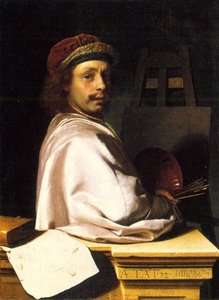
Frans van Mieris
1635 - 1681 , Nederland
Kort om kunstneren
- Artistic Movement Or Style: Fijnschilder
- Artists Or Movements Influenced By This Artist: ['Barock']
- Artists Who Influenced This Artist: ['Gerrit Dou']
- Date Of Birth: Leiden, 1635
- Date Of Death: Leiden, 1681
- Full Name: Frans Jansz. van Mieris
- Nationality: Nederlandsk
- Notable Artworks:
- Doktorbesök
- Porträtt av konstnären själv
- Place Of Birth: Leiden