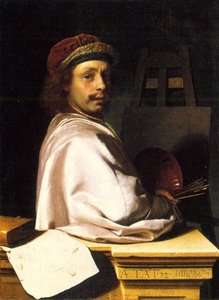
Duet
Oil
WallArt
Dutch Golden Age
1658
Early Modern
31.0 x 24.0 cm
Staatliches Museum
Håndlaget oljereproduksjon
Håndmalt olje på lerret i din valgte størrelse og ramme, laget på bestilling av våre kunstnere.
P118B $10
P118H $10
P118W $10
P438Z $10
P508JH $12
P508YH $12
P805H $10
P805Z $10
P919BZ $10
P919G $10
P919XJ $10
P959ZH $10
P968JZ $12
W106C $8
W218G $10
W218JH $8
W218Y $10
W307PJ $10
W316G $10
W316PJ $8
W316Y $10
W398PJ $8
W4111J $10
W500HY $15
W500JH $15
W692G $12
W849H $8
W940BG $15
W953PJ $8
Velg mellom våre forhåndsdefinerte størrelser som bevarer kunstverkets opprinnelige proporsjoner.
Du kan angi egne mål for å tilpasse en spesifikk ramme eller plass. Dersom den valgte størrelsen ikke samsvarer med originalbildets proporsjoner, vil vi enten beskjære kunstverket eller utvide maleriet med ytterligere håndmalte elementer. En digital mockup vil bli sendt til din godkjenning før produksjonen starter.
Vennligst merk at forhåndsvisningen på skjermen ikke gjenspeiler den faktiske beskjæringen eller utvidelsen. Kun mockuppen vil vise den endelige komposisjonen nøyaktig.
Selv om tilpassede størrelser er tilgjengelige, anbefaler vi å velge et mål fra den forhåndsdefinerte listen for å bevare de originale proporsjonene.

Etter bestilling vil OriginalUniqueArt.com-teamet sende e-post til kunden for instruksjoner og sende et utkast (mockup) som forhåndsvisning.
Verdensomspennende levering () på 3–4 uker i stedet for standard 5 uker. (18 July). Ingen kompromisser med kvaliteten.
Gratis ekspressfrakt over hele verden
Lerretsduk av høykvalitets lin
Full forsikring under transport
Garanti for refusjon av toll og importavgifter
Garantert korrekt fargegjengivelse
60 dagers returrett (kun ved feil)
100% pengene tilbake-garanti
Rabatt ved flere kjøp
Duet
Teknikk for reproduksjon
Størrelse på reproduksjon
-
Endelig pris
-
Beskrivelse av kunstverket
A Symphony of Light and Detail
In the quiet intimacy of a seventeenth-century Dutch interior, Frans van Mieris the Elder captures a moment of profound musical connection in his masterpiece, Duet. This exquisite work serves as a quintessential example of the fijnschilder style, a technique where the artist’s brushwork becomes nearly invisible, leaving behind only the breathtaking reality of texture and light. As we gaze upon the scene, we are transported to an era of refined elegance, where the soft glow of candlelight or filtered daylight dances across the polished wood of a harpsimchord and the rich, crimson folds of a lady's gown. The painting is not merely a depiction of a musical performance; it is a sensory experience that invites the viewer to hear the delicate pluck of strings and feel the hushed reverence of the room.
The composition centers on a woman lost in the rhythmic flow of her music, her posture poised and graceful. Beside her, a companion watches with an intensity that suggests a shared emotional resonance, creating a silent dialogue between the performers. The inclusion of a small dog, resting loyally at their feet, adds a layer of domestic warmth and symbolizes fidelity, grounding the sophisticated atmosphere in a sense of home and heart. Every element, from the delicate lace of a collar to the subtle sheen on the musical score, is rendered with a precision that speaks to Van Mieris’s mastery of the Leiden school, making this piece a jewel of the Dutch Golden Age.
Historical Elegance for the Modern Collector
To possess a reproduction of Duet is to bring a piece of history into the contemporary living space. Created in 1658, during the height of the Dutch Golden Age, this work reflects the prosperity and cultural sophistication of the Netherlands. During this period, artists like Van Mieris were celebrated for their ability to elevate genre scenes—everyday moments of life—into high art through unparalleled technical virtuosity. For the discerning interior designer, this painting offers a timeless focal point that complements both classical and modern decor. Its rich palette of deep reds, warm ambers, and soft shadows provides a sophisticated anchor for a room, evoking a sense of luxury and intellectual depth.
Beyond its aesthetic appeal, the painting serves as an emotional sanctuary. In an age of digital noise, the stillness captured in Duet offers a meditative quality that can transform the atmosphere of any gallery or private residence. It is a celebration of the fine arts, the beauty of domesticity, and the enduring power of human connection. Whether displayed in a sunlit study or a formal dining room, this work continues to inspire awe, reminding us of the meticulous beauty that can be found in life's most quiet, harmonious moments.
Om kunstneren
Frans van Mieris the Elder (1635 - 1681): A Master of Detail and Dutch Domestic Life
Frans Jansz. van Mieris the Elder, born in Leiden in 1635, stands as a cornerstone of Dutch Golden Age painting—a figure celebrated for his meticulous technique and profound insight into the everyday realities of affluent Dutch society. His artistic journey began under the tutelage of Abraham van den Tempel and Gerrit Dou, shaping him into one of the foremost practitioners of *fijnschilder*, or “fine painting,” a style characterized by an almost obsessive dedication to realism achieved through painstaking precision. This approach distinguished him from many contemporaries and cemented his legacy as a pivotal contributor to Dutch artistic heritage. ### Early Training and Influences Van Mieris’s formative years instilled in him not merely technical skill but also a deep appreciation for narrative nuance—a quality directly attributable to Dou's influence. Gerrit Dou, renowned for his masterful use of chiaroscuro and subtle psychological portrayal, served as a crucial mentor, guiding Van Mieris toward an artistic vision that prioritized capturing the essence of human experience rather than simply replicating visual appearances. This mentorship fostered a stylistic convergence that would define much of Van Mieris’s subsequent oeuvre. Furthermore, his initial exposure to Rembrandt's dramatic lighting and expressive brushwork undoubtedly broadened his artistic horizons. ### The Rise of *Fijnschilder* Style and Genre Scenes The hallmark of Van Mieris’s style was undeniably the *fijnschilder* technique—a method that demanded an unparalleled level of detail, smooth brushstrokes, and a masterful manipulation of light and shadow. Unlike earlier painters who favored grand compositions and bold colors, Van Mieris focused on intimate domestic interiors populated by figures engaged in seemingly mundane activities. However, these scenes were imbued with remarkable psychological depth, reflecting Dou’s influence in portraying human emotion and behavior with sensitivity and nuance. His subjects—often women preparing meals or gentlemen conversing—were rendered with exquisite realism, capturing not just their physical likeness but also their inner lives. ### Notable Works and Artistic Legacy Among Van Mieris's most celebrated paintings are “Doctor’s Visit” (1657) and “Self-Portrait with a Cittern,” both exemplifying his mastery of *fijnschilder* and demonstrating his ability to convey profound emotion through subtle visual cues. The Doctor’s Visit, in particular, captures the quiet tension of a medical examination with astonishing accuracy—a testament to Van Mieris's meticulous observation and artistic skill. Similarly, his self-portrait reveals a contemplative gaze and conveys a sense of inner reflection—underscoring his understanding of psychological portraiture. Beyond these iconic pieces, he produced numerous genre scenes depicting everyday life in Leiden’s upper classes, establishing him as one of the foremost chroniclers of Dutch domestic culture during the Golden Age. His influence extended beyond his own lifetime; his son Willem van Mieris (1662–1747) and grandson Frans van Mieris the Younger (1689–1763) continued the artistic tradition, perpetuating Van Mieris’s distinctive style and furthering his legacy as a master of Dutch painting. ### Historical Significance and Enduring Appeal Frans van Mieris's contribution to Dutch art transcends mere stylistic innovation; he captured the spirit of an era—a period defined by intellectual curiosity, artistic experimentation, and a fascination with portraying human experience in its most nuanced form. His paintings continue to resonate with audiences today because they offer a glimpse into a bygone world—a world rendered with breathtaking detail and imbued with timeless beauty. He remains a symbol of Dutch artistic excellence and a testament to the enduring power of observation and meticulous craftsmanship.Frans van Mieris

1635 - 1681 , Nederland
Kort om kunstneren
- Artistic Movement Or Style: Fijnschilder
- Artists Or Movements Influenced By This Artist: ['Barock']
- Artists Who Influenced This Artist: ['Gerrit Dou']
- Date Of Birth: Leiden, 1635
- Date Of Death: Leiden, 1681
- Full Name: Frans Jansz. van Mieris
- Nationality: Nederlandsk
- Notable Artworks:
- Doktorbesök
- Porträtt av konstnären själv
- Place Of Birth: Leiden

Glassalternativet er kun tilgjengelig i størrelser under 110 cm