
 Forhåndsvisning
 Send
Send Del
Del
 Vis detaljer
 Utskriftsvennlig guide

 Last ned bilde
 Liknende objekter
 Røntgenundersøkelse
 Lysbildefremvisning
 Q&A
Q&A Statistikk
St John the Baptist

- 83.0 x 70.0 cm


 Vis hele teksten
Giclée / Kunsttrykk
Giclée- eller lerretsprint av museumskvalitet med rask produksjon og fleksible valgmuligheter for etterbehandling. ( Kjøp håndmalt maleri Bytt til digitalt bilde)




P118B Nkr10

P118H Nkr10

P118W Nkr10

P438Z Nkr10

P508JH Nkr12

P508YH Nkr12

P805H Nkr10

P805Z Nkr10

P919BZ Nkr10

P919G Nkr10

P919XJ Nkr10

P959ZH Nkr10

P968JZ Nkr12

W106C Nkr8

W218G Nkr10

W218JH Nkr8

W218Y Nkr10

W307PJ Nkr10

W316G Nkr10

W316PJ Nkr8

W316Y Nkr10

W398PJ Nkr8

W4111J Nkr10

W500HY Nkr15

W500JH Nkr15

W692G Nkr12

W849H Nkr8

W940BG Nkr15

W953PJ Nkr8




Velg mellom våre forhåndsdefinerte størrelser som bevarer kunstverkets opprinnelige proporsjoner.

Skriv inn ønsket bredde og høyde for å tilpasse trykket til din ramme eller vegg. Et trykk kan kun beskjæres, aldri skaleres opp utover motivets opprinnelige størrelse, noe som betyr at et format med andre proporsjoner vil føre til tap av deler av bildet. Vi sender deg en digital mockup for godkjenning før vi starter trykkeprosessen. Bildet som vises på denne siden viser ikke den faktiske beskjæringen — det er kun mockuppen som viser dette.
Verdensomspennende levering () på 2 uker i stedet for standard 4/5 uker. (31 October)

Gratis ekspressfrakt over hele verden

Lerretsduk av lin av høy kvalitet

Full transportforsikring

Garanti for refusjon av toll og importavgifter

Garantert fargegjengivelse

100 dagers returrett ved fabrikasjonsfeil

100% pengene tilbake-garanti

Rabatt ved flere kjøp
 Glassalternativet er kun tilgjengelig i størrelser under 110 cm

St John the Baptist
Giclée / Kunsttrykk
Størrelse på reproduksjon
-


Totalpris for valgte alternativer
Nkr 770
A Moment Frozen in Baroque Drama
In the hallowed halls of the Museo del Prado, there exists a window into the fervent soul of the late seventeenth century. Francesco Solimena’s St John the Baptist is not merely a portrait of a biblical figure; it is a visceral experience of contemplation interwoven with palpable urgency. Painted between 1690 and 1700, this oil on canvas masterpiece serves as a profound testament to the Baroque era—a period defined by opulent grandeur, dramatic emotion, and an unwavering belief in spiritual transcendence. As one gazes upon the canvas, the viewer is immediately drawn into a world where the boundary between the earthly and the divine becomes beautifully blurred through the masterful application of light.
The composition is anchored by Solimena’s uncompromising commitment to chiaroscuro. Drawing inspiration from the legendary Caravaggio, the artist employs a stark, theatrical contrast between luminous highlights and an enveloping, unsettling darkness. This technique does more than just define form; it directs the viewer's emotional journey. The light falls intensely upon St John's face and torso, illuminating his youthful yet weathered features and highlighting the physical tension in his musculature. This sudden burst of brilliance against a shadowy, receding background creates an immediate sense of presence, as if the saint has just emerged from the depths of the wilderness to deliver a divine message.
A Symphony of Earthly Tones and Divine Grace
Solimena’s palette is a masterclass in purposeful restraint. The artist avoids unnecessary flamboyance, opting instead for a subdued arrangement of earthy browns, ochres, and beige tones that establish a solemn, ascetic atmosphere appropriate for the subject. Yet, within this muted landscape, there are strategic splashes of color that act as spiritual punctuation marks. A striking use of crimson, particularly in the folds of the drapery, draws the eye across the canvas, subtly hinting at the blood of sacrifice and the presence of divine grace amidst the ruggedness of the saint's life.
The texture of the work adds a layer of tactile realism that is deeply engaging for the discerning collector. Solimena’s meticulous brushwork imbues the canvas with a palpable sense of physicality; one can almost feel the coarseness of the camel skin and the weight of the heavy cloth. These visible, energetic strokes contribute to the overall dynamism of the scene, ensuring that the painting feels alive rather than static. For those looking to integrate such a piece into a sophisticated interior, the artwork offers a profound sense of depth and movement, acting as a focal point that commands attention through its sheer textural richness.
The Legacy of a Neapolitan Master
To understand this work is to understand the zenith of Neapolitan painting. Francesco Solimena was a titan of his age, a painter whose influence stretched across Europe. Trained by his father, Angelo, and refined under the shadows of masters like Luca Giordano and Mattia Preti, Solimena possessed the unique ability to blend the raw naturalism of the early Baroque with a more restrained, classical elegance. This duality is present in St John the Baptist, where the rugged, almost chaotic energy of the scene is balanced by a sophisticated command of composition and anatomical precision.
For art lovers and interior designers alike, this reproduction offers more than just aesthetic beauty; it provides an opportunity to possess a fragment of history. The painting’s ability to evoke intense emotion—ranging from quiet introspection to dramatic tension—makes it a versatile and powerful addition to any curated collection. It is a piece that does not merely decorate a wall but transforms a space, inviting conversation about the enduring power of faith, the mastery of light, and the timeless brilliance of the Italian Baroque.
Spørsmål og svar
Hva er "St John the Baptist" laget med, og i hvilken stil?
I "St John the Baptist" møter Oil On Canvas-teknikken Baroque-retningen.
Hvem selger håndmalte kopier av "St John the Baptist" av Francesco Solimena?
Du kan bestille en håndmalt reproduksjon av "St John the Baptist" av Francesco Solimena direkte på siden for Håndmalt oljereproduksjon: en håndmalt oljereproduksjon på linlerret, laget etter bestilling.
Er "St John the Baptist" av Francesco Solimena et kjent kunstverk?
Popularitetsnivået som er registrert for "St John the Baptist" av Francesco Solimena, er Recognized.
Om kunstneren
A Neapolitan Master of Baroque Grandeur
Francesco Solimena, født i den lille italienske landsby Canale di Serino nær Avellino i 1657, steg frem som en av de mest betydningsfulle figurene innen neapolitansk malerkunst under det sene barokke perioden. Hans kunstneriske reise begynte innenfor en familie allerede dypt forankret i kunsttradisjoner; hans far, Angelo Solimena, fungerte som hans første instruktør, og samarbeidet med ham om tidlige prosjekter som Paradisfreskoen for Nocera-katedralen. Denne grunnleggende erfaringen la grunnlaget for en dyp forståelse av teknikk og komposisjon hos den unge Francesco. Han viderefintet sine ferdigheter under veiledningen av Francesco di Maria og Giacomo del Po, og absorberte ulike innflytelser som ville forme hans distinkte stil. Kardinal Vincenzo Orsinis gunst var avgjørende, og ga oppmuntring og muligheter som tillot Solimena å etablere seg som en uavhengig kunstner allerede på 1680-tallet, og gjennomførte stadig mer ambisiøse freskomalerier.Forging a Style: Echoes of Rome in Neapolitan Splendor
Solimenas kunstneriske stemme er umiddelbart gjenkjennelig gjennom hans varme, brunaktige skyggelegging og dramatiske bruk av lys – kvaliteter dypt gjengitte fra de romerske barokkmesterne Luca Giordano og Giovanni Lanfranco. Men han imiterte ikke bare; i stedet syntetiserte han disse innflytelserne til en unikt neapolitansk estetikk. Hans verk er preget av dynamiske komposisjoner fylt med emosjonell intensitet, som gjenspeiler den barokke periodens forkjærlighet for overdådighet og teater. Han besaatte en eksepsjonell evne til å fange bevegelse og drama innenfor sine scener, og trakk seerne inn i både hellige og mytologiske narrativer. Fra 1690-tallet ble Solimenas studio en dominerende kraft i Napoli, og formet kunstens landskap av byen i tiår. Verkstedet var bemerkelsesverdig produktivt, og produserte alt fra relikviebilder til fresker og lerreter som prydet kirker og palasser over hele regionen. En sentral egenskap ved hans komposisjonstilnærming var å antyde omgivelser med minimal detaljering, strategisk dirigerende oppmerksomheten mot figurene selv og deres utsmykkelige drapering – ofte belyst av nøye plasserte lyskilder for å forsterke deres virkning.A Prolific Output: Frescoes, Altarpieces, and Mythological Visions
Francesco Solimena var en utrolig produktiv kunstner, og etterlot seg et omfattende verk som spenningsfylt en rekke emner og formater. Han utmerket seg i store freskomalerier, og transformerte interiørene i neapolitanske kirker og palasser til livlige utstillinger av religiøs lidenskap og aristokratisk prakt. Hans relikviebilder er spesielt bemerkelsesverdige for sin evne til å formidle komplekse teologiske narrativer med både emosjonell dybde og teknisk briljans. Ut over sine religiøse verk viste Solimena også en mesterskap i mytologiske scener, og innpreget klassiske fortellinger med dramatisk energi og sanselig skjønnhet. Blant hans mest berømte verk er *Allegorien av Styring*, som i dag befinner seg i State Hermitage Museum i St. Petersburg – et bevis på hans ferdigheter i allegorisk representasjon og sofistikert komposisjon. Hans fremstillinger av bryllup og hoffarrangementer viser ytterligere hans allsidighet, og fanger elegansen og overdådigheten i neapolitansk samfunnsliv. Verk som "St John the Baptist" og "The Assumption and Coronation of the Virgin" illustrerer hans mesterskap innenfor chiaroscuro og dynamiske komposisjoner.Legacy and Influence: A School of Neapolitan Painting
Solimenas innflytelse utvidet seg langt utover hans egne kunstneriske skapelser. Hans store, velorganiserte verksted fungerte som en slags akademi, og spilte en avgjørende rolle i det kulturelle livet i Napoli. Han trente mange elever som ble fremtredende kunstnere i sine egne rettigheter, og solidifiserte dermed sin posisjon som en sentral figur i 18-tallets italienske kunst. Blant hans mest fremtredende studenter er Francesco de Mura, Giuseppe Bonito, Pietro Capelli og Corrado Giaquinto – hver bidro betydelig til utviklingen av neapolitansk malerkunst. Solimenas suksess var ikke begrenset til kunstnerisk anerkjennelse; han oppnådde betydelig økonomisk velstand i løpet av livet sitt, og ble tildelt tittelen baron og levde et liv i samsvar med sin berømmelse. Han døde i 1747 i Barra, nær Napoli, og etterlot seg en varig arv som fortsatt feires gjennom utstillinger, vitenskapelige studier og reproduksjoner tilgjengelig for publikum i dag. Han står som en av de mest betydningsfulle figurene innen neapolitansk barokkmalerkunst, og syntetiserte effektivt romerske innflytelser med lokale tradisjoner for å skape en distinkt stil som definerte kunstproduksjonen i Napoli i generasjoner. Hans verk blir fortsatt beundret for sin dramatiske flair, tekniske mesterskap og vedvarende skjønnhet – et bevis på hans geni og hans varige bidrag til kunsthistorien.Useful Links

Francesco Solimena
1657 - 1747 , Italia
Kort om kunstneren
- Artistic Movement Or Style: Barokkunst
- Artists Or Movements Influenced By This Artist: ['Francesco de Mura']
- Artists Who Influenced This Artist:
- Luca Giordano
- Giovanni Lanfranco
- Date Of Birth: 4 okt 1657
- Date Of Death: 3 apr 1747
- Full Name: Francesco Solimena
- Nationality: Italiensk
- Notable Artworks:
- Allegori av styre
- Fresker i Napoli
- Place Of Birth: Canale di Serino, Italia
Relaterte artikler

John Constable: Topp 25 Maler – Engelsk Landskapskunst i Ditt Hjem
Opplev John Constables 25 mest ikoniske malerier! Fordyp deg i engelsk romantikk, landskapskunst og atmosfæriske scener. Finn museumskvalitets reproduksjoner & interiørinspirasjon på OriginalUniqueArt.com. Utforsk samlingen online!

Barokkens drama: Å bringe prakt og følelser inn i moderne interiører
Oppdag barokkens praktfulle drama! Lær om stilens historie, kjennetegn og hvordan du kan integrere den i ditt hjem med s eksklusive kunstutvalg.

John Singer Sargent's 25 Masterpieces: Portraits & Beyond | OriginalUniqueArt
Explore 25 iconic John Singer Sargent paintings – from dazzling portraits to Impressionist landscapes. Discover the stories behind Madame X, El Jaleo & more! Find museum-quality art reproductions and elevate your home decor with OriginalUniqueArt.com.

The Dramatic Flourish: Exploring the Baroque Movement's Enduring Legacy in Art History
Explore the dramatic world of Baroque art! Discover iconic artists like Caravaggio & Rubens, defining techniques, and its lasting impact on art history. Expert insights for collectors & enthusiasts at OriginalUniqueArt.
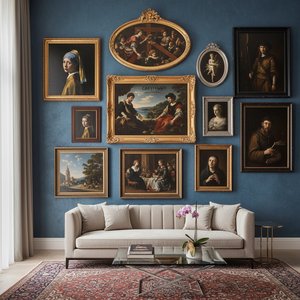
Barokkens Mesterverk: Topp 10 Malerier som Definerte Epoken | OriginalUniqueArt
Opplev barokkens prakt! Utforsk 10 ikoniske malerier av Karavaggio, Rembrandt og Vermeer. Lær om kunsthistorien bak mesterverkene og finn inspirasjon til interiøret ditt. Museumskvalitet reproduksjoner på OriginalUniqueArt.com