

 Se i rommet
 Del som digitalt kort
 Del
Del
 Detaljer
 Studentguide

 Last ned
 Liknende objekter
 Røntgen
 Lysbildefremvisning
 Besøksstatistikk
Cupid and Psyche
 Acrylic On Canvas
- WallArt
- Neoclassical Sculpture
 1796
1796- 19th Century
 150.0 x 68.0 cm
 Louvre
 Les mer
Giclée / Kunsttrykk
Giclée- eller lerretsprint av museumskvalitet med rask produksjon og fleksible valgmuligheter for etterbehandling. ( Bestill håndmalt reproduksjon Gå til digitalt bilde)




P118B $10

P118H $10

P118W $10

P438Z $10

P508JH $12

P508YH $12

P805H $10

P805Z $10

P919BZ $10

P919G $10

P919XJ $10

P959ZH $10

P968JZ $12

W106C $8

W218G $10

W218JH $8

W218Y $10

W307PJ $10

W316G $10

W316PJ $8

W316Y $10

W398PJ $8

W4111J $10

W500HY $15

W500JH $15

W692G $12

W849H $8

W940BG $15

W953PJ $8




Velg mellom våre forhåndsdefinerte størrelser som bevarer kunstverkets opprinnelige proporsjoner.

Du kan oppgi egne mål for å tilpasse en spesifikk ramme eller et bestemt område. Dersom den valgte størrelsen ikke samsvarer med det originale bildets proporsjoner, vil vi enten beskjære kunstverket eller utvide bildet med en speilet eller ensfarget kant. En digital mockup vil bli sendt til din godkjenning før produksjonen starter.
Vennligst merk at forhåndsvisningen på skjermen ikke gjenspeiler den faktiske beskjæringen eller utvidelsen. Kun mockuppen vil vise den endelige komposisjonen nøyaktig.
Selv om tilpassede størrelser er tilgjengelige, anbefaler vi å velge et mål fra den forhåndsdefinerte listen for å bevare de originale proporsjonene.
Verdensomspennende levering () på 2 uker i stedet for standard 4/5 uker. (26 September)

Gratis ekspressfrakt over hele verden

Lerretsduk av høykvalitets lin

Full transportforsikring

Garanti for refusjon av toll og importavgifter

Garantert fargeekthet

100 dagers returrett ved fabrikasjonsfeil

100% pengene tilbake-garanti

Mengderabatt
 Glassalternativet er kun tilgjengelig i størrelser under 110 cm

Cupid and Psyche
Giclée / Kunsttrykk
Format på reproduksjon
-


Totalpris
$ 80
The Mythic Heart of Antonio Canova’s Masterpiece
Antonio Canova's "Cupid and Psyche" isn’t merely a sculpture; it’s a frozen moment of profound yearning, a testament to the enduring power of love against the backdrop of classical mythology. Completed in 1796, this marble masterpiece transcends its subject matter, offering a glimpse into the burgeoning Romantic sensibility while firmly rooted in the elegant formalism of Neoclassicism. The story itself—the tale of Cupid’s obsessive pursuit and Psyche's arduous journey to earn his love—resonates with universal themes of devotion, sacrifice, and ultimately, triumph over adversity. Canova masterfully captures this narrative through a dynamic composition that balances poised elegance with palpable emotion.

The sculpture depicts the pivotal moment when Cupid, having overcome the wrath of Venus, descends upon Psyche, bestowing upon her a kiss that awakens her from a deathlike slumber. Canova’s genius lies in his ability to convey this intense exchange with subtle gestures and exquisitely rendered anatomy. The figures are not rigidly posed; instead, they move within a single, fluid action—a delicate balance between anticipation and fulfillment. Psyche, bathed in an ethereal light, reaches out towards Cupid, her hand poised to receive the kiss, while Cupid himself is captured mid-motion, his wings partially unfurled as he gently touches her breast. The sculpture’s diagonal composition draws the eye directly into this intimate tableau, creating a powerful sense of immediacy.
Neoclassical Form and Romantic Emotion
“Cupid and Psyche” stands at the fascinating intersection of two artistic movements: Neoclassicism and Romanticism. Canova, deeply influenced by the classical ideals of balance, harmony, and proportion, meticulously adheres to the formal conventions of Neoclassicism. The smooth surfaces of the marble, the idealized forms of the figures, and the carefully controlled drapery all reflect this commitment to classical aesthetics. However, beneath this surface lies a profound emotional depth that anticipates the Romantic emphasis on feeling, passion, and individualism. Canova doesn’t simply depict a mythological scene; he captures the very essence of love—its intensity, its vulnerability, and its transformative power.
The choice of marble itself is significant. Marble was considered the material of gods and heroes in antiquity, lending an air of timelessness and reverence to the sculpture. Canova’s masterful manipulation of the stone – the subtle gradations of light and shadow, the delicate textures of skin and fabric – elevates the work beyond mere representation, imbuing it with a remarkable sense of realism and vitality.
Symbolism and Artistic Technique
The sculpture is rich in symbolic detail. Cupid’s quiver, filled with arrows, represents his role as the god of love, while Psyche's veiled face suggests her initial state of unconsciousness and vulnerability. The vase that caused Psyche to faint symbolizes the obstacles she had to overcome to earn Cupid’s affection. Canova’s technical skill is equally impressive. He employed a technique known as *contrapposto*, where the figures are slightly off-balance, creating a sense of naturalism and movement. This subtle shift in weight adds dynamism to the composition and draws attention to the emotional core of the scene.
Furthermore, Canova’s meticulous study of human anatomy is evident in every detail—the delicate curve of Psyche's neck, the muscular tension in Cupid’s arm, the flowing folds of their garments. He achieved this level of realism through countless hours of observation and dissection, demonstrating a profound understanding of the human form.
A Timeless Legacy
“Cupid and Psyche” remains one of Antonio Canova's most celebrated works, admired for its beauty, emotional depth, and technical mastery. It’s a sculpture that continues to captivate viewers centuries after its creation, reminding us of the enduring power of love—a force capable of overcoming even the greatest obstacles. Reproductions of this iconic piece offer an opportunity to bring this timeless masterpiece into your home or studio, allowing you to experience firsthand the artistry and emotion that define Canova’s legacy.
Kunstnerbiografi
Antonio Canova: Et liv i marmor
- Født: Possagno, Italia (1757)
- Død: 1822
Antonio Canova står som en monumentale skikkelse i den vestlige kunsthistorien, og regnes vidt sett som den fremste nyklassiske billedhuggeren. Hans mesterskap i marmorhugging og hans evne til å besjele klassiske former med dyp emosjon sikret hans plass blant alle tiders største kunstnere. Født i Possagno i Italia, som sønn av steinhuggeren Pietro Canova, ble Canovas tidlige liv formet av det kunstneriske miljøet som omga ham.
Tidlig liv og opplæring
- Familiebakgrunn: Hans fars yrke ga den første eksponeringen for steinhugging, og hans bestefar, Pasino Canova, en skulptør spesialisert på altere og lavrelieffer, spilte en avgjørende rolle i å pleie hans talent.
- Tidlig kunstnerisk utvikling: Allerede før tiårsalderen utviste Canova bemerkelsesverdig ferdighet ved å skape små marmorskriner som viste hans medfødte evne. Han var i lære hos Giuseppe Bernardi ('Torretto') og Giovanni Ferrari, noe som ytterligere foredlet hans ferdigheter.
- Studier ved akademiet: Hans studier ved Accademia di Belle Arti di Venezia brakte med seg en rekke priser, noe som sementerte hans rykte som en lovende ung kunstner. Et verksted i et kloster ga ham rom til å utvikle sitt håndverk.
- Tidlige oppdrag: Tidlige bestillinger, som statuene av Orpheus og Eurydice for senator Giovanni Falier (1775-1777), viste en fremvoksende rokokkostil som varslet hans senere nyklassiske raffinement.
Veien til berømmelse og den nyklassiske stilen
- Definisjonen av nyklassisismen: Canovas arbeid er karakterisert av elegante former, idealiserte figurer og en retur til de estetiske prinsippene fra det antikke Hellas og Roma. Han unngikk på dyktig vis barokk-kunstens melodrama, samtidig som han motstod kulden som ofte ble assosiert med tidligere forsøk på klassisk gjenopplivning.
- Hovedverk og anerkjennelse: Skulpturer som Cupid og Psyke (ca. 1787-1793), Den angrende Magdalene og
Herkules og Lichas etablerte hans rykte over hele Europa. Hans arbeid var ettertraktet av både kongelige og adel. - Promotering av sitt rykte: Canova promoterte sin karriere strategisk gjennom utgivelse av graveringer av sine verk og ved å skape marmorversjoner av gipsavstøpninger, noe som sikret en omfattende spredning av hans kunst.
- Internasjonal anerkjennelse: Oppdrag fra hele Europa, inkludert en statue av Theseus og Minotauren for Girolamo Zulian (venetiansk ambassadør til Roma), sementerte hans status som en av de mest berømte kunstnerne i Europa.
Store verk og ettermæle
- Bemerkelsesverdige skulpturer: Utover de allerede nevnte, inkluderer Canovas betydelige verk Venus Italica, La Musa Polyhymnia, De tre grasier dansende og hans gripende fremstilling av Eurydike.
- Monumentale oppdrag: Han mottok prestisjetunge oppdrag for gravmonumenter, mest iøynefallende det forseggjorte Gravmælet til pave Klemens XIII i Peterskirken i Roma – et vitnesbyrd om hans ferdigheter innen både skulptur og arkitektonisk design.
- Gipsoteca Antonio Canova: Museet Gipsoteca Antonio Canova huser den viktigste samlingen av hans verk, noe som gir uvurderlig innsikt i hans kreative prosess og kunstneriske utvikling.
Historisk betydning
- Selve legemliggjøringen av nyklassisismen: Antonio Canova ble synonym med den nyklassiske bevegelsen, og legemliggjorde dens idealer om orden, klarhet og en retur til antikken.
- Hoffskulptør og diplomat: Hans posisjon som hoffskulptør for en rekke europeiske herskere ga ham betydelig politisk innflytelse og gjorde det mulig for ham å forme den kunstneriske smaken over hele kontinentet.
- Teknisk innovasjon: Canovas uovertrufne ferdighet i å skjære i marmor flyttet grensene for hva som ble ansett som mulig, og satte en ny standard for skulpturell ekspertise.
- Et varig kunstnerisk ettermæle: Hans skulpturer fortsetter å trollbinde publikum over hele verden, og befester hans plass som en av de viktigste og mest innflytelsesrike kunstnerne i historien.

Antonio Canova
1757 - 1822 , Italia
Kort om kunstneren
- Artistic Movement Or Style: Neoklassisisme
- Artists Or Movements Influenced By This Artist: ['Sen Neoklassisisme']
- Artists Who Influenced This Artist: ['Barokk skulptører']
- Date Of Birth: 1757
- Date Of Death: 1822
- Full Name: Antonio Canova
- Nationality: Italiensk
- Notable Artworks:
- Cupid Psyche
- Magdalena
- Herakles
- Theseus
- Place Of Birth: Possagno, Italia
Relaterte artikler

The Enduring Allure of Marble in Art History: From Classical Sculpture to Modern Abstraction
Explore the captivating history of marble sculpture from ancient Greece to modern art. Discover renowned artists like Canova & Michelangelo, carving techniques, and investment insights at OriginalUniqueArt.
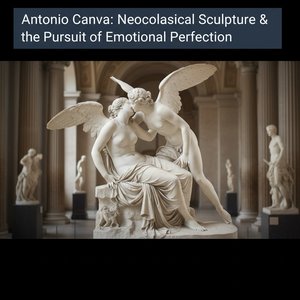
Antonio Canova: Neoclassical Sculpture & the Pursuit of Emotional Perfection
Explore the life & art of Antonio Canova, the greatest Neoclassical sculptor. Discover his masterpieces, innovative techniques, and lasting influence on fine art collecting. Expert insights for discerning investors.

The Enduring Form: Sculpture Across History, Technique & Emotional Resonance
Explore the rich history of sculpture with OriginalUniqueArt. Discover key techniques, influential artists & investment potential for discerning collectors. Expert insights into valuing and collecting timeless masterpieces.

The Enduring Form: Exploring Themes & Techniques in Sculpture Across Historical Periods
Explore the rich history of sculpture from ancient masterpieces to contemporary innovations. Discover key techniques, influential artists & investment potential for discerning art collectors.

Bronseklassikere: 10 skulpturer som revolusjonerte kunsten | OriginalUniqueArt
Utforsk 10 legendariske bronseskulpturer som formet kunsthistorien! Fra Rodin til Michelangelo – oppdag historiene, teknikkene og skjønnheten bak tidløse mesterverk. Finn din perfekte veggkunst eller interiørdekor på OriginalUniqueArt.com.
