

 Se i rommet
 Del som digitalt kort
 Del
Del
 Detaljer
 Studentguide

 Last ned
 Liknende objekter
 Røntgen
 Lysbildefremvisning
 Besøksstatistikk
DAVID WEMYSS, LORD ELCHO


 Les mer
Giclée / Kunsttrykk
Giclée- eller lerretsprint av museumskvalitet med rask produksjon og fleksible valgmuligheter for etterbehandling. ( Bestill håndmalt reproduksjon Gå til digitalt bilde)




P118B Nkr10

P118H Nkr10

P118W Nkr10

P438Z Nkr10

P508JH Nkr12

P508YH Nkr12

P805H Nkr10

P805Z Nkr10

P919BZ Nkr10

P919G Nkr10

P919XJ Nkr10

P959ZH Nkr10

P968JZ Nkr12

W106C Nkr8

W218G Nkr10

W218JH Nkr8

W218Y Nkr10

W307PJ Nkr10

W316G Nkr10

W316PJ Nkr8

W316Y Nkr10

W398PJ Nkr8

W4111J Nkr10

W500HY Nkr15

W500JH Nkr15

W692G Nkr12

W849H Nkr8

W940BG Nkr15

W953PJ Nkr8




Velg mellom våre forhåndsdefinerte størrelser som bevarer kunstverkets opprinnelige proporsjoner.

Skriv inn bredden og høyden du trenger, slik at den passer til din ramme eller vegg. Et trykk kan kun beskjæres, aldri gjøres større enn bildet, så et format med en annen form vil miste en del av motivet. Vi sender deg en digital mockup for godkjenning før vi trykker noe som helst. Bildet som vises på denne siden viser ikke den faktiske beskjæringen — det er kun mockuppen som gjør det.
Verdensomspennende levering () på 2 uker i stedet for standard 4/5 uker. (24 October)

Gratis ekspressfrakt over hele verden

Lerretsduk av høykvalitets lin

Full transportforsikring

Garanti for refusjon av toll og importavgifter

Garantert fargeekthet

100 dagers returrett ved fabrikasjonsfeil

100% pengene tilbake-garanti

Mengderabatt
 Glassalternativet er kun tilgjengelig i størrelser under 110 cm

DAVID WEMYSS, LORD ELCHO
Giclée / Kunsttrykk
Format på reproduksjon
-


Totalpris
Nkr 760
A Portrait of Nobility: Allan Ramsay’s David Wemyss, Lord Elcho
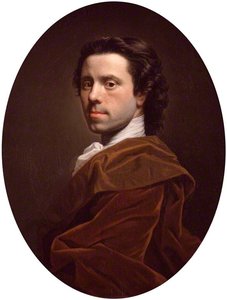
Allan Ramsay's “David Wemyss, Lord Elcho” is more than just a painted likeness; it’s a carefully constructed tableau of 18th-century Scottish aristocracy, imbued with the formality and restrained emotion characteristic of his era. Completed around 1775, this oil on canvas portrait captures David Wemyss, Lord Elcho, a prominent figure in Jacobite circles and a man defined by both privilege and turbulent history. The painting immediately draws the eye with its rich palette – deep reds and browns dominate, offset by creamy whites and subtle golds – creating an atmosphere of dignified opulence that speaks to the subject’s status and wealth.
Ramsay's skill lies not merely in replicating appearance but in conveying character. Lord Elcho is presented in a three-quarter pose, his gaze direct and unwavering, establishing an immediate connection with the viewer. His posture exudes confidence, yet there’s also a hint of melancholy in his expression, perhaps reflecting the political turmoil that defined his life. The artist masterfully employs soft lines to define the contours of the face and clothing, avoiding harsh outlines and instead creating a sense of gentle realism. Notice how the folds of his coat and cravat aren't simply rendered; they’re sculpted with subtle shading, adding depth and texture that bring the portrait to life.
The Context of Power and Rebellion
To fully appreciate “David Wemyss, Lord Elcho,” it’s crucial to understand its historical context. The late 18th century in Scotland was a period of intense political unrest, fueled by aspirations for restoring the Stuart monarchy. Lord Elcho, as a Jacobite supporter, played a significant role in this movement, raising his own troop of cavalry – the “Lifeguards” – which became renowned for their bravery and effectiveness during the 1745 Rising. The portrait itself is therefore inextricably linked to this era of rebellion and loyalty, serving as a visual testament to a man caught between duty and ambition.
Further research reveals that Lord Elcho’s life was marked by both success and tragedy. He initially rose through the ranks of the army, earning recognition for his military prowess. However, following the disastrous defeat at Culloden in 1746, he fled to Europe and faced imprisonment and exile. The painting, therefore, can be viewed as a poignant reminder of a life cut short by political upheaval – a man whose legacy is intertwined with both glory and loss.
Symbolism and Artistic Technique
Ramsay’s technique is rooted in the traditions of 18th-century portraiture, yet he infuses it with his own distinctive style. The lighting, diffused and soft, illuminates Lord Elcho's face and upper body while leaving the background shrouded in shadow, creating a dramatic focal point and emphasizing the subject’s presence. The use of color is particularly noteworthy; the rich reds and browns evoke notions of power, wealth, and nobility, while the lighter tones suggest refinement and elegance.
Beyond mere representation, Ramsay employs subtle symbolism to enhance the portrait's meaning. The elaborate attire – the richly colored coat, the ornate cravat, and the powdered wig – are all indicators of Lord Elcho’s social standing and status within Scottish society. The composition itself, with its balanced arrangement and direct gaze, reinforces his authority and confidence. It is a carefully considered image designed to project an aura of power and dignity.
A Timeless Masterpiece for the Home
“David Wemyss, Lord Elcho” remains a captivating work of art, offering a glimpse into a pivotal moment in Scottish history and showcasing the exceptional talent of Allan Ramsay. Reproductions of this portrait are highly sought after by collectors and interior designers alike, providing a touch of elegance and historical gravitas to any space. Its rich colors, masterful composition, and evocative subject matter make it a truly timeless masterpiece – a testament to the enduring power of art to capture both the outward appearance and inner character of its subjects.
Spørsmål og svar
Hvilket rom foreslås det at "DAVID WEMYSS, LORD ELCHO" plasseres i, med tanke på fargepaletten?
Med sin Earthy palett, anbefales "DAVID WEMYSS, LORD ELCHO" av Allan Ramsay for et Living Room. Fargene er en av grunnene til denne anbefalingen.
Hvor kan jeg se originalen av "DAVID WEMYSS, LORD ELCHO" av Allan Ramsay?
Originalen av "DAVID WEMYSS, LORD ELCHO" av Allan Ramsay oppbevares i Louvre, Paris, France. En reproduksjon gjør det mulig å stille ut verket i eget hjem.
Hvilken atmosfære har "DAVID WEMYSS, LORD ELCHO"?
"DAVID WEMYSS, LORD ELCHO" av Allan Ramsay beskrives med en Elegant stemning. Denne klassifiseringen kan bidra til å matche verket med et passende miljø.
Kunstnerbiografi
Allan Ramsay: En Epoke av Elegance og Portrettkunst
Født i Edinburgh, Skottland den 13. oktober 1713, fremsto Allan Ramsay som en fremtredende skotsk portrettmaler hvis verk fanget tidens eleganse og raffinement. Hans kunstneriske reise begynte da han var tjue år gammel, da han reiste til London for å studere under den svenske maleren Hans Hysing, etterfulgt av undervisning ved St. Martin's Lane Academy. Denne grunnleggende opplæringen ga ham et solid fundament i teknikk og komposisjon.
Italiensk Inspirasjon og Kunstnerisk Utvikling
Ramsays kunstneriske utvikling tok en betydelig vending med hans reiser til Roma og Napoli, hvor han tilbrakte tre år (1736-1738) under veiledning av Francesco Solimena og Imperiali (Francesco Fernandi). Disse italienske mestrene påvirket stilen hans dypt, fremmet en større forståelse for klassiske prinsipper og forbedret hans evne til å fange likhet og karakter. Han absorberte den rådende rokokkoestetikken samtidig som han utviklet en verdsettelse for nyklassisistiske idealer. Oppholdet i Italia var avgjørende, ikke bare for å perfeksjonere maleteknikker, men også for å forstå hvordan lys og skygge kunne brukes til å skape dybde og emosjonell resonans i portrettene hans.
En Blomstrende Karriere og Viktige Verk
Etter hjemkomsten til Storbritannia i 1738 etablerte Ramsay raskt en suksessfull karriere som portrettmaler. Hans evne til å skildre sine motiver med både nøyaktighet og ynde sikret ham snart en anerkjent kundekrets. Noen av hans mest bemerkelsesverdige verk inkluderer:
- Dronning Charlotte (1744-1818) med hennes to eldste sønner (Royal Collection, London): En kongelig fremstilling som viser Dronningens mødreholdning.
- Mary Degg, Lady Robert Manners (Scottish National Gallery, Edinburgh): Et elegant portrett som demonstrerer Ramsays dyktighet i å fange aristokratisk skjønnhet.
- Hode av Duncan Forbes of Culloden: Dette tidlige verket vakte oppmerksomheten til hertugen av Argyll og ble senere presentert på Royal Bank of Scotland sine sedler.
Kongelig Ansettelse og Høyeste Prestasjon
Et vendepunkt i Ramsays karriere kom i 1761 med hans utnevnelse som Hovudmaler til Georg III. Denne prestisjetunge posisjonen sementerte hans status blant kunsteliten og sikret en jevn strøm av bestillinger fra kongefamilien og overklassen. Han ble *portrettøreren* for den georgianske epoken, og malte ikke bare ansikter, men også essensen av sine motiver – deres ambisjoner, sosiale status og personlige historier.
Senere Liv og Arv
Ramsays senere liv ble preget av et skifte mot litterære interesser, noe som gjenspeiler hans brede intellektuelle interesser. Personlige tragedier – en utilsiktet forskyvning av høyre arm og bortgangen til hans andre kone i 1782 – påvirket imidlertid helsen og produktiviteten hans. Han døde i 1784.
Til tross for disse utfordringene etterlot Ramsay en varig arv som en av Skotlands mest feirede portrettmalere. Som Samuel Johnson bemerket, “Jeg elsker Ramsay. Du vil ikke finne en mann i hvis samtale det er mer undervisning, mer informasjon og mer eleganse enn i Ramsays.” Hans verk fortsetter å bli beundret for sin tekniske dyktighet, raffinerte estetikk og innsiktsfulle skildringer av 1700-tallets samfunn. Han var en mester i å fange ikke bare det ytre utseendet, men også den indre karakteren til sine motiver.
Historisk Betydning
Allan Ramsays bidrag strekker seg utover hans kunstneriske talent. Han spilte en avgjørende rolle i å forme visuell kultur i Skottland i en periode med betydelig sosial og politisk endring. Hans portretter gir verdifull innsikt i livet, moten og verdiene til den skotske adelen og landadelen. Verkene hans finnes på steder som Ayr Town Hall og Scottish National Portrait Gallery.
Allan Ramsay
1713 - 1784 , Storbritannia
Kort om kunstneren
- Artister Som Påvirket Denne Artisten:
- Hans Hysing
- Francesco Solimena
- Imperiali (Fernandi)
- Bemerkelsesverdige Kunstverk:
- Dronning Charlotte m. sønner
- Mary Degg, Lady Robert Manners
- Duncan Forbes av Culloden
- Dødsdato: 1784
- Fullt Navn: Allan Ramsay
- Fødested (By Og Land): Edinburgh, Storbritannia
- Fødselsdato: 13. oktober 1713
- Kunstnerisk Bevegelse/Stil: Rokokko, Neoklassisisme
- Nasjonalitet: Skotsk
Relaterte artikler

Allen Ramsay: Portraiture, Patronage & Shaping Georgian Identity
Explore the life & work of Allen Ramsay, pivotal portraitist to George III. Discover his Rococo style, influence on Georgian society, and lasting legacy in British art history. Learn about his key works & patronage.

David Roberts: A Scottish Pioneer of Topographical Art & Orientalist Vision
Explore the captivating world of David Roberts, a pioneering Scottish painter renowned for his detailed Orientalist scenes & stunning Egyptian landscapes. Discover his legacy and find museum-quality reproductions at OriginalUniqueArt.
Alexander Nasmyth: Picturing Scotland's Romantic Landscape – Innovation & Identity
Explore the life & art of Alexander Nasmyth, a pivotal figure in Scottish Romantic landscape painting. Discover his iconic works, including portraits of Robert Burns, and learn about his lasting influence on national identity. Fine art reproductions available.
George Paul Chalmers: Rediscovering the Angus Rembrandt & Scottish Colourist Roots
Explore the captivating world of George Paul Chalmers (1833-1878), a pivotal Scottish painter. Discover his landscapes, portraits & connection to the Aesthetic Movement and Colourists. Learn about this 'Angus Rembrandt's' legacy with OriginalUniqueArt.
Sir John Watson Gordon: A Study in Scottish Landscape Painting & Tonal Impressionism
Explore the captivating portraits of Sir John Watson Gordon, a leading Scottish master. Discover his evolution from neoclassical style to atmospheric Tonalism and influence on 19th-century British art. Learn about his iconic sitters & legacy.


