Ukiyo-e, one artist at a time

39 Famous Ukiyo-e Kunstenaars Who Shaped the Movement

Katsushika Hokusai (1760–1849) is the most famous Ukiyo-e kunstenaar, whose singular vision gave us Fuji, Bergen bij helder weer (rode Fuji) en De Grote Golf van Kanagawa. Next stand Ando Hiroshige, Kitagawa Utamaro, Yoshitoshi Taiso en Kiyonaga Torii. These 39 artiesten, from Hishikawa Moronobu (born 1618) to Goyō Hashiguchi (born 1880), came from 1 countries.

Our selection. Artists whose works our catalogue attaches to Ukiyo-e, in the order of our fame ranking. Artists born after 1955 with no Wikidata identifier stay out until verified. The Wikipedia figure counts our 32 languages with an article on the artist.

  1. Fuji, Bergen bij helder weer (rode Fuji) door Katsushika Hokusai1Katsushika Hokusai
  2. Early Department from a Daimyo door Ando Hiroshige2Ando Hiroshige
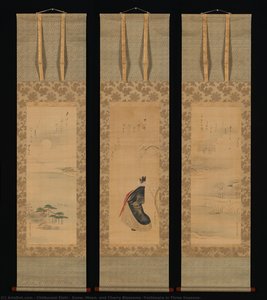
  3. Courtesan or Kneeling Lady with Fan from the series Seasonal Poems Composed by Famous Women door Kitagawa Utamaro3Kitagawa Utamaro

In brief

Ukiyo-e in brief

  • 39Kunstenaars
  • 1618–1880Geboortejaren
  • 1Landen van geboorte
  • 0Vrouwen
  • 1Levende kunstenaars
  • 5.896Werken in onze catalogus
Steden met de meeste geboorten
Edo (8), Tokyo (7), Tokio (4), Osaka (2)

One artist at a time

39 Ukiyo-e Kunstenaars and their signature works

1of 39

Katsushika Hokusai

Japans Born in Honjo Ukiyo-e Wikipedia in 32/32 languages

Katsushika Hokusai

Al op zesjarige leeftijd maakt de jongen schetsen, gedreven door een honger naar creatie die zijn vader, Nakajima Ise, weliswaar herkent, maar niet volledig kan sturen. Tegen zijn twaalfde treedt hij in dienst bij de studio van Katsukawa Shunshō, waar hij de veeleisende precisie van de ukiyo-e houtsnedekunst onder de knie krijgt.

Signature works · The 100 signature works

2of 39

Ando Hiroshige

Japanse Born in Edo *Ukiyo-e* Wikipedia in 30/32 languages

Ando Hiroshige

Zijn leven ontviel tijdens een periode van relatieve vrede en welvaart onder het Tokugawa-shogunaat, maar ook één gemarkeerd door toenemende sociale veranderingen en uiteindelijk westernisatie – krachten die uiteindelijk bijdroegen aan de achteruitgang van ukiyo-e, hoewel ze tegelijkertijd zijn blijvende nalatenschap versterkten.

Pupil of Utagawa Toyohiro #26

Signature works · The 100 signature works

3of 39

Kitagawa Utamaro

Japanse kunstenaar Born in Kawagoe *Ukiyo-e* Wikipedia in 27/32 languages

Kitagawa Utamaro

Hij staat te boek als een van de meest gevierde ontwerpers van houtsneden en schilderijen uit de Edo-periode, en liet een onuitwisbare erfenis na die niet alleen de Japanse kunst vormgaf, maar ook een diepe indruk maakte op het Europese Impressionisme.

Signature works · The 100 signature works

4of 39

Yoshitoshi Taiso

Japans Born in Edo Ukiyo-e Wikipedia in 15/32 languages

Yoshitoshi Taiso

Geboren als Owariya Yonejiro op 30 april 1839, betrad de man die later bekend zou worden als Tsukioka Yoshitoshi een wereld in voortdurende beweging. Geboren als Owariya Yonejiro in de wijk Shimbashi in het oude Edo, groeide de jongen die later Yoshitoshi zou worden op in een huishouden dat werd gevormd door sociale ambitie.

Signature works · The 100 signature works

5of 39

Kiyonaga Torii

Japans Born in Edo Ukiyo-e Wikipedia in 16/32 languages

Kiyonaga Torii

Geboren als Sekiguchi Shinsuke in 1752, in het bruisende hart van Edo (het huidige Tokio), kwam Torii Kiyonaga naar voren als een van de meest gevierde meesters van de ukiyo-e, de “prenten van de vlietende wereld”. Hij nam de kunstnaam Torii Kiyonaga aan, waarmee hij zijn ambities binnen de gerespecteerde Torii-school kenbaar maakte – en hoewel hij niet biologisch verwant was aan de familie, zou hij uiteindelijk hun leider worden.

Signature works · The 100 signature works

6of 39

Kuniyoshi Utagawa

Japanse Born in Tokyo Ukiyo-e Wikipedia in 24/32 languages

Kuniyoshi Utagawa

The breakthrough came in 1827 with the release of The One Hundred and Eight Heroes of the Popular Suikoden, a monumental series based on the Chinese novel Shui Hu Zhuan. The series wasn’t merely an illustration of heroic tales; it was a showcase for Kuniyoshi's burgeoning talent for dramatic composition and characterization. As the Edo period drew to a close, Japan experienced increasing contact with the West, and Kuniyoshi was among the first ukiyo-e artists to incorporate elements of Western perspective and shading into his work.

Pupil of Utagawa Toyokuni I #13 · Teacher of Utagawa Yoshitora #32, Kawanabe Kyōsai #11

Signature works · The 100 signature works

7of 39

Suzuki Harunobu

Japans Born in Edo Ukiyo-e Wikipedia in 21/32 languages

Suzuki Harunobu

Geboren rond 1725, werd zijn familiegeschiedenis gekenmerkt door ontheemding; zowel zijn vader, Shigekazu, als zijn grootvader, Shigemitsu, werden verbannen van Edo naar Kyoto. Hij putte uit de stijlen van Torii Kiyomitsu en Ishikawa Toyonobu, terwijl hij tegelijkertijd elementen absorbeerde van de Kawamata- en Kanō-scholen.

Signature works · The 100 signature works

8of 39

Hishikawa Moronobu

Japans Born in Hota Ukiyo-e Wikipedia in 20/32 languages

Hishikawa Moronobu

Hishikawa Moronobu, geboren in Edo (het huidige Tokio) in 1618, staat als een spilfiguur in de geschiedenis van de Japanse kunst. De Edo-periode (1603-1868) was getuige van een bloeiende stedelijke cultuur, gevoed door economische voorspoed en relatieve vrede.

Signature works · The 100 signature works

9of 39

Kunisada

Japanese Born in Edo Ukiyo-e Wikipedia in 17/32 languages

Kunisada

Utagawa Kunisada, geboren als Sumida Shōgorō IX in de levendige wijk Honjo, Japan, staat te boek als wellicht de meest gevierde ukiyo-e kunstenaar van de 19e eeuw. Zijn enorme productie en ongekende commerciële succes verstevigden zijn positie als een titaan onder zijn tijdgenoten—Hiroshige, Hokusai en Kuniyoshi—en vestigden zijn naam als de onbetwiste kampioen van de kleurenhoutsnede tijdens de Edo-periode.

Pupil of Utagawa Toyokuni I #13

Signature works · The 100 signature works

10of 39

Chobunsai Eishi

Japans Born in Tokio Ukiyo-e, Bijin-ga Wikipedia in 11/32 languages

Chobunsai Eishi

Chobunsai Eishi (1756-1829), ook wel bekend als Hosoda Tokitomi, staat als een spilfiguur in de levendige wereld van de Edo-periode Japanse kunst. Zijn vroege jaren werden gekenmerkt door dienstbaarheid aan het Tokugawa-hof, een positie die hij in 1789 opgaf om zich volledig te wijden aan zijn passie: het vastleggen van de voortreffelijke schoonheid van vrouwen en de evocatieve verhalen uit de klassieke literatuur.

Signature works · The 100 signature works

11of 39

Kawanabe Kyōsai

Japanese Born in Koga Ukiyo-e, Caricature, Manga pioneer Wikipedia in 10/32 languages

Kawanabe Kyōsai

In 1874, he helped create what is considered the first manga magazine, Eshinbun Nipponchi, alongside Kanagaki Robun.

Signature works · The 100 signature works

12of 39

Keisai Eisen

Japanese Born in Edo Bunsei Era Ukiyo-e Wikipedia in 15/32 languages

Keisai Eisen

This shift defined the aesthetic of the Bunsei era (1818–1830), a period often characterized by its decadent and psychologically complex atmosphere.

Signature works · The 100 signature works

13of 39

Utagawa Toyokuni I

Japanese Born in Shiba Ukiyo-e Wikipedia in 13/32 languages

Utagawa Toyokuni I

He didn’t seek to revolutionize ukiyo-e overnight; instead, he embarked on a period of intense study, focusing intently on the works of masters like Utamaro, Chōbunsai Eishi, and Eishōsai Chōki. He wasn't simply copying their styles but rather dissecting them, understanding their strengths, and ultimately synthesizing them into something uniquely his own. While Sharaku is often lauded by modern art historians for his psychological insight, it was Toyokuni who captured the hearts of the Edo public.

Teacher of Utagawa Kunimasa #15, Utagawa Kunisada #34, Utagawa Toyokuni II #35

Signature works · The 100 signature works

15of 39

Utagawa Kunimasa

Japanse kunstenaar Born in Aizuwakamatsu Utagawa School

Utagawa Kunimasa

Kunimasa’s early life was marked by a dedication to craftsmanship and artistic training. His apprenticeship under Toyokuni wasn’t merely about technical skill; it instilled in him an understanding of the broader aesthetic goals of ukiyo-e—to capture fleeting moments of beauty and emotion with unparalleled precision. He served as an inspiration to subsequent generations of ukiyo-e artists who embraced his stylistic innovations—a harmonious blend of intensity and elegance—solidifying his place as one of the Utagawa school’s foremost masters.

Signature works · The 100 signature works

16of 39

Nishikawa Sukenobu

Japanese Born in Kyoto Ukiyo-e Wikipedia in 9/32 languages

Nishikawa Sukenobu

These works demonstrate his versatility as an artist and underscore his commitment to exploring diverse artistic mediums—a testament to his intellectual curiosity and artistic ambition. Legacy & Recognition: Nishikawa Sukenobu’s enduring legacy resides in his contribution to Japanese art history, particularly his groundbreaking portrayal of women. Influence on Subsequent Artists: Sukenobu’s influence extended far beyond his own lifetime, inspiring subsequent generations of printmakers like Suzuki Harunobu and Kitao Shigemasa.

Signature works · The 100 signature works

17of 39

Sharaku

Japan ukiyo-e Wikipedia in 19/32 languages

Sharaku

Despite the mystery surrounding his true identity, his work has been recognized for its mastery of the medium. His reputation rests largely on his earlier prints, while his later output is often considered to have a declining artistry. Sharaku's technique involved the use of woodblock prints, sometimes employing extravagant methods such as the dusting of mica in the backgrounds to create a glittering effect.

Signature works · The 100 signature works

18of 39

Utashige

Japanese Ukiyo-e

Utashige

He often incorporated poetic verses – haiku – into his compositions, adding layers of meaning and inviting viewers to contemplate the deeper significance of the scenes depicted. Hiroshige’s prints are not simply images; they are windows into the soul of Japan. Hiroshige’s reputation solidified with his Fifty-three Stations of the Tōkaidō (1833–1834), a horizontal-format series depicting the journey along the main road connecting Edo to Kyoto.

Signature works · The 100 signature works

19of 39

Miyagawa Chōshun

Japanese Born in Miyagawa Ukiyo-e Wikipedia in 9/32 languages

Miyagawa Chōshun

The works of Chōshun are instantly recognizable for their evocative atmosphere and tender execution. His subjects—often the elegant courtesans of the pleasure districts—were depicted with a fuller, more voluptuous grace than the slender, stylized figures seen in the works of later artists like Harunobu. His pupils, including his son Miyagawa Isshō and the talented Miyagawa Chōki, carried forward his dedication to depicting the tastes and textures of urban life.

Signature works · The 100 signature works

20of 39

Goyō Hashiguchi

Dutch Born in Kagoshima Post-Impressionism

Goyō Hashiguchi

Goyō’s initial foray into the art world wasn't through printmaking but rather illustration. He gained recognition for his work on Natsume Sōseki’s celebrated novel, I Am a Cat, and subsequently illustrated works by other prominent authors like Futabatei Shimei, Tanizaki Jun'ichirō, and Nagai Kafū. Despite his frail health, exacerbated by beriberi, Goyō continued to produce prints at a remarkable pace from 1915 until his untimely death in 1921 at the age of forty-one.

Signature works · The 100 signature works

21of 39

Isoda Koryūsai

Japanese Born in Tokyo Ukiyo-e Wikipedia in 10/32 languages

Isoda Koryūsai

Establishing himself near the iconic Ryōgoku Bridge in 1769, he positioned himself at the epicenter of Edo's entertainment and commercial life.

Signature works · The 100 signature works

22of 39

Ogata Gekko

Japanese Born in Tokyo Ukiyo-e, Nihonga Wikipedia in 9/32 languages

Ogata Gekko

His most celebrated series, “One Hundred Views of Mount Fuji” (1896-1905), exemplifies his mastery. Beyond Mount Fuji, he produced numerous other series, including “Bijin Meisho Awase” (Beautiful Women in Famous Places), offering intimate glimpses into Japanese society and daily life, and dramatic triptychs depicting historical events like the Iwakura Taiko incident – a pivotal clash between Japanese and Western powers. His exposure to European art through scholars like Ernest Fenellosa and Okakura Kakuzō further broadened his artistic horizons.

Signature works · The 100 signature works

23of 39

Kobayashi Kiyochika

Japans Born in Tokio Ukiyo-e, Kōsen-ga Wikipedia in 10/32 languages

Kobayashi Kiyochika

Geboren in Tokio in 1847, tijdens de laatste dagen van het Japan van de Edo-periode, groeide Kobayashi Kiyochika uit tot een sleutelfiguur in de artistieke transitie van het land. De artistieke ontwikkeling van Kiyochika werd diepgaand gevormd door zijn blootstelling aan westerse kunsttechnieken, met name door zijn studies bij Charles Wirgman, een Britse karikaturist die in Japan woonde.

Pupil of Kawanabe Kyōsai #11

Signature works · The 100 signature works

25of 39

Toyohara Chikanobu

Japanese Shin-hanga

Toyohara Chikanobu

In the twilight of the Edo period and the dawn of a modernizing Japan, few artists captured the profound tension between tradition and transformation as masterfully as Toyohara Chikanobu. While his real name, Hashimoto Naoyoshi, whispered of a more private existence, his artistic persona commanded the attention of a nation undergoing rapid metamorphosis. Born in 1838, an era of profound cultural shifts, Chikanobu—often recognized by his art name Yōshū Chikanobu —emerged as a monumental figure in the world of Japanese woodblock printing.

Signature works · The 100 signature works

27of 39

Mizuno Toshikata

Japanese Born in Tokyo Ukiyo-e, Kuchi-e

Mizuno Toshikata

He was particularly renowned for his bijin-ga – portraits of beautiful women – which he approached with a keen eye for capturing not just physical beauty but also the inner lives and emotions of his subjects. He skillfully employed subtle gradations of tone to create atmospheric effects and to convey nuanced emotional states. His career gained momentum in 1887 when he secured a position as an illustrator for the Yamato shinbun newspaper.

Signature works · The 100 signature works

28of 39

Ishikawa Toyonobu

Japanese Born in Tokyo Ukiyo-e (Lacquer Print Art) Wikipedia in 7/32 languages

Ishikawa Toyonobu

A hallmark of these compositions was a deliberate stillness, an impassivity in the faces of the subjects reminiscent of the Kaigetsudō school's aesthetic.

Signature works · The 100 signature works

29of 39

Kogyo Sakamaki

Japanese Noh Theatre Prints

Kogyo Sakamaki

He was awarded a prize at the Panama Pacific International Exposition in San Francisco in 1915 for his woodcut “The Horse Market at Kiso,” cementing his reputation as one of Japan's foremost printmakers. Technique & Style: Sakamaki employed a distinctive watercolor -like technique, layering translucent washes to achieve luminous effects that captured the subtle nuances of Noh theatre—a stylistic innovation that distinguished him from his contemporaries.

Signature works · The 100 signature works

30of 39

Hokkei

Born in Tokyo Wikipedia in 8/32 languages

Hokkei

While Hokkei produced a variety of ukiyo-e subjects – including landscapes, bird-and-flower paintings, and scenes from daily life – he is perhaps best known for his illustrations of Murasaki Shikibu's monumental novel, The Tale of Genji. He was undoubtedly influenced by earlier masters of ukiyo-e, particularly Kanenobu and the traditions of Edo period painting.

Pupil of Katsushika Hokusai #1

Signature works · The 100 signature works

31of 39

Sadatora

Japanese Born in Tokyo Ukiyo-e

Sadatora

Born around 1825 in the bustling metropolis of Tokyo, Sadatora was more than just a practitioner of woodblock printing; he was a poet of the atmospheric and the transient. His formative years were spent under the rigorous and inspiring tutelage of masters such as Utagawa Yoshitora and Kunisada. The career of Utagawa Sadatora, spanning roughly from 1818 to 1844, coincided with a period of profound cultural transition in Japan.

Signature works · The 100 signature works

32of 39

Utagawa Yoshitora

Utagawa Yoshitora

Utagawa Yoshitora, a name resonating within the vibrant world of ukiyo-e, stands as a compelling figure whose career bridged traditional Japanese artistry with an increasingly globalized aesthetic. While his work may not be as widely recognized as that of Hokusai or Kuniyoshi, Yoshitora’s contributions are increasingly appreciated by scholars and collectors alike.

Signature works · The 100 signature works

33of 39

Kunichika Toyohara

Japans Born in Edo Ukiyo-e (Yakusha-e, Bijinga) Wikipedia in 10/32 languages

Kunichika Toyohara

Toyohara Kunichika, een beroemde Japanse houtsnijkunstenaar, werd geboren op 30 juni 1835. Al op jonge leeftijd werd hij erkend om zijn uitzonderlijke talent, wat ertoe leidde dat hij op dertienjarige leeftijd leerling werd van Utagawa Kunisada, de meest vooraanstaande maker van prenten in Tokio. Kunichika's diepgaande begrip van het Kabuki-drama vormde de basis voor zijn belangrijkste oeuvre: de yakusha-e, houtsneden van Kabuki-acteurs en scènes uit populaire toneelstukken.

Signature works · The 100 signature works

34of 39

Utagawa Kunisada

Japans Born in Tokio Ukiyo-e (yakusha-e) Wikipedia in 6/32 languages

Utagawa Kunisada

bekijk de kunstwerken van utagawa kunisada ii op AllPaintingsStore.com. ontdek het hokkaido museum of modern art (japan) op AllPaintingsStore.com. ontdek de schilderijen van nonoyama kōzan op AllPaintingsStore.com.

Signature works · The 100 signature works

35of 39

Utagawa Toyokuni II

Japanese Ukiyo-e Wikipedia in 4/32 languages

Utagawa Toyokuni II

This ambitious undertaking demanded exceptional artistic skill and logistical organization, cementing Hiroshige’s reputation as a visionary artist who could transform ordinary scenes into sublime expressions of beauty. Technique & Style: Hiroshige’s prints are distinguished by their subtle tonal gradations achieved through layering multiple blocks of color.

Pupil of Utagawa Toyokuni I #13

Signature works · The 100 signature works

36of 39

Utagawa Yoshitaki

Japanese Born in Osaka Ukiyo-e Wikipedia in 4/32 languages

Utagawa Yoshitaki

He mastered the complex techniques of nishiki-e (錦絵), utilizing multiple woodblocks to achieve a full spectrum of hues – a significant advancement over earlier monochrome or limited-color prints. The influence of Kuniyoshi is evident in Yoshitaki’s bold outlines and dramatic lighting, but he developed a distinctly personal style characterized by a remarkable sensitivity to human expression. Ichiyosai Yoshitaki’s prolific output provides an invaluable window into 19th-century Japanese society.

Signature works · The 100 signature works

37of 39

Utagawa Kunitsuna Ii, Ichiransai, Sadashige

Japanese Ukiyo-e

Utagawa Kunitsuna Ii, Ichiransai, Sadashige

Pinpointing Kunitsuna’s artistic lineage proves challenging due to the limited documentation surrounding his early career. However, scholars believe he was heavily influenced by earlier masters of bijin-ga such as Kitagawa Utamaro and Keisai Eisen.

Signature works · The 100 signature works

38of 39

Utagawa Yoshikazu

Japanese Born in Edo Ukiyo-e, Yokohama-e Wikipedia in 3/32 languages

Utagawa Yoshikazu

As with most Ukiyo-e artists of his time, Yoshikazu employed the traditional collaborative process of woodblock printing. He demonstrated a particular mastery of capturing textures and materials, from the sheen of Western fabrics to the rough surfaces of Japanese buildings.

Signature works · The 100 signature works

39of 39

Shunkōsai Hokushū

Japanese Born in Osaka Kamigata-e Wikipedia in 3/32 languages

Shunkōsai Hokushū

Shunkōsai Hokuchō (春曙斎 北頂), born around 1802 in Osaka, Japan, stands as a fascinating figure within the vibrant tapestry of Edo-period art history. Early Life & Training: Hokuchō’s formative years were spent under the tutelage of Shunkōsai Hambei, a respected Osaka artist who instilled in him foundational skills in woodblock printing and design. While Hokuchō may not command the same level of fame as Hokusai or Hiroshige, his quiet mastery of tsukuri-e and his profound understanding of theatrical emotion solidified his place as a pivotal figure in Osaka’s artistic heritage.

Pupil of Katsushika Hokusai #1

Signature works · The 100 signature works

Signature works

Signature Ukiyo-e works

  1. Fuji, Bergen bij helder weer (rode Fuji) door Katsushika Hokusai

    Fuji, Bergen bij helder weer (rode Fuji)

    Katsushika Hokusai

    1831

  2. Early Department from a Daimyo door Ando Hiroshige

    Early Department from a Daimyo

    Ando Hiroshige

    Nakagawa-machi Bato Hiroshige Museum of Art, Nagasaki

  3. Courtesan or Kneeling Lady with Fan from the series Seasonal Poems Composed by Famous Women door Kitagawa Utamaro

    Courtesan or Kneeling Lady with Fan from the series Seasonal Poems Composed by Famous Women

    Kitagawa Utamaro

    1790 · Hill-Stead Museum, Farmington

  4. Tokugawa Iemitsu ontvangt heren in audiëntie door Yoshitoshi Taiso

    Tokugawa Iemitsu ontvangt heren in audiëntie

    Yoshitoshi Taiso

    1875 · Los Angeles County Museum of Art

  5. Two Beauties after the Bath door Kiyonaga Torii

    Two Beauties after the Bath

    Kiyonaga Torii

    701 · Metropolitan Museum of Art, New York

  6. Musashi on the back of a whale door Kuniyoshi Utagawa

    Musashi on the back of a whale

    Kuniyoshi Utagawa

  7. Hunting for fireflies door Suzuki Harunobu

    Hunting for fireflies

    Suzuki Harunobu

    1768

  8. Spring Dance Scene door Hishikawa Moronobu

    Spring Dance Scene

    Hishikawa Moronobu

    1667 · Cleveland Museum of Art

A timeline

Ukiyo-e through its signature works

  1. 1667
  2. 1768
  3. 1776
  4. 1790
  5. 1809
  6. 1825
  7. 1827
  8. 1831
  9. 1850
  10. 1855
  11. 1858
  12. 1870
  13. 1873
  14. 1874

Figures

The figures

Every name

List of 39 famous Ukiyo-e artiesten, every name

  1. 1Katsushika HokusaiKatsushika HokusaiJapans · 1760–1849
  2. 2Ando HiroshigeAndo HiroshigeJapanse · 1797–1858
  3. 3Kitagawa UtamaroKitagawa UtamaroJapanse kunstenaar · 1753–1806
  4. 4Yoshitoshi TaisoYoshitoshi TaisoJapans · 1839–1892
  5. 5Kiyonaga ToriiKiyonaga ToriiJapans · 1752–1815
  6. 6Kuniyoshi UtagawaKuniyoshi UtagawaJapanse · 1798–1861
  7. 7Suzuki HarunobuSuzuki HarunobuJapans · 1724–1770
  8. 8Hishikawa MoronobuHishikawa MoronobuJapans · 1618–1694
  9. 9KunisadaKunisadaJapanese · 1786–1865
  10. 10Chobunsai EishiChobunsai EishiJapans · 1756–1829
  11. 11Kawanabe KyōsaiKawanabe KyōsaiJapanese · 1831–1889
  12. 12Keisai EisenKeisai EisenJapanese · 1790–1848
  13. 13Utagawa Toyokuni IUtagawa Toyokuni IJapanese · 1769–1825
  14. 14Hiroshige I, Utagawa & Kiemon, TsuruyaHiroshige I, Utagawa & Kiemon, TsuruyaJapanese · 1797–1858
  15. 15Utagawa KunimasaUtagawa KunimasaJapanse kunstenaar · 1773–1810
  16. 16Nishikawa SukenobuNishikawa SukenobuJapanese · 1671–1750
  17. 17SharakuSharakuJapan ·
  18. 18UtashigeUtashigeJapanese ·
  19. 19Miyagawa ChōshunMiyagawa ChōshunJapanese · 1683–1753
  20. 20Goyō HashiguchiGoyō HashiguchiDutch · 1880–1921
  21. 21Isoda KoryūsaiIsoda KoryūsaiJapanese · 1735–1790
  22. 22Ogata GekkoOgata GekkoJapanese · 1859–1920
  23. 23Kobayashi KiyochikaKobayashi KiyochikaJapans · 1847–1915
  24. 24Adachi GinkoAdachi GinkoJapanese · geboren in 1853
  25. 25Toyohara ChikanobuToyohara ChikanobuJapanese · 1838–1912
  26. 26Utagawa ToyohiroUtagawa ToyohiroJapanese · 1773–1828
  27. 27Mizuno ToshikataMizuno ToshikataJapanese · 1866–1908
  28. 28Ishikawa ToyonobuIshikawa ToyonobuJapanese · 1711–1785
  29. 29Kogyo SakamakiKogyo SakamakiJapanese · 1869–1927
  30. 30HokkeiHokkei1780–1850
  31. 31SadatoraSadatoraJapanese ·
  32. 32Utagawa YoshitoraUtagawa Yoshitora
  33. 33Kunichika ToyoharaKunichika ToyoharaJapans · 1835–1900
  34. 34Utagawa KunisadaUtagawa KunisadaJapans · 1823–1880
  35. 35Utagawa Toyokuni IIUtagawa Toyokuni IIJapanese · 1777–1835
  36. 36Utagawa YoshitakiUtagawa YoshitakiJapanese · 1841–1899
  37. 37Utagawa Kunitsuna Ii, Ichiransai, SadashigeUtagawa Kunitsuna Ii, Ichiransai, SadashigeJapanese ·
  38. 38Utagawa YoshikazuUtagawa YoshikazuJapanese ·
  39. 39Shunkōsai HokushūShunkōsai HokushūJapanese ·

Questions

Your questions

Read

Stories on OriginalUniqueArt.com

Other movements

Famous artists of other movements

Other periods

Famous artists across the periods

Discover more

More artists to discover