Portret van Bartholomeus Spranger

De 74 beroemdste schilderijen van Bartholomeus Spranger, elk uniek

Bijgewerkt in november 2026 · gerangschikt op basis van onze populariteitsscore (zoekopdrachten, bezoeken en bestellingen per kunstwerk) · 76 werken van Bartholomeus Spranger in onze catalogus

Kortom

Adoration of the Magi (1606) is het schilderij van Bartholomeus Spranger dat de meeste aandacht trekt. Daarna gaat de blik naar Ulysses and Circe (1586) en Allegory of Emperor Rudolf II (1592). Van de 76 werken van Bartholomeus Spranger in onze catalogus zijn dit de 74 bekendste, elk een uniek origineel gepresenteerd met het jaar, het museum en de reden waarom het blijft voortbestaan.

1546 – 1611, Antwerpen Northern mannerism Meeste werken: Kunsthistorisches Museum

Top 10 schilderijen van Bartholomeus Spranger, door de ogen van de galerie

1
Adoration of the Magi (1606) door Bartholomeus Spranger

Adoration of the Magi

1606 · Engraving

The work titled Adoration of the Magi, also recognized as The Adoration of the Kings, is a creation of the artist Bartholomeus Spranger. Born in Antwerp, Belgium, in 1546, Spranger brought a specific Northern sensibility to the religious scene. He remained active in his craft until his death in 1611. This specific piece emerged from his hand during a period of intense creative output, dated around 1590 or around 1595-6.

2
Ulysses and Circe (1586) door Bartholomeus Spranger

Ulysses and Circe

1586 · Oil On Canvas · Kunsthistorisches Museum, Wenen

The air in the room feels heavy, thick with the scent of old stone and spilled wine. In this Mannerist encounter, the bodies do not merely exist; they twist. Circe, seen from behind, turns her torso in a serpentine arc, her pale skin catching a sharp, luminous light that cuts through the gloom. Her form is a curve of white against the deep, dark shadows of the background. Opposite her,…

3
Allegory of Emperor Rudolf II (1592) door Bartholomeus Spranger

Allegory of Emperor Rudolf II

1592 · Oil · Kunsthistorisches Museum, Wenen

The Allegory of Emperor Rudolf II emerges from the brush of Bartholomeus Spranger, a painter who captures a moment of intense, swirling movement. Created in 1592, this work presents a complex arrangement of figures that seem to dance through a bright, open sky. The composition draws the eye upward toward a winged figure, while below, a pyramidal structure of deities and warriors creates a sense of layered depth. Every line…

4
Hercules, Deianira, and Nessus (1580) door Bartholomeus Spranger

Hercules, Deianira, and Nessus

1580 · Oil · Kunsthistorisches Museum, Wenen

The air in this scene feels heavy, thick with the sudden, violent shift of fate. In a swirling composition of interlocking limbs and muscular torsos, the figures of Hercules, Deianira, and Nessus collide in a moment of profound struggle. The movement is restless, a serpentine energy that pulls the eye through a tangle of bodies. Hercules dominates the center, his form rendered with a powerful anatomical precision that catches the…

5
Minerva Victorious over Ignorance (1591) door Bartholomeus Spranger

Minerva Victorious over Ignorance

1591 · Oil On Canvas · Kunsthistorisches Museum, Wenen

In this dynamic Mannerist oil painting, the goddess Minerva Victorious over Ignorance emerges as a central force of triumph. Created by Bartholomeus Spranger around 1591, the scene captures a moment of intense movement and theatrical energy. Minerva dominates the vertical space, her body held in an elegant, elongated contrapposto pose that suggests both grace and power. She wears a gleaming silver breastplate with a golden relief, paired with a light…

6
Self-portrait (1585) door Bartholomeus Spranger

Self-portrait

1585 · Oil On Canvas · Kunsthistorisches Museum, Wenen

This oil portrait, titled Self-portrait, was executed by the artist Bartholomeus Spranger in 1585. It offers a direct encounter with the painter himself, captured during a period of significant professional development. The work measures 45 x 63 cm, providing an intimate scale for such a personal study of identity and presence.

7
Fall of Man (1595) door Bartholomeus Spranger

Fall of Man

1595 · Oil On Panel · Kunsthistorisches Museum, Wenen

The religious art piece "Fall of Man" by Bartholomeus Spranger presents a scene centered on the biblical narrative of the expulsion from Paradise. The composition focuses on the figures of Adam and Eve in the immediate aftermath of their transgression. These two figures occupy the central space of the work, positioned within a landscape that reflects the consequences of their actions. The subject matter specifically addresses the moment of humanity's…

8
God the Father with the Holy Ghost and angels (1582) door Bartholomeus Spranger

God the Father with the Holy Ghost and angels

1582 · Oil On Panel · Kunsthistorisches Museum, Wenen

A celestial hierarchy unfolds within an oval composition, capturing a moment of profound spiritual descent. At the apex, God the Father gazes downward with a solemn expression, one hand raised in blessing while the other rests upon a luminous orb that represents the universe. Beneath him, the Holy Ghost descends as a white dove, enveloped in radiant golden light. The scene is populated by cherubic angel faces emerging from soft,…

9
Apollo and the Muses (1590) door Bartholomeus Spranger

Apollo and the Muses

1590 · Oil · Kunsthistorisches Museum, Wenen

In this Mannerist oil painting, we find ourselves drawn into a crowded, dynamic scene where mythology meets a lush, hilly landscape. Apollo sits at the center of this movement, a radiant figure distinguished by a halo, his fingers engaged with a stringed instrument. He is not alone; he is surrounded by several female Muses, each caught in a moment of music or quiet conversation. The composition feels intentional yet restless,…

10
Mercury and Venus (1578) door Bartholomeus Spranger

Mercury and Venus

1578 · Oil On Canvas · Bayerische Staatsgemäldesammlungen, München

The oil on canvas work titled Mercury and Venus was executed by the artist Bartholomeus Spranger. This painting is dated to about 1585. It captures a moment of mythic intimacy through the presence of two central nude figures. These figures, likely Mercury and Venus, are caught in the middle of an embrace.

De beroemde schilderijen van Bartholomeus Spranger, nummer 11 tot 74

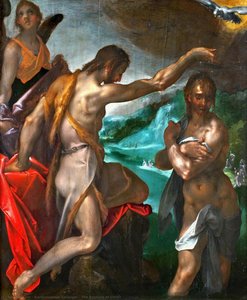
11The Fragrance (1578) door Bartholomeus SprangerThe Fragrance1578 · Bayerische Staatsgemäldesammlungen 12Saint Mary Magdalene (1578) door Bartholomeus SprangerSaint Mary Magdalene1578 · Bayerische Staatsgemäldesammlungen 13Holy Family (1578) door Bartholomeus SprangerHoly Family1578 · Bayerische Staatsgemäldesammlungen 14Lamentation of Christ (1576) door Bartholomeus SprangerLamentation of Christ1576 · Bayerische Staatsgemäldesammlungen 15Sine Cerere et Baccho friget Venus (1590) door Bartholomeus SprangerSine Cerere et Baccho friget Venus1590 · Kunsthistorisches Museum 16Mountain landscape with a scene of the early history of man (1569) door Bartholomeus SprangerMountain landscape with a scene of the early history of man1569 · Staatliche Kunsthalle Karlsruhe 17The contest between Apollo and Pan (1587) door Bartholomeus SprangerThe contest between Apollo and Pan1587 · Bayerische Staatsgemäldesammlungen 18Saint Luke painting the Virgin (1582) door Bartholomeus SprangerSaint Luke painting the Virgin1582 · Bayerische Staatsgemäldesammlungen 19The Flagellation of Christ (1586) door Bartholomeus SprangerThe Flagellation of Christ1586 · Statens Museum for Kunst 20Jael Kills Sisera (1586) door Bartholomeus SprangerJael Kills Sisera1586 · Statens Museum for Kunst 21Ecce Homo (1580) door Bartholomeus SprangerEcce Homo1580 22God the father with the holy spirit and angels (1582) door Bartholomeus SprangerGod the father with the holy spirit and angels1582 23Diana Resting after Hunt (1597) door Bartholomeus SprangerDiana Resting after Hunt1597 · Szépművészeti Múzeum 24Diana - Luna (1600) door Bartholomeus SprangerDiana - Luna1600 · Szépművészeti Múzeum 25Venus and Mercury put a blindfold over Cupid's eyes (1597) door Bartholomeus SprangerVenus and Mercury put a blindfold over Cupid's eyes1597 · Germanisches Nationalmuseum 26Portrait of Zdenko Adalbert Popel, 1st Prince Lobkowicz (1568-1628) (1600) door Bartholomeus SprangerPortrait of Zdenko Adalbert Popel, 1st Prince Lobkowicz (1568-1628)1600 · National Gallery Prague 27The Suicide of Sophonisba (1605) door Bartholomeus SprangerThe Suicide of Sophonisba1605 · National Gallery Prague 28Amor fleeing Psyche (1599) door Bartholomeus SprangerAmor fleeing Psyche1599 29Standing Nude Man (Bacchus) (1600) door Bartholomeus SprangerStanding Nude Man (Bacchus)1600 30Diana and Actaeon (1600) door Bartholomeus SprangerDiana and Actaeon1600 31Saint Barbara (1611) door Bartholomeus SprangerSaint Barbara1611 · Szépművészeti Múzeum 32Venus and Mercury (1585) door Bartholomeus SprangerVenus and Mercury1585 · Kunsthistorisches Museum 33Jupiter and Antiope (1596) door Bartholomeus SprangerJupiter and Antiope1596 · Kunsthistorisches Museum 34Allegory of Justice and Prudence (1599) door Bartholomeus SprangerAllegory of Justice and Prudence1599 · Louvre 35Venus and Adonis (1587) door Bartholomeus SprangerVenus and Adonis1587 · Rijksmuseum 36Venus and Mars warned by Mercury (1587) door Bartholomeus SprangerVenus and Mars warned by Mercury1587 · Kunsthistorisches Museum 37Hermes and Athena (1585) door Bartholomeus SprangerHermes and Athena1585 · Praagse Burcht 38Venus and Vulcan (1610) door Bartholomeus SprangerVenus and Vulcan1610 · Kunsthistorisches Museum 39Mountain landscape with a hermit (1567) door Bartholomeus SprangerMountain landscape with a hermit1567 · Staatliche Kunsthalle Karlsruhe 40Figure Studies (1575) door Bartholomeus SprangerFigure Studies1575 41Glaucus and Scylla (1582) door Bartholomeus SprangerGlaucus and Scylla1582 · Kunsthistorisches Museum 42Diana and Actaeon (1585) door Bartholomeus SprangerDiana and Actaeon1585 43Saint Margaret (1583) door Bartholomeus SprangerSaint Margaret1583 44Engelen dragen het lichaam van Christus (Engelenpietà), Bartholomeus Spranger, c. 1587 (1587) door Bartholomeus SprangerEngelen dragen het lichaam van Christus (Engelenpietà), Bartholomeus Spranger, c. 15871587 · Rijksmuseum 45The Baptism of Christ (1603) door Bartholomeus SprangerThe Baptism of Christ1603 · National Museum in Wrocław 46The Triumph of Venus (1600) door Bartholomeus SprangerThe Triumph of Venus1600 47Study of a Female Nude (Venus in a Drapery) (1605) door Bartholomeus SprangerStudy of a Female Nude (Venus in a Drapery)1605 · Nationaal Museum in Warschau 48Achelous and Deianeira (1600) door Bartholomeus SprangerAchelous and Deianeira1600 49The Adoration of the Kings (1595) door Bartholomeus SprangerThe Adoration of the Kings1595 · National Gallery 50Adoration of the Kings (1595) door Bartholomeus SprangerAdoration of the Kings1595 · National Gallery 51Mercury Carrying Psyche to Mount Olympus (1611) door Bartholomeus SprangerMercury Carrying Psyche to Mount Olympus1611 52Odysseus and Circe (1585) door Bartholomeus SprangerOdysseus and Circe1585 · Kunsthistorisches Museum 53St Wenceslas and St Vitus door Bartholomeus SprangerSt Wenceslas and St VitusNational Gallery Prague 54St Sigismund and St Adalbert door Bartholomeus SprangerSt Sigismund and St AdalbertNational Gallery Prague 55Vulcan and Maia (1575) door Bartholomeus SprangerVulcan and Maia1575 · Kunsthistorisches Museum 56Ceres and Bacchus door Bartholomeus SprangerCeres and Bacchus 57Allegory door Bartholomeus SprangerAllegoryMusée des Beaux-Arts 58Apotheosis of the Arts (Fame leading the Arts to Olympus) door Bartholomeus SprangerApotheosis of the Arts (Fame leading the Arts to Olympus)National Gallery Prague 59Faun with Wounded Foot door Bartholomeus SprangerFaun with Wounded Foot 60La Peinture, la Sculpture et l'Architecture door Bartholomeus SprangerLa Peinture, la Sculpture et l'Architecture 61Le Christ sauveur du monde door Bartholomeus SprangerLe Christ sauveur du monde 62ALLEGORIE DE LA JUSTICE door Bartholomeus SprangerALLEGORIE DE LA JUSTICELouvre 63Venus + Mercury und Amus door Bartholomeus SprangerVenus + Mercury und Amus 64Peter and John Heal a Cripple at the Gate of the Temple door Bartholomeus SprangerPeter and John Heal a Cripple at the Gate of the Temple 65Salvator Mundi door Bartholomeus SprangerSalvator Mundi 66Faith, Hope and Charity door Bartholomeus SprangerFaith, Hope and Charity 67Sarah Presenting Hagar to Abraham door Bartholomeus SprangerSarah Presenting Hagar to Abraham 68Christ blessing little children door Bartholomeus SprangerChrist blessing little children 69Female Warrior Crushing a Satyr door Bartholomeus SprangerFemale Warrior Crushing a Satyr 70Venus and Adonis (1597) door Bartholomeus SprangerVenus and Adonis1597 · Kunsthistorisches Museum 71Epitaph of Goldsmith Nicolas Müller of Prague (1592) door Bartholomeus SprangerEpitaph of Goldsmith Nicolas Müller of Prague1592 · National Gallery Prague 72Angelica and Medoro (1600) door Bartholomeus SprangerAngelica and Medoro1600 · Alte Pinakothek 73Hermaphrodite and the nymph Salmacis (1582) door Bartholomeus SprangerHermaphrodite and the nymph Salmacis1582 · Kunsthistorisches Museum 74Herakles and Omphale (1585) door Bartholomeus SprangerHerakles and Omphale1585 · Kunsthistorisches Museum

De beroemde schilderijen van Bartholomeus Spranger, periode voor periode

De onderwerpen die de aandacht van Bartholomeus Spranger troffen

De vier onderwerpen die het meest voorkomen in deze originelen, elk met zijn mooiste voorbeeld.

De musea waar de originele werken van Bartholomeus Spranger worden bewaard

De 8 musea met de meeste schilderijen op deze pagina.

Museum Stad Werken van Bartholomeus Spranger Schilderijen uit deze lijst
Kunsthistorisches Museum, WenenKunsthistorisches Museum Wenen 19 Ulysses and Circe, Allegory of Emperor Rudolf II, Hercules, Deianira, and Nessus
Bayerische Staatsgemäldesammlungen, MünchenBayerische Staatsgemäldesammlungen München 7 Mercury and Venus, The Fragrance, Saint Mary Magdalene
National Gallery Prague, PraagNational Gallery Prague Praag 6 Portrait of Zdenko Adalbert Popel, 1st Prince Lobkowicz (1568-1628), The Suicide of Sophonisba, St Wenceslas and St Vitus
Szépművészeti Múzeum, BoedapestSzépművészeti Múzeum Boedapest 3 Diana Resting after Hunt, Diana - Luna, Saint Barbara
Staatliche Kunsthalle Karlsruhe, KarlsruheStaatliche Kunsthalle Karlsruhe Karlsruhe 2 Mountain landscape with a scene of the early history of man, Mountain landscape with a hermit
Statens Museum for Kunst, KopenhagenStatens Museum for Kunst Kopenhagen 2 The Flagellation of Christ, Jael Kills Sisera
Louvre, ParijsLouvre Parijs 2 Allegory of Justice and Prudence, ALLEGORIE DE LA JUSTICE
Rijksmuseum, AmsterdamRijksmuseum Amsterdam 2 Venus and Adonis, Engelen dragen het lichaam van Christus (Engelenpietà), Bartholomeus Spranger, c. 1587

Bartholomeus Spranger door de decennia heen: elk een uniek origineel

Werken per decennium

Kies een decennium om het origineel te zien dat dit tijdperk definieert.

Schilderijen van Bartholomeus Spranger: vragen voor de galerie

Wat is het bekendste werk van Bartholomeus Spranger?Onthul het antwoord

Adoration of the Magi (1606). Ulysses and Circe (1586) en Allegory of Emperor Rudolf II (1592) volgen.

Op welke leeftijd creëerde Bartholomeus Spranger Adoration of the Magi?Onthul het antwoord

60 jaar oud: Adoration of the Magi dateert uit 1606, en Bartholomeus Spranger werd geboren in 1546.

Welke tien schilderijen van Bartholomeus Spranger zijn het meest bekend?Onthul het antwoord

Adoration of the Magi, Ulysses and Circe, Allegory of Emperor Rudolf II, Hercules, Deianira, and Nessus, Minerva Victorious over Ignorance, Self-portrait, Fall of Man, God the Father with the Holy Ghost and angels, Apollo and the Muses en Mercury and Venus. De bovenstaande ranglijst vermeldt het jaar en het museum van elk werk.

Hoeveel werken van Bartholomeus Spranger zijn er bekend?Onthul het antwoord

Onze catalogus bevat 76 werken van Bartholomeus Spranger, daterend van 1567 tot 1611.

Waar kunnen de beroemdste originelen van Bartholomeus Spranger worden bekeken?Onthul het antwoord

Voornamelijk in Kunsthistorisches Museum (Wenen), Bayerische Staatsgemäldesammlungen (München) en National Gallery Prague (Praag). De bovenstaande museumtabel bevat een volledig overzicht.

In welke periode creëerde Bartholomeus Spranger de bekendste schilderijen?Onthul het antwoord

In 1580s: 21 van de 74 werken op deze pagina werden toen gemaakt, waaronder Ulysses and Circe.

Welk beroemd schilderij van Bartholomeus Spranger is de vroegste, en welke de laatste?Onthul het antwoord

Op deze pagina is het vroegste Mountain landscape with a hermit (1567) en het laatste Saint Barbara (1611).

Welke onderwerpen had Bartholomeus Spranger de voorkeur?Onthul het antwoord

Woman (34), Man (32) en Skin (13), verspreid over de 74 werken op deze pagina.

Met welke materialen schilderde Bartholomeus Spranger het meest?Onthul het antwoord

Oil, voor 26 van de 74 werken op deze pagina.

Bij welke stroming behoort het werk van Bartholomeus Spranger?Onthul het antwoord

Northern mannerism, te oordelen aan de originelen op deze pagina.

Welke originele werken van Bartholomeus Spranger kan ik zien in het Kunsthistorisches Museum?Onthul het antwoord

Ulysses and Circe, Allegory of Emperor Rudolf II en Hercules, Deianira, and Nessus: het Kunsthistorisches Museum, Wenen herbergt 19 van de werken op deze pagina.

Bartholomeus Spranger: een portret van de kunstenaar

Bartholomeus Spranger: De Hofschilder van Eros en Majesteit

Bartholomeus Spranger (1546-1611), een naam die nog steeds doorklinkt in de wandelgangen van het Noordelijk Maniërisme, was veel meer dan louter een schilder; hij was een cruciale figuur die de artistieke sensibiliteit van zijn tijd vormgaf. Geboren in Antwerpen als zoon van een koopman met uitgebreide reizen, wees zijn vroege jeugd al de weg naar een toekomst die doordrenkt zou zijn van kunst en buitenlandse invloeden. Zijn eerste opleiding onder Jan Mandijn, Frans Mostaert en Cornelis van Dalem legde een solide fundament in de landschapsschilderkunst – een verrassend vertrekpunt voor een kunstenaar die later wereldberoemd zou worden door zijn intens sensuele weergaven van de naakte menselijke vorm. Toch was het zijn verblijf in Parijs in 1565, werkend in het atelier van Marc Duval, dat zijn artistieke traject werkelijk deed ontbranden en hem blootstelde aan geheel nieuwe technieken en perspectieven.

Vroege Invloeden en Italiaanse Reizen

De artistieke ontwikkeling van Spranger bleef niet beperkt tot de grenzen van de Nederlanden. Met grote toewijding kopieerde hij prenten van Frans Floris en Parmigianino, waarbij hij hun elegante lijnen en geraffineerde composities volledig in zich opsenpte. Cruciaal in zijn vorming waren zijn reizen naar Italië, waar hij acht maanden in Milaan en drie maanden in Parma doorbracht. In Parma ondersteunde hij Bernardino Gatti bij het ambitieuze fresco-project voor de koepel van de Santa Maria della Steccata. Deze ervaring bood hem onschatbare inzichten in technieken voor grootschalige schilderkunst en stelde hem bloot aan de bruisende artistieke scène van de Italiaanse Renaissance. Zijn verblijf in Rome bleek bijzonder vormend; hier legde hij een band met Giulio Clovio, een beroemde maniëristische schilder en ontwerper die zijn protegé werd. Het was ook in deze stad dat hij Karel van Mander ontmoette, wiens Schilder-boeck later een gedetailleerd verslag zou bieden van het leven en het werk van Spranger – een levend bewijs van de grote betekenis van de kunstenaar binnen de artistieke gemeenschap.

Het Keizerlijk Hof van Praag

De carrière van Spranger beleefde een ware apotheose toen hij in 1570 werd benoemd tot hofschilder van Paus Pius V. Toch ligt zijn meest blijvende nalatenschap in zijn dienst aan de Heilige Roomse Keizer Rudolf II, een gepassioneerd verzamelaar van zowel kunst als esoterische kennis. De verplaatsing van het keizerlijk hof naar Praag in 1581 vormde een cruciaal keerpunt voor de kunstenaar. De fascinatie van de keizer voor de klassieke oudheid, mythologie en alchemie liet een diepe stempel achter op het oeuvre van de schilder. Spranger reageerde direct op deze intellectuele voorkeuren door een oeuvre te creëren dat gedomineerd werd door voortreffelijk weergegeven naaktfiguren – vaak van achteren bekeken, wat een aura van mysterie en sensualiteit oproept. Dit waren geen louter decoratieve studies; het waren zorgvuldig geconstrueerde allegorieën die de filosofische neigingen van Rudolf II weerspiegelden en zijn verlangen om een imago van macht en verfijning uit te stralen.

Stijl en Techniek: Het Hoogtepunt van het Noordelijk Maniërisme

De stijl van Spranger vormt een essentieel voorbeeld van het Noordelijk Maniërisme, gekenmerkt door verlengde figuren, complexe houdingen en een bewuste nadruk op elegantie en verfijning. Zijn schilderijen onderscheiden zich door een vloeiende modellering, minutieuze details en een subtiel kleurgebruik. Met meesterschap verweefde hij het laat-Nederlandse realisme met Italiaanse maniëristische invloeden, in het bijzonder de Romeinse traditie van de weergave van de klassieke mythologie. Vooral zijn tekeningen bezitten een opmerkelijke energie en vrijheid – een getuigenis van zijn meesterlijke grafische vaardigheid. Het werk van Spranger is tevens opmerkelijk door zijn dynamiek, die wordt bereikt door zorgvuldig georkestreerde diagonalen en een constante suggestie van beweging binnen elke compositie. De invloed van zijn eerdere opleiding in de landschapsschilderkunst is duidelijk zichtbaar in de atmosferische achtergronden die hij vaak hanteerde, wat een extra laag van diepte en context toevoegt aan zijn figuren.

Nalatenschap en Invloed

De impact van Bartholomeus Spranger op de Europese kunst is van onschatbare waarde. Zijn schilderijen, in het bijzonder de werken die worden bewaard in het Kunsthistorisches Museum in Wenen, vormen een absoluut hoogtepunt van het Noordelijk Maniërisme. Zijn oeuvre diende als een bron van inspiratie voor opeenvolgende generaties kunstenaars, waaronder die in de Nederlandse Republiek, waar zijn stijl op grote schaal werd verspreid via prenten en door kunstenaars die met hem hadden samengewerkt. De minutieuze details en de sensuele aantrekkingskracht van zijn naakten blijven tot op de dag van vandaag de toeschouwer betoveren, wat de positie van Spranger als een meester in zijn vak en een significante figuur in de geschiedenis van de westerse kunst definitief bezegelt. Zijn levensverhaal is er een van artistieke evolutie, gevormd door uiteenlopende invloeden en uiteindelijk gedefinieerd door zijn unieke visie—een visie die erotiek, allegorie en keizerlijke grandeur naadloos met elkaar verweefde.