Voorvertoning
 Verstuur
 Delen
Delen
 Details bekijken
 Gids
Gids

 Download
 Vergelijkbare items
 Röntgenonderzoek
 Diavoorstelling
 Vraag & antwoord
 Statistieken
Bomen en Wortelgroei


 Lees meer
Giclée / Kunstafdrukken
Giclée- of canvasafdruk van museumkwaliteit met een snelle productie en flexibele afwerkingsmogelijkheden. ( Bestel handgeschilderde reproductie Schakel over naar digitale afbeeldingen)




P118B €10

P118H €10

P118W €10

P438Z €10

P508JH €12

P508YH €12

P805H €10

P805Z €10

P919BZ €10

P919G €10

P919XJ €10

P959ZH €10

P968JZ €12

W106C €8

W218G €10

W218JH €8

W218Y €10

W307PJ €10

W316G €10

W316PJ €8

W316Y €10

W398PJ €8

W4111J €10

W500HY €15

W500JH €15

W692G €12

W849H €8

W940BG €15

W953PJ €8




Kies uit onze vooraf ingestelde maten die overeenkomen met de originele verhoudingen van het kunstwerk.

Voer de gewenste breedte en hoogte in, passend bij uw lijst of muur. Een afdruk kan alleen worden ingekort en nooit groter worden gemaakt dan het origineel; een formaat met andere verhoudingen zal daarom een deel van de afbeelding verliezen. Wij sturen u een digitaal mockup ter goedkeuring voordat we tot drukwerk overgaan. De afbeelding op deze pagina toont niet de werkelijke uitsnede — dit is alleen te zien op het mockup.
Wereldwijde levering () binnen 2 weken in plaats van de standaard 4/5 weken. (9 november)

Gratis wereldwijde expressverzending

Hoogwaardig linnen canvas

Volledige verzendverzekering

Garantie op terugbetaling van invoerrechten

Garantie op exacte kleurweergave

Retourbeleid van 100 dagen (alleen bij defecten)

100% Geld-terug-garantie

Korting bij meerdere afnames
 De optie voor glas is alleen beschikbaar bij een formaat kleiner dan 110 cm.

Bomen en Wortelgroei
Giclée / Kunstafdrukken
Afmetingen reproductie
-


Eindtotaal
€ 72
Een Symphonie van Groen: Het Ontluisteren van Vincent van Goghs “Bomen en Wortelgroep”
Vincent van Goghs “Bomen en Wortelgroep”, geschilderd in 1887, is niet zomaar een weergave van een bosrijk gebied; het is een onderdompelende ervaring. Deze olieverf op doek transporteert de toeschouwer naar een beschaduwde boomgaard, pulserend met leven en doordrenkt met de diepgevoelde verbinding van de kunstenaar met de natuur. Ver verwijderd van een eenvoudige landschapsschilderij, verraadt dit werk Van Goghs kenmerkende stijl uit de vroege periode – een vurige explosie van kleur en textuur die volmaakt spreekt over zijn emotionele staat en zijn innovatieve benadering om licht en vorm vast te leggen. Het schilderij trekt direct de aandacht met zijn intense groentinten, variërend van de diepe schaduwen onder het bladerdak tot de helderdere accenten die dansen op bladeren en takken. Het is een getuigenis van Van Goghs vermogen om diepte en atmosfeer te creëren door middel van een schijnbaar eenvoudig onderwerp.
De compositie zelf is zorgvuldig georkestreerd. Een reeks bomen, geschilderd met dikke, impasto penseelstreken, receden in de verte, waardoor een overtuigend gevoel van ruimtelijke diepte ontstaat. Let op hoe Van Gogh niet elke blad of tak gedetailleerd weergeeft; hij gebruikt in plaats daarvan korte, afgebroken streken om vorm en textuur aan te duiden, wat het tafereel een bijna onrustige energie geeft. Een subtiele vogel die op één van de takken zit, voegt een vleugje leven en beweging toe, verankert de compositie en nodigt tot contemplatie uit. Het gevlekte licht dat door het bladerdak filtert – Van Gogh gebruikt meesterlijk contrasterende kleuren en waarden om het spel van zonlicht en schaduw te oproepen, waardoor een dynamisch en helder effect ontstaat.
Het Ontcijferen van de Post-Impressionistische Palette
"Bomen en Wortelgroep" is een kenmerkend voorbeeld van Van Goghs evoluerende stijl tijdens zijn Parijse periode. Door blootgesteld aan het focus op vluchtige momenten van licht en kleur van de Impressionisten, ging hij verder dan alleen observatie, door zijn eigen intense emoties en subjectieve ervaring in zijn werk te injecteren. De gedurfde, levendige kleuren – met name de groenen, gelellen en bruintinten – zijn verre van naturalistisch; ze worden doelbewust versterkt om Van Goghs innerlijke wereld uit te drukken. Deze techniek sluit aan bij de bredere trends van Post-Impressionisme, waar kunstenaars probeerden verder te gaan dan objectieve representatie en het expressieve potentieel van kleur en vorm te verkennen.
Het schilderij’s penseelwerk is even belangrijk. Van Gogh gebruikte een kenmerkende “gebroken” stijl, waarbij hij verf aanlegde in korte, afzonderlijke streken die optisch overlappen en mengen. Deze techniek creëert een gevoel van beweging en textuur, wat bijdraagt aan de algehele dynamiek van het schilderij. Het is een groot verschil met de gladde, vermengde oppervlakken die door veel vroegere schilders werden verkiest; in plaats daarvan zijn Van Goghs penseelstreken zichtbaar en doelbewust, waardoor hij zijn actieve betrokkenheid bij het onderwerp uitdrukt.
Een Venster in een Kunstenaars’ Ziel
Schilderij uit 1887, biedt “Bomen en Wortelgroep” een fascinerend blik op Van Goghs artistieke ontwikkeling. Deze periode markeerde een overgang voor hem, terwijl hij experimenteerde met nieuwe technieken en onderwerpen, vaak geïnspireerd door de natuurlijke wereld. Het schilderij weerspiegelt zijn groeiende interesse in het vastleggen niet alleen van het uiterlijk van dingen, maar ook van hun emotionele resonans. Het is onderdeel van een reeks werken bekend als “sous-bois”, of wortelgroep schilderijen, die Van Gogh tijdens deze tijd creëerde, waarbij hij de texturen en kleuren van bossen en tuinen verkende.
Interessant is dat de historische context iets onthult over Van Goghs geestestoestand. Hij worstelde met persoonlijke problemen en psychische uitdagingen op het moment, en zijn kunst diende vaak als een manier om deze complexe emoties te uiten. “Bomen en Wortelgroep” kan worden geïnterpreteerd als een weerspiegeling van zijn verlangen naar vrede en verbinding met de natuur – een schuilplaats tegen de chaos in.
Het Brengen van Van Goghs Visie Thuis
OriginalUniqueArt biedt zorgvuldig vervaardigde, handgeschilderde reproducties van “Bomen en Wortelgroep”, waarmee u de schoonheid en emotionele diepte van dit iconische meesterwerk in uw eigen huis kunt ervaren. Onze bekwame kunstenaars reproduceren Van Goghs kenmerkende penseelwerk en levendige palet met buitengewone precisie, waardoor de essentie van zijn artistieke visie wordt vastgelegd. Of u nu een kunstliefhebber, verzamelaar of gewoon op zoek bent naar een vleugje tijdloze elegantie voor uw interieurdecoratie, onze reproducties bieden een prachtig en authentiek representatie van dit geliefde werk.
Verken vandaag nog onze collectie en breng de sereniteit van Van Goghs “Bomen en Wortelgroep” in uw ruimte. Lees hier meer over dit kunstwerk.
Veelgestelde vragen
Hoe kan ik de afbeelding van "Bomen en Wortelgroei" door Vincent Van Gogh downloaden?
"Bomen en Wortelgroei" door Vincent Van Gogh kan worden gedownload via de Downloaden-pagina van het kunstwerk, als een digitale afbeelding in hoge resolutie om te downloaden.
Wat stelt "Bomen en Wortelgroei" voor en welke sfeer straalt het uit?
"Bomen en Wortelgroei" toont bomen, ondergroei, bos, van gogh, natuur, schildertechnieken, kleur, compositie en de vastgelegde stemming is Sereniteit.
Hoe groot is het contrast in "Bomen en Wortelgroei" door Vincent Van Gogh?
Het licht-donkercontrast van "Bomen en Wortelgroei" wordt weergegeven als Zacht. Contrast beschrijft hoe sterk de lichte en donkere vlakken van elkaar verschillen.
Biografie kunstenaar
Het Leven van Vincent Willem Van Gogh
Vincent Willem Van Gogh werd geboren op 30 maart 1853 in Zundert, Nederland. Hij was de oudste van zes kinderen uit het huwelijk van Theodorus en Anna Carbentus. Zijn komst werd gevolgd door een stilgeboren broer genaamd Vincent, die precies een jaar eerder was geboren. De familie woonde in de Brabantse regio, waar het landschap en de verstilde ritmes van het rurale leven een diepe indruk achterlieten op zijn vroege jaren. Zijn broer Theo werd geboren op 1 mei 1857, en hun onderlinge band zou een constante factor blijven in de vele brieven die zij gedurende de jaren uitwisselden.
Zijn leven werd gekenmerkt door een voortdurende zoektocht naar een plek waar hij echt kon thuishoren. Hij doorliep diverse rollen, van werkzaamheden in kunstgalerieën tot zijn tijd als missionaris, voordat hij zich uiteindelijk volledig aan het canvas wijdde. Dit pad was verre van eenvoudig. Hij werd geconfronteerd met perioden van diepe isolatie en mentale strijd die als een schaduw over zijn werk bleven liggen. Uiteindelijk bewoog hij zich door het licht van Zuid-Frankrijk en de stilte van Saint-Rémy, voordat zijn leven een einde vond in Auvers-sur-Oise, Frankrijk. Hij overleed op 29 juli 1890, op 37-jarige leeftijd, aan de gevolgen van een zelfveroorzaakte schotwond in de borst.
Het Vroege Leven, Familie en Vorming
Het verstilde dorpje Zundert in de provincie Noord-Brabant was de geboorteplaats van Vincent Willem Van Gogh. Als tweede zoon van Theodorus van Gogh, een protestantse predikant, en Anna Carbentus, werd hij gevormd door het ritme van het dorpsleven en de vele wandelingen door het omringende landschap. Op elfjarige leeftijd werd hij naar een kostschool in Zevenbergen gestuurd, een ervaring die hij als moeilijk en ongelukkig ervoer. Tegen zijn dertiende verhuisde hij naar Tilburg voor het middelbaar onderwijs, hoewel hij de school halverwege zijn tweede leerjaar verliet om redenen die tot op de dag van vandaag een mysterie blijven.
Zijn professionele pad begon dankzij de connecties van zijn oom. Op zestienjarige leeftijd begon hij als stagiair bij de vestiging van Goupil & Cie in Den Haag. Deze rol bracht hem in voortdurend contact met het werk van andere meesters. In 1873 verhuisde hij naar de Londense vestiging van Goupil & Cie, waar hij tot mei 1875 bleef. Zijn werk leidde hem steeds dieper het hart van de kunsthandel in, toen hij in mei 1875 naar de Parijse vestiging van hetzelfde bedrijf vertrok. Hij bleef in Parijs tot april 1876. Gedurende deze jaren onderhield hij een groeiende correspondentie met zijn jongere broer, Theo, die eveneens werkzaam was binnen het netwerk van Goupil & Cie.
De zoektocht naar een doel
Voordat de penselen en de dikke lagen olieverf zijn leven vormgaven, was er een lange periode van zoeken naar een plek in de wereld. Hij bewoog zich door verschillende levens, waarbij hij diverse rollen testte om te zien welke hem werkelijk zou vasthouden. Hij werkte als kunsthandelaar, diep geworteld in de handel, en probeerde later zijn geluk in het onderwijs. Deze jaren werden gekenmerkt door een rusteloze beweging van de ene roeping naar de andere, een voortdurende zoektocht naar een richting die steeds buiten bereik bleef.
In Engeland werkte hij als taalleraar en als lekenprediker. Deze periode van religieuze zoektocht leidde hem in de winter van 1879–80 naar de Borinage in België. Daar leefde hij onder het volk als evangelist, met de oprechte intentie om een gemeenschap te dienen door zijn geloof. Hij leidde in die jaren een bestaan van eenzaamheid en strijd, waarbij hij vaak werd geconfronteerd met het gewicht van zijn eigen overtuigingen en de harde realiteit van zijn omgeving.
Pas toen hij 27 jaar oud was, richtte hij zijn volledige focus eindelijk op de schilderkunst. Deze beslissing kwam voort uit jaren van zoeken in andere beroepen, waaronder zijn tijd als missionaris. Met een late start begon hij de instrumenten van zijn ambacht te beheersen, waarbij hij de rollen van leraar en prediker achter zich liet om zich definitief te nestelen in het leven van een kunstenaar.
De Parijse Periode en Artistieke Ontwaking
In 1886 bracht de verhuizing naar Parijs een fundamentele verandering teweeg in de manier waarop hij licht en kleur waarnam. De stad bracht hem in contact met het impressionisme en het postimpressionisme, waardoor zijn focus verschoof van de donkere, zware tonen uit zijn eerdere jaren naar een geheel nieuw spectrum. Hij besteedde kostbare tijd aan het absorberen van de technieken van meesters als Monet, Renoir en Pissarro. Zijn palet begon op te lichten; de sombere, aardse kleuren uit zijn tijd in Nederland maakten plaats voor een nieuwe visie op de wereld, gevangen in licht en dynamische penseelstreken.
Hij bewoog zich door de kringen van de avant-garde en ontmoette figuren zoals Émile Bernard en Paul Gauguin. Deze ontmoetingen waren meer dan louter sociale interacties; ze vormden deel uit van een voortdurende uitwisseling van ideeën over de vraag hoe de wereld op een plat vlak gerepresenteerd kon worden. Hij bestudeerde de gedurfde contouren en de vlakke kleurvelden van Japanse prenten, die hij samen met zijn broer Theo verzamelde. Deze periode was een tijdperk van snelle technische transformatie, waarin zijn penseelvoering losser werd en zijn kleurgebruik directer en krachtiger.
Onder de werken uit deze vormende jaren vallen onder andere:
- Skull with Burning Cigarette (1886)
- Le Moulin de la Galette (1886)
De Creatieve Explosie in Arles
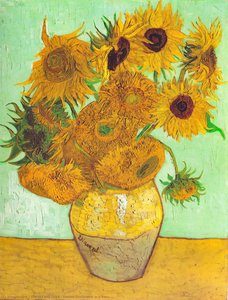
De verhuizing naar Arles in 1888 bracht een fundamentele verandering in het licht met zich mee. De zon van Zuid-Frankrijk leek het palet te doen ontbranden, wat leidde tot een periode van ongekende artistieke productiviteit. Hij bracht de verf dik aan met een impasto-techniek die een tastbare textuur creëerde, waardoor het canvas bijna een sculpturaal karakter kreeg. Dit was de tijd van de zonnebloemen, waarin hij werkte aan verschillende versies van bloemen in een vaas, en de diepgaande studies van het nachtcafé. De kleuren werden verzadigder en bewogen zich weg van de sombere, aardse tonen uit zijn eerdere jaren.
In zijn zoektocht naar een gemeenschap voor kunstenaars nodigde hij Paul Gauguin uit om zich bij hem in Arles te voegen. Zijn droom was het stichten van een utopische kolonie waar schilders samen konden leven en werken. Deze periode van samenwerking werd echter getekend door spanning. Een dramatische confrontatie tussen de twee mannen leidde uiteindelijk tot het moment waarop Van Gogh zijn eigen oor verwondde. Deze gebeurtenis markeerde een omslag in zijn mentale toestand en leidde tot een periode van opname in een inrichting.
- Zonnebloemen (1888)
- Het Nachtcafé (1888)
- Sterrennacht boven de Rhône (1888)
De latere jaren in Saint-Rémy en Auvers
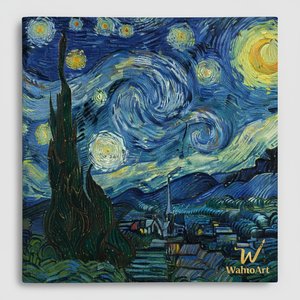
Na zijn tijd in Arles trok Vincent Van Gogh zich terug in een inrichting in Saint-Rémy. Tijdens deze periode richtte hij zijn aandacht op de omringende landschappen, waarbij hij de beweging van de hemel en de aarde vastlegde in meesterwerken zoals Sterrennacht. De penseelstreken in dit werk dragen een ritmische, kolkende energie in zich, een directe reflectie van de omgeving die hij vanuit zijn venster observeerde. Hij bleef met een enorme vruchtbaarheid schilderen en vond een manier om de innerlijke spanning van zijn omgeving te vertalen naar het canvas.
Uiteindelijk verhuisde hij naar Auvers-sur-Oise, waar hij onder de zorg van Dr. Paul Gachet verbleef. Deze periode werd gekenmerkt door een voortdurende poging om het licht en de velden van het Franse platteland te vangen. Toch bleven zijn innerlijke strijd en de schaduwen in zijn geest onveranderd aanwezig. Op 29 juli 1890, op de leeftijd van 37 jaar, kwam er een einde aan zijn leven in Auvers-sur-Oise, Frankrijk, als gevolg van een zelfveroorzaakte schotwond in de borst.
- Sterrennacht
- Korenveld met raven
- De kerk in Auvers
- Oude man in droefenis
Techniek en Artistieke Stijl
De verf op het canvas ligt vaak in dikke, zware richels. Deze impasto-techniek zorgt ervoor dat de penseelstreken niet louter kleurvlakken zijn, maar fysieke lagen die het licht vangen en breken. Hij bracht de olieverf aan met een gevoel van urgentie, waardoor een getextureerde oppervlakte ontstond die een rusteloze energie uitstraalt. Deze sporen zijn vaak impulsief en dramatisch, waarbij de beweging van het onderwerp de boventoon voert boven de strikte lijnen van een schets. Hij streefde niet naar een fotografische gelijkenis van de wereld; in plaats daarvan gebruikte hij kleur en vorm om een subjectieve ervaring over te brengen, waarbij de intensiteit van een gevoel altijd prioriteit kreeg boven de objectieve realiteit van een scène.
Zijn palet onderging een transformatie naarmate zijn methoden evolueerden. Hij bewoog zich weg van de gedempte, aardse tinten uit zijn vroege jaren naar een gebruik van gedurfde, verzadigde kleuren. Dit werd deels gedreven door zijn fascinatie voor Japanse houtsnedes, zoals die van Hiroshige. Van deze prenten leerde hij het gebruik van vlakke kleurvlakken en opvallende composities. Ook nam hij het gebruik van krachtige contouren en ongebruikelijke perspectieven over. Deze invloed hielp hem richting een stijl te bewegen waarin kleur werd ingezet om innerlijke gemoedstoestanden uit te drukken, in plaats van enkel het natuurlijke licht van een landschap te beschrijven.
- De Aardappeleters (1885)
- Zonnebloemen (1888)
- De Sterrennacht (1889)
- Iris (1889)
Belangrijke Werken en Meesterwerken
In 1885 zat hij verloren in de zware, donkere tonen van het Nederlandse platteland, waarbij hij De Aardappeleters schiep. De verf is hier dik aangebracht, waardoor de ruwe texturen van het aardewerk en de vermoeide gezichten van degenen die rond de tafel zaten, tastbaar worden. Het is een studie van aarde en schaduw, waarin het licht lijkt te vechten tegen de somberheid van de kamer. Deze periode toont een man die met een scherp oog kijkt naar de rauwe realiteit van handarbeid, waarbij hij een sober palet gebruikt om het leven van de arbeidersklasse te weerspiegelen.
Het licht veranderde ingrijpend toen hij naar het zuiden trok. In 1888 richtte hij zijn aandacht op de Zonnebloemen-serie, waarbij hij aan verschillende versies werkte om een kamer in Arles te decoreren. Deze doeken maken gebruik van een zware impasto-techniek, waarbij de verf zo dik is aangebracht dat het een eigen fysiek reliëf creëert. De gele tinten zijn helder en direct, aangebracht met een ritmische energie die de bloemblaadjes doet aanvoelen alsof ze nog steeds in beweging zijn. Dit was een tijdperk van intense kleur, een breuk met de gedempte bruintinten uit zijn eerdere jaren.
Tegen 1889 had zijn penseelstreek een kolkende, rusteloze kwaliteit gekregen. De Sterrennacht toont deze beweging door middel van diepblauwe tinten en pulserend geel, wat een lucht creëert die leeft van beweging. Later, in 1890, schilderde hij De Kerk in Auvers, waarbij hij de architectuur van het dorp vastlegde onder een weidse, open hemel. Zijn laatste werken weerspiegelden vaak het landschap om hem heen, of het nu de korenvelden waren of de stille hoekjes van een dorp, altijd getekend door diezelfde zichtbare, zware applicatie van olieverf.
- De Aardappeleters (1885)
- Zonnebloemen-serie (1888)
- De Sterrennacht (1889)
- De Kerk in Auvers (1890)
Nalatenschap en Blijvende Invloed
De enorme omvang van zijn invloed werd pas echt duidelijk in het begin van de twintigste eeuw. Zijn unieke benadering van kleur en vorm plaveide de weg voor het expressionisme, waarbij de kunst zich losmaakte van de noodzaak om de fysieke wereld louter te spiegelen. In plaats daarvan verschoof de focus naar het innerlijke; het canvas werd een medium om te communiceren wat men voelt, in plaats van enkel wat men ziet. Deze verschuiving veranderde de manier waarop talloze kunstenaars naar hun werk keken, waarbij de subjectieve ervaring van het individu de boventoon kreeg.
Veel van wat we vandaag de dag weten over zijn oeuvre is te danken aan de onvermoeibare inzet van Johanna van Gogh-Bonger. Na zijn dood zette zij zich met passie in om ervoor te zorgen dat zijn schilderijen niet alleen gezien, maar ook begrepen zouden worden. Zij beheerde zijn nalatenschap en promootte zijn kunst, waardoor zijn reputatie groeide tot ver buiten de kleine kring van mensen die hem tijdens zijn leven kenden. Zonder haar toewijding zou de enorme breedte van zijn creatieve output wellicht verborgen zijn gebleven in privécollecties, of verloren zijn gegaan in de schaduwen van zijn persoonlijke strijd.
Hij wordt vaak herinnerd als een tragische figuur, een man wiens leven werd getekend door mentale kwetsbaarheid en armoede. Deze perceptie is een integraal onderdeel van zijn geschiedenis geworden, waarbij het soms de technische discipline overschaduwt die hij met zoveel precisie op zijn doeken toepaste. Zijn verhaal blijft onlosmakelijk verbonden met de spanning tussen zijn persoonlijke lijden en de intense, ritmische energie die hij achterliet in zijn olieverfwerken. Zijn plek in de kunstgeschiedenis wordt gedefinieerd door dit snijvlak: de botsing tussen een moeizaam bestaan en een vruchtbaar, transformerend oeuvre dat de wereld voorgoed veranderde.
Waar u zijn meesterwerken vandaag de dag kunt bewonderen
Om de tastbare sporen van zijn expressieve penseelstreken in het echt te ervaren, kan men reizen naar verschillende vooraanstaande collecties. Het Kröller-Müller Museum in Otterlo herbergt de grootste concentratie van zijn werk, met maar liefst 143 stukken die daar bewaard worden. Het Van Gogh Museum in Amsterdam volgt met een indrukwekkende collectie van 100 werken. Deze collecties bieden de unieke kans om van dichtbij te zien hoe zijn stijl transformeerde: van de sombere, aardse tonen uit zijn vroege jaren naar de dikke, pasteuze impasto-techniek die zijn latere leven kenmerkte.
Andere significante groepen van zijn schilderijen zijn ondergebracht in grote internationale musea. Het Musée d'Orsay in Parijs bevat 22 werken. Aan de andere kant van de Atlantische Oceaan, in het Metropolitan Museum of Art in New York, bevindt zich een collectie van 15 stukken. Deze locaties bieden elk een ander perspectief op zijn artistieke evolutie, van zijn vroege, rauwe weergaven van het boerenleven tot de kolkende, dynamische luchten uit zijn laatste jaren.
- De Aardappeleters (1885)
- Zonnebloemen (1888)
- De Sterrennacht (1889)
- De Kerk in Auvers (1890)
- Korenveld met Kraaien (1890)
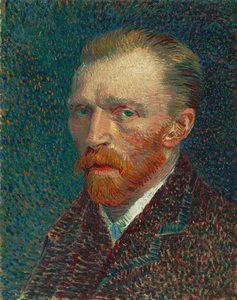
Vincent Van Gogh
1853 - 1890 , Nederland
Belangrijkste feiten
- Artistic Movement Or Style: Post-Impressionisme
- Artists Or Movements Influenced By This Artist:
- Expressionisme
- Fauvisme
- Artists Who Influenced This Artist:
- Rembrandt
- Millet
- Date Of Birth: 30 maart 1853
- Date Of Death: 29 juli 1890
- Full Name: Vincent Willem van Gogh
- Nationality: Nederlands
- Notable Artworks:
- Pommes de terre
- Zonnebloemen
- Sterrennacht
- Place Of Birth: Zundert, Nederland
Gerelateerde artikelen

Rembrandt's Meesterwerken: De Top 25 – Kunst voor uw Interieur | OriginalUniqueArt
Ontdek de 25 meest iconische schilderijen van Rembrandt van Rijn! Duik in de Gouden Eeuw, bewonder zijn portretten & zelfportretten. Museumkwaliteit reproducties voor uw interieur op OriginalUniqueArt.com. Bekijk de collectie!

Top 10 Meesterwerken van de Vroege Nederlandse Schilderkunst | OriginalUniqueArt
Ontdek de 10 meesterwerken van Jan van Eyck, Rogier van der Weyden & andere Vlaamse Primitieven. Duik in de rijke symboliek en olieverfschilderijen van de Vroege Nederlandse Schilderkunst. Vind museumkwaliteit reproducties op OriginalUniqueArt.com!

Decoding Impasto: The Emotional Power and Texture of Van Gogh's Brushstrokes
Explore the profound emotional depth of Van Gogh's impasto technique. Discover how his sculptural brushstrokes and textured oil layers define Post-Impressionism through an expert art-historical lens, perfect for discerning collectors and fine art enthusiasts.
Decoding Van Gogh's Turmoil: OriginalUniqueArt’s Masterful Reproductions of Emotional Depth
Discover exquisite Van Gogh reproductions from OriginalUniqueArt – expert art specialists offering museum-quality prints & custom paintings. Trust our authentic process and elevate your collection today.

Top 10 Post-Impressionistische Meesterwerken: Kunst die de Geschiedenis Schreef | OriginalUniqueArt.nl
Ontdek de 10 meest iconische meesterwerken van het Post-Impressionisme! Van Gogh, Monet, Cézanne en meer. Leer over hun technieken & emoties achter deze tijdloze kunst. Museumkwaliteit reproducties op OriginalUniqueArt.com – Kunst voor uw interieur.