Pop Art/Conceptual art · 1962
Objectivity (Sol Lewitt, 1962)
Sol Lewitt (1928–2007) maakte Objectivity. Het dateert uit 1962. Het behoort tot de Pop Art/Conceptual art-stroming. Het is gemaakt van Mixed Media. De afmetingen zijn 128 × 128 cm.
- 1962
- Mixed Media
- 128 × 128 cm

 Voorvertoning

 Met de hand geschilderd olieverfwerk
 Verstuur
 Delen
 Informatieblad


 Download
 Vergelijkbare items
 Röntgenonderzoek
 Diavoorstelling
 Vraag & antwoord

 Statistieken
Objectivity, in het kort
- Titel
- Objectivity
- Kunstenaar
- Sol Lewitt (1928–2007)
- Geboren in [jaar]
- Hartford, Verenigde Staten
- Datum
- 1962
- Medium
- Mixed Media
- Afmetingen
- 128 × 128 cm
- Beweging
- Pop Art/Conceptual art
- Periode
- Modern
- Onderwerp
- grid, text, minimalism, conceptual, repetition, objectivity
Wat stelt Objectivity voor?
Objectivity by Sol LeWitt: A Grid of Conceptual Precision
Sol LeWitt's "Objectivity," created in 1962, is a seminal work within the realms of Minimalism and Conceptual Art. This striking piece challenges traditional notions of artistic representation, prioritizing idea and system over subjective expression or illusionistic depiction. Measuring an impressive 128 x 128 cm, it commands attention with its rigorous structure and deliberate repetition.
Composition and Technique: A Three-Dimensional Grid
"Objectivity" presents as a square canvas meticulously divided into a three-dimensional grid of twenty-five squares. Each row contains five squares across and five down. The word "OBJECTIVITY," rendered in bold blue capital letters, is repeated five times across the rows. However, it's not simply a straightforward repetition. Each square displays two letters – “OB,” “JE,” “CT,” and “IV” – with the rightmost squares completing the word “ITY.” A key element of the work lies in its layering: the top row projects outward from the canvas surface, while subsequent rows recede further back, creating a subtle illusion of depth. The background color shifts progressively from orange in the upper row to increasingly darker shades of red as one descends, contributing to a sense of diminishing visibility and an overall darkening effect.
Style and Historical Context: Minimalism and Conceptualism
“Objectivity” emerged during a pivotal period in art history. The late 1950s and early 1960s witnessed the rise of Minimal Art, which rejected Abstract Expressionism’s emphasis on gesture and emotion, favoring instead geometric forms, industrial materials, and a reduction to essential elements. Simultaneously, Conceptual Art began to gain momentum, prioritizing the idea behind the artwork over its physical manifestation. LeWitt's work brilliantly embodies both movements. "Objectivity" exemplifies Minimalism through its grid structure, precise geometry, and serial repetition. It aligns with Conceptualism by foregrounding the underlying concept – in this case, a meditation on objectivity itself – and minimizing the artist’s hand in the final product. The systematic nature of the piece reflects LeWitt's interest in mathematical principles and logical systems.
Symbolism and Emotional Impact: Questioning Perception
The title "Objectivity" is inherently provocative, given the work's visual complexity and layered construction. By repeatedly presenting the word within a receding grid, LeWitt seems to question the very notion of objective truth or perception. The darkening effect as one descends suggests that objectivity becomes increasingly elusive, obscured by layers of interpretation and perspective. The rigid structure can evoke feelings of detachment, artificiality, and even a subtle unease. While seemingly impersonal, "Objectivity" invites viewers to contemplate the complexities of seeing and understanding, prompting reflection on how our perceptions are shaped by context and distance.
Materials and Legacy
LeWitt utilized mixed media in “Objectivity,” primarily employing cardboard or similar rigid material painted with acrylics. The choice of materials reinforces the work's industrial aesthetic and its rejection of traditional artistic techniques. "Objectivity" remains a significant piece within LeWitt’s oeuvre, demonstrating his pioneering approach to artmaking and solidifying his place as a key figure in 20th-century art. Its influence can be seen in subsequent generations of artists exploring conceptual frameworks and systematic processes.
Hoogwaardige afbeeldingen van Objectivity
Protected by copyright: these files are for personal reference, not a licence to republish.
Sol Lewitt, Objectivity (1962).
Vragen over Objectivity, beantwoord
In welk jaar werd "Objectivity" door Sol Lewitt gemaakt?
"Objectivity" dateert uit 1962. Deze datum plaatst het werk binnen de carrière van Sol Lewitt en het betreffende tijdperk.
Met welke techniek is "Objectivity" door Sol Lewitt vervaardigd?
"Objectivity" is uitgevoerd in Mixed Media.
Wat zijn de afmetingen van het originele "Objectivity" door Sol Lewitt?
"Objectivity" heeft in zijn originele vorm de afmetingen 128 x 128 cm. De originele afmetingen dienen als een handig referentiepunt bij het kiezen van de juiste afmeting voor een reproductie.
Wat stelt "Objectivity" door Sol Lewitt voor?
"Objectivity" door Sol Lewitt toont: grid, text, minimalism, conceptual, repetition, objectivity, geometric.
Is de afbeelding van "Objectivity" door Sol Lewitt vrij van auteursrecht?
"Objectivity" door Sol Lewitt valt onder nog steeds auteursrechtelijk beschermd. Deze status bepaalt hoe de afbeelding van het werk mag worden gereproduceerd.
Aan welke kunstenaar wordt "Objectivity" toegeschreven?
De kunstenaar achter "Objectivity" is Sol Lewitt. Het werk is gecatalogiseerd onder de naam van Sol Lewitt.
Bij welke kunststroming behoort "Objectivity" door Sol Lewitt?
De kunststroming die verbonden is aan "Objectivity" door Sol Lewitt is Pop Art/Conceptual art. Deze classificatie plaatst het werk binnen een context van verwante kunstenaars en kunstwerken.
Tot welke periode in de carrière van Sol Lewitt behoort "Objectivity"?
"Objectivity" behoort tot de Mature Period in de carrière van Sol Lewitt. Deze classificatie plaatst het werk in de context van de ontwikkeling van de kunstenaar.
Hoe oud was Sol Lewitt toen "Objectivity" werd gemaakt?
Sol Lewitt maakte "Objectivity" op 34-jarige leeftijd. De kunstenaar werd geboren in 1928 en het werk dateert uit 1962.
Over de kunstenaar, Sol Lewitt

1928–2007, Verenigde Staten
Sol Lewitt
De Architect van Ideeën: Het Leven en de Nalatenschap van Sol LeWitt In het uitgestrekte landschap van het modernisme van de twintigste eeuw werpt weinig figuren een zo lange of intellectueel diepgaande schaduw als Solomon LeWitt. Geboren op 9 september 1928 in Hartford, Connecticut, in een gezin van Joodse immigranten uit Rusland, werd de reis van LeWitt bepaald door het streven naar pure gedachte boven louter fysieke uitvoering. Zijn vroege jaren werden gevormende door een rigoureuze analytische nieuwsgierigheid, een eigenschap die werd gevoed door zijn studies aan de Syracuse University tussen 1945 en 1949. Deze academische basis in de wiskunde en meetkunde zou later het kloppende hart van zijn artistieke taal worden, waardoor hij de decoratieve excessen van de traditionele kunst kon wegsnijden om de skeletachtige schoonheid van logica en structuur te onthullen.
Ook van Sol Lewitt
 Serial Project #1 ABCD1966
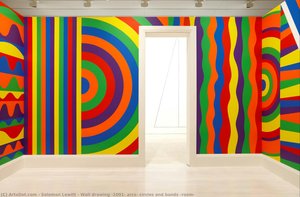 Wall drawing #1091: arcs, circles and bands (room)2003
 Distorted Cubes Bozuk Küpler
 Wall Drawing #3911983
Essays over Objectivity
 Geometry with Purpose: Distinguishing Suprematism from ConstructivismMaster the differences between Suprematism and Constructivism with our expert guide. Discover the soul of the Russian avant-garde now.
 Beyond the Object: Top 10 Masterpieces of Conceptual ArtExplore 10 iconic works of Conceptual Art by Duchamp and Ono. Discover the power of ideas on OriginalUniqueArt.com.
 Expressionism vs. New Objectivity: Emotion vs. Precision in German ArtMaster the tension between Expressionist emotion and New Objectivity precision. Explore the soul of German modern art now.