Minimalism · 1966
Serial Project #1 ABCD (Sol Lewitt, 1966)
Sol Lewitt (1928–2007) maakte Serial Project #1 ABCD. Het dateert uit 1966. Het behoort tot de Minimalism-stroming. Het is gemaakt van Sculpture. Het is te vinden in MoMA - Museum of Modern Art in New York City, Verenigde Staten van Amerika.
- 1966
- Sculpture
- MoMA - Museum of Modern Art, New York City

 Met de hand geschilderd olieverfwerk
 Verstuur
 Delen
 Informatieblad


 Download
 Vergelijkbare items
 Diavoorstelling
 Vraag & antwoord

 Statistieken
Serial Project #1 ABCD, in het kort
- Titel
- Serial Project #1 ABCD
- Kunstenaar
- Sol Lewitt (1928–2007)
- Geboren in [jaar]
- Hartford, Verenigde Staten
- Datum
- 1966
- Medium
- Sculpture
- Te zien in
- MoMA - Museum of Modern Art, New York City, Verenigde Staten van Amerika
- Beweging
- Minimalism
- Periode
- Modern
- Onderwerp
- cubes, prisms, grid, white, black, geometric shapes
Wat stelt Serial Project #1 ABCD voor?
The Logic of Form
A systematic arrangement of white cubes and rectangular prisms occupies a grid-like base, set against a stark black void. This geometric composition, titled Serial Project #1 ABCD, functions as an architectural exploration of structure and seriality. Rather than representing a specific building, the work investigates the permutations of simple shapes. The arrangement follows a predetermined algorithm, where the placement of each element is dictated by a logical sequence rather than subjective intuition. Precision and order define the visual field, stripping away decorative excess to reveal a skeletal, mathematical beauty.
Materiality and Method
The work emerged in 1966, a period when the boundaries between Minimalism and Conceptual Art were being actively redefined. The piece utilizes a specific set of materials and processes to achieve its clinical aesthetic:
- Baked enamel on steel units over baked enamel on aluminum
- Painted wood
- A grid-based structural system
The technique relies on the combination and recombination of open and closed elements. By utilizing a system of logical instructions, the artist functions as a clerk cataloging the results of a premise. This method ensures that the physical manifestation is a secondary consequence of the initial idea. The resulting structure is both intricate and methodical, offering a visual field that allows the viewer to unravel its underlying logic.
The Architecture of Thought
The work challenges the traditional role of the artist as a manual craftsman. By prioritizing the mental blueprint over the finished object, the piece suggests that the concept is the primary medium. The repetition of forms suggests a focus on process, where chance and taste are excluded from the outcome. It is a study in rationality, where the grid acts as a framework for exploring the limits of geometric variation. The result is a quiet, intellectual rigor that emphasizes the idea as the machine that makes the art.
In welk museum bevindt Serial Project #1 ABCD zich?
MoMA - Museum of Modern Art
New York City, Verenigde Staten van Amerika
Oorsprong en geschiedenis van MoMA - Museum of Modern Art De fundamenten van MoMA - Museum of Modern Art werden gelegd in 1929. Geconcipieerd door Abby Aldrich Rockefeller, Lillie P. Bliss en Mary Quinn Sullivan, ontstond de instelling tijdens een periode van diepgaande mondiale transitie.


Hoogwaardige afbeeldingen van Serial Project #1 ABCD
Protected by copyright: these files are for personal reference, not a licence to republish.
Sol Lewitt, Serial Project #1 ABCD (1966), MoMA - Museum of Modern Art.
Vragen over Serial Project #1 ABCD, beantwoord
In welk museum is het originele werk "Serial Project #1 ABCD" te zien?
Het originele "Serial Project #1 ABCD" door Sol Lewitt wordt bewaard in MoMA - Museum of Modern Art, New York City, Verenigde Staten van Amerika. Een reproductie maakt het mogelijk om het werk thuis tentoon te stellen.
In welk jaar werd "Serial Project #1 ABCD" gemaakt?
"Serial Project #1 ABCD" door Sol Lewitt werd gemaakt in 1966.
Met welk medium is "Serial Project #1 ABCD" door Sol Lewitt uitgevoerd?
Sol Lewitt gebruikte de Sculpture-techniek voor "Serial Project #1 ABCD". De techniek bepaalt de materiële aard van het originele werk.
Wat wordt er afgebeeld in "Serial Project #1 ABCD" door Sol Lewitt?
De onderwerpen van "Serial Project #1 ABCD" zijn cubes, prisms, grid, white, black, geometric shapes.
Behoort "Serial Project #1 ABCD" door Sol Lewitt tot het publiek domein?
Wat betreft het auteursrecht valt "Serial Project #1 ABCD" onder nog steeds auteursrechtelijk beschermd.
Wie heeft "Serial Project #1 ABCD" gemaakt?
"Serial Project #1 ABCD" is gemaakt door Sol Lewitt. De informatie op deze pagina beschrijft het originele werk van Sol Lewitt.
Bij welke kunststroming behoort "Serial Project #1 ABCD" door Sol Lewitt?
"Serial Project #1 ABCD" door Sol Lewitt behoort tot de Minimalism-stroming. Deze stroming biedt de stilistische context van het werk.
Uit welke fase van de carrière van Sol Lewitt is "Serial Project #1 ABCD"?
Binnen de carrière van Sol Lewitt valt "Serial Project #1 ABCD" in de Mature Period. Deze fase helpt om het werk te vergelijken met andere werken van de kunstenaar.
Hoe oud was Sol Lewitt bij het creëren van "Serial Project #1 ABCD" in 1966?
Sol Lewitt maakte "Serial Project #1 ABCD" op 38-jarige leeftijd. De kunstenaar werd geboren in 1928 en het werk dateert uit 1966.
Over de kunstenaar, Sol Lewitt

1928–2007, Verenigde Staten
Sol Lewitt
De Architect van Ideeën: Het Leven en de Nalatenschap van Sol LeWitt In het uitgestrekte landschap van het modernisme van de twintigste eeuw werpt weinig figuren een zo lange of intellectueel diepgaande schaduw als Solomon LeWitt. Geboren op 9 september 1928 in Hartford, Connecticut, in een gezin van Joodse immigranten uit Rusland, werd de reis van LeWitt bepaald door het streven naar pure gedachte boven louter fysieke uitvoering. Zijn vroege jaren werden gevormende door een rigoureuze analytische nieuwsgierigheid, een eigenschap die werd gevoed door zijn studies aan de Syracuse University tussen 1945 en 1949. Deze academische basis in de wiskunde en meetkunde zou later het kloppende hart van zijn artistieke taal worden, waardoor hij de decoratieve excessen van de traditionele kunst kon wegsnijden om de skeletachtige schoonheid van logica en structuur te onthullen.
Ook van Sol Lewitt
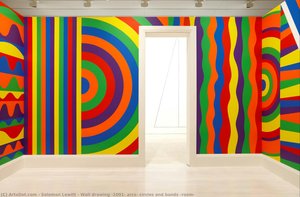 Wall drawing #1091: arcs, circles and bands (room)2003
 Distorted Cubes Bozuk Küpler
 Wall Drawing #3911983
 Wall Drawing #8311997
Essays over Serial Project #1 ABCD
 25 Masterpieces by Amedeo Modigliani: The Soul of Modern PortraitureExplore 25 iconic Modigliani masterpieces and their soulful stories. Discover the full collection online at OriginalUniqueArt.com.
 The Architecture of Absence: Evaluating Form and Essence in Minimalist ArtMaster the nuances between Minimalism and Geometric Abstraction with expert analysis. Elevate your collection today.
 The Architecture of Abstraction: Exploring Order, Form, and Geometric Precision in Modern ArtExplore the evolution of geometric abstraction from Cézanne to Mondrian. Discover the profound logic of form and order in modern art.