Voorvertoning
 Verstuur
 Delen
Delen
 Details bekijken
 Gids
Gids

 Download
 Vergelijkbare items
 Röntgenonderzoek
 Diavoorstelling
 Vraag & antwoord
 Statistieken
Jupiter and Antiope

- 150.0 x 206.0 cm


 Lees meer
Giclée / Kunstafdrukken
Giclée- of canvasafdruk van museumkwaliteit met een snelle productie en flexibele afwerkingsmogelijkheden. ( Bestel handgeschilderde reproductie Schakel over naar digitale afbeeldingen)




P118B €10

P118H €10

P118W €10

P438Z €10

P508JH €12

P508YH €12

P805H €10

P805Z €10

P919BZ €10

P919G €10

P919XJ €10

P959ZH €10

P968JZ €12

W106C €8

W218G €10

W218JH €8

W218Y €10

W307PJ €10

W316G €10

W316PJ €8

W316Y €10

W398PJ €8

W4111J €10

W500HY €15

W500JH €15

W692G €12

W849H €8

W940BG €15

W953PJ €8




Kies uit onze vooraf ingestelde maten die overeenkomen met de originele verhoudingen van het kunstwerk.

Voer de gewenste breedte en hoogte in, passend bij uw lijst of muur. Een afdruk kan alleen worden ingekort en nooit groter worden gemaakt dan het origineel; een formaat met andere verhoudingen zal daarom een deel van de afbeelding verliezen. Wij sturen u een digitaal mockup ter goedkeuring voordat we tot drukwerk overgaan. De afbeelding op deze pagina toont niet de werkelijke uitsnede — dit is alleen te zien op het mockup.
Wereldwijde levering () binnen 2 weken in plaats van de standaard 4/5 weken. (9 november)

Gratis wereldwijde expressverzending

Hoogwaardig linnen canvas

Volledige verzendverzekering

Garantie op terugbetaling van invoerrechten

Garantie op exacte kleurweergave

Retourbeleid van 100 dagen (alleen bij defecten)

100% Geld-terug-garantie

Korting bij meerdere afnames
 De optie voor glas is alleen beschikbaar bij een formaat kleiner dan 110 cm.

Jupiter and Antiope
Giclée / Kunstafdrukken
Afmetingen reproductie
-


Eindtotaal
€ 72
A Baroque Encounter: The Divine and the Earthly
In the grand theater of the Baroque era, few moments capture the tension between celestial power and mortal vulnerability as exquisitely as Sir Anthony van Dyck’s "Jupiter and Antiope." Painted around 1620, this monumental canvas serves as a breathtaking window into a world where myth and flesh collide. The scene unfolds with a dramatic intensity that is quintessential to the Flemish Master's early period, presenting us with the god Jupiter—disguised as a wild, muscular satyr—as he descends upon the unsuspecting Antiope. There is an immediate, palpable electricity in the air; the viewer is not merely an observer but a witness to a transformative moment of divine seduction that blurs the lines between the sacred and the profane.
Van Dyck, a protégé of the legendary Peter Paul Rubens, utilizes his profound understanding of movement and anatomy to orchestrate this encounter. The composition is masterfully structured in a pyramidal form, a technique that provides stability to an otherwise turbulent subject. At the apex sits the powerful, dark-toned figure of the satyr, whose presence looms over the pale, luminous form of Antiope. This stark contrast in skin tones—the sun-kissed, rugged texture of the masculine deity against the porcelain, ethereal glow of the maiden—creates a visual rhythm that guides the eye through the swirling drapery and the muscular tension of the figures.
Mastery of Light and Symbolic Depth
The true soul of this masterpiece lies in Van Dyck’s unparalleled command of chiaroscuro. He employs light not merely to illuminate, but to sculpt emotion. An unseen, celestial light source washes over Antiope, highlighting the delicate curves of her form and the silken flow of her hair, casting her as a beacon of innocence amidst the encroaching shadows. This interplay of deep, velvety blacks and brilliant highlights creates a sense of three-dimensional depth that makes the figures appear to breathe within their rocky, atmospheric setting. The background, filled with heavy, brooding clouds and the rugged textures of a cliffside, reinforces the primal nature of the myth.
Every element within the frame is steeped in symbolic resonance. Perched upon a nearby outcrop, an eagle spreads its wings—a silent, watchful emblem of Jupiter’s imperial authority and divine vigilance. While the scene captures a moment of earthly desire, the eagle reminds us of the inescapable gaze of the heavens. Antiope herself represents the idealized feminine virtue of the period, her serene yet vulnerable pose inviting a contemplation on the fragility of purity when confronted by the overwhelming forces of nature and divinity. It is this duality—the erotic tension paired with a sense of cosmic order—that gives the painting its enduring psychological depth.
An Inspiration for the Discerning Collector
For the art lover, the collector, or the interior designer, "Jupiter and Antiope" offers much more than mere decoration; it offers a narrative centerpiece. The painting’s rich palette of deep ochres, shadows, and luminous creams possesses a timeless elegance that can anchor a room with a sense of historical gravity and sophisticated drama. Whether placed in a grand library or a contemporary gallery space, a high-quality reproduction of this work brings with it the prestige of the Flemish Baroque tradition.
Integrating such a piece into a curated collection allows for an exploration of the themes that have captivated humanity for centuries: beauty, power, and the mysteries of the unknown. It is a work that demands attention, sparking conversation and providing a focal point of profound emotional impact. To possess a reproduction of Van Dyck’s brilliance is to invite the dramatic spirit of the 17th century into the modern home, ensuring that the legacy of one of history's greatest portraitists continues to inspire awe and admiration.
Veelgestelde vragen
Wat is de luminantie van "Jupiter and Antiope" door Antoon van Dyck?
"Jupiter and Antiope" door Antoon van Dyck heeft een luminantie van Soft Shadow. Luminantie beschrijft hoeveel licht de kleuren lijken te reflecteren.
Met welke techniek en welke afmetingen is het originele "Jupiter and Antiope" door Antoon van Dyck uitgevoerd?
"Jupiter and Antiope" is vervaardigd in Oil On Canvas en heeft in zijn originele vorm de afmetingen 150 x 206 cm.
Wat zijn de afmetingen en het formaat van "Jupiter and Antiope"?
"Jupiter and Antiope" door Antoon van Dyck is een Landscape compositie met de originele afmetingen van 150 x 206 cm.
Biografie kunstenaar
Een Vlaamse Meester aan de Courtains van Europa
Sir Anthony van Dyck, geboren in Antwerpen in 1599, kwam op als een van de meest gerespecteerde en invloedrijke portretkunstenaars van het Barokke tijdperk. Zijn leven, tragisch afgesneden bij slechts veertig-drie jaar oud, was een razendsnel spiraal van artistieke exploratie en prestigieuze opdrachten die hem van zijn thuisland Vlaanderen naar Italië en uiteindelijk naar het hart van de Engelse hofhouding voerden. Vanaf jonge leeftijd toonde Van Dyck een buitengewone talent, waarbij hij zich vroeg in dienst trad bij Hendrick van Balen’s werkplaats en snel de heersende stijlen van die tijd opving. Echter, zijn associatie met Peter Paul Rubens – niet alleen als leerling, maar ook als collaborateur – vormde daadwerkelijk de basis voor zijn artistieke fundament. Hij leerde van Rubens’ dynamische composities, rijke kleurenpaletten en meesterlijke behandeling van licht en schaduw, maar Van Dyck begon al snel zijn eigen, onderscheidende pad te volgen, gekenmerkt door elegantie en verfijning die zijn kenmerk zouden worden.Italiaanse Zwerftochten en de Ontstaan van een Stijl
De jaren die Van Dyck in Italië doorbracht, beginnend rond 1621, bleken cruciaal voor zijn artistieke ontwikkeling. Hij woonde voornamelijk in Genua, waar hij de gunst won van de families van de stad. Hier begon hij een verfijnde stijl te cultiveren waaraan hij bekend zou staan – een stijl gekenmerkt door gracieuze poses, luxueuze stoffen en een bijna tastbare sfeer van adel. In tegenstelling tot de dynamische energie die vaak in Rubens’ werk te vinden is, straalt Van Dyck’s Italiaanse portretten een verfijnde componement uit, waarbij niet alleen fysieke gelijkenis, maar ook het innerlijke karakter en de sociale status van zijn onderwerpen worden vastgelegd. Tijdens deze periode begon hij ook aan zijn *Iconografie*, een reeks nauwkeurig weergegeven portretgravures die prominente figuren uit zijn tijd toonden – kunstenaars, geleerden en heersers. Dit project toonde zijn uitzonderlijke technische vaardigheid en vestigde hem als een toonaangevende gravuremaker. Deze gravures waren niet alleen records; ze waren zorgvuldig geconstrueerde beelden ontworpen om de onderwerpen te eren en hun status en intelligentie over te brengen.De Koning’s Schilder: Van Dyck in Engeland
In 1632 kreeg Van Dyck een uitnodiging die zijn carrière voor altijd zou veranderen – een oproep van Charles I van Engeland om de hofschilder aan te treden. Deze benoeming markeerde een keerpunt, niet alleen voor Van Dyck, maar ook voor de Engelse portretkunst. Hij arriveerde in Londen met een aanzienlijke reputatie en werd snel onmisbaar voor de koning, belast met het creëren van beelden die een aura van macht, majesteit en goddelijke recht projecteerden. Van Dyck’s portretten van Charles I zijn bijzonder opmerkelijk; hij veranderde de stijve, formele representaties die eerder door kunstenaars werden gebruikt, in dynamische, charismatische beelden van de koning. Hij gebruikte innovatieve technieken – dramatisch licht, uitwaaiende gebaren en zorgvuldig gekozen achtergronden – om beelden te creëren die zowel visueel indrukwekkend als politiek geladen waren. Zijn invloed strekte zich uit over de hele adel van Engeland, vormde de visuele cultuur van het land voor generaties lang. Hij schilderde niet alleen portretten; hij construeerde een beeld van koninklijkheid, waardoor de manier waarop koningen werden gezien werd beïnvloed gedurende meer dan een eeuw.Invloeden en Een Erfgoed
Van Dyck’s vroege overlijden in 1641 trok een uitzonderlijke talent weg van de kunstwereld, maar zijn nalatenschap leeft tot op de dag van vandaag voort. Zijn impact op de Engelse portretkunst is onmiskenbaar; hij vestigde een standaard van elegantie en verfijning die toekomstige kunstenaars streefden om na te streven.- Technische Innovatie: Hij was een meester in zowel olieverf als gravure, voortdurend experimenterend met nieuwe technieken.
- Stijlvolle Verfijning: Zijn portretten worden gekenmerkt door hun gracieuze poses, luxueuze stoffen en subtiele psychologische inzichten.
- Hofinvloed: Hij transformeerde het beeld van de Engelse monarchie, waardoor een visuele taal van macht en prestige werd gecreëerd.
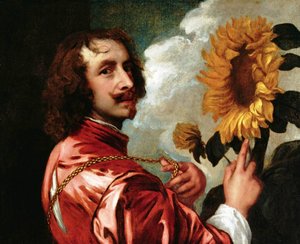
Antoon van Dyck
1599 - 1641 , België
Belangrijkste feiten
- Artistic Movement Or Style: Barokke schilderkunst
- Artists Or Movements Influenced By This Artist: ['Engels portretschilderij']
- Artists Who Influenced This Artist: ['Peter Paul Rubens']
- Date Of Birth: 22 maart 1599
- Date Of Death: 9 december 1641
- Full Name: Sir Anthony van Dyck
- Nationality: Vlaams
- Notable Artworks:
- Portret van een man
- Equestriërportret van Charles I
- Place Of Birth: Antwerpen, België
Gerelateerde artikelen

Mastering the Classics: The 25 Greatest Paintings by Nicolas Poussin
Journey through the grandeur of French Baroque with our curated list of the top 25 Nicolas Poussin masterpieces. Explore the stories behind these timeless classical paintings and find museum-quality art reproductions for your decor. Discover all masterpieces on OriginalUniqueArt.com.

10 Iconic Masterpieces That Defined the Baroque Era
Immerse yourself in the drama of Baroque painting. Explore 10 legendary masterpieces, from Caravaggio’s chiaroscuro to Rembrandt's brilliance. Find museum-quality art reproductions and timeless decor inspiration at OriginalUniqueArt.com. Discover all masterpieces on OriginalUniqueArt.com.

Masterpieces of Motion: The Top 25 Greatest Artworks by Peter Paul Rubens
Immerse yourself in the dramatic splendor of Baroque master, Peter Paul Rubens. Explore 25 iconic paintings, from mythological epics to vibrant portraits. Find inspiration for museum-quality art reproductions and luxury decor. Discover all masterpieces on OriginalUniqueArt.com.
10 Iconic Baroque Masterpieces That Changed Art Forever
Step into the drama of the Baroque era. Explore 10 iconic masterpieces featuring dramatic chiaroscuro and legendary artists. Find inspiration for your space with museum-quality art reproductions and curated decor. Discover all masterpieces on OriginalUniqueArt.com.
10 Iconic Baroque Masterpieces That Changed Art Forever
Step into the drama of the Baroque era. Explore 10 iconic masterpieces by legends like Caravaggio and Bernini, featuring breathtaking chiaroscuro and rich textures. Find museum-quality art reproductions for your decor. Discover all masterpieces on OriginalUniqueArt.com.