 Schakel over naar print
 Lees meer







































 Voor kunstwerken of reproducties die aan één zijde groter zijn dan 105 cm (ongeveer 41 inch), wordt de lijst als een losse set verzonden. Deze methode garandeert een veilige levering en voorkomt schade tijdens het transport.


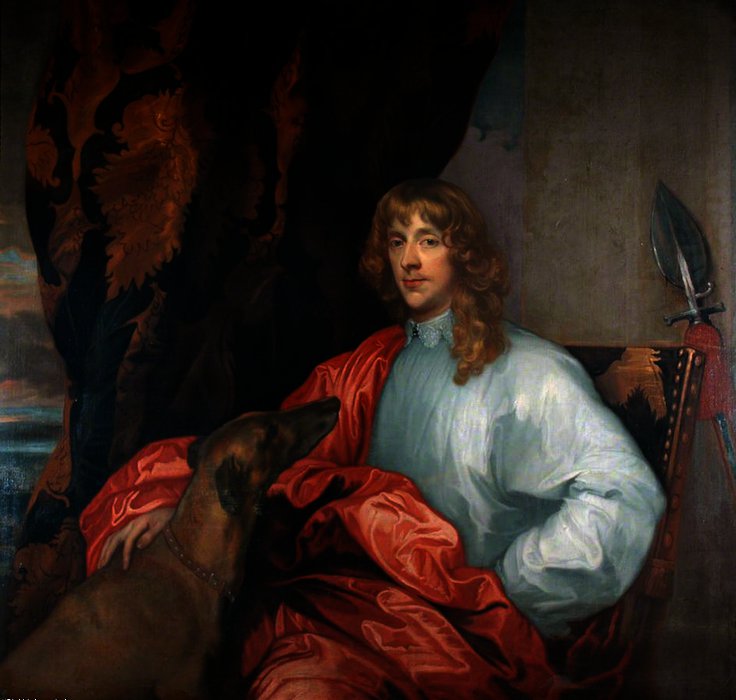
James Stuart, Duke of Richmond – A Baroque Portrait Embodied in Dignified Majesty
Sir Anthony van Dyck’s portrait of James Stuart, Duke of Richmond and Lennox, stands as a testament to the grandeur and sophistication of the Elizabethan court. Completed around 1636, this oil painting transcends mere likeness; it captures an essence of aristocratic power and contemplative nobility that continues to resonate with viewers centuries later.
- Subject Matter: The central figure is James Stuart himself – a loyal supporter of King Charles I – depicted in a seated pose radiating confidence. Alongside him rests a dignified dog, symbolizing loyalty and companionship, reinforcing the image of noble lineage.
- Style & Technique: Van Dyck’s masterful execution exemplifies Baroque realism. He skillfully employs chiaroscuro—the dramatic interplay of light and shadow—to sculpt Stuart's face and clothing, creating depth and highlighting textures with meticulous brushstrokes. The layering technique builds up a rich surface finish that captures the subtleties of fabric folds and skin tones.
- Composition & Perspective: Linear perspective guides the eye towards receding architectural elements in the background, establishing a sense of spatial depth. The drapery—particularly the curtain—adds to this illusionistic effect, immersing the viewer within the opulent setting of Stuart’s residence.
Beyond its technical prowess, the portrait is laden with symbolic significance. Stuart wears a sword and plume – emblems of authority and status – underscoring his position as a prominent nobleman within the royal hierarchy. These symbols speak to the broader cultural values of the time: honor, duty, and aristocratic distinction.
The color palette—dominated by reds, blues, and browns—creates an atmosphere of warmth tempered with solemnity. The artist’s deliberate use of hues contributes to the overall emotional impact, conveying a sense of dignified composure and regal bearing. This artwork is more than just a depiction; it's a window into the spirit of Elizabethan England and a celebration of artistic excellence.
- Historical Context: Painted during Charles I’s reign, this portrait reflects the anxieties surrounding religious tensions and political instability. Stuart’s presence embodies the stability and tradition associated with the monarchy – ideals fiercely defended by the ruling elite.
- Interior Design Inspiration: The grandeur of Stuart's surroundings—captured in meticulous detail—offers inspiration for creating sophisticated interiors that evoke a similar sense of timeless elegance. Consider incorporating rich fabrics, dramatic lighting, and sculptural forms to achieve comparable visual impact.
Veelgestelde vragen
Hoe verhoudt de stijl van "James Stuart, Hertog van Richmond" zich tot het tijdperk van de maker?
In "James Stuart, Hertog van Richmond" door Antoon van Dyck ontmoet de Baroque Realism-stroming de Vroegmoderne tijd-periode.
Is er een diavoorstelling beschikbaar voor "James Stuart, Hertog van Richmond" door Antoon van Dyck?
De diaporama van "James Stuart, Hertog van Richmond" is te bekijken op de Diavoorstelling-pagina van het kunstwerk.
Waarvoor wordt een afdruk van "James Stuart, Hertog van Richmond" aanbevolen?
Een reproductie van "James Stuart, Hertog van Richmond" door Antoon van Dyck wordt aanbevolen voor Statementstuk. Dit advies is gebaseerd op het onderwerp, de sfeer en de kleuren van het werk.
 Voorvertoning
 Verstuur
 Delen
Delen
 Details bekijken
 Gids
Gids

 Download
 Vergelijkbare items
 Röntgenonderzoek
 Diavoorstelling
 Vraag & antwoord
 Statistieken