

 Verstuur
 Delen
Delen
 Details bekijken
 Gids
Gids

 Download
 Vergelijkbare items
 Diavoorstelling
 Q&A
Q&A Statistieken
Ongetiteld werk van René Lalique


 Lees meer
Giclée / Kunstafdrukken
Giclée- of canvasafdruk van museumkwaliteit met een snelle productie en flexibele afwerkingsmogelijkheden. ( Bestel handgeschilderde reproductie Schakel over naar digitale afbeeldingen)




































Kies uit onze vooraf ingestelde maten die overeenkomen met de originele verhoudingen van het kunstwerk.

Voer de gewenste breedte en hoogte in, passend bij uw lijst of muur. Een afdruk kan alleen worden ingekort en nooit groter worden gemaakt dan het origineel; een formaat met andere verhoudingen zal daarom een deel van de afbeelding verliezen. Wij sturen u een digitaal mockup ter goedkeuring voordat we tot drukwerk overgaan. De afbeelding op deze pagina toont niet de werkelijke uitsnede — dit is alleen te zien op het mockup.
Wereldwijde levering () binnen 2 weken in plaats van de standaard 4/5 weken. (28 oktober)

Gratis wereldwijde expressverzending

Hoogwaardig linnen canvas

Volledige verzendverzekering

Garantie op terugbetaling van invoerrechten

Garantie op exacte kleurweergave

Retourbeleid van 100 dagen (alleen bij defecten)

100% Geld-terug-garantie

Korting bij meerdere afnames
 De optie voor glas is alleen beschikbaar bij een formaat kleiner dan 110 cm.

None
Giclée / Kunstafdrukken
Afmetingen reproductie
-


Eindtotaal
€ 71
A Vision of Sapphire Dreams: Exploring René Lalique’s “Blue Opaline”
René Jules Lalique’s “Blue Opaline,” created in 1906, transcends mere ornamentation; it embodies the very spirit of Art Nouveau—a movement obsessed with organic forms and sensual beauty. This exquisite glass sculpture isn't simply a decorative object; it’s a testament to Lalique’s masterful manipulation of material and his profound understanding of artistic symbolism.
The Material & Technique: Crystallization Through Craftsmanship
Lalique, renowned for his pioneering use of pâte verre technique—French for “melted glass”—transformed raw silica sand into a breathtaking spectacle. The process began with meticulously fusing powdered glass together at high temperatures, resulting in a viscous liquid that retained its color during the subsequent annealing stage. Unlike traditional glassblowing, pâte verre allowed Lalique to achieve unparalleled control over texture and luminosity. He skillfully applied thin layers of colored glass onto a mold, creating intricate patterns reminiscent of flowing water or blossoming flowers—elements deeply rooted in Art Nouveau’s fascination with nature.
A Symbol of Tranquility & Transformation
The striking shade of sapphire blue wasn't chosen arbitrarily. Lalique deliberately selected this hue to evoke feelings of serenity and contemplation, mirroring the tranquil landscapes of his childhood home in Champagne. However, beyond its immediate aesthetic appeal lies a deeper symbolic resonance. Blue represents purity, spirituality, and transformation—themes prevalent throughout Art Nouveau’s artistic lexicon. The opaline effect – achieved through careful layering and polishing – further enhances this symbolism, mimicking the iridescent shimmer of precious stones and suggesting an inner radiance.
Historical Context: Lalique & The Belle Époque
“Blue Opaline” emerged during the Belle Époque (roughly 1871-1914), a period characterized by optimism, artistic experimentation, and lavish patronage. Lalique’s work flourished amidst this cultural fervor, aligning perfectly with the movement's desire to elevate craftsmanship and celebrate beauty in all its forms. He collaborated extensively with prominent figures of his time—artists like Alphonse Mucha and writers like Marcel Proust—establishing himself as a leading voice within the artistic landscape.
Emotional Impact: Capturing Light & Emotion
More than just visually stunning, “Blue Opaline” possesses an intangible quality that speaks to the viewer’s emotions. The sculpture's luminous surface captures and refracts light with mesmerizing grace, creating a captivating interplay of color and texture. Lalique aimed not merely to reproduce beauty but to embody it—to distill the essence of nature’s splendor into a single object. It invites contemplation and inspires awe, reminding us that true art transcends mere representation; it communicates feeling itself.
- Artist: René Jules Lalique
- Year Created: 1906
- Material: pâte verre (Fused Glass)
- Style: Art Nouveau
- Dimensions: 6 x 8 cm
Veelgestelde vragen
Onder welke pseudoniemen of andere namen is René Lalique bekend?
René Lalique staat ook bekend als René Jules Lalique.
Biografie kunstenaar
A Life Forged in Beauty: The World of René Lalique
René Jules Lalique, a name synonymous with the ethereal beauty of Art Nouveau and the sleek elegance of Art Deco, was more than just a jeweller or glass designer—he was an innovator, a poet of materials, and a true artist who redefined luxury for his time. Born in Aÿ, France, on April 6th, 1860, Lalique’s journey began amidst the rolling hills of Champagne, a landscape that would forever imprint itself upon his artistic sensibility. Early summers spent with his maternal grandparents instilled within him a deep reverence for nature, a theme that would become utterly central to his creations. This idyllic upbringing was disrupted by a move to the Parisian suburbs, yet the memory of Aÿ remained potent, fueling his later naturalistic glasswork and imbuing it with an organic grace. The untimely death of his father propelled young René into apprenticeship with goldsmith Louis Aucoc, setting him on a path that would ultimately revolutionize both jewellery and glass artistry. He further honed his skills at the École des Arts Décoratifs in Paris and even ventured to London for studies at the Crystal Palace School of Art, absorbing diverse influences that shaped his unique aesthetic vision.From Jewellery to Glass: A Revolutionary Aesthetic
Lalique’s early career blossomed as a freelance designer for prominent French jewelry houses like Cartier and Boucheron during the 1880s. However, it was in 1890, with the opening of his own boutique in Paris' Opéra district, that Lalique truly began to forge his distinctive style. He swiftly became known for rejecting the prevailing opulent aesthetic, favoring instead a more organic and imaginative approach. He wasn’t interested merely in showcasing precious stones; he sought to elevate materials often considered secondary – horn, ivory, enamel, and crucially, glass – to equal status with diamonds and rubies. This was revolutionary. His jewelry became miniature sculptures, teeming with life: dragonflies with iridescent wings crafted from plique-à-jour enamel, orchids rendered in delicate gold filigree, peacocks displaying their plumage in vibrant gemstones. These weren’t simply adornments; they were wearable works of art, imbued with a sense of movement and naturalism rarely seen before. His designs resonated deeply with the spirit of Art Nouveau, embracing flowing lines, organic forms, and a celebration of the feminine form. He quickly garnered a devoted clientele, including celebrated actress Sarah Bernhardt, who commissioned numerous pieces that reflected her own dramatic persona. The use of materials like horn, ivory, enamel, and glass was not merely decorative; it was integral to his artistic vision, reflecting a desire to capture the essence of nature in miniature.The Allure of Glass: A New Artistic Horizon
While Lalique’s jewelry established his reputation, it was his exploration of glass that cemented his legacy. His collaboration with perfumer François Coty in 1907 proved pivotal. Coty commissioned Lalique to design bottles for his perfumes, recognizing the potential to elevate fragrance presentation beyond simple functionality. This partnership marked a turning point, leading Lalique to dedicate himself increasingly to glassmaking. He acquired the Verrerie d'Alsace in 1921, allowing him to experiment with mass production techniques while maintaining artistic control. This wasn’t about creating cheap imitations; it was about making beauty accessible. The Art Deco era saw Lalique’s glasswork reach new heights of sophistication. He moved away from the flowing curves of Art Nouveau towards more geometric forms and streamlined designs, reflecting the modern spirit of the age. Vases, bowls, chandeliers, and even automobile hood ornaments—each piece bore the hallmark of his exquisite craftsmanship and innovative techniques like cire perdue (lost-wax casting) and frosted glass finishes. His work became synonymous with luxury and elegance, adorning the homes of discerning collectors worldwide, including Calouste Sarkis Gulbenkian, who amassed an impressive collection of over 140 Lalique pieces. The Verrerie d'Alsace was a crucial step in his career, allowing him to scale production while retaining artistic control and experimenting with new techniques.Influences and Techniques
Lalique’s work was profoundly influenced by several sources. His early exposure to nature during his childhood in Aÿ shaped his appreciation for organic forms and natural motifs. The Japanese aesthetic, particularly its emphasis on asymmetry and delicate craftsmanship, also played a significant role. Furthermore, Lalique drew inspiration from the Art Nouveau movement's fascination with flowing lines, floral patterns, and female figures. His technical mastery was equally remarkable. He pioneered techniques such as *plique-à-jour*, which allowed light to pass through colored glass, creating ethereal stained-glass effects; *cire perdue* (lost-wax casting), a method for producing intricate three-dimensional forms; and various enameling techniques that added vibrant colors and textures to his creations. He was a true innovator, constantly pushing the boundaries of what was possible with these materials. His ability to seamlessly blend artistic vision with technical expertise set him apart as one of the most influential artists of his time.A Lasting Legacy
René Lalique’s influence extends far beyond his own creations. He not only transformed the fields of jewelry and glass but also inspired generations of artists and designers. His daughter, Suzanne Lalique, continued the family artistic tradition as a painter and set designer for the Comédie-Française. His granddaughter, Marie Claude-Lalique, carried on the legacy of glassmaking until her death in 2003. The Maison Lalique continues to thrive today, upholding the standards of quality and artistry established by its founder. René Lalique passed away in Paris on May 1st or 5th, 1945, and was laid to rest in Père Lachaise Cemetery, a fitting final resting place for an artist whose work embodies both beauty and enduring spirit. His creations can be found in prestigious museums around the world, including the Musée d'Orsay, serving as a testament to his profound impact on art history. René Lalique wasn’t simply creating objects; he was crafting dreams, capturing the ephemeral beauty of nature, and leaving an indelible mark on the aesthetic landscape of the 20th century. His work remains a powerful reminder that true artistry lies in the ability to transform ordinary materials into extraordinary expressions of human creativity.
René Lalique
1860 - 1945 , Frankrijk
Belangrijkste feiten
- Artistic Movement Or Style: Art Nouveau, Art Deco
- Artists Or Movements Influenced By This Artist:
- Art Nouveau
- Art Deco
- Artists Who Influenced This Artist:
- Gustave Moreau
- James Abbott McNeill Whistler
- Date Of Birth: 6 april 1860
- Date Of Death: 1 mei 1945
- Full Name: René Jules Lalique
- Nationality: Frans
- Notable Artworks:
- St. Albert Vaso
- Pendant ketting
- 'Vrouwelijke gezicht' Pendant
- Place Of Birth: Aÿ, Frankrijk
Gerelateerde artikelen

Top 10 Meesterwerken gedomineerd door 'Slate Blue': Kunst voor uw interieur
Ontdek 10 beroemde schilderijen gedomineerd door de prachtige tint 'Slate Blue'. Van Monet tot Van Gogh, leer over kunstgeschiedenis & techniek. Museumkwaliteit reproducties voor uw interieur op OriginalUniqueArt.com! Ontdek de collectie online.
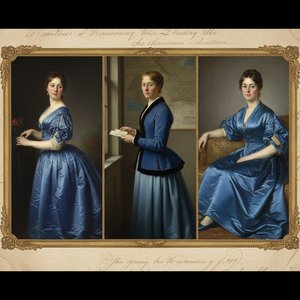
Azure Visions: Exploring Representations of the Blue Dress in Western Art History
Explore the rich history of the blue dress in Western art! Discover its symbolism, from Renaissance masterpieces to modern interpretations by artists like Martin & Schiele. Uncover cultural meanings and artistic techniques.
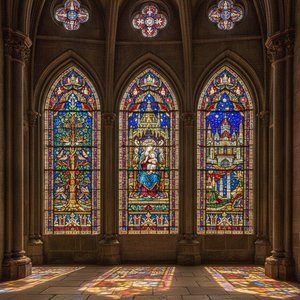
Luminous Masterpieces: The Captivating Beauty and Timeless Elegance of Stained Glass Artworks
Embark on a visual journey through the luminous world of stained glass art. Discover the exquisite craftsmanship, historical significance, and captivating beauty of masterworks from Art Nouveau to the Gothic era, curated for the discerning fine art enthusiast.

The Allure of Azure: Exploring the Symbolic & Aesthetic Depths of Blue in Art History
Explore the rich history of blue in art! Discover its symbolism, from ancient pigments to modern masterpieces by Kandinsky & Seurat. Uncover the psychological impact and cultural meanings behind this captivating hue.
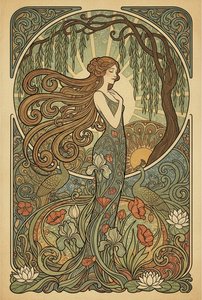
The Flowing Line & Flourishing Form: Exploring Art Nouveau's Aesthetic Legacy
Explore the captivating world of Art Nouveau! Discover its origins, key artists like Horta & Mucha, regional styles, innovative techniques, and lasting influence on architecture & design. A comprehensive guide for art enthusiasts.


