Gongbi Landscape · 1530
Handscroll (Qiu Ying, 1530)
Qiu Ying (1494–1552) maakte Handscroll. Het dateert uit 1530. Het behoort tot de Gongbi Landscape-stroming. Het is gemaakt van Acrylic On Canvas. Het is te vinden in Metropolitan Museum of Art in New York, Verenigde Staten van Amerika.
- 1530
- Acrylic On Canvas
- Metropolitan Museum of Art, New York

 Voorvertoning

 Met de hand geschilderd olieverfwerk
 Verstuur
 Delen
 Informatieblad


 Download
 Vergelijkbare items
 Röntgenonderzoek
 Diavoorstelling
 Vraag & antwoord

 Statistieken
Handscroll, in het kort
- Titel
- Handscroll
- Kunstenaar
- Qiu Ying (1494–1552)
- Geboren in [jaar]
- Taicang, Volksrepubliek China
- Datum
- 1530
- Medium
- Acrylic On Canvas
- Te zien in
- Metropolitan Museum of Art, New York, Verenigde Staten van Amerika
- Beweging
- Gongbi Landscape
- Periode
- Late Medieval
- Onderwerp
- ming dynasty, landscape, scroll, qiu ying, luohans, chinese art
Wat stelt Handscroll voor?
Qiu Ying’s “Up the River During Qingming”: A Masterpiece of Ming Dynasty Serenity
“Up the River During Qingming,” painted by Qiu Ying during the mid-16th century, is more than just a landscape; it's a carefully constructed meditation on harmony, leisure, and the enduring beauty of nature. Attributed to one of China’s Four Masters of the Ming Dynasty – alongside Shen Zhou, Tang Yin, and Wen Zhengming – this exquisite handscroll offers a rare glimpse into the refined aesthetic sensibilities of Suzhou during that era. The work, currently residing in the collection of the National Gallery of Canada, invites viewers into a tranquil scene brimming with subtle symbolism and masterful brushwork.
Qiu Ying’s artistic journey was remarkably unconventional for his time. Rather than pursuing formal training within established art circles, he began as a lacquer artisan, honing his skills in meticulous detail – a foundation that profoundly influenced the precision and control evident throughout “Up the River During Qingming.” This early experience instilled in him an unparalleled understanding of line and color, qualities he would later translate into his celebrated landscape paintings. His apprenticeship with Zhou Chen in Suzhou further solidified his technical abilities, exposing him to the techniques of the Wu School, known for its emphasis on ink washes and a more expressive approach to nature.
A Symphony of Detail: Technique and Style
The painting’s remarkable quality stems from Qiu Ying's mastery of the gongbi technique – a highly detailed, realistic style that was favored by court painters. Each element—from the meticulously rendered bamboo stalks to the delicate folds of the pavilions—is executed with painstaking precision, creating an illusion of incredible depth and texture. Notice the subtle gradations of color achieved through layering washes of ink and pigment; this creates a luminous quality that brings the scene to life. The composition is carefully balanced, drawing the eye across the landscape in a deliberate and engaging manner. The artist’s use of loose brushwork, particularly in depicting the distant mountains and flowing river, contrasts beautifully with the tightly controlled detail of the foreground elements, demonstrating Qiu Ying's versatility and his ability to seamlessly blend different artistic approaches.
Symbolism Woven into the Landscape
“Up the River During Qingming” is rich in symbolic meaning. The scene depicts a scholar leisurely enjoying a day by the river, surrounded by carefully arranged pavilions and gardens. This imagery reflects the Confucian ideals of scholarly pursuits, contemplation, and harmony with nature – values highly esteemed during the Ming Dynasty. The presence of the tavern and the farmer gathering water vegetables adds a touch of everyday life to the scene, reminding us that even amidst beauty and tranquility, human activity continues. The bamboo grove, a recurring motif in Chinese art, symbolizes resilience, integrity, and longevity—qualities admired in virtuous individuals. The distant mountains represent permanence and stability, while the flowing river embodies fluidity and change.
A Window into Ming Dynasty Culture
Beyond its aesthetic beauty, “Up the River During Qingming” offers a valuable insight into Ming Dynasty culture. It reflects the importance of gardens as spaces for contemplation, artistic expression, and social interaction. The lavish furnishings within the pavilions—including the exquisite celadon vase—demonstrate the wealth and sophistication of the era’s elite. The painting also reveals the influence of philosophical ideas, particularly those associated with Zhou Dunyi, whose “On the Love for the Lotus” inspired the scene's composition and symbolism. Qiu Ying’s ability to seamlessly integrate these diverse elements into a cohesive and harmonious whole is a testament to his artistic skill and cultural awareness.
Collecting a Legacy: Reproduction and Inspiration
Reproductions of “Up the River During Qingming” capture only a fraction of the painting's original impact. The subtle nuances of color, texture, and brushwork are difficult to replicate fully, but high-quality reproductions offer an accessible way to appreciate Qiu Ying’s artistry. This work serves as a powerful reminder of the enduring appeal of Chinese landscape painting—a genre that continues to inspire artists and captivate viewers with its beauty, symbolism, and profound sense of serenity.
In welk museum bevindt Handscroll zich?
Metropolitan Museum of Art
New York, Verenigde Staten van Amerika
Oorsprong en geschiedenis van het Metropolitan Museum of Art Het Metropolitan Museum of Art begon met een visie die werd gedeeld door een groep zakenlieden, financiers en vooraanstaande kunstenaars en denkers. Na de oprichting in 1870 zocht de instelling naar een permanente thuishaven om haar groeiende collectie onder te brengen. Voordat het museum zich op de huidige locatie vestigde, maakte het een korte periode door in het Douglas Mansion-landgoed aan West 14th Street.


Hoogwaardige afbeeldingen van Handscroll

Publiek domein: de kunstenaar is overleden in 1552.
Andere formaten, uitsneden en citatiegegevens →Qiu Ying, Handscroll (1530), Metropolitan Museum of Art. Publiek domein
Veelgestelde vragen over Handscroll
Waar is "Handscroll" door Qiu Ying tegenwoordig te zien?
"Handscroll" door Qiu Ying is te zien in Metropolitan Museum of Art, New York, Verenigde Staten van Amerika. De vermelding van het museum heeft betrekking op het originele werk, niet op reproducties.
In welk jaar werd "Handscroll" gemaakt?
"Handscroll" door Qiu Ying werd gemaakt in 1530.
Met welk medium is "Handscroll" door Qiu Ying uitgevoerd?
Qiu Ying gebruikte de Acrylic On Canvas-techniek voor "Handscroll". De techniek bepaalt de materiële aard van het originele werk.
Wat wordt er afgebeeld in "Handscroll" door Qiu Ying?
De thema's die aanwezig zijn in "Handscroll" door Qiu Ying omvatten ming dynasty, landscape, scroll, qiu ying, luohans, chinese art, gongbi. Samen vatten zij de onderwerpen van het kunstwerk samen.
Is "Handscroll" vrij van auteursrecht?
De auteursrechtelijke status van "Handscroll" door Qiu Ying: het werk is bevindt zich in het publiek domein - de auteursrechten zijn verlopen. Dit bepaalt of reproducties van de afbeelding vrijelijk mogen worden gemaakt.
Wie heeft "Handscroll" gemaakt?
"Handscroll" is gemaakt door Qiu Ying. De informatie op deze pagina beschrijft het originele werk van Qiu Ying.
Bij welke kunststroming behoort "Handscroll" door Qiu Ying?
"Handscroll" door Qiu Ying behoort tot de Gongbi Landscape-stroming. Deze stroming biedt de stilistische context van het werk.
In welke periode van de carrière van Qiu Ying valt "Handscroll"?
"Handscroll" vertegenwoordigt de Mid-16th Century van Qiu Ying.
Op welke leeftijd maakte Qiu Ying "Handscroll"?
Qiu Ying was 36 jaar oud bij het creëren van "Handscroll" in 1530. De leeftijd is berekend op basis van het geboortejaar van de kunstenaar, 1494.
Over de kunstenaar, Qiu Ying
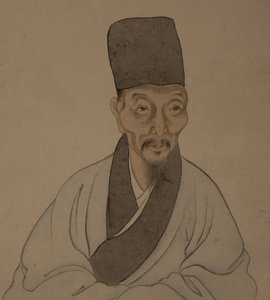
1494–1552, Volksrepubliek China
Qiu Ying
Een leven gesmeed in penseelstreken: De wereld van Qiu Ying Geboren in bescheiden omstandigheden in 1494, in het stadje Taicang nabij de huidige provincie Jiangsu, klom Qiu Ying op tot een van de meest gevierde schilders van de Ming-dynastie. In tegenstelling tot veel kunstenaars uit zijn tijd, die profiteerden van een geleerde opvoeding en een formele opleiding binnen gevestigde artistieke kringen, was het pad van Qiu Ying er een van bewonderenswaardig zelfgemaakte succes. Zijn artistieke reis begon niet via de traditionele kanalen, maar als leerling in de lakwarenkunst, waar hij zijn vaardigheden verfijnde in gedetailleerd decoratief werk – een fundament dat een diepgaande invloed zou hebben op de minutieuze precisie die zo kenmerkend is voor zijn latere schilderijen. Deze vroege ervaring bracht hem een meesterschap in lijn en kleur bij, kwaliteiten die hij later verder zou perfectioneren onder de begeleiding van Zhou Chen in Suzhou, een bruisend cultureel centrum tijdens de Ming-periode.
Ook van Qiu Ying
 Up the River During Qingming1644
 Zhao Mengfu Writing the Heart (Hridaya) Sutra in Exchange for Tea1542
 Lady Su Hui and Her Verse Puzzle501
 The Seven sages of the bamboo grove1552

Essays over Handscroll
 Understanding Chinese Painting: A Comparison of Gongbi and XieyiMaster the differences between Gongbi and Xieyi styles. Discover the history and techniques of Chinese ink painting now.
 25 Must-See Masterpieces at Berlin's Alte NationalgalerieExplore 25 iconic masterpieces from Berlin's Alte Nationalgalerie. From Romanticism to Impressionism, discover them all on OriginalUniqueAr…
 Understanding Chinese Art: Literati Painting and Song Academy PaintingMaster the distinction between Song Academy and Literati painting styles. Explore Chinese art history through expert analysis today.