

 Bekijk op ware grootte
 Verstuur
 Delen
Delen
 Details bekijken
 Gids voor studentenkunstwerken

 Download
 Vergelijkbare items
 Röntgenonderzoek
 Diavoorstelling
 Statistieken
Faces
 Oil On Canvas
- WallArt
- Analytical Realism
 1940
1940- Modern
 56.0 x 64.0 cm
 Lees meer
Giclée / Kunstafdrukken
Giclée- of canvasafdruk van museumkwaliteit met een snelle productie en flexibele afwerkingsmogelijkheden. ( Koop handgeschilderd kunstwerk Schakel over naar digitale afbeeldingen)




































Kies uit onze vooraf ingestelde maten die overeenkomen met de originele verhoudingen van het kunstwerk.

Voer de breedte en de hoogte in die u nodig heeft, passend bij uw lijst of uw muur. Een afdruk kan alleen worden ingekort, nooit groter worden gemaakt dan het origineel, waardoor een formaat met een andere verhouding een deel van de afbeelding verliest. Wij sturen u een digitaal mockup ter goedkeuring voordat we iets drukken. De afbeelding op deze pagina toont niet de werkelijke uitsnede — dit is alleen te zien op het mockup.
Wereldwijde levering () binnen 2 weken in plaats van de standaard 4/5 weken. (24 oktober)

Gratis wereldwijde expressverzending

Hoogwaardig linnen canvas

Volledige verzendverzekering

Garantie op terugbetaling van invoerrechten

Garantie op exacte kleurweergave

Retourbeleid van 100 dagen (alleen bij defecten)

100% Geld-terug-garantie

Korting bij meerdere afnames
 De optie voor glas is alleen beschikbaar bij een formaat kleiner dan 110 cm.

Faces
Giclée / Kunstafdrukken
Formaat reproductie
-


Totaalprijs
€ 71
The Fragmented Soul: Unveiling Filonov's Faces
In the profound depths of Pavel Filonov’s 1940 masterpiece, Faces, viewers are not merely looking at a canvas, but rather peering into a complex psychological landscape. This extraordinary oil on canvas serves as a quintessential window into the world of Analytical Realism, a movement Filonov himself pioneered. The painting presents an intricate, almost labyrinthine composition where the boundaries between individual identity and universal chaos begin to dissolve. Rather than presenting clear, singular portraits, the work offers a kaleidoscopic array of facial elements—eyes, noses, and mouths—that emerge from a dense thicket of lines and shapes. It is a piece that demands patience, rewarding the observer with a sense of discovery as each layer of paint reveals a new fragment of a hidden human narrative.
The technique employed in Faces is nothing short of hypnotic. Filonov’s brushwork is famously expressive, eschewing smooth transitions for a textured, almost cellular approach to painting. Through his method of "analytical" dissection, he breaks down the human form into its most fundamental, microscopic components, rebuilding them on the canvas to suggest an inner vitality. This creates a palpable sense of movement and dynamism; the composition feels as though it is breathing, or perhaps vibrating with the tension of creation itself. The color palette plays a vital role in this sensory experience, utilizing rich reds, deep blues, vibrant yellows, and lush greens to breathe life into the abstract forms. These colors do not just decorate the surface; they pulse through the network of lines, providing a rhythmic energy that guides the eye through the intricate web of the composition.
Beyond its technical brilliance, Faces carries a heavy emotional and historical resonance. Created in 1940, on the precipice of even greater global upheaval, the painting reflects a period of intense fragmentation. The overlapping masks and fractured features can be seen as symbols of the multifaceted nature of human existence—the many personas we wear and the struggle to maintain a cohesive self amidst external pressures. For the collector or interior designer, this artwork offers more than just aesthetic beauty; it provides a profound intellectual anchor for a space. Its complex layers and vibrant energy make it a commanding centerpiece, capable of sparking conversation and inviting deep contemplation. To possess a reproduction of such a work is to bring a piece of the Russian avant-garde's most daring philosophical inquiry into one's own environment, offering a timeless connection to the very essence of reality.
Vragen & Antwoorden
Welke kleur valt het meest op in "Faces"?
De kleur die het meest opvalt in "Faces" is Rosy Brown (#ba8f80). De dominante kleur is handig bij het afstemmen van een kunstwerk op een interieur.
Is "Faces" typerend voor wat Pavel Filonov gewoonlijk creëerde?
Onder de vastgelegde thema's van Pavel Filonov - cubism and expressionism, analyzing reality's essence, breaking down basic forms, defining analytical realism, exploring inner life - brengt "Faces" een eigen focus op abstract, faces, masks, analytical realism, expressive, fragmented forms.
Zijn de kleuren van "Faces" door Pavel Filonov levendig of gedempt?
De kleuren van "Faces" door Pavel Filonov vertonen een Clear Color Presence verzadiging met een Vivid intensiteit.
Biografie van de kunstenaar
Een leven gewijd aan het Analytisch Realisme
Pavel Nikolajevitsj Filonov, geboren in Moskou in 1883, blijft een diep fascinerende en vaak raadselachtige figuur binnen het landschap van de Russische avant-garde. Zijn leven was niet louter een chroniek van artistieke creatie, maar een filosofische zoektoetst—een onvermoeibare drang om de essentie van de werkelijkheid te ontleden en te onthullen via zijn unieke methode van het Analytisch Realisme. In tegenstelling tot veel tijdgenoten die innovatie zochten in abstractie of geometrische vereenvoudiging, graafde Filonov dieper; hij geloofde dat elk object een "innerlijk leven" bezat, een verborgen ziel die wachtte om door middel van minutieuze analyse aan het licht te worden gebracht. Het ging hem niet simpelweg om *hoe* dingen eruitzagen, maar om *hoe* ze op hun meest fundamentele niveau bestonden—een concept dat zijn gehele artistieke traject zou definiëren. Zijn vroege jaren werden getekend door ontbering en verlies; als wees werd hij op jonge leeftijd naar de opkomende kunstscene van Sint-Petersburg getrokken, een stad die zowel zijn muze als zijn beproevingsveld zou worden. Hoewel hij aanvankelijk een formele opleiding volgde, vond hij de gevestigde normen van het Russisch realisme al snel verstikkend, terwijl hij verlangde naar een benadering die verder ging dan de loutere oppervlakte van de verschijning.De genesis van het Analytisch Realisme
Filonovs artistieke reis was diep verweven met de intellectuele stromingen van zijn tijd. De rigoureuze logica van Bertrand Russell, de epistemologische vragen van G.E. Moore en de taalfilosofie van Ludwig Wittgenstein vonden allemaal een diepe weerklank in zijn ontwikkelende principes. Hij experimenteerde uitgebreid en absorbeerde diverse invloeden, maar smeedde uiteindelijk zijn eigen pad, wat culmineerde in de formulering van het Analciteisch Realisme. Dit was geen plotselinge openbaring, maar een geleidelijke destillatie van ideeën; een moeizaam proces van het verfijnen van zijn visie totdat deze kristalliseerde in een coherente artistieke filosofie. Hij zette zich af tegen wat hij beschouwde als de oppervlakkigheid van het kubisme; hoewel hij de poging tot het afbreken van vormen erkende, vond hij dat het tekortschoot in het werkelijk vangen van de inherente energie en dynamiek van een object. Hij stelde dat elk wezen—bezield of onbezield—bestond uit fundamentele elementen: lijnen, oppervlakken, kleuren en vormen. Door deze componenten te analyseren, kon men het "innerlijke leven" of de "ziel" van het onderwerp onthullen. Dit omvatte een proces van deconstructie en reconstructie, waarbij objecten werden afgebroken tot hun bestanddelen en weer werden samengevoegd op een manier die hun onderliggende structuur en essentie overbracht. Zijn doeken werden levendige ecosystemen van gefragmenteerde vormen, krachtige lijnen en intense kleuren—een visuele representatie van dit analytische proces. Het ging niet om het afbeelden van de werkelijkheid zoals zij verscheen, maar zoals zij in de kern *was*.Kernwerken en artistieke stijl
Filonovs artistieke oeuvre is, hoewel relatief klein qua aantal, opmerkelijk divers en consequent meeslepend. Vroege werken zoals St. Catherine (1910) tonen zijn ontluikende beheersing van kleur en compositie, terwijl ze al hinten naar de abstracte lens waarmee hij religieuze thema's spoedig zou bekijken. Man met een kruis (1913) verkent verder spirituele symboliek, verweven met zijn analytische benadering van vorm. Latere werken, zoals Gezichten (1940), zijn exemplarisch voor zijn volwassen stijl—abstracte composities die lijken op maskers of gefragmenteerde gelaatstrekken, uitgevoerd met een expressieve penseelvoering die beweging en emotionele diepgang overbrengt. Moeder (1916) springt eruit als een krachtig expressionistisch werk, doordrenkt van intimiteit en onrust, vol met levendige kleuren en symbolische lagen. Misschien wel een van zijn meest baanbrekende prestaties is Twee hoofden (1925), een meesterwerk van het Analytisch Realisme, gekenmerende door geometrische abstractie en complexe symboliek. Een bepalend kenmerk van Filonovs stijl is de dichte gelaagdheid van vormen—een techniek die hij gebruikte om diepte, complexiteit en een gevoel van pulserende energie in zijn composities te creëren. Hij bouwde zijn doeken op met meerdere lagen verf, waarbij hij minutieus complexe patronen creëerde die leken te vibreren van leven. Dit nauwgezette proces was niet louter technisch; het was essentieel om de verborgen energieën te onthullen die hij in alle dingen zag bestaan.Erfenis en blijvende invloed
Ondanks perioden van vergetelheid en onderdrukking tijdens het stalinistische tijdperk—een tijd waarin avant-gardistische kunst vaak met argwaan werd bekeken—worden de bijdragen van Pavel Filonov aan de kunstgeschiedenis tegenwoordig breed erkend. Hij wordt terecht beschouwd als een sleutelfiguur in de Russische avant-garde, een pionier die durfde uit te dagen wat de conventionele opvattingen over representatie waren. Zijn unieke artistieke visie en filosofische benadering blijven kunstenaars tot op de dag van vandaag inspireren en prikkelen om de grenzen tussen perceptie en realiteit te verkennen. Zijn werk is tentoongesteld in prestigieuze instellingen zoals de Trejakoev Galerij, wat ervoor zorgt dat zijn nalatenschap voortleeft als een getuigenis van de kracht van analytisch denken en het potentieel voor innovatieve artistieke expressie. Filonovs kunst is niet slechts iets om naar te kijken; het is een uitnodiging om de wereld opnieuw te zien—om voorbij de oppervlakte te kijken en af te dalen in de verborgen diepten van het bestaan.- Stroming: Analytisch Realisme
- Geboren: Moskou, Rusland (1883)
- Overleden: 1941

Pavel Filonov
1883 - 1941 , Rusland
Snelle feiten
- Artistic Movement Or Style: Analytisch Realisme
- Artists Or Movements Influenced By This Artist:
- Suprematisme
- Expressionisme
- Artists Who Influenced This Artist:
- Bertrand Russell
- G.E. Moore
- Ludwig Wittgenstein
- Date Of Birth: 8 januari 1883
- Date Of Death: 3 december 1941
- Full Name: Pavel Nikolayevitsj Filonov
- Nationality: Russisch
- Notable Artworks:
- St. Catherine
- Man met een Kruis
- Gesichten
- Twee Hoofd
- Place Of Birth: Moskou, Rusland
Gerelateerde artikelen
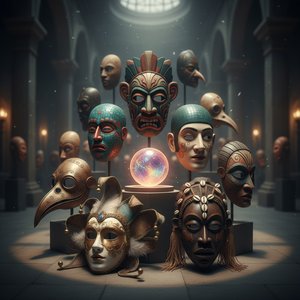
Unveiling the Mystery: A Journey Through the World's Most Iconic Mask Artworks
Embark on a profound journey through the world's most iconic mask artworks. Explore the spiritual depth, intricate craftsmanship, and rich cultural heritage of global traditions, from Chhau to Gomira, in this expert-led exploration of ancestral artistry and symbolic beauty.

Top 10 Meesterwerken van de Geometrische Abstractie | OriginalUniqueArt.nl
Ontdek de 10 meest invloedrijke meesterwerken van de geometrische abstractie! Van Mondriaan tot Malevich, leer over kunstenaars, technieken & kleuren. Museumkwaliteit reproducties op OriginalUniqueArt.com – voor een unieke interieurstijl.

Kandinsky's Meesterwerken: 25 Abstracte Kunstparels voor uw Interieur | OriginalUniqueArt
Ontdek de 25 meest iconische werken van Wassily Kandinsky! Duik in zijn abstracte wereld vol kleur, expressionisme & spirituele diepgang. Vind museumkwaliteit reproducties en interieurinspiratie op OriginalUniqueArt.com.

Top 10 Abstract Expressionisme Meesterwerken: Kunst voor uw Interieur | OriginalUniqueArt.com
Ontdek de 10 meest invloedrijke werken van Abstract Expressionisme! Leer over Jackson Pollock, Mark Rothko & meer. Museumkwaliteit kunst reproducties voor uw interieur. Bekijk de collectie op OriginalUniqueArt.com.

Romantic Realism's Finest: 10 Masterpieces for Your Home | OriginalUniqueArt
Explore 10 defining masterpieces of Romantic Realism! Discover Courbet, Millet & Daumier's powerful paintings—capturing emotion and social realities. Find museum-quality reproductions for your home at OriginalUniqueArt.com.
