

 Voorvertoning
 Verstuur
 Delen
Delen
 Details bekijken

 Download
 Vergelijkbare items
 Röntgenonderzoek
 Diavoorstelling
Procopius the Blessed Averts the Stone Cloud from the Great Ustiug


 Lees meer
Giclée / Kunstafdrukken
Giclée- of canvasafdruk van museumkwaliteit met een snelle productie en flexibele afwerkingsmogelijkheden. ( Bestel handgeschilderde reproductie Koop afbeelding)




P118B $10

P118H $10

P118W $10

P438Z $10

P508JH $12

P508YH $12

P805H $10

P805Z $10

P919BZ $10

P919G $10

P919XJ $10

P959ZH $10

P968JZ $12

W106C $8

W218G $10

W218JH $8

W218Y $10

W307PJ $10

W316G $10

W316PJ $8

W316Y $10

W398PJ $8

W4111J $10

W500HY $15

W500JH $15

W692G $12

W849H $8

W940BG $15

W953PJ $8




Kies uit onze vooraf ingestelde maten die overeenkomen met de originele verhoudingen van het kunstwerk.

U kunt uw eigen afmetingen opgeven om in een specifieke lijst of ruimte te passen. Als de door u gekozen maat niet overeenkomt met de proporties van het originele kunstwerk, zullen wij de afbeelding bijsnijden of uitbreiden met een gespiegelde of effen rand. Een digitaal mockup wordt ter goedkeuring naar u verzonden voordat de productie begint.
Houd er rekening mee dat de preview op het scherm de werkelijke bijsneding of uitbreiding niet weergeeft. Alleen de mockup toont de uiteindelijke compositie nauwkeurig.
Hoewel aangepaste maten beschikbaar zijn, raden wij aan een afmeting uit de vooraf bepaalde lijst te kiezen om de originele proporties te behouden.
Wereldwijde levering () binnen 2 weken in plaats van de standaard 4/5 weken. (29 augustus)

Gratis wereldwijde expressverzending

Hoogwaardig linnen canvas

Volledige verzendverzekering

Garantie op terugbetaling van invoerrechten

Garantie op exacte kleurweergave

Retourbeleid van 60 dagen (alleen bij defecten)

100% Geld-terug-garantie

Korting bij meerdere afnames
 De optie voor glas is alleen beschikbaar bij een formaat kleiner dan 110 cm.

Procopius the Blessed Averts the Stone Cloud from the Great Ustiug
Giclée / Kunstafdrukken
Afmetingen reproductie
-


Eindtotaal
$ 81
Nicholas Roerich’s ‘Procopius the Blessed Averts the Stone Cloud from the Great Ustiug’: An Echo of Spiritual Struggle
This arresting sketch by Nicholas Roemerich, titled “Procopius the Blessed Averts the Stone Cloud from the Great Ustiug,” offers a profound meditation on themes of protection, spiritual resilience, and the confrontation with existential dread. Executed in graphite and charcoal on paper, the artwork’s stark simplicity belies its complex symbolic weight, immediately evoking Roerich's signature style – characterized by an intensely personal engagement with mythology, spirituality, and the vast landscapes of Central Asia.
- Subject Matter & Narrative: The scene depicts Procopius the Blessed, a figure revered in Orthodox Christianity, intervening to dispel a menacing stone cloud hovering over a desolate landscape. This narrative thread, rooted in ancient legends and religious iconography, speaks to humanity’s enduring struggle against adversity and the promise of salvation offered through faith and action.
- Style & Technique: Roerich's approach here is distinctly sketch-like, prioritizing atmosphere and emotional resonance over meticulous realism. Loose, gestural lines dominate, creating a sense of immediacy and urgency. The use of hatching and cross-hatching within the cloud formation generates a powerful illusion of depth and texture, suggesting both the immense scale of the threat and the protective force at work.
- Color & Composition: The monochromatic palette – shades of grey, beige, and off-white – amplifies the artwork’s somber mood. The composition is deliberately unbalanced, with the cloud occupying a significant portion of the frame, mirroring the overwhelming nature of the challenge. This imbalance draws the viewer's eye directly to the central figure, emphasizing his role as a beacon of hope amidst darkness.
Symbolism and Spiritual Resonance
Beyond its surface depiction, “Procopius the Blessed Averts the Stone Cloud” is rich in symbolic meaning. The stone cloud itself represents not merely a meteorological phenomenon but rather a potent metaphor for suffering, chaos, and the forces of evil that threaten human existence. Procopius’s outstretched hand, acting as a shield against this looming darkness, embodies faith, courage, and the unwavering belief in a higher power capable of delivering protection. The desolate landscape further reinforces the theme of isolation and vulnerability, highlighting the individual's struggle within a vast and often hostile world.
- Roerich’s Vision: Roerich frequently employed such symbolic imagery to explore universal spiritual themes – the interconnectedness of humanity with nature, the search for inner peace, and the importance of preserving cultural heritage. His work reflects a deep engagement with Eastern mysticism and a belief in a shared human experience transcending geographical boundaries.
- Mythological Roots: The artwork’s narrative draws upon ancient Slavic legends, reflecting Roerich's fascination with folklore and mythology as sources of spiritual wisdom. This connection to the past adds another layer of depth to the piece, suggesting that humanity’s struggles are timeless and recurring.
Historical Context & Artistic Influence
Created in 1913, “Procopius the Blessed Averts the Stone Cloud from the Great Ustiug” reflects a pivotal moment in Roerich's artistic development. Following his early explorations of realism and academic style, he increasingly embraced a more expressive and symbolic approach, influenced by theosophical ideas and his travels throughout Central Asia. This sketch anticipates the grand scale and spiritual intensity that would characterize much of his later work, solidifying his place as one of the 20th century’s most significant artists.
- Roerich's Legacy: Roerich’s unique blend of artistic skill, philosophical inquiry, and humanitarian activism has ensured his enduring legacy. His artwork continues to resonate with viewers seeking meaning and inspiration in a world often characterized by uncertainty and conflict.
- Collecting & Interior Design: This reproduction offers an exceptional opportunity to bring a piece of Roerich’s visionary art into your home or office. Its evocative imagery and powerful symbolism make it a compelling addition to any collection, while its monochromatic palette lends itself beautifully to a variety of interior design schemes – particularly those seeking a touch of contemplative elegance.
Biografie van de kunstenaar
A Life Immersed in Art and Spirit
Nicholas Roerich, geboren op 9 oktober 1874 in het levendige culturele hart van Sint Petersburg, Rusland, was een figuur wiens leven verder ging dan de grenzen van artistieke expressie. Hij was niet alleen een schilder; hij was een archeoloog, schrijver, filosoof en een vastberaden pleitbezorger voor vrede en cultureel behoud. Zijn opvoeding, doordrenkt van intellectuele ernst – zijn vader was notaris – en artistieke waardering dankzij zijn moeder, legde de basis voor een buitengewoon veelzijdige carrière. Roerich studeerde tegelijkertijd zowel rechten als kunst aan de Universiteit van Sint Petersburg en de Academie voor Kunstnijverheid beginnend in 1893, wat een vroege toewijding aan een brede begrip van de wereld weerspiegelde. Deze dubbele weg was niet contradictorisch voor hem; het spiegelde eerder een overtuiging dat artistieke visie een gronding nodig had in historische context en intellectuele discipline. Hij ontving zijn kunstdiploma in 1897 en voltooide zijn rechtenstudie het daaropvolgende jaar, waardoor de scène werd gezet voor een leven gewijd aan zowel creatieve exploratie als rationele actie.De Verleiding van Symbolisme en Theatraal Innovatie
Roerich’s artistieke ontwikkeling werd diep beïnvloed door de stromingen van het Russische Symbolisme, een beweging die emotionele en spirituele diepten probeerde te roepen door evocatieve beelden en suggestieve vormen. Hij kwam snel in contact met de invloedrijke “Wereld van Kunst” (Mir Iskusstva) van Sergei Diaghilev, en trad uiteindelijk op als president vanaf 1910 tot 1916. Deze associatie bleek cruciaal te zijn, waardoor hij werd blootgesteld aan een netwerk van innovatieve kunstenaars, componisten en denkers die het landschap van de Russische kunst opnieuw vormgaven. Zijn vroege werk toonde een fascinatie met archeologie en toneelontwerp, wat leidde tot baanbrekende samenwerkingen met Diaghilev’s Ballets Russes. Roerich’s ontwerpen voor producties zoals Alexander Borodin's *Prins Igor* (1909) en vooral Igor Stravinsky’s revolutionaire *De Rite van de Lente* (1913), waren niet alleen achtergronden; ze waren integraal onderdeel van de theatrale ervaring. Hij combineerde zorgvuldige historische onderzoek met een gedurfd imaginaire visie, waardoor indrukwekkende visuele omgevingen werden gecreëerd die de emotionele kracht van de muziek en choreografie versterkten. Deze ontwerpen waren niet alleen decoratief; ze probeerden oerkrachten en oude rituelen te oproepen, wat de symbolistische interesse in mythe en spiritualiteit weerspiegelde. Zijn werk werd ook beïnvloed door apocrypha en middeleeuwse sektarische geschriften zoals het Boek van de Dove, waardoor lagen esoterische betekenis werden toegevoegd aan zijn artistieke creaties.Een Reis Naar Spiritualiteit en Himalayaanse Visioenen
Naarmate Roerich’s carrière voortvorderde, ondergingen zijn schilderijen een significante transformatie, waarbij steeds meer spirituele en mystieke thema's werden benadrukt. Deze verschuiving werd gevoed door zijn groeiende interesse in Theosofie en Oosterse religies, filosofieën die de verbondenheid van alles benadrukten en het nastreven van innerlijke wijsheid. Zijn *Architecturale Studies* serie (1904–1905) toonde niet alleen zijn architectonische vaardigheid, maar ook een diepe toewijding aan het behoud van cultureel erfgoed, wat later zijn inspanningen om kunst te beschermen tijdens tijden van conflict voorspelde. Herkenbare motieven begonnen op te duiken in zijn werk: majestueuze landschappen, oude steden gehuld in mysterie en figuren doordrenkt van spirituele betekenis zoals St. Panteleimon en Kuan Yin. Hij maakte uitgebreide reizen door Centraal-Azië, waarbij hij archeologisch onderzoek verrichtte en oude culturen documenteerde, ervaringen die zijn artistische visie diepgaand vormden en zijn overtuiging versterkten dat cultureel begrip essentieel is.Erfgoed van Behoud en Duurzaam Invloed
Nicholas Roerich’s toewijding strekte zich verder uit dan het doek; hij was een toegewijd pleitbezorger voor het beschermen van kunst en architectuur tijdens tijden van oorlog. Erkend de kwetsbaarheid van culturele schatten, heeft hij de oprichting van het Roerich Pact in 1935 voorgelegd – een internationaal verdrag ontworpen om culturele objecten te beschermen tegen vernietiging. Deze initiatief leverde hem meerdere nominaties op voor de Nobelprijs voor de Vrede, wat zijn humanitaire inspanningen onderstreept. Zijn onvermoeibare inspanningen toonden een overtuiging dat het behoud van cultureel erfgoed niet alleen essentieel is voor het begrijpen van het verleden, maar ook voor het bouwen aan een vreedzamere toekomst. Hij liet een oeuvre achter dat niet alleen visueel indrukwekkend is, maar ook diep betekenisvol, en een tijdloze boodschap van vrede, begrip en respect voor alle culturen biedt.Belangrijke Werken & Duurzaam Invloed
- Saint Nicholas: Een gedetailleerde monochrome muurschildering die middeleeuwse kunst en heraldische symboliek toont.
- City: Evocative beelden van oude stedelijke landschappen, die zijn archeologische interesses weerspiegelen.
- Lake of the Nagas: Een tempera schilderij dat symboliek en natuur combineert, een voorbeeld van zijn unieke artistieke visie.

Nikolaas Roerich
1874 - 1947 , Rusland
Belangrijkste feiten
- Artistic Movement Or Style: Symbolisme, Spirituele kunst
- Artists Or Movements Influenced By This Artist: ['Russisch Symbolisme']
- Artists Who Influenced This Artist: ['Diaghilev']
- Date Of Birth: 9 oktober 1874
- Date Of Death: 13 december 1947
- Full Name: Nicholas Konstantinovich Roerich
- Nationality: Russisch
- Notable Artworks:
- Saint Nicholas
- City
- Lake Nagas
- Place Of Birth: Sint-Petersburg, Rusland
Gerelateerde artikelen

Nicholas Roerich: Mysticism, Mountains & the Search for Ageless Wisdom in Art
Explore the captivating art of Nicholas Roerich – a visionary painter whose Himalayan landscapes blend spiritual mysticism with cultural preservation. Discover his legacy & symbolism.

Giclée Prints: Archival Quality & Aesthetic Nuances for the Discerning Collector
Explore the world of giclée prints with OriginalUniqueArt. Learn about archival quality, aesthetic nuances & investment potential. Expert guidance for discerning art collectors seeking museum-quality reproductions and lasting value.

The Enduring Legacy of Fine Art Prints: Technique, History & Aesthetic Impact
Explore the rich history & techniques of fine art prints. Discover investment potential, assess authenticity, and learn how to preserve your collection with expert guidance. Trusted insights for discerning collectors.

Echoes of Time: Exploring the Enduring Appeal & Historical Context of Vintage Art Prints
Explore the captivating world of vintage art prints! Discover their history, collecting tips & enduring appeal. Expert insights on chromolithography and building a legacy collection with OriginalUniqueArt.
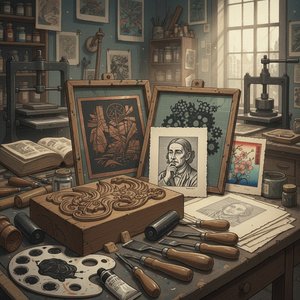
The Enduring Legacy of Printmaking: Techniques, Themes & Artistic Innovation Across Centuries
Explore the rich history of printmaking with OriginalUniqueArt. Discover techniques from intaglio to lithography, learn about collecting valuable prints & find museum-quality reproductions. Expert insights for art enthusiasts and collectors.



