Menu
Voorvertoning Bekijk in AR Schakel over naar print Schakel over naar digitale afbeelding Verstuur
Details bekijken Toevoegen aan favorieten Download Vergelijkbare items Röntgenonderzoek Diavoorstelling Statistieken

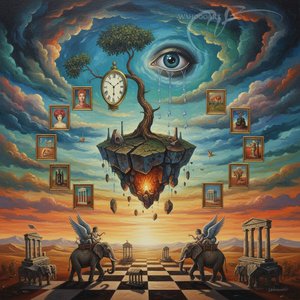
It's a Highway to Heaven

Explore Max Ernst's Surrealism with this tapestry of fragmented faces and soaring birds, a dreamlike journey into the subconscious mind.

Max Ernst (1891-1976): Een baanbrekende Duitse surrealist! Bekend om frottage, collages & droomachtige schilderijen met vogels, landschappen en psychologische thema's. #MaxErnst #Surrealisme

Handgemaakte olieverfreproductie

Met de hand geschilderd in olieverf op canvas in uw gewenste maat en lijst, op bestelling gemaakt door onze kunstenaars. ( Schakel over naar print Schakel over naar digitale afbeelding)

P118B $10
P118H $10
P118W $10
P438Z $10
P508JH $12
P508YH $12
P805H $10
P805Z $10
P919BZ $10
P919G $10
P919XJ $10
P959ZH $10
P968JZ $12
W106C $8
W218G $10
W218JH $8
W218Y $10
W307PJ $10
W316G $10
W316PJ $8
W316Y $10
W398PJ $8
W4111J $10
W500HY $15
W500JH $15
W692G $12
W849H $8
W940BG $15
W953PJ $8

Standaardformaat
op maat gemaakt
CM
INCH

Kies uit onze vooraf ingestelde maten die overeenkomen met de originele verhoudingen van het kunstwerk.

breedte
hoogte

U kunt uw eigen afmetingen invoeren om in een specifieke lijst of ruimte te passen. Als de door u gekozen maat niet overeenkomt met de verhoudingen van het originele beeld, zullen we het kunstwerk bijsnijden of het schilderij uitbreiden met extra handgeschilderde elementen. Een digitale mockup wordt ter goedkeuring naar u verzonden voordat de productie begint.
Houd er rekening mee dat de preview op het scherm niet de werkelijke uitsnede of uitbreiding weergeeft. Alleen de mockup toont de uiteindelijke compositie nauwkeurig.
Hoewel aangepaste afmetingen mogelijk zijn, raden we aan een maat uit de vooraf gedefinieerde lijst te selecteren om de originele verhoudingen te behouden.

Voorbeelden van aanpassingen: Vervang het gezicht met een eigen foto; Voeg een huisdier toe (bijv. vervang de kat door een hond); Verwerk een verborgen boodschap in de achtergrond; Wijzig het landschap of andere elementen in de achtergrond.
Na de bestelling zal het team van OriginalUniqueArt.com per e-mail contact opnemen met de klant voor instructies en een mockup-voorbeeld sturen.

Wereldwijde levering () binnen 3 tot 4 weken in plaats van de standaard 5 weken. (18 september). Zonder concessies aan de kwaliteit.

why_choose_icon
Gratis wereldwijde expressverzending
why_choose_icon
Hoogwaardig linnen canvas
why_choose_icon
Volledige verzendverzekering
why_choose_icon
Garantie op terugbetaling van invoerrechten
why_choose_icon
Garantie op exacte kleurweergave
why_choose_icon
Retourbeleid van 100 dagen (alleen bij defecten)
why_choose_icon
100% Geld-terug-garantie
why_choose_icon
Korting bij meerdere afnames

Totaalprijs

$ 300

reproduction

It's a Highway to Heaven

Druktechniek

Afmetingen reproductie

-

Eindtotaal

$ 300

Snelle feiten

  • Artistic style: Surrealist
  • Title: It's a Highway to Heaven
  • Medium: Mixed media (oil, collage)
  • Notable elements or techniques: Superimposed faces, Collage
  • Subject or theme: Identity, Fragmentation, Flight

Kunstquiz

Er is slechts één goed antwoord op elke vraag.

Vraag 1:
What artistic movement is most closely associated with the themes and style of "It's a Highway to Heaven"?
Vraag 2:
What technique did Max Ernst employ in this piece, combining paint with other materials?
Vraag 3:
What do the multiple superimposed faces in the artwork primarily symbolize?
Vraag 4:
In what historical period did the Surrealist movement, which influenced this work, flourish?
Vraag 5:
What do the birds visible in the painting often symbolize within the context of Surrealist art?

A Kaleidoscope of Identity: The Surreal Vision of Max Ernst

To gaze upon "It's a Highway to Heaven" is to step through a portal where the boundaries of the self begin to dissolve. In this arresting masterpiece, Max Ernst presents us with a visual paradox that defies the logic of the waking world. At first glance, the viewer is confronted by a single, monumental figure, yet upon closer inspection, this central presence is revealed to be a complex tapestry of superimposed faces. This is not merely a portrait in the traditional sense; it is a profound exploration of fragmentation and introspection. Each overlapping visage acts as a layer of memory, a whisper of a dream, or a fragment of a subconscious thought, creating a mesmerizing rhythm of identity that pulls the observer into a deep psychological labyrinth.

The artwork serves as a quintessential exemplar of Surrealism, a movement that sought to liberate the human imagination from the suffocating constraints of rationalism. Ernst, a pioneer who emerged from the ashes of the Dada movement, masterfully employs dreamlike imagery juxtaposed with sharp, observational detail. The composition vibrates with an unsettling yet sublime energy, inviting those who view it—whether as collectors of fine art or designers of evocative spaces—to contemplate the layers that constitute our own existence. It is a piece that does not merely sit upon a wall; it breathes, challenging the viewer to look beyond the surface of reality.

Technique and the Alchemy of Texture

The physical creation of this work reflects Ernst’s restless, experimental spirit. Eschewing the rigid academicism of his era, he utilized a sophisticated mixed-media approach that bridges the gap between painting and collage. By meticulously combining oil paints with paper fragments and printed elements, Ernst achieved a tactile complexity that is rare in traditional canvas works. This technique allows for a stunning interplay of textures, where smooth transitions of color meet the raw, disrupted edges of collage. The result is a rich, multidimensional surface that catches the light and demands physical presence.

This layering process is central to the painting's emotional resonance. As colors are built up and textures are scraped or superimposed, a sense of depth is created that mirrors the complexity of the human psyche. For the interior designer, this provides an incredible opportunity for visual depth within a room; the artwork functions as a focal point that offers new discoveries with every glance, making it an ideal centerpiece for a sophisticated, contemporary gallery or a thoughtfully curated study.

Symbolism and the Flight of the Soul

Beyond its striking aesthetic, "It's a Highway to Heaven" is steeped in profound symbolism. The multitude of faces serves as a poignant metaphor for the multifaceted nature of human experience—the way we are composed of our anxieties, our triumphs, and our many different roles throughout life. Amidst this sea of identities, Ernst introduces the motif of birds, which drift through the composition like wandering thoughts. These avian figures represent freedom, aspiration, and the ultimate transcendence of the spirit. They act as guides, leading the viewer away from the heavy, fragmented earth toward a higher state of consciousness.

Born from the historical anxieties of the post-World War I era, the painting reflects a period when the foundations of European society were being radically redefined. It captures that specific tension between the trauma of the past and the soaring hope for a new, liberated way of seeing. To own a reproduction of this work is to possess a piece of art history that speaks to the enduring human search for meaning amidst chaos. It is an invitation to embrace the irrational beauty of the universe and to find transcendence within the beautiful complexity of our own fragmented souls.


Biografie van de kunstenaar

A Life Immersed in the Surreal

Max Ernst, geboren Maximilian Maria Ernst op 1 april 1891 in Brühl, Duitsland, was een onrustige geest die tot een van de meest invloedrijke figuren van de 20e-eeuwse kunst werd. Zijn reis was geen van conventionele artistieke opleiding; eerder een zelfgeleide verkenning aangedreven door filosofische reflectie, psychologische fascinatie en een diepe teleurstelling met maatschappelijke normen. Ernst’s vader, leraar van de doven en amateur schilder, instilledde hem zowel gevoeligheid voor de wereld als een rebellie tegen gevestigde autoriteit. Deze vroege dualiteit zou een kenmerkende eigenschap worden van zijn artistieke visie.

Ernst’s academische inspanningen aan de Universiteit van Bonn – omvatten filosofie, kunstgeschiedenis, literatuur, psychologie en psychiatrie – waren niet alleen afleidingen maar fundamentele elementen die zijn latere werk diepgaand beïnvloedden. Hij was niet simpelweg geïnteresseerd in *hoe* te schilderen; hij worstelde met *waarom*. Deze intellectuele nieuwsgierigheid leidde hem tot het ontmoeten van baanbrekende werken van Picasso, Van Gogh en Gauguin op de Sonderbund tentoonstelling in Keulen in 1912, een moment dat zijn artistieke traject onherstelbaar veranderde. De zaden van modernisme waren gezaaid.

Dada’s Disruptie en de Geboorte van Surrealistische Visies

De catastrofe van de Eerste Wereldoorlog bleek een keerpunt te zijn voor Ernst. Zijn ervaringen als soldaat aan zowel het Oost- als Westfront lieten hem diepgaand gekwetst achter, wat leidde tot een diepe scepsis ten opzichte van gevestigde orde en een verlangen naar nieuwe vormen van expressie. Deze teleurstelling vond vruchtbare grond in de opkomende Dada beweging, waar hij vol overtuiging aanleunde na zijn terugkeer naar Keulen in 1918. Samen met Hans Arp – een levenslange vriend en collaborateur – werd Ernst een centrale figuur in de Keulse Dada groep, die traditionele artistieke conventies verwerkte en absurditeit, kans en anti-rationaliteit omarmde.

Dada was echter slechts een tussenstap. In het begin van de jaren 1920 migreerde Ernst naar Parijs en voegde hij zich bij de Surrealistische kring, geleid door André Breton. Dit markeerde een verschuiving richting het verkennen van het rijk van dromen, het onbewuste en de irrationele. Invloedrijk waren de psychoanalytische theorieën van Sigmund Freud, waarnaar Ernst op zoek ging om de verborgen dieptes van de menselijke ervaring te ontgrendelen door zijn kunst. Hij was niet geïnteresseerd in het weergeven van de werkelijkheid zoals deze voorkwam, maar eerder in het onthullen van de onderliggende psychologische krachten die deze vormden.

Pioniers Technieken: Frottage, Grattage en Collage

Ernst’s artistieke innovatie strekte zich uit voor de onderwerpkeuze; hij was een meesterlijke experimentator met techniek. Hij nam niet simpelweg bestaande methoden aan—hij verzinsde nieuwe. Misschien zijn meest bekende bijdragen is frottage, een proces van wrijven met potlood of houtskoor over getextureerde oppervlakken om onverwachte en evocatieve beelden te creëren. Deze techniek, geboren uit een moment van verveling terwijl hij naar houtnerf keek, stelde Ernst in staat om in de diepten van het onderbewustzijn te duiken en vormen te genereren die zich verzetten tegen bewuste controle. Dicht gerelateerd was grattage, waarbij verf over een doek wordt geschraapt om onderliggende lagen te onthullen.

Hij gebruikte ook meesterlijk collage, het samenstellen van uiteenlopende elementen – beelden uit tijdschriften, wetenschappelijke illustraties, foto’s – in surrealistische composities die conventionele ideeën over representatie uitdaagden. Deze technieken waren niet simpelweg stijlicheden—ze waren integraal aan zijn verkenning van het onbewuste en zijn wens om traditionele artistieke grenzen te verstoren. Zijn schilderijen bevatten vaak terugkerende symbolische beelden: vogels (vooral zijn alter ego Loplop), desolate landschappen, verontrustende juxtaposities en een doordringende mystiek.

Een Erfgoed van Innovatie en Invloed

De uitbraak van de Tweede Wereldoorlog dwong Ernst tot vlucht uit Europa, waar hij onderdak vond in de Verenigde Staten. Hij bleef schilderen en experimenteren met nieuwe technieken gedurende zijn ballingschap, uiteindelijk terugkeerend naar Frankrijk na de oorlog, waar hij actief bleef tot zijn dood op 1 april 1976, een dag voor zijn 85e verjaardag.

Ernst’s bijdragen aan Dada en Surrealisme waren niets minder dan baanbrekend. Hij daagde artistieke normen uit, duikelde in de diepten van het onbewuste en verzinsde innovatieve technieken die nog steeds kunstenaars inspireren. Hij was niet simpelweg een schilder—hij was een ontdekkingsreiziger, een provocateur en een visionair die de grenzen van de kunst zelf uitbreidde.

  • Belangrijke Werken: The Entire City, Euclides, Ofrenda funeraria, The Equivocal Woman, L’Ange du foyer
  • Invloeden: Pablo Picasso, Vincent van Gogh, Paul Gauguin, Sigmund Freud, Giorgio de Chirico
  • Bewegingen: Dada, Surrealisme
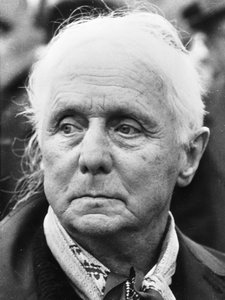
Max Ernst

Max Ernst

1891 - 1976 , Duitsland

Belangrijkste feiten

  • Artistic Movement Or Style: Dada, Surrealisme
  • Artists Or Movements Influenced By This Artist:
    • Surrealisme
    • Dada
  • Artists Who Influenced This Artist:
    • Picasso
    • Van Gogh
    • Gauguin
  • Date Of Birth: 1 apr 1891
  • Date Of Death: 1 apr 1976
  • Full Name: Max Ernst
  • Nationality: Duits/Amerikaans, Frans
  • Notable Artworks:
    • The Entire City
    • Euclides
  • Place Of Birth: Brühl, Duitsland
Ontdek kunstwerken georganiseerd op thema, stijl en kenmerk.