

 Voorvertoning
 Verstuur
 Delen
Delen
 Details bekijken

 Download
 Vergelijkbare items
 Röntgenonderzoek
 Diavoorstelling
Bastard Toadflax (Comandra pallida)
 Aquarel
- Wanddecoratie
- Botanical Illustration
 1923
1923- 19e eeuw
 26.0 x 18.0 cm
 Lees meer
Handgemaakte olieverfreproductie
Met de hand geschilderd in olieverf op canvas in uw gewenste maat en lijst, op bestelling gemaakt door onze kunstenaars. ( Bestel print Koop afbeelding)




P118B $10

P118H $10

P118W $10

P438Z $10

P508JH $12

P508YH $12

P805H $10

P805Z $10

P919BZ $10

P919G $10

P919XJ $10

P959ZH $10

P968JZ $12

W106C $8

W218G $10

W218JH $8

W218Y $10

W307PJ $10

W316G $10

W316PJ $8

W316Y $10

W398PJ $8

W4111J $10

W500HY $15

W500JH $15

W692G $12

W849H $8

W940BG $15

W953PJ $8




Kies uit onze vooraf ingestelde maten die overeenkomen met de originele verhoudingen van het kunstwerk.

U kunt uw eigen afmetingen invoeren om in een specifieke lijst of ruimte te passen. Als de door u gekozen maat niet overeenkomt met de verhoudingen van het originele beeld, zullen we het kunstwerk bijsnijden of het schilderij uitbreiden met extra handgeschilderde elementen. Een digitale mockup wordt ter goedkeuring naar u verzonden voordat de productie begint.
Houd er rekening mee dat de preview op het scherm niet de werkelijke uitsnede of uitbreiding weergeeft. Alleen de mockup toont de uiteindelijke compositie nauwkeurig.
Hoewel aangepaste afmetingen mogelijk zijn, raden we aan een maat uit de vooraf gedefinieerde lijst te selecteren om de originele verhoudingen te behouden.
Na de bestelling zal het team van OriginalUniqueArt.com per e-mail contact opnemen met de klant voor instructies en een mockup-voorbeeld sturen.
Wereldwijde levering () binnen 3 tot 4 weken in plaats van de standaard 5 weken. (21 augustus). Zonder concessies aan de kwaliteit.

Gratis wereldwijde expressverzending

Hoogwaardig linnen canvas

Volledige verzendverzekering

Garantie op terugbetaling van invoerrechten

Garantie op exacte kleurweergave

Retourbeleid van 60 dagen (alleen bij defecten)

100% Geld-terug-garantie

Korting bij meerdere afnames
 De optie voor glas is alleen beschikbaar bij een formaat kleiner dan 110 cm.

Bastard Toadflax (Comandra pallida)
Druktechniek
Afmetingen reproductie
-


Eindtotaal
$ 300
Beschrijving kunstwerk
Een Bloemrijke Pionier: Mary Vaux Walcott en Haar Bastard Toadflax
Mary Vaux Walcott’s Bastard Toadflax (Comandra pallida), geschilderd in 1923, is een betoverende aquarel botanische illustratie die het hoogtepunt vormt van haar kunstenaarschap. Deze prachtige tekening is niet alleen een afbeelding van een plant; het is een bewijs van minutieuze observatie, wetenschappelijke nauwkeurigheid en een waardering voor de subtiele schoonheid gevonden binnen het natuurlijke wereld. Een echte hommage aan de natuurlijke wereld, zoals Walcott haar wilde bloemen graag vastlegde. ### Onderwerp en Stijl: Botanische Precisie Het kunstwerk richt zich volledig op de Comandra pallida, ook wel bastard toadflax genoemd. Walcott’s stijl is stevig geworteld in botanische illustratie – een genre dat prioriteit geeft aan nauwkeurige weergave boven artistieke interpretatie. Toch overtreedt haar bekwaamheid deze eenvoudige regel; ze schenkt de plant een gevoel van leven en energie toe door middel van delicate washes van kleur en gedetailleerde tekeningen. De compositie draait om de plant’s stam en takken, die diagonaal over het kader lopen om visueel interesse te creëren. Er is een bewuste vlakheid aan het perspectief, waardoor aandacht wordt getrokken tot de complexe details van de bladeren, bloemen en zetharen. Deze stijl was karakteristiek voor kunst uit het 19e eeuwse botanische kunstenaarschap, waarbij wetenschappelijke nauwkeurigheid werd aangemoedigd voor identificatiedoeleinden. Een stijl die Walcott zelf voortreffelijk beheerstte, net als haar werk aan Audubon’s natuurlijke illustraties doet denken. ### Techniek: AquarelMeesterschap Walcott’s meesterschap van aquarel is zichtbaar in elke penseelstrek. Het schilderij gebruikt laagjes washes om diepte te creëren en een licht korrelige textuur te vormen die het natuurlijke oppervlak van plantenweefsel nabootst. Ze beheerst het gebruik van subtiele kleurgradaties, waardoor de delicate tinten van de bloemen en het bladerdak worden vastgelegd. De precisie waarmee ze elk element weergeeft – de aderen op de bladeren, de complexe structuur van de zetharen – demonstreert haar scherp oog voor detail en technische bekwaamheid. Een stijl die Walcott zelf voortreffelijk beheerstte, net als haar werk aan Audubon’s natuurlijke illustraties doet denken. De kunstenares gebruikte laagjes aquarelpigmenten op papier om een prachtige afbeelding te creëren. Een techniek die zowel wetenschappelijke nauwkeurigheid als artistieke expressie combineerde. ### Historische Context en Symbolisme: Een Echo van de Pioniersgeest Walcott’s Bastard Toadflax staat symbool voor een tijdperk waarin wetenschap en kunst hand in hand gingen, waarbij botanische illustratie een belangrijke rol speelde bij het documenteren en begrijpen van de natuurlijke wereld. Deze stijl werd gekenmerkt door een aandacht voor detail en nauwkeurigheid, zoals blijkt uit haar werk aan Audubon’s natuurlijke illustraties. Het gebruik van aquarel als medium onderstreepte de schoonheid en eenvoud van de natuurlijke wereld, terwijl het ook een gevoel van nostalgie oproept naar een tijd waarin wetenschappelijke observatie en kunstenaarschap elkaar aanvulden. Een prachtige hommage aan de natuurlijke wereld, zoals Walcott haar wilde bloemen graag vastlegde. De afbeelding is een prachtige illustratie van een enkele plantensoort, een kunstwerk dat zowel wetenschappelijke nauwkeurigheid als artistieke schoonheid combineerde. Een stijl die Walcott zelf voortreffelijk beheerstte, net als haar werk aan Audubon’s natuurlijke illustraties doet denken. ### Emotionele Impact: Een Inspirerende Visie voor de Toekomst Meer dan alleen een wetenschappelijke afbeelding is Bastard Toadflax een prachtige kunstwerk dat een gevoel van verwondering en waardering oproept voor de schoonheid en complexiteit van het natuurlijke wereld. Het kunstwerk spreekt tot het hart van elke kunstliefhebber, verzamelaar en interieurontwerper die op zoek is naar inspiratie en schoonheid – een blijvende erfenis van Mary Vaux Walcott’s pioniersgeest en haar ongeëvenaarde bekwaamheid om de natuurlijke wereld vast te leggen in prachtige aquarel tekeningen. Een kunstwerk dat nog steeds fascineert en inspireert generaties later. Een stijl die Walcott zelf voortreffelijk beheerstte, net als haar werk aan Audubon’s natuurlijke illustraties doet denken.Biografie van de kunstenaar
A Life Blossoming in Watercolor: The World of Mary Vaux Walcott
Born into the refined world of Philadelphia’s Quaker society in 1860, Mary Morris Vaux seemed destined for a life of quiet domesticity. Yet, from an early age, a vibrant artistic spirit stirred within her, ignited by a simple gift – a set of watercolor paints at the tender age of eight. These weren't merely tools for recreation; they were keys unlocking a lifelong passion for capturing the delicate beauty of the natural world, particularly wildflowers. Little could anyone have predicted that this early inclination would blossom into a remarkable career, earning her the affectionate title “the Audubon of Botany.” Her story is not simply one of artistic talent, but also of resilience, scientific curiosity, and a pioneering spirit that defied societal expectations. The weight of familial responsibility fell upon young Mary after her mother’s death in 1880, compelling her to dedicate herself to caring for her father and two younger brothers. This devotion didn't extinguish her creative flame; rather, it fueled a deep connection with the landscapes they explored during their annual summer expeditions to the Canadian Rockies.The Allure of the Rockies: Nature as Muse and Subject
These journeys were transformative. The rugged grandeur of the Canadian Rockies became Mary’s artistic laboratory. Alongside her brothers, she didn't merely observe the landscape; she meticulously documented it – studying mineralogy, charting glacial movements through drawings and photographs, and immersing herself in the intricate details of alpine flora. This wasn’t passive observation but active engagement with the scientific underpinnings of nature. It was during these expeditions that Mary began to hone her skills as a botanical illustrator, initially at the request of botanists eager for accurate depictions of rare species. Her approach was revolutionary for its time: she rendered plants to scale, showcasing their delicate structures and vibrant colors with unparalleled precision. Unlike many floral paintings of the era, which often romanticized or stylized their subjects, Walcott’s work prioritized scientific accuracy alongside artistic expression. She sought to capture not just the beauty of a flower, but also its precise form, its relationship to its environment, and its unique characteristics. The vastness of the landscape also fostered a spirit of adventure; in 1900, she became the first woman recorded to summit Mount Stephen, a feat that underscored her physical courage and unwavering determination – a testament to her refusal to be limited by societal expectations.A Partnership Forged in Science and Art
Mary’s life took another significant turn in 1914 when she married Charles Doolittle Walcott, then Secretary of the Smithsonian Institution and a renowned paleontologist. This union wasn't merely a personal connection; it was a meeting of minds deeply committed to scientific exploration. They shared a profound respect for nature and a desire to understand its complexities. Their marriage fostered a unique partnership where art and science intertwined seamlessly. During their annual expeditions to the Rockies, Charles pursued his geological research while Mary dedicated herself to her botanical paintings – often working alongside him, meticulously documenting the flora surrounding their investigations. This collaboration allowed her to integrate scientific observation with artistic representation, resulting in works that were both scientifically accurate and aesthetically captivating. The Smithsonian Institution became a crucial platform for showcasing Mary’s work, culminating in the publication of *North American Wild Flowers* in 1925 – a monumental five-volume collection featuring over 400 of her meticulously crafted illustrations. This publication cemented her reputation as a leading botanical artist and earned her the enduring moniker “the Audubon of Botany,” acknowledging the parallel between her detailed floral studies and John James Audubon’s iconic depictions of birds.The Creation of *North American Wild Flowers*
The creation of *North American Wild Flowers* was a monumental undertaking, reflecting Mary Vaux Walcott's dedication to botanical illustration and scientific accuracy. She spent years traveling throughout North America, meticulously studying and painting hundreds of wildflower species. Her approach was revolutionary for its time; she rendered plants to scale, showcasing their delicate structures and vibrant colors with unparalleled precision. Unlike many floral paintings of the era, which often romanticized or stylized their subjects, Walcott’s work prioritized scientific accuracy alongside artistic expression. She sought to capture not just the beauty of a flower, but also its precise form, its relationship to its environment, and its unique characteristics. The five-volume set became an invaluable resource for botanists and naturalists alike, providing detailed illustrations and insightful observations about each species. It stands as a testament to her artistic skill, scientific knowledge, and unwavering commitment to documenting the beauty of North America’s flora.Legacy and Lasting Impact
Mary Vaux Walcott's influence extends far beyond the beauty of her paintings. Her work represents a unique synthesis of artistic skill, scientific observation, and adventurous spirit. She wasn’t simply documenting flowers; she was capturing their essence, revealing their intricate structures, and celebrating their vital role in the natural world. Her illustrations continue to be valued by both art enthusiasts and botanists alike, serving as invaluable resources for identifying and studying North American flora. Beyond her artistic achievements, Walcott also demonstrated a commitment to public service, serving on the federal Board of Indian Commissioners from 1927 to 1932 and actively advocating for improved conditions on Native American reservations. Upon her death in 1940, she bequeathed a substantial sum to the Smithsonian Institution, ensuring that future generations would benefit from scientific research and publication. A mountain peak in Jasper National Park, Mount Mary Vaux, stands as a lasting tribute to her adventurous spirit and enduring legacy – a symbol of her dedication to both art and the natural world.
Mary Vaux Walcott
1860 - 1940 , Verenigde Staten van Amerika
Belangrijkste feiten
- Artistic Movement Or Style: Botanische illustratie
- Artists Or Movements Influenced By This Artist: ['Maria Sibylla Merian']
- Artists Who Influenced This Artist: ['John James Audubon']
- Date Of Birth: 31 juli 1860
- Date Of Death: 22 aug 1940
- Full Name: Mary Vaux Walcott
- Nationality: Amerikaans
- Notable Artworks:
- Herfstbladeren
- Gaillardia aristata
- Rosa bourgeauiana
- Place Of Birth: Philadelphia, VS
Gerelateerde artikelen
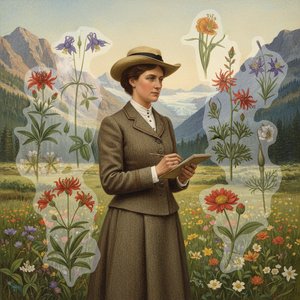
Mary Vaux Walcott: Botanical Precision & Artistic Vision in American Conservation
Discover the exquisite botanical watercolors of Mary Vaux Walcott, celebrated as the 'Audubon of Botany.' Explore her life, art, and lasting impact on American conservation through detailed illustrations & Smithsonian contributions.

The Flourishing Canvas: A Historical Journey Through Botanical Illustration
Explore the captivating history of botanical illustration! Discover renowned artists like Robert Havell & Mary Walcott, learn about techniques, and find museum-quality art at OriginalUniqueArt.com.

Top 10 Legendarische Aquarellen die de Kunst voor Altijd Veranderden | OriginalUniqueArt
Ontdek de 10 legendarische aquarellen die kunstgeschiedenis schreven! Van Turner tot Monet, leer over techniek, emotie & impact. Vind museumkwaliteit reproducties en interieurinspiratie op OriginalUniqueArt.com.
The Flourishing Canvas: A Historical Journey Through Botanical Illustration
Explore the captivating history of botanical illustration! Discover renowned artists like Robert Havell & Mary Walcott, learn about techniques, and find museum-quality art at OriginalUniqueArt.com.
The Flourishing Canvas: A Historical & Artistic Exploration of Botanical Illustration
Explore the rich history of botanical illustration! Discover key artists like Havell & Barraband, learn about scientific accuracy & aesthetic beauty. Shop museum-quality reproductions at OriginalUniqueArt.



