

 Bekijk op ware grootte
 Verstuur
 Delen
Delen
 Details bekijken
 Gids voor studentenkunstwerken

 Download
 Vergelijkbare items
 Röntgenonderzoek
 Diavoorstelling
 Statistieken
Boy's Head
 Acrylic On Canvas
- WallArt
- Scottish Colourists
 26.0 x 28.0 cm
 Government Art Collection
 Lees meer
De kunstwerken die op deze pagina worden weergegeven, zijn beschermd door de auteursrechtwetgeving, wat betekent dat het ons wettelijk niet is toegestaan om identieke reproducties te maken of te verkopen. Deze bescherming wordt gehandhaafd onder internationale overeenkomsten zoals de Conventie van Bern en door nationale wetgeving, waaronder de bepalingen van de Amerikaanse auteurswet - Titel 17. Alle rechten voorbehouden. Reproduceren of distribueren van afbeeldingen is niet toegestaan zonder uitdrukkelijke schriftelijke toestemming van WahooArt.com en de rechthebbenden.
Als een respectvol en legaal alternatief bieden wij op maat gemaakte, handgeschilderde kunstwerken aan die geïnspireerd zijn op het origineel. Onze bekwame en professionele kunstenaars bestuderen zorgvuldig de stijl, sfeer en artistieke essentie van het origineel om een nieuw, uniek werk te creëren dat dezelfde emotie oproept – terwijl het een op zichzelf staande, originele creatie blijft.
Deze methode voldoet volledig aan de auteursrechtwetgeving, omdat het niet gaat om het kopiëren of dupliceren van het beschermde kunstwerk. In plaats daarvan is er sprake van een creatieve herinterpretatie — een nieuw schilderij dat door het origineel wordt geïnspireerd, maar er niet identiek aan is.
Handgemaakte olieverfreproductie
Met de hand geschilderd in olieverf op canvas in uw gewenste maat en lijst, op bestelling gemaakt door onze kunstenaars. ( Schakel over naar print Schakel over naar digitale afbeeldingen)




P118B €10

P118H €10

P118W €10

P438Z €10

P508JH €12

P508YH €12

P805H €10

P805Z €10

P919BZ €10

P919G €10

P919XJ €10

P959ZH €10

P968JZ €12

W106C €8

W218G €10

W218JH €8

W218Y €10

W307PJ €10

W316G €10

W316PJ €8

W316Y €10

W398PJ €8

W4111J €10

W500HY €15

W500JH €15

W692G €12

W849H €8

W940BG €15

W953PJ €8




Kies uit onze vooraf ingestelde maten die overeenkomen met de originele verhoudingen van het kunstwerk.

Voer de breedte en de hoogte in die u nodig heeft, passend bij uw lijst of uw muur. Dit is handgeschilderd, dus bij een afmeting met een andere vormverhouding kan de kunstenaar iets meer rondom het schilderij schilderen of juist iets meer weglaten — u kiest zelf. Wij sturen u een digitaal mockup ter goedkeuring voordat het schilderwerk begint. De afbeelding die op deze pagina wordt getoond, is niet het uiteindelijke resultaat — alleen de mockup geeft dit weer.
Na de bestelling zal het team van OriginalUniqueArt.com per e-mail contact opnemen met de klant voor instructies en een mockup-voorbeeld sturen.
Wereldwijde levering () binnen 3 tot 4 weken in plaats van de standaard 5 weken. (22 oktober). Zonder concessies aan de kwaliteit.

Gratis wereldwijde expressverzending

Hoogwaardig linnen canvas

Volledige verzendverzekering

Garantie op terugbetaling van invoerrechten

Garantie op exacte kleurweergave

Retourbeleid van 100 dagen (alleen bij defecten)

100% Geld-terug-garantie

Korting bij meerdere afnames
 De optie voor glas is alleen beschikbaar bij een formaat kleiner dan 110 cm.

Boy's Head
Reproductiemethode
Formaat reproductie
-


Totaalprijs
€ 263
A Portrait of Innocence: Joan Eardley's "Boy’s Head"
Joan Kathleen Harding Eardley (1921–1963), a Scottish painter whose work captured the essence of rural life and childhood, remains one of Britain’s most beloved artists. Born in Sussex to parents grappling with the lingering trauma of World War I – her father suffering from shell shock – Eardley's formative years instilled within her an unwavering empathy for those marginalized by society. This sensitivity would become the bedrock of her artistic vision, informing her distinctive approach to portraying subjects with remarkable tenderness and honesty. Her relocation to Glasgow in 1939 cemented her connection to the Scottish Colourists movement, spearheaded by Hugh Adam Crawford, who profoundly influenced her stylistic development. Though briefly pursuing teacher training, Eardley’s passion for visual art ultimately prevailed, leading her to undertake a carpentry apprenticeship – an unexpected path that nonetheless honed her observational skills and deepened her understanding of craftmanship.- Subject Matter: The painting focuses on the head of a young boy, rendered with meticulous detail. Eardley’s subjects were often children from working-class backgrounds in Glasgow, reflecting her commitment to documenting everyday life and capturing the spirit of ordinary people.
- Style & Technique: “Boy’s Head” exemplifies Eardley's signature style – a blend of realism and expressive brushwork—characterized by bold strokes and vibrant color palettes. She employed oil paint on board, utilizing thick impasto to convey texture and depth, creating an image that feels both tangible and emotionally resonant.
- Historical Context: Created during the post-war era in Britain, Eardley’s work speaks to a period of social upheaval and resilience. Her depictions of children embody hope amidst hardship, capturing the innocence and vulnerability of youth against the backdrop of societal change.
Provenance & Exhibition
The artwork was acquired from Roland Delbanco Gallery in London in 1954 and subsequently exhibited at Edinburgh’s Aitken Dott & Son gallery during the “Joan Eardley Exhibition” held between May and June of 1961. This exhibition solidified Eardley's reputation as a leading figure in Scottish art and ensured that her poignant depictions of childhood would continue to inspire audiences for decades to come.Further Exploration
For more information on Joan Eardley’s life and artistic legacy, explore resources such as Art UK (Vragen & Antwoorden
Waar en voor welk doel wordt "Boy's Head" aanbevolen?
"Boy's Head" door Joan Kathleen Harding Eardley wordt aanbevolen voor Accent, bij voorkeur in een Living Room. Gebruik en ruimte bepalen samen waar een reproductie het beste tot zijn recht komt.
Is "Boy's Head" door Joan Kathleen Harding Eardley een licht of een donker kunstwerk?
De waargenomen helderheid van "Boy's Head" door Joan Kathleen Harding Eardley is bright. Deze kan worden afgestemd op het licht in de beoogde ruimte.
Naar welke tint neigt "Boy's Head"?
Een Amber to Saffron tint loopt door "Boy's Head" door Joan Kathleen Harding Eardley.
Biografie van de kunstenaar
Joan Kathleen Harding Eardley (1921–1963): A Visionary Bridging Realism and Emotion
Joan Kathleen Harding Eardley, a name synonymous with the raw beauty of Scotland and the poignant realities of post-war life, remains one of Britain’s most compelling artists. Born in 1921 in Sussex to parents grappling with the lingering shadows of the First World War – her father suffering from shell shock – Eardley's early years were marked by instability that perhaps fostered within her a deep empathy for those living on the fringes of society. This sensitivity would become a defining characteristic of her artistic vision. Her family’s move to Glasgow in 1939 proved pivotal, leading her to enroll at the Glasgow School of Art, where she honed her skills under Hugh Adam Crawford and absorbed the vibrant legacy of the Scottish Colourists. Though briefly diverted into teacher training, Eardley's spirit yearned for creative expression, finding a temporary outlet as a joiner’s apprentice – a practical pursuit that nonetheless allowed space for artistic exploration.- Early Life & Influences:
- Glasgow School of Art & The Scottish Colourists
- Travel to Italy: Renaissance Inspiration
- The Glasgow Street Children Project
- Catterline Landscapes & Late Style
Glasgow School of Art & The Scottish Colourists
Eardley’s artistic journey began at the Glasgow School of Art in 1948, where she studied under Hugh Adam Crawford and was profoundly influenced by the stylistic innovations of the Scottish Colourists – Samuel John Peploe and Francis Cadell. These artists championed bold palettes and expressive brushwork, prioritizing emotion over meticulous detail—a technique that would permeate Eardley’s own oeuvre. The legacy of Peploe and Cadell instilled in her a belief that art should capture not just what is seen but how it *feels*, shaping her approach to portraying the human condition. Crawford encouraged her to explore sculptural forms, mirroring the humanist ideals prevalent in Renaissance art, particularly those championed by Giotto and Masaccio.Travel to Italy: Renaissance Inspiration
A scholarship enabled Eardley to embark on a transformative journey through Italy in 1948. Immersed in the grandeur of Florence and Rome, she encountered masterpieces that captivated her imagination—works by Michelangelo and Raphael—inspiring her to adopt a similar sculptural sensibility. The experience solidified her conviction that art should strive for depth and resonance, mirroring the profound contemplation evoked by the Renaissance masters.The Glasgow Street Children Project
Returning to Glasgow in 1949, Eardley established herself as an artist at Cochrane Street, where she began documenting the lives of children residing in the city’s impoverished tenement districts. Her portraits of these youngsters—rendered in charcoal and imbued with remarkable tenderness—became emblematic of her artistic mission: to portray social realities with unflinching honesty while simultaneously conveying compassion. These weren't sentimental depictions; they were powerful statements about poverty and resilience, captured with a visceral energy that resonated deeply with contemporaries like Peter Blake and John Bratby.Catterline Landscapes & Late Style
In 1951 Eardley discovered Catterline, a remote fishing village on Scotland’s northeast coast, where she would spend her formative years as an artist. Drawn to the dramatic vistas of the sea and sky—influenced by artists like Chaim Soutine and Wassily Kandinsky—Eardley embraced bolder techniques, experimenting with impasto and incorporating natural materials directly onto her canvases. Her later works demonstrated a move towards greater abstraction, yet they remained firmly rooted in observation, conveying not just what she *saw*, but how it *felt* to be present in that landscape. She famously remarked that she would never go completely abstract, preferring instead to honor the immediacy of experience.Legacy & Enduring Influence
Tragically, Joan Eardley’s artistic career was cut short by breast cancer in 1963 at the age of just forty-two. Despite her brief life, she left behind a substantial body of work that continues to inspire artists today—particularly her poignant portraits of Glasgow street children and her evocative landscapes of Catterline. Her unwavering commitment to portraying human dignity alongside social injustice cemented her place in art history as a visionary artist whose voice persists long after her passing.
Joan Kathleen Harding Eardley
1921 - 1963 , Verenigd Koninkrijk
Snelle feiten
- Artistic Movement Or Style: Realisme en expressie
- Artists Or Movements Influenced By This Artist:
- Chaim Soutine
- Wassily Kandinsky
- Artists Who Influenced This Artist:
- Samuel John Peploe
- Francis Cadell
- Date Of Birth: 18 mei 1921
- Date Of Death: 16 augustus 1963
- Full Name: Joan Kathleen Harding Eardley
- Nationality: Britse kunstenaar
- Notable Artworks:
- Straatkinderen
- De Golf
- Place Of Birth: Warnham, Verenigd Koninkrijk
Gerelateerde artikelen
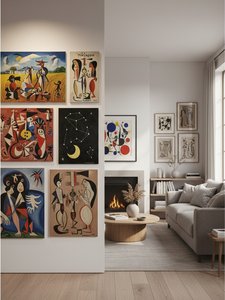
Joan Miró's Top 25 Meesterwerken: Kleurrijke Dromen voor Je Interieur | OriginalUniqueArt
Ontdek de top 25 kunstwerken van Joan Miró! Duik in zijn kleurrijke wereld vol surrealisme & abstractie. Leer over zijn techniek en vind museumkwaliteit reproducties voor jouw interieur op OriginalUniqueArt.com.
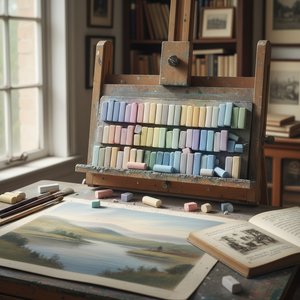
The Subtleties of Pastel: A Comprehensive Exploration of Technique, History & Emotional Resonance
Explore the captivating world of pastel art! Discover its rich history, Impressionistic masters like Degas, emotional power & unique techniques. Find museum-quality reproductions at OriginalUniqueArt.

James Giles: Capturing Scottish Life Through the Lens of British Realism
Explore the life & work of James Giles (1801-1870), a master of Scottish landscape painting and favored artist of Queen Victoria. Discover his atmospheric realism & royal commissions.

The Soft Power of Pastel: A Connoisseur's Guide to History, Technique, and the Art of Texture
Explore the ethereal beauty of pastel art. From Renaissance origins to Impressionist mastery, discover the history, technique, and velvety textures that define this luminous medium in our expert guide for art connoisseurs.

The Subdued Radiance of Pastel: Exploring Nuance & Emotion in Art
Explore the nuanced world of pastel art! Discover its history, techniques & emotional power with expert insights from OriginalUniqueArt.com. Find museum-quality reproductions and learn about collecting this delicate medium.