
 Voorvertoning
 Verstuur
 Delen
Delen
 Details bekijken
 Gids
Gids

 Download
 Vergelijkbare items
 Röntgenonderzoek
 Diavoorstelling
 Vraag & antwoord
 Statistieken
Self-Portrait

- 61.0 x 49.0 cm


 Lees meer
Giclée / Kunstafdrukken
Giclée- of canvasafdruk van museumkwaliteit met een snelle productie en flexibele afwerkingsmogelijkheden. ( Bestel handgeschilderde reproductie Schakel over naar digitale afbeeldingen)




P118B €10

P118H €10

P118W €10

P438Z €10

P508JH €12

P508YH €12

P805H €10

P805Z €10

P919BZ €10

P919G €10

P919XJ €10

P959ZH €10

P968JZ €12

W106C €8

W218G €10

W218JH €8

W218Y €10

W307PJ €10

W316G €10

W316PJ €8

W316Y €10

W398PJ €8

W4111J €10

W500HY €15

W500JH €15

W692G €12

W849H €8

W940BG €15

W953PJ €8




Kies uit onze vooraf ingestelde maten die overeenkomen met de originele verhoudingen van het kunstwerk.

Voer de gewenste breedte en hoogte in, passend bij uw lijst of muur. Een afdruk kan alleen worden ingekort en nooit groter worden gemaakt dan het origineel; een formaat met andere verhoudingen zal daarom een deel van de afbeelding verliezen. Wij sturen u een digitaal mockup ter goedkeuring voordat we tot drukwerk overgaan. De afbeelding op deze pagina toont niet de werkelijke uitsnede — dit is alleen te zien op het mockup.
Wereldwijde levering () binnen 2 weken in plaats van de standaard 4/5 weken. (15 november)

Gratis wereldwijde expressverzending

Hoogwaardig linnen canvas

Volledige verzendverzekering

Garantie op terugbetaling van invoerrechten

Garantie op exacte kleurweergave

Retourbeleid van 100 dagen (alleen bij defecten)

100% Geld-terug-garantie

Korting bij meerdere afnames
 De optie voor glas is alleen beschikbaar bij een formaat kleiner dan 110 cm.

Self-Portrait
Giclée / Kunstafdrukken
Afmetingen reproductie
-


Eindtotaal
€ 72
Jean-Étienne Liotard’s “Self-Portrait,” A Window into Rococo Introspection
The year 1744 marks a pivotal moment in the artistic trajectory of Jean-Étienne Liotard, a Genevan painter whose oeuvre is defined by an exquisite blend of naturalism and ethereal beauty. His “Self-Portrait,” housed within the hallowed halls of the Uffizi Gallery in Florence, isn’t merely a depiction of a man; it's a carefully constructed meditation on identity, perception, and the delicate balance between the observed world and the inner self. Painted during his period in Rome, this pastel masterpiece exemplifies Liotard’s signature style – a luminous, almost dreamlike quality achieved through masterful layering and an unparalleled sensitivity to light and texture.
Liotard's technique is immediately striking. He eschews the rigid formality of traditional portraiture, opting instead for a relaxed pose and a gaze that feels both direct and contemplative. The pastel medium itself—a relatively new tool in 18th-century art—allowed Liotard to build up color with astonishing subtlety, creating an effect akin to sfumato, the hazy blurring technique perfected by Leonardo da Vinci. Notice how he employs delicate washes of pinks, blues, and greens to capture the nuances of light on his face and clothing, imbuing the portrait with a sense of atmospheric depth. The background, rendered in loose, impressionistic strokes, isn’t merely decorative; it subtly reinforces the feeling of introspection, suggesting an inner landscape mirroring the sitter's thoughts.
A Genevan Artist Embraces the Orient
Born in Geneva in 1702, Liotard’s early life was shaped by his Huguenot heritage and a rigorous artistic training under esteemed miniaturists. However, it was his sojourn to Constantinople between 1738 and 1742 that profoundly influenced his artistic vision. Immersed in the vibrant culture of the Ottoman Empire, he developed a fascination with Eastern aesthetics – particularly the use of rich colors, luxurious fabrics, and the portrayal of everyday life. This influence is subtly present in “Self-Portrait,” not through overt Orientalist tropes, but rather through the overall mood of serenity and an appreciation for tactile textures. The loose brushwork and soft color palette evoke a sense of exoticism without resorting to stereotypical imagery.
Interestingly, Liotard’s embrace of the East wasn't solely aesthetic; it was also deeply personal. He deliberately adopted Turkish dress in his portraits, a conscious decision that challenged European conventions and established him as a unique figure within the art world. This choice, documented in numerous accounts, reflected not just an artistic preference but a genuine engagement with a culture vastly different from his own. It’s a testament to Liotard's intellectual curiosity and willingness to transcend conventional boundaries.
Symbolism of Inner Reflection
Beyond its technical brilliance, “Self-Portrait” is rich in symbolic meaning. The sitter’s direct gaze invites the viewer into his world, fostering a sense of intimacy and shared contemplation. The slightly parted lips suggest a quiet amusement, while the subtle furrow of his brow hints at underlying thoughts and emotions. Some art historians have interpreted the portrait as an exploration of the concept of “inner space”—a realm where the self is revealed through careful observation and artistic representation.
The inclusion of a small, partially visible book in the foreground adds another layer of complexity. It’s a subtle nod to Liotard's own intellectual pursuits – his studies of art theory and his role as an art dealer. The book symbolizes knowledge, reflection, and the pursuit of understanding—qualities that are central to the portrait’s overall message. The soft lighting and hazy atmosphere further contribute to this sense of introspection, creating a space where the viewer is invited to contemplate not just the subject's appearance but also his inner world.
A Timeless Masterpiece for Collectors
Liotard’s “Self-Portrait” remains a captivating work of art, offering a rare glimpse into the mind and soul of a remarkable artist. Its delicate pastel technique, evocative atmosphere, and profound symbolism continue to resonate with viewers centuries after its creation. A high-quality reproduction captures much of this beauty, making it an ideal addition to any collection or interior space. The painting’s luminous quality and contemplative mood create a sense of serenity and intellectual engagement—a perfect choice for those seeking art that transcends mere decoration.
Veelgestelde vragen
Welke stemming en emotie straalt "Self-Portrait" door Jean-Étienne Liotard uit?
De vastgelegde stemming van "Self-Portrait" door Jean-Étienne Liotard is Elegant, en de emotionele toon ervan is Reflective.
Kan ik augmented reality gebruiken om "Self-Portrait" door Jean-Étienne Liotard in mijn eigen ruimte te bekijken?
De AR-weergave-pagina van "Self-Portrait" door Jean-Étienne Liotard maakt gebruik van augmented reality om het kunstwerk op een compatibel apparaat in uw eigen ruimte te tonen.
Wat is de dominante kleur van "Self-Portrait" door Jean-Étienne Liotard?
De kleur die het meest opvalt in "Self-Portrait" is Clay (#a67555). De dominante kleur is handig bij het afstemmen van een kunstwerk op een interieur.
Biografie kunstenaar
Vroege Leven, Familie en Opleiding
Jean-Étienne Liotard kwam op 22 december 1702 het leven binnen in Genève, Zwitserland. Hij werd geboren in een gezin van Franse protestanten die na de gebeurtenissen van 1685 hun toevlucht in Genève hadden gezocht. Zijn geboorte werd vergezeld door een tweelingbroer, Jean-Michel, die later zijn eigen pad zou volgen als tekenaar en graveur. Deze vroege omgeving, gevormd door de ontheemding van zijn ouders, bood een rustige en gedisciplineerde basis voor de jaren van studie die volgden.
Zijn formele opleiding begon in Genève onder het waakzame oog van professoren Daniel Gardelle en Petitot. Het was tijdens deze vroege lessen dat hij voor het eerst de delicate complexiteit van emaille- en miniatuurschilderkunst meester werd, technieken die een vaste hand en een scherp oog voor detail vereisten. Deze vormende jaren legden de basis voor de technische precisie die zijn latere oeuvre zou definiëren, lang voordat hij de bredere horizon buiten de Zwitserse grenzen opzocht.
In 1725 verhuisde de jonge kunstenaar naar Parijs om zijn ontwikkeling verder vorm te geven. Hij bracht drie jaar door in het atelier van Jean-Baptiste Massé, een periode die meer werd gekenmerkt door professionele arbeid dan door een formele leertijd. Gedurende deze tijd werkte hij als assistent en maakte hij talrijke kopieën van bestaande werken om in zijn levensonderhoud te voorzien. Deze praktische onderdompeling in de Parijse kunstwereld bood hem de noodzakelijke blootstelling aan de heersende smaken van die tijd, wat hem voorbereidde op de reizen die hem uiteindelijk naar het Ottomaanse Rijk zouden leiden.
Leven en activiteiten in Constantinopel
De verblijfperiode van Liotard in Constantinopel, die in 1738 begon en vier jaar zou duren, veranderde de koers van zijn carrière fundamenteel. Ondergedompeld in het Ottomaanse Rijk ontwikkelde hij een diepe fascinatie voor de oosterse esthetiek. Dit was geen vluchtige interesse in het exotische; hij streefde ernaar de texturen en kleuren te begrijpen van een cultuur die zo ver verwijderd was van zijn Genovese wortels. Zijn observaties waren uiterst minutieus, waarbij hij zich concentreerde op de verstilling van het huiselijke leven en de specifieke details van de lokale gebruiken.
Hij bleef niet louter een toeschouwer aan de zijlijn. Liotard omarmde de lokale levenswijze en droeg in zijn dagelijks leven regelmatig Turkse kledij. Deze keuze voor kleding was zo consequent dat hij uiteindelijk de bijnaam "de Turkse schilder" kreeg. Door zichzelf te integreren in het sociale weefsel van de stad, kreeg hij toegang tot intieme scènes die een gewone reiziger wellicht nooit zou aanschouwen. Zijn pastels uit deze periode vangen deze huiselijke interieurs met een gevoel van authentieke aanwezigheid, waarbij hij de oppervlakkigheid die men vaak in de toenmalige oriëntalistische werken aantreft, moeiteloos overstijgt.
- Turkish Woman with a Tambourine (1738)
- A Turk Seated (ca. 1740)
Techniek en Artistieke Stijl
De benadering van Jean-Étienne Liotard ten aanzien van de kunst was diep geworteld in een rigoureuze toewijding aan het naturalisme. In zijn traktaat, Traité des principes et des règles de la peinture, betoogde hij dat het doel van de schilderkunst was om te fungeren als een spiegel van de natuur. Deze filosofie leidde zijn hand, of hij nu werkte in olieverf, grafiek of zijn meest kenmerkende medium, pastel. Hij streefde ernaar de wereld vast te leggen met een precisie die de kunstmatigheid vermeed die men vaak aantrof in de portretkunst van zijn tijdperk.
Zijn beheersing van pastel stelde hem in staat een luminositeit te bereiken die weinig van zijn tijdgenoten konden evenaren. Hij bracht kleur niet louter aan op een oppervlak; hij drukte het pigment met kracht op zijn dragers om een diepe tonaliteit op te bouwen. Deze techniek vereiste een specifieke voorbereiding van zijn materialen. Hij werkte vaak op vellum—kalfs-, geiten- of lamshuid—dat was behandeld met een mengsel van vislijm, wijn en fijn puimsteenpoeder om de noodzakelijke textuur te creëren voor zijn gelaagde applicatie van kleur.
Deze technische precisie is overduidelijk in zijn vermogen om de subtiele texturen van stoffen en de zachte nuances van de menselijke huid weer te geven. Zijn portretten staan bekend om hun opmerkelijke detail, waarbij hij het specifieke karakter van een geportretteerde vastlegde door een delicate omgang met het licht. Hoewel zijn reizen hem exotische onderwerpen brachten, bleef zijn methode onveranderd gefocust op de waarheidsgetrouwe observatie van zijn modellen.
Opmerkelijke Werken en Meesterwerken
Het jaar 1744 bleek een cruciaal moment in zijn oeuvre, gemarkeerd door de creatie van The Chocolate Girl en een opmerkelijk Zelfportret. Dat laatste werk, dat momenteel wordt bewaard in de Galleria degli Uffizi in Florence, biedt een intieme blik op zijn eigen identiteit door het medium van pastel. In dit werk hanteert hij het materiaal om kleur op te bouwen met een subtiele, gelaagde techniek die een gevoel van atmosferische diepte creëert. Zijn vermogen om de nuances van licht en textuur te vangen, stelde hem in staat om zich los te maken van de rigide formaliteit die men vaak aantreft in de traditionele portretkunst van die tijd.
Zijn betrokkenheid bij de intellectuele kringen van Europa is duidelijk zichtbaar in het Portret van Francesco Algarotti, voltooid in 1745. Dit pastelwerk vangt het onderwerp met een vloeiende, lumineuze kwaliteit, waarbij het karakter van de filosoof wordt benadrukt door delicate kleurnuances. In vergelijkbare zin komt zijn meesterschap in het weergeven van jeugdige onderwerpen tot uiting in het Portret van Maria Frederike van Reede-Athlone op zevenjarige leeftijd, een werk dat bewaard is gebleven in het J. Paul Getty Museum in Los Angeles. Deze portretten getuigen van een uniek vermogen om de fysieke gelijkenis in evenwicht te brengen met de levendige aanwezigheid van de geportretteerde.
In de latere stadia van zijn carrière breidde zijn focus zich uit naar de landschappen van zijn geboorteregio. In 1770 schiep hij View of the Mont Blanc massif from the artist's studio in Geneva, with self-portrait. Dit olieverfschilderij op canvas toont een weids uitzicht op de Zwitserse Alpen door een groot venster, waarbij de externe grandeur van de bergen versmelt met de verstilde, innerlijke ruimte van zijn atelier. Het werk blijft een significant voorbeeld van zijn talent om realisme te versmelten met een zachte, bijna impressionistische benadering van licht en distantie.
Latere Jaren en Overlijden
Het laatste decennium van het leven van Jean-Étienne Liotard werd gekenmerkt door een fascinerende verschuiving: van de bijna wetenschappelijke, observationele precisie van zijn jongere jaren naar een diepgaande, theoretische reflectie op zijn vakmanschap. In 1781 publiceerde hij zijn traktaat, Traité des Principes et règles de la Peinture, een werk dat streefde naar het vastleggen van de essentiële normen van zijn professie. Deze publicatie was de culminatie van een leven lang technisch onderzoek, waarbij hij de loutere imitatie van de vorm oversteeg om de fundamentele principes van het medium zelf te ontleden.
Zelfs toen zijn interesses zich meer richting de intellectuele fundamenten van de kunst bewogen, bleef zijn hand onvermoeibaar actief in het atelier. Hij verliet de fysieke daad van het creëren nooit; in zijn latere jaren bleef hij stillevens en landschappen vervaardigen met dezelfde toewijding als voorheen. Deze latere werken, die vaak de verstilling van de natuur of de zorgvuldige compositie van objecten verkenden, vormden een constante stroom van creativiteit naast zijn meer beroemde portretten. Hij bleef tot het allerlaatste moment een man van het atelier.
Uiteindelijk keerde Liotard terug naar zijn wortels in Genève, de stad waar hij werd geboren als zoon van de koopman Antoine en Anne Sauvage. Hij bleef verbonden met dit vertrouwde landschap tot zijn overlijden op 12 juni 1789. Zijn dood vond plaats aan de vooravond van een tijdperk in opkomst, waarbij hij een oeuvre naliet dat de brug sloeg tussen het minutieuze detail van de vroege achttiende eeuw en de veranderende esthetiek van de late Verlichting.
Waar zijn zijn werken vandaag de dag te bewonderen
De verspreiding van het oeuvre van Liotard over heel Europa en daarbuiten nodigt uit tot een gevarieerde studie van zijn technische precisie. Het Rijksmuseum in Amsterdam heeft de grootste aanwezigheid van zijn werk, met dertien stukken die zijn meesterschap in het medium weerspiegelen. In Londen bewaart de Royal Collection tien werken, die een glimp bieden van de portretten die ooit circuleerden onder de Britse elite. Voor wie op zoek is naar zijn meer intieme verkenningen, herbergt het Musée d'Art et d'Histoire in Genève een significante collectie van zijn pastels en tekeningen.
Zijn aanwezigheid in grote internationale instellingen blijft onmiskenbaar. Het J. Paul Getty Museum in Los Angeles herbergt vier van zijn werken, terwijl de Uffizi Gallery in Florence zijn Zelfportret uit 1744 bewaart. Deze werken, verspreid van de Zwitserse Alpen tot aan de Middellandse Zee, vormen een fysieke kaart van een leven dat werd doorgebracht in beweging tussen de centra van de Europese en Ottomaanse cultuur.
- 1744: Zelfportret - Galleria degli Uffizi, Florence
- 1744: The Chocolate Girl - Gemäldegalerie, Dresden
- 1754: Portrait of Prince Edward, Duke of York and Albany - Royal Collection, Londen
- 1756: Portrait of Maria Frederike van Reede-Athlone at Seven Years of Age - J. Paul Getty Museum, Los Angeles

Jean-Étienne Liotard
1702 - 1789 , Zwitserland
Belangrijkste feiten
- Artists Who Influenced This Artist:
- Daniel Gardelle
- Petitot
- Jean-Baptiste Massé
- François Lemoyne
- Date Of Birth: 1702
- Date Of Death: 1789
- Full Name: Jean-Étienne Liotard
- Nationality: Zwitsers
- Notable Artworks:
- Dutch girl at breakfast
- La liseuse
- The chocolate girl
- La belle lyonnaise
- Maria frederike van reede-athlone at seven
- Place Of Birth: Genève, Zwitserland
Gerelateerde artikelen

The Introspective Gaze: Tracing the Evolution and Psychological Depth of the Self-Portrait
Explore the psychological evolution of self-portraiture from Dürer to modern masters. Trace the history of the human gaze with us.
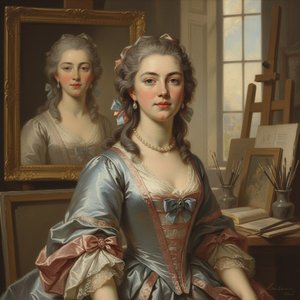
Jean-Étienne Liotard: Rococo Portraiture & the Pursuit of Naturalism
Explore the exquisite Rococo portraits of Jean-Étienne Liotard, a master of pastel and enamel. Discover his innovative techniques, captivating Turkish scenes, and lasting influence on art history. Learn more at OriginalUniqueArt.

Jean-Marc Nattier: Rococo Portraiture & Aristocratic Patronage
Explore the exquisite Rococo portraits of Jean-Marc Nattier, favored by French aristocracy. Discover his artistic techniques, patronage network, and lasting legacy – a guide for discerning collectors.

Beyond Decor: How Custom Historical Portraits Redefine Modern Self-Expression
Discover how custom historical portraits transcend decor to become profound expressions of identity. Explore the artistry of bespoke oil reproductions, from Renaissance mastery to modern reimagining, and learn to transform personal legacies into museum-quality fine art masterpieces.

25 Iconic Masterpieces by Henri de Toulouse-Lautrec: Capturing the Spirit of Montmartre
Step into the vibrant nightlife of Montmartre with our curated guide to the top 25 Henri de Toulouse-Lautrec masterpieces. Explore the soul of Post-Impressionism through iconic prints and museum-quality reproductions. Discover all masterpieces on OriginalUniqueArt.com.
