Menu
GRATIS KUNSTADVIES
Bekijk op ware grootteBekijk op ware grootte Bekijk in ARBekijk in AR Bestel een print Bestel een printNaar afbeelding wisselen Naar afbeelding wisselen VerstuurVerstuur
Details bekijkenDetails bekijken Toevoegen aan favorieten Toevoegen aan favorieten DownloadDownload Vergelijkbare werkenVergelijkbare werken RöntgenonderzoekRöntgenonderzoek DiavoorstellingDiavoorstelling

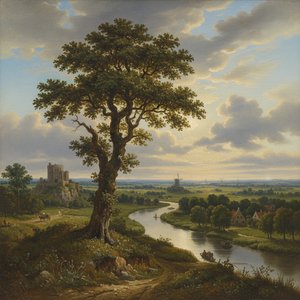
Wheat Fields

Explore the life & work of Jacob van Ruisdael, the preeminent Dutch landscape painter. Discover his technical brilliance, symbolic depth, and lasting influence on art history. Learn about collecting Ruisdael's masterpieces.

Jacob van Ruisdael (1628-1682) was de belangrijkste landschapsschilder van de Nederlandse Gouden Eeuw. Ontdek zijn meesterwerken: dramatische luchten, serene plattelandsgezichten en stadslandschappen. Invloedrijk voor Engelse Romantici en meer.

Handgemaakte olieverfreproductie

Met de hand geschilderd in olieverf op canvas in uw gewenste maat en lijst, op bestelling gemaakt door onze kunstenaars. (Bestel een print Bestel een printNaar afbeelding wisselen Naar afbeelding wisselen)

P118B $10
P118H $10
P118W $10
P438Z $10
P508JH $12
P508YH $12
P805H $10
P805Z $10
P919BZ $10
P919G $10
P919XJ $10
P959ZH $10
P968JZ $12
W106C $8
W218G $10
W218JH $8
W218Y $10
W307PJ $10
W316G $10
W316PJ $8
W316Y $10
W398PJ $8
W4111J $10
W500HY $15
W500JH $15
W692G $12
W849H $8
W940BG $15
W953PJ $8

Standard
custom
CM
INCH

Kies uit onze vooraf ingestelde maten die overeenkomen met de originele verhoudingen van het kunstwerk.

breedte
hoogte

U kunt uw eigen afmetingen invoeren om in een specifieke lijst of ruimte te passen. Als de door u gekozen maat niet overeenkomt met de verhoudingen van het originele beeld, zullen we het kunstwerk bijsnijden of het schilderij uitbreiden met extra handgeschilderde elementen. Een digitale mockup wordt ter goedkeuring naar u verzonden voordat de productie begint.
Houd er rekening mee dat de preview op het scherm niet de werkelijke uitsnede of uitbreiding weergeeft. Alleen de mockup toont de uiteindelijke compositie nauwkeurig.
Hoewel aangepaste afmetingen mogelijk zijn, raden we aan een maat uit de vooraf gedefinieerde lijst te selecteren om de originele verhoudingen te behouden.

Voorbeelden van wat aangepast kan worden: Vervang het gezicht met een eigen foto; Voeg een huisdier toe (bijv. vervang de kat door een hond); Verwerk een verborgen boodschap in de achtergrond; Wijzig het landschap of andere elementen in de achtergrond.
Na de bestelling zal het team van OriginalUniqueArt.com per e-mail contact opnemen met de klant voor instructies en een mockup-voorbeeld sturen.

Wereldwijde levering () binnen 3 tot 4 weken in plaats van de standaard 5 weken. (1 augustus). Zonder concessies aan de kwaliteit.

why_choose_icon
Gratis wereldwijde expressverzending
why_choose_icon
Hoogwaardig linnen canvas
why_choose_icon
Volledige verzendverzekering
why_choose_icon
Garantie op terugbetaling van invoerrechten
why_choose_icon
Garantie op exacte kleurweergave
why_choose_icon
60 dagen retourbeleid (alleen bij defecten)
why_choose_icon
100% Geld-terug-garantie
why_choose_icon
Korting bij meerdere afnames

Totaalprijs

$ 300

reproduction

Wheat Fields

Medium reproductie

Formaat reproductie

-

Totaalprijs

$ 300

Belangrijkste kenmerken

  • Subject or theme: Rural landscape
  • Dimensions: 39 3/8 x 51 1/4 in.
  • Notable elements or techniques: Dramatic sky illumination
  • Artistic style: Landscape painting
  • Artist: Jacob van Ruisdael
  • Movement: Dutch Golden Age
  • Influences: Romanticism

Kunstquiz

Er is slechts één goed antwoord op elke vraag.

Vraag 1:
What is the primary subject matter of Jacob van Ruisdael’s ‘Wheat Fields’?
Vraag 2:
According to the description, what is notable about the sky in ‘Wheat Fields’?
Vraag 3:
The description mentions two horses in the painting. Where are they positioned?
Vraag 4:
What artistic technique did Jacob van Ruisdael employ to convey a sense of movement and drama in ‘Wheat Fields’?
Vraag 5:
The description suggests that ‘Wheat Fields’ reflects a broader cultural significance. What does it symbolize?

Beschrijving kunstwerk

Jacob van Ruisdael’s “Wheat Fields”: A Symphony of Light and Landscape

“Wheat Fields,” painted circa 1670 by Jacob Jansz van Ruisdael, stands as arguably the most arresting depiction of Dutch pastoralism from the Golden Age. More than just a scenic vista, it's a masterful orchestration of atmospheric perspective and compositional dynamism—a painting that continues to resonate with viewers centuries later. Examining its intricacies reveals not only Van Ruisdael’s technical prowess but also his profound understanding of conveying emotion through visual language.

A Masterclass in Atmospheric Perspective

Van Ruisdael's signature style is characterized by a deliberate flattening of depth, achieved through subtle gradations of color and tonal variation. The distant wheat field recedes into hazy blues and greens—a technique known as atmospheric perspective—creating an illusion of vastness and conveying the serenity of rural life. Unlike many contemporaries who prioritized detailed realism, Ruisdael prioritized capturing the essence of a landscape rather than meticulously recreating every blade of grass. This approach aligns perfectly with the prevailing philosophical currents of the time, where contemplation and reflection on nature held considerable sway. The artist skillfully uses light—particularly diffused sunlight filtering through clouds—to sculpt the forms of the field and its inhabitants, imbuing the scene with an ethereal quality.

Compositional Drama: Figures Amidst Vastness

The inclusion of two figures—a man carrying a bag and a woman accompanied by a child—adds a crucial element of narrative complexity to the landscape. Their placement at the forefront draws the eye inward, anchoring the viewer’s gaze amidst the expansive expanse of wheat and sky. The figures aren't merely decorative additions; they serve as symbols of human presence within the natural world, prompting contemplation about our relationship with the environment. Furthermore, Van Ruisdael employs a dynamic diagonal line that bisects the canvas, guiding the eye across the scene and enhancing its visual impact. This compositional device contributes to the painting’s dramatic tension—the subtle interplay between light and shadow emphasizing the contours of the landscape and the figures alike.

Symbolism Rooted in Dutch Identity

“Wheat Fields” embodies the spirit of the Dutch Golden Age, reflecting a fascination with idealized representations of national identity. The wheat field itself symbolizes fertility and prosperity—themes central to Dutch agricultural traditions and economic success during this period. The inclusion of livestock reinforces these associations, grounding the scene in tangible realities while simultaneously elevating it to a realm of symbolic significance. Van Ruisdael’s depiction of the sky—dominated by swirling clouds illuminated by sunlight—suggests both beauty and vulnerability—a motif that resonates with broader anxieties about the unpredictable forces of nature.

Emotional Resonance: Tranquility and Reflection

Ultimately, “Wheat Fields” succeeds in evoking a profound sense of tranquility and contemplation. The muted palette—primarily blues, greens, and browns—creates an atmosphere of calm repose, inviting viewers to immerse themselves in the stillness of the countryside. Yet, beneath this surface serenity lies a subtle undercurrent of drama—the interplay of light and shadow hinting at hidden complexities. As Gavin Finney eloquently describes it, Ruisdael “picks the moment you’d want to press the shutter on a camera,” capturing not just what is seen but also what is felt—a testament to Van Ruisdael's ability to transform visual observation into emotionally resonant art.
  • Artist: Jacob Jansz van Ruisdael
  • Date: Circa 1670
  • Medium: Oil on Canvas
  • Dimensions: 39 3/8 x 51 1/4 in. (100 x 130.2 cm)
Provenance: Bequest of Benjamin Altman, 1913 Location: The Metropolitan Museum of Art

Biografie van de kunstenaar

Vroege Leven en Carrière

Jacob Isaackszoon van Ruisdael, geboren in 1628 in Haarlem, Nederland, was een vooraanstaande Nederlandse schilder, tekenaar en etser. Hij wordt algemeen beschouwd als de belangrijkste landschapsschilder van de Gouden Eeuw, een periode gekenmerkt door grote welvaart en culturele bloei. Zijn vroege leven is relatief ongedocumenteerd, maar het is bekend dat hij afkomstig was uit een familie van kunstenaars; zijn vader, Isaak van Ruisdael, was ook schilder, hoewel minder succesvol. Jacob ontving waarschijnlijk zijn eerste opleiding in de werkplaats van zijn vader en later mogelijk bij Simon van Pouwelen, een lokale landschapsschilder. Al vroeg toonde hij een uitzonderlijk talent voor het weergeven van de Nederlandse natuur.

Artistieke Stijl en Ontwikkeling

Van Ruisdaels werk kenmerkt zich door zijn veelzijdigheid en productiviteit, waarbij hij een breed scala aan landschapssubjecten afbeeldde. Vanaf 1646 schilderde hij opmerkelijke scènes van het Nederlandse platteland, die later na zijn reis naar Duitsland in 1650 een meer heroïsche karakter aannamen. Deze reis had een significante invloed op zijn stijl, waardoor hij grotere en dramatischer landschappen ging creëren met rotsachtige bergen en watervallen – elementen die minder gebruikelijk waren in de traditionele Nederlandse landschapsschilderkunst. Zijn latere werk, geproduceerd terwijl hij woonde en werkte in Amsterdam, kenmerkt zich door stadsgezichten en zeegezichten, vaak met een luchtpartij die twee derde van het canvas beslaat. Deze hemelpartijen zijn niet alleen indrukwekkend qua omvang, maar ook qua lichteffecten en atmosferische perspectief. Van Ruisdaels vermogen om de subtiele nuances van licht en schaduw te vangen, droeg bij aan de realistische en emotionele impact van zijn werken.

Invloeden en Technieken

Hoewel Van Ruisdael een originele stem ontwikkelde, was hij niet immuun voor de invloed van andere kunstenaars. Hendrick Vroom, een pionier in het Nederlandse landschapsschilderen, wordt vaak genoemd als een vroege bron van inspiratie. Ook de Italiaanse landschapschilders, hoewel Van Ruisdael Italië nooit bezocht, oefenden indirect invloed uit via prenten en andere kunstenaars die wel reizen naar het zuiden maakten. Zijn techniek was bijzonder verfijnd; hij werkte met een beperkt kleurenpalet, maar wist door subtiele gradaties en transparante lagen een enorme rijkdom aan sfeer en detail te creëren. Hij experimenteerde ook met verschillende manieren van penseelvoering, variërend van fijne details tot losse, expressieve streken. Zijn gebruik van compositie was doordacht, waarbij hij vaak elementen zoals bomen, waterwegen en gebouwen gebruikte om diepte en perspectief te creëren.

Museumcollecties en Nalatenschap

Van Ruisdaels werk is verspreid over particuliere en institutionele collecties wereldwijd, met opmerkelijke holdings in:

Van Ruisdaels invloed op de landschapsschilderkunsttradities is diepgaand. Zijn werk vormde een belangrijke inspiratiebron voor de Engelse Romantici, de Barbizon School in Frankrijk en de Hudson River School in de Verenigde Staten. Hij inspireerde generaties van Nederlandse landschapskunstenaars en wordt nog steeds beschouwd als een van de grootste landschapsschilders aller tijden. Zijn vermogen om zowel de fysieke schoonheid als de spirituele dimensie van het landschap vast te leggen, maakt zijn werk tijdloos en universeel aantrekkelijk. Bekende werken:

Artist's profile on OriginalUniqueArt: Jacob Isaackszoon van Ruisdael

Jacob Van Ruisdael

Jacob Van Ruisdael

1628 - 1682 , Nederland

Snelle feiten

  • Artistieke Stroming: Dutch Golden Age, Barok
  • Bekende Werken:
    • View of Haarlem
    • Waterfall landscape
    • Amsterdam cityscape
  • Beïnvloed Door Kunstenaars: ['Hendrick Vroom']
  • Geboortedatum: 1628/1629
  • Geboorteplaats: Haarlem, Nederland
  • Kunstenaars/Stromingen Beïnvloed:
    • Engelse Romantiek
    • Barbizon School
  • Nationaliteit: Nederlands
  • Sterfdatum: 1682
  • Volledige Naam: Jacob Isaackszoon van Ruisdael
Ontdek kunstwerken georganiseerd op thema, stijl en kenmerk.