
 Voorvertoning
 Verstuur
 Delen
Delen
 Details bekijken
 Gids
Gids

 Download
 Vergelijkbare items
 Röntgenonderzoek
 Diavoorstelling
 Vraag & antwoord
 Statistieken
Samuel Humes

- 74.0 x 61.0 cm


 Lees meer
Ontvang een bestand dat klaar is voor drukwerk en de kwaliteit van het online voorbeeld ver overstijgt. Elke digitale afbeelding die wij verkopen, is afkomstig van een high-resolution master uit onze database — meestal tussen de 5.000 en 15.000 pixels breed — zodat u met vertrouwen groot kunt afdrukken, nauwkeurig kunt bijsnijden of fijne details kunt reproduceren.
Geen enkel bestand verlaat ons atelier onbewerkt. Een digitaal expert controleert de kleuren aan de hand van het originele schilderij en corrigeert deze indien nodig, om vervolgens de helderheid en details te verbeteren met professionele retoucheertechnieken — waarbij de penseelstreek en stijl van de kunstenaar altijd strikt worden gerespecteerd. Het resultaat is een afbeelding die oogt als het schilderij zelf, en niet als een gescande foto met een filter.
U keurt de afbeelding goed voordat de bestelling wordt afgerond: onze expert stuurt u binnen 72 uur een e-mail ter beoordeling. Niet tevreden? Vraag om aanpassingen of correcties, of vraag een terugbetaling aan als de kwaliteit niet aan de verwachtingen voldoet.
Dit is de kwaliteit waarop uitgevers, designstudio's, galeries en drukkerijen vertrouwen.
Digitale afbeeldingen
Download een bestand met hoge resolutie voor persoonlijke weergave, afdrukken en creatieve projecten. ( Schakel over naar print Bestel handgeschilderde reproductie)
Inbegrepen bij elke bestelling van een digitale afbeelding
Professionele digitale levering, gegarandeerd
Wanneer u kiest voor OriginalUniqueArt.com, ontvangt u niet alleen een afbeelding – u krijgt een professioneel verbeterd digitaal kunstwerk, met precisie vervaardigd en voorzien van een tevredenheidsgarantie. Dit is alles wat automatisch bij uw bestelling is inbegrepen:

Snelle levering per e-mail
Uw hoogwaardige digitale afbeeldingsbestand wordt binnen 72 uur na bestelling naar u gemaild – klaar voor direct gebruik.

AI-verbeterd digitaal bestand
Uw kunstwerk wordt professioneel geoptimaliseerd met behulp van geavanceerde AI-tools en handmatige bewerkingen, waardoor maximale details, helderheid en kleurnauwkeurigheid worden gegarandeerd.

Gratis levenslange herlevering van digitale bestanden
Je bestand per ongeluk verwijderd of kwijtgeraakt? Geen zorgen – we sturen het u op elk gewenst moment gratis opnieuw toe.

Geen invoerkosten – nooit
Geniet direct van uw kunstwerk zonder invoerrechten, belastingen of verzendkosten – digitale downloads zijn altijd belastingvrij.

Garantie op kleurgetrouwheid
Met behulp van professionele hulpmiddelen en kleurbeheer zorgen wij ervoor dat uw digitale afbeelding de originele kleuren zo nauwkeurig mogelijk weergeeft.

100 dagen tevredenheidsgarantie
Mocht u niet tevreden zijn met uw digitale afbeelding, dan passen wij deze aan of storten wij 100% terug binnen 100 dagen – zonder vragen te stellen.

100% Geld-terug-garantie
Niet tevreden? Ontvang een volledige terugbetaling binnen 100 dagen na ontvangst van uw digitale bestand – zonder vragen te stellen.

Korting bij grote bestellingen
Koop 3 afbeeldingen, bespaar 10% - Koop 5, bespaar 15% - Koop 10+, bespaar 20%. Ideaal voor creatieve projecten, galerieën en bureaus.
A Window into Pennsylvania Society: Examining Jacob Eichholtz’s Portrait of Samuel Humes
Jacob Eichholtz's "Samuel Humes" stands as a testament to the burgeoning artistic spirit of early 19th-century America, specifically within the context of Lancaster County. Born in 1776, Eichholtz wasn’t formally trained at an academy; his artistic journey began organically—rooted in the practical realities of his upbringing alongside Leonard Eichholtz, whose Bull’s Head Tavern served as a cornerstone of Lancaster's social and economic life. This formative experience instilled in him not merely an understanding of commerce but also a profound appreciation for human interaction – a sensibility that would permeate his oeuvre. Recognizing his innate talent, Eichholtz’s family skillfully channeled this inclination toward the craft of coppersmithing, securing a stable profession while simultaneously nurturing his artistic aspirations.- Subject Matter: The portrait depicts Samuel Humes, an affluent gentleman from Lancaster County, presenting him in a dignified pose against a subtly textured background.
- Style: Eichholtz’s style aligns with the Romantic Victorian movement, characterized by its emphasis on realism and psychological depth—a departure from earlier Neoclassical conventions.
Technique & Materials – Capturing Light and Texture
Executed in oil paint on canvas measuring 74 x 61 cm, Eichholtz employed a meticulous technique that prioritized capturing the nuances of light and texture. He skillfully blended brushstrokes to achieve a velvety surface finish—a hallmark of Victorian portraiture—allowing for subtle gradations of color and creating an illusion of three-dimensionality. The artist’s careful observation of anatomy and drapery contributes to the painting's remarkable accuracy, reflecting the prevailing scientific interest in studying human form during this period.Historical Context – Pennsylvania’s Artistic Renaissance
“Samuel Humes” emerged during a period of significant artistic growth within Pennsylvania—often referred to as Pennsylvania’s Artistic Renaissance. The burgeoning middle class embraced portraiture as a means of commemorating achievements and establishing social status, fostering a demand for skilled artists like Eichholtz. Lancaster County itself was experiencing rapid industrialization and urbanization, attracting individuals from across the nation eager to build lives and reputations. Eichholtz's work embodies this spirit—a celebration of both individual identity and the broader cultural landscape of his time.Symbolism & Emotional Impact – Apples and Classical Influence
The inclusion of apples within Humes’s attire is laden with symbolic significance, referencing biblical references to Adam and Eve and representing fertility and prosperity—themes prevalent in Victorian art. Furthermore, Eichholtz's stylistic choices draw inspiration from classical ideals of beauty and harmony, mirroring the broader revival of Greco-Roman culture during the Romantic era. The painting evokes a sense of quiet dignity and contemplative reflection, inviting viewers to contemplate Humes’s character and place within his community—a testament to Eichholtz’s ability to convey emotion through visual representation.Provenance & Legacy – A Masterpiece Preserved
Currently housed at the Metropolitan Museum of Art in New York City, “Samuel Humes” remains a captivating example of American Romantic portraiture. Its meticulous execution and evocative composition continue to inspire admiration among art historians and collectors alike—a lasting legacy of Jacob Eichholtz’s artistic vision.Veelgestelde vragen
Hoe komen medium en beweging samen in "Samuel Humes"?
"Samuel Humes" door Jacob Eichholtz combineert de Oil On Canvas-techniek met de Romantic Victorian Portrait-stijl. Techniek en stroming beschrijven de vervaardiging en de stijl van het werk.
Hoe groot is het contrast in "Samuel Humes" door Jacob Eichholtz?
"Samuel Humes" door Jacob Eichholtz vertoont een Statement contrast tussen de lichte en donkere partijen.
Hoe harmonieus is het kleurgebruik in "Samuel Humes" door Jacob Eichholtz?
De kleuren van "Samuel Humes" door Jacob Eichholtz vertonen een Discordant Palette harmonie. Harmonie beschrijft de onderlinge relatie tussen de kleuren.
Kunstenaarsbiografie
Het vroege leven en de leertijd in Lancaster
Het verhaal van Jacob Eichholtz begint niet in de gewijde zalen van een kunstacademie, maar te midden van de praktische ambachten van het 18e-eeuwse Pennsylvania. Geboren in Lancaster, een opkomende stad aan de rand van de wildernis, trad hij ter wereld als de zoon van Leonard Eichholtz, waarmee hij een familietraditie erfde die verweven was met zowel handel als gemeenschap. Zijn vader, Leonard, dreef de levendige Bull’s Head Tavern, een essentieel knooppunt voor sociale interactie en handel – een leven dat in de jonge Jacob een begrip van menselijke verbondenheid en de ritmes van het dagelijks bestaan plantte. Toch stroomde er vanaf zijn vroegste jaren een andere beweging door hem heen: een diepgewortelde fascinatie voor het tekenen en een ontluikend artistiek gevoel. Erkennend deze neiging, lieten zijn ouders hem, met oog voor zijn groeiende talent, op jonge leeftijd van elf jaar al in de leer gaan bij een koper smid. Deze schijnbaar pragmatische stap – het veiligstellen van een stabiel ambacht – was in werkelijkheid een zorgvuldig overwogen investering in het potentieel van Jacob. Het vakmanschap van de metaalbewerking bood een basis in precisie en techniek, terwijl het tegelijkertijd zijn oog voor detail en waardering voor vorm cultiveerde. Cruciaal was dat het hem ook de ruimte bood om zijn artistieke impulsen de vrije loop te laten; tijdens rustmomenten schetste hij ontwerpen op koperen platen, een stille rebellie tegen de eisen van zijn leertijd. De betrokkenheid van zijn vader bij de Amerikaanse Onafhankelijkheidsoorlog vormde Jacobs perspectief verder, door hem bloot te stellen aan idealen van vrijheid en zelfbeschikking – waarden die later zijn benadering van de portretkunst zouden beïnvloeden.De overgang van ambacht naar canvas: De opkomst van een portrettist
De overgang van koper smid naar schilder verliep niet onmiddellijk of zonder hindernissen. Jacobs eerste stappen in de schilderkunst waren grotendeels zelf aangeleerd, gevoed door een onwankelbare passie en een scherpe observatie van de wereld om hem heen. Hij zocht begeleiding bij lokale reclameverfschilders, waarbij hij technieken absorbeerde en zijn vaardigheden in houtskool en inkt ontwikkelde. Het was echter de komst van Thomas Sully, een vooraanstaande portrettist die in 1808 door Lancaster reisde, die een cruciaal moment vormde in Jacobs artistieke reis. Sully herkende het potentieel van Eichholtz en bood hem onschatbare instructie en toegang tot zijn atelier – een genereuze daad die zijn ontwikkeling spectaculair versnelde. Zoals Sully zelf later opmerkte: “Eichholtz zou een eersteklas schilder zijn geworden als hij vroeg in zijn leven met de gebruikelijke voordelen was begonnen.” Dit mentorschap gaf Jacob cruciale inzichten in compositie, lichtinval en de kunst van het vastleggen van de gelijkenis en het karakter van zijn onderwerpen. Deze ervaring verstevigde zijn toewijding aan de portretkunst en transformeerde deze van een persoonlijke bezigheid tot een levensvatbaar beroep. Eichholtz' besluit om zijn eigen atelier in Lancaster op te richten, weerspiegelde dit nieuwe zelfvertrouwen – een gewaagde stap naar onafhankelijkheid en zelfvoorzienendheid.Een portrettist voor de samenleving van Pennsylvania
Tegen het begin van de 19e eeuw had Jacob Eichholtz zichzelf gevestigd als een gerespecteerd portretschilder binnen de groeiende gemeenschappen van Pennsylvania en Maryland. Hij probeerde niet louter uiterlijkheden te reproduceren; hij streefde ernaar de essentie van zijn onderwerpen te vangen – hun persoonlijkheden, ambities en sociale status. Zijn portretten werden vensters naar het leven van prominente figuren: advocaten, kooplieden, landeigenaren en leden van de hogere klasse. Hij navigeerde behendig door de conventies van de Romantische Victoriaanse traditie, waarbij hij gebruikmaakte van dramatische lichtinval, rijke texturen en zorgvuldig weergegeven details om beelden te creëren die zowel esthetisch aangenaam als psychologisch onthullend waren. Het werk van Eichholtz was bijzonder gewild bij degenen die hun familiegeschiedenis wilden documenteren of belangrijke levensgebeurtenissen wilden herdenken. Zijn portretten sierden de muren van grandioze huizen en openbare gebouwen, als tastbare herinneringen aan sociale connecties en familiale erfenissen. Zijn vermogen om een breed scala aan emoties weer te geven – van stille contemplatie tot uitbundige vreugde – droeg aanzienlijk bij aan zijn populariteit en blijvende aantrekkingskracht.Opmerkelijke werken en nalatenschap
Gedurende drie decennia produceerde Jacob Eichholtz een verbazingwekkend aantal portretten — schattingen suggereren meer dan 800 — een getuigenis van zijn enorme productiviteit en onwankerbare toewijding. Zijn schilderijen zijn nu ondergebracht in belangrijke musea en privécollecties door de hele Verenigde Staten, wat een waardevol inkijkje biedt in het sociale en culturele landschap van het vroege Amerika. Onder zijn meest gevierde werken bevindt zich “Jane Evans Tevis” (circa 1827), een prachtig evocatief portret dat de serene schoonheid en stille waardigheid van haar onderwerp vastlegt. Zijn portretten van opperrechter John Marshall en Nicholas Biddle, prominente figuren in de politieke en financiële kringen van Philadelphia, zijn bijzonder nobel vanwege hun minutieuze detail en psychologische diepgang. De nalatenschap van Eichholtz reikt verder dan zijn individuele artistieke prestaties; hij vertegenwoordigt een cruciale schakel in de keten van de Amerikaanse portretkunst — een autodidactische kunstenaar die door talent, doorzettingsvermogen en een scherp begrip van de wensen van zijn cliëntelent naar de top klom. Hij staat als een herinnering dat artistieke excellentie uit onverwachte plekken kan voortkomen, waarbij nederige beginnens worden getransformeerd tot blijvende erkenning.Latere jaren en herinnering
In 1830 verhuisde Jacob Eichholtz naar Philadelphia, op zoek naar nieuwe kansen en een frisse start. Hij bleef productief schilderen tot aan zijn dood in 1842, waarmee hij een bewonderenswaardig oeuvre achterliet dat de geest van een tijdperk weerspiegelt. Zijn laatste jaren werden gekenmerkt door een verlangen naar eenvoud en verbinding met zijn wortels, wat hem terugbracht naar Lancaster, waar hij werd bijgezet naast zijn familie op de Woodward Hill Cemetery. Vandaag de dag blijven de portretten van Jacob Eichholtz kostbare artefacten — getuigenissen van zijn vaardigheid, visie en blijvende bijdrage aan de Amerikaanse portretkunst. Ze bieden ons een ontroerend inkijkje in het leven van degenen die de geschiedenis van de natie vormgaven, en herinneren ons aan de kracht van kunst om niet alleen uiterlijkheden, maar ook de ware essentie van de menselijke ervaring vast te leggen.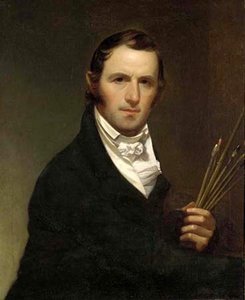
Jacob Eichholtz
1776 - 1842 , Pennsylvania
Belangrijkste feiten
- Artistic Movement Or Style: Romantisch Victoriaanse portretschilderkunst
- Artists Who Influenced This Artist:
- James Peale
- Thomas Sully
- Date Of Birth: 1776
- Date Of Death: 1842
- Full Name: Jacob Eichholtz
- Nationality: Amerikaans
- Notable Artworks:
- Henry Eichholtz Leman
- Phoebe Cassidy Freeman (Mrs. Clarkson Freeman)
- William Clark Frazer
- Robert Coleman
- Place Of Birth: Lancaster, Pennsylvania