Modernism
Sculptural Objects (Cramer 47) (Henry Moore)
Henry Moore (1898–1986) maakte Sculptural Objects (Cramer 47). Het behoort tot de Modernism-stroming. Het is gemaakt van Painting.
- Painting

 Voorvertoning

 Met de hand geschilderd olieverfwerk
 Verstuur
 Delen
 Informatieblad


 Download
 Vergelijkbare items
 Röntgenonderzoek
 Diavoorstelling
 Vraag & antwoord

 Statistieken
Sculptural Objects (Cramer 47), in het kort
- Titel
- Sculptural Objects (Cramer 47)
- Kunstenaar
- Henry Moore (1898–1986)
- Geboren in [jaar]
- Castleford, Verenigd Koninkrijk
- Medium
- Painting
- Beweging
- Modernism
- Periode
- Modern
- Onderwerp
- blue ball, red shoe, red ball, people, sculptures, abstract shapes
Wat stelt Sculptural Objects (Cramer 47) voor?
A Symphony of Form: The Modernist Vision of Henry Moore
In the vast landscape of twentieth-century modernism, few names resonate with as much tactile power and organic grace as Henry Moore. While the world often recognizes him through his monumental bronze figures that command public squares across the globe, his foray into the two-dimensional realm offers a uniquely intimate window into his creative psyche. Sculptural Objects (Cramer 47) stands as a breathtaking testament to this versatility, a painting that does not merely depict shapes but breathes life into them. In this work, Moore transcends the boundaries of his usual medium, using the canvas to explore the very essence of volume, weight, and spatial relationship that defined his sculptural career.
The composition is a masterful dance of geometry and humanity. At first glance, the viewer is greeted by an array of striking shapes—a large, commanding blue sphere, a vibrant red shoe, and smaller crimson accents that punctuate the scene like rhythmic beats in a visual melody. Yet, these are not isolated relics; they exist within a living ecosystem. Moore populates this abstract landscape with figures who interact with these objects, creating a profound dialogue between the inanimate and the animate. This interplay suggests that art is not a distant, untouchable entity, but something woven into the fabric of human experience, inviting us to touch, move, and inhabit the space alongside the subjects.
Technique, Perspective, and the Modernist Spirit
What makes Sculptural Objects (Cramer 47) so captivating for the discerning collector or interior designer is its sophisticated use of perspective and depth. Moore employs a technique that allows for multiple viewpoints to coexist within a single frame, a hallmark of modernist innovation. This creates a sense of kinetic energy, as if the painting is shifting beneath our gaze. The way light and shadow play across the blue ball and the red forms gives them a palpable three-dimensionality, tricking the eye into perceiving weight where there is only pigment. It is this illusion of mass that makes the piece feel remarkably "sculptural" despite being a flat surface.
The emotional impact of the work lies in its balance of abstraction and familiarity. While the shapes are undeniably modern and abstract, the presence of the human figures anchors the piece in a recognizable reality. There is a sense of wonderment, a childlike curiosity as the people navigate this world of colorful totems. For those looking to adorn a sophisticated interior, this painting offers more than just decoration; it provides a focal point of intellectual depth and aesthetic joy. It brings with it the legacy of the English master—a legacy of finding the eternal in the organic and the monumental in the small.
Owning a high-quality reproduction of such a masterpiece allows one to bring the revolutionary spirit of Moore into the home. Whether placed in a minimalist contemporary gallery or a richly textured traditional study, Sculptural Objects (Cramer 47) serves as a conversation starter, an invitation to contemplate the beautiful tension between the shapes we create and the lives we lead.
Hoogwaardige afbeeldingen van Sculptural Objects (Cramer 47)

Protected by copyright: these files are for personal reference, not a licence to republish.
Henry Moore, Sculptural Objects (Cramer 47).
Vragen over Sculptural Objects (Cramer 47), beantwoord
Met welk medium is "Sculptural Objects (Cramer 47)" door Henry Moore uitgevoerd?
Het medium van "Sculptural Objects (Cramer 47)" door Henry Moore is Painting. Reproducties zijn bedoeld om de uitstraling van deze techniek weer te geven.
Wat stelt "Sculptural Objects (Cramer 47)" voor?
De onderwerpen van "Sculptural Objects (Cramer 47)" zijn blue ball, red shoe, red ball, people, sculptures, abstract shapes.
Is "Sculptural Objects (Cramer 47)" vrij van auteursrecht?
Wat betreft het auteursrecht valt "Sculptural Objects (Cramer 47)" onder nog steeds auteursrechtelijk beschermd.
Aan welke kunstenaar wordt "Sculptural Objects (Cramer 47)" toegeschreven?
"Sculptural Objects (Cramer 47)" wordt toegeschreven aan Henry Moore.
Bij welke kunststroming behoort "Sculptural Objects (Cramer 47)" door Henry Moore?
"Sculptural Objects (Cramer 47)" door Henry Moore behoort tot de Modernism-stroming. Deze stroming biedt de stilistische context van het werk.
Tot welke periode in de carrière van Henry Moore behoort "Sculptural Objects (Cramer 47)"?
"Sculptural Objects (Cramer 47)" behoort tot de Modern Period in de carrière van Henry Moore. Deze classificatie plaatst het werk in de context van de ontwikkeling van de kunstenaar.
Behoort "Sculptural Objects (Cramer 47)" van Henry Moore tot het publiek domein, en zo ja, waarom?
De auteursrechtstatus van "Sculptural Objects (Cramer 47)" - nog steeds auteursrechtelijk beschermd - is gebaseerd op het overlijden van de kunstenaar in 1986.
Wat deelt "Sculptural Objects (Cramer 47)" met het overige oeuvre van Henry Moore?
"Sculptural Objects (Cramer 47)" deelt met andere werken van Henry Moore de Modernism-stijl en de terugkerende thema's: modernist abstraction, nature and human form, human experience interaction, versatile artistic approach, evolution of sculpture.
Hoe verhoudt het onderwerp van "Sculptural Objects (Cramer 47)" zich tot de gebruikelijke thema's van Henry Moore?
"Sculptural Objects (Cramer 47)" verbeeldt blue ball, red shoe, red ball, people, sculptures, abstract shapes, terwijl de bekende thema's van Henry Moore modernist abstraction, nature and human form, human experience interaction, versatile artistic approach, evolution of sculpture zijn. Een vergelijking tussen beide laat zien hoe het werk zich verhoudt tot de gebruikelijke onderwerpen van de kunstenaar.
Over de kunstenaar, Henry Moore

1898–1986, Verenigd Koninkrijk
Henry Moore
A Life Sculpted in Form: The World of Henry Moore Henry Spencer Moore, geboren in de Yorkshirese mijnstad Castleford in 1898, werd een van Engelands meest significante en internationaal erkende beeldhouwers van de twintigste eeuw. Zijn reis van bescheiden begin tot wereldwijde erkenning is een bewijs van zijn onwrikbare toewijding aan artistieke exploratie en zijn diepe verbinding met de menselijke vorm en de natuurlijke wereld. Moore’s vader, een zelfstandige man met een passie voor leren, stuurde hem op weg naar formele scholing, weg van het leven als mijnwerker. Zelfs als jonge knaap toonde Moore een innig talent voor het modelleren van klei en houtsnijden, wat voorspelde de weg die zijn leven zou volgen.
Ook van Henry Moore
 Reclining Figure
 Falling Warrior1957
 Sheep 1
 A Miner at Work1942
Essays over Sculptural Objects (Cramer 47)
 Unveiling the Dreamer: The 25 Most Iconic Masterpieces by Gustave MoreauStep into the dreamlike world of Gustave Moreau. Explore 25 iconic Symbolist masterpieces, from mythic legends to opulent textures. Find in…
 The Power of One: Exploring Depth and Emotion in Monochromatic ArtistryExplore the profound depth of monochromatic mastery from Malevich to Klein. Discover the power of single-hue art today.
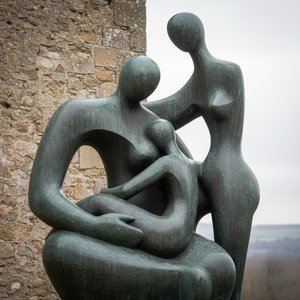 Henry Moore: Sculpting Modernity – Form, Emotion & the Human ConditionExplore the revolutionary sculptures of Henry Moore – abstract forms, reclining figures & powerful expressions of the human condition. Disc…