Voorvertoning
 Verstuur
 Delen
Delen
 Details bekijken
 Gids
Gids

 Download
 Vergelijkbare items
 Röntgenonderzoek
 Diavoorstelling
 Vraag & antwoord
 Statistieken
Patriarch van Armenië

- 59.0 x 42.0 cm


 Lees meer
Giclée / Kunstafdrukken
Giclée- of canvasafdruk van museumkwaliteit met een snelle productie en flexibele afwerkingsmogelijkheden. ( Bestel handgeschilderde reproductie Schakel over naar digitale afbeeldingen)




P118B €10

P118H €10

P118W €10

P438Z €10

P508JH €12

P508YH €12

P805H €10

P805Z €10

P919BZ €10

P919G €10

P919XJ €10

P959ZH €10

P968JZ €12

W106C €8

W218G €10

W218JH €8

W218Y €10

W307PJ €10

W316G €10

W316PJ €8

W316Y €10

W398PJ €8

W4111J €10

W500HY €15

W500JH €15

W692G €12

W849H €8

W940BG €15

W953PJ €8




Kies uit onze vooraf ingestelde maten die overeenkomen met de originele verhoudingen van het kunstwerk.

Voer de gewenste breedte en hoogte in, passend bij uw lijst of muur. Een afdruk kan alleen worden ingekort en nooit groter worden gemaakt dan het origineel; een formaat met andere verhoudingen zal daarom een deel van de afbeelding verliezen. Wij sturen u een digitaal mockup ter goedkeuring voordat we tot drukwerk overgaan. De afbeelding op deze pagina toont niet de werkelijke uitsnede — dit is alleen te zien op het mockup.
Wereldwijde levering () binnen 2 weken in plaats van de standaard 4/5 weken. (6 november)

Gratis wereldwijde expressverzending

Hoogwaardig linnen canvas

Volledige verzendverzekering

Garantie op terugbetaling van invoerrechten

Garantie op exacte kleurweergave

Retourbeleid van 100 dagen (alleen bij defecten)

100% Geld-terug-garantie

Korting bij meerdere afnames
 De optie voor glas is alleen beschikbaar bij een formaat kleiner dan 110 cm.

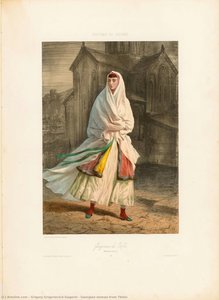
Patriarch van Armenië
Giclée / Kunstafdrukken
Afmetingen reproductie
-


Eindtotaal
€ 72
Een Visioen van Gelukzaligheid: Een Analyse van ‘Patriarch van Armenië’ door Grigory Gagarin
Grigory Grigorievich Gagarin, een Russische kunstenaar, majorgeneraal en diplomaat, staat bekend om zijn prachtige werkstukken die vaak het licht zien van daglicht. Een bijzonder indrukwekkende creatie is ‘Patriarch van Armenië’, een schilderij dat hij voltooid heeft in 1855 en nu wordt gehuisvest in het Kunstpaleis van Georgië – Museum voor Culturele Geschiedenis te Tbilisi. Deze afbeelding, die een complexe combinatie vormt van religieuze symboliek en technische vaardigheid, biedt een fascinerende kijk op zowel Gagarin’s artistieke visie als de historische context waarin hij actief was.- Het Onderwerp: Het schilderij toont een figuur die een lange witte gewaad draagt en een staf vasthoudt, een afbeelding die vaak voorkomt in orthodoxe kunst en verwijst naar het beeld van Christus als Koning der Apostelen. De patriarch staat op een eenvoudige aardgrond, wat een gevoel van nederigheid en eenvoudige wijsheid oproept.
- Stijl: Gagarin’s stijl kan worden beschouwd als een prachtige combinatie van romantiek en natuurlijke observatie. Hij heeft een warme kleurpalet gebruikt, waarbij gebruik gemaakt wordt van kleuren zoals goud en rood om de glorie en het licht weer te geven dat het onderwerp omringt. Een subtiele aandacht voor detail zorgt ervoor dat elk element binnen het schilderij een belangrijke rol speelt bij het overbrengen van het emotionele gevoel dat hij wilde oproepen.
- Techniek: Gagarin gebruikte olie opdoektechniek, een populaire manier om prachtige kleuren en texturen te creëren. Zijn zorgvuldige penseelstreek zorgt voor een vloeiende beweging die de figuur tot leven brengt en een gevoel van dynamische rust uitstraalt. De kunstenaar heeft een hoog niveau van technische bekwaamheid laten zien, wat bijdraagt aan het prachtige karakter van het werkstuk.
- Historische Context: Het schilderij werd voltooid tijdens de Russische Kazachje Oorlog, een periode van grote politieke en militaire spanningen. Gagarin’s betrokkenheid bij deze oorlog heeft zijn kunstwerken gekleurd met een gevoel voor zowel schoonheid als verantwoordelijkheid. De afbeelding dient als een prachtige herinnering aan een tijd waarin kunstenaars een belangrijke rol speelden bij het vormgeven van de nationale identiteit en het uitdrukken van emotionele ervaringen.
- Symboliek: De staf die de patriarch vasthoudt staat symbool voor autoriteit en bescherming, maar ook voor wijsheid en kracht. Het licht dat omringt het onderwerp symboliseert het goddelijke licht dat het goede overweldigt en een gevoel van hoop en gelukzaligheid oproept. Gagarin heeft deze symboliek op een subtiele manier gebruikt om zijn boodschap over te brengen en de kunstenaar’s artistieke visie verder te verdiepen.
Veelgestelde vragen
Is er een gids beschikbaar voor "Patriarch van Armenië" door Grigori Grigorievich Gagarin?
De gids voor "Patriarch van Armenië" is de Informatieblad-pagina van het kunstwerk – een printbaar informatieblad waarop het kunstwerk wordt getoond met het bijschrift, de bronvermelding en de identificatietabel (kunstenaar, data, medium, originele afmetingen, collectie).
Welke emotie straalt "Patriarch van Armenië" door Grigori Grigorievich Gagarin uit?
"Patriarch van Armenië" door Grigori Grigorievich Gagarin straalt een Reflectief emotionele toon uit.
Wat stelt "Patriarch van Armenië" door Grigori Grigorievich Gagarin voor, en welke stemming straalt het uit?
"Patriarch van Armenië" toont georgian art, religious painting, caucasian landscape, saint petersburg style, biblical figure, armenian tradition, 19th century art en de vastgelegde stemming is Sereniteit.
Biografie kunstenaar
Early Life and Education
Grigory Grigorievich Gagarin (1810 – 1893) was a Russian painter, Major General, and administrator whose artistic endeavors intertwined seamlessly with his distinguished diplomatic career. Born in Saint Petersburg to the noble Rurikid princely Gagarin family—his father, Prince Grigory Ivanovich Gagarin, served as Russia’s ambassador to Italy—Gagarin's upbringing instilled within him a profound appreciation for culture and intellectual pursuits. Despite lacking formal artistic training, he benefited immensely from private lessons imparted by Karl Briullov, arguably Saint Petersburg’s foremost painter at the time, fostering an early connection with Romantic ideals and techniques. This formative influence would shape his subsequent artistic vision.Artistic Career and Notable Works
Gagarin's artistic trajectory was inextricably linked to literary luminaries of his era, notably Alexander Pushkin and Mikhail Lermontov. He undertook the monumental task of illustrating Pushkin’s celebrated poems “The Queen of Spades” and “The Tale of Tsar Saltan,” capturing the dramatic spirit and vivid imagery of these iconic narratives. Furthermore, he cultivated close relationships with figures like Lermontov, contributing to the vibrant intellectual milieu of Moscow during his formative years. His artistic output encompassed a diverse range of subjects—primarily portraits of Caucasian peoples—reflecting his fascination with ethnographic studies and documenting the cultural tapestry of the Russian Empire. Among his most enduring masterpieces are “Caucasian Prince” (59 x 42 cm), “Circassian Woman” (59 x 42 cm), "A Priest from Armenia" (59 x 42 cm), “Kurds from Ararat” (59 x 42 cm), and “Georgian Man” (59 x 42 cm)—each meticulously rendered in watercolor, embodying the Romantic aesthetic’s emphasis on emotion and observation. These paintings stand as testament to Gagarin's artistic skill and his commitment to portraying the beauty of diverse cultures.Military Service and Diplomatic Engagement
Beyond his artistic pursuits, Gagarin distinguished himself as a soldier and diplomat, serving with distinction in Paris, Rome, and Constantinople—roles that exposed him to European intellectual currents and broadened his worldview. His tenure in Munich further enriched his understanding of Germanic art and society. Notably, he returned to Russia in 1839, embarking on a multifaceted administrative career that spanned decades. He played a pivotal role in revitalizing the Russian Academy of Arts, fostering artistic innovation and promoting scholarly research. Gagarin’s unwavering dedication to cultural preservation cemented his legacy as a champion of Russian heritage.Legacy and Recognition
Grigory Gagarin's contribution to Russian art is undeniable—his paintings continue to inspire admiration for their stylistic elegance and psychological depth. His work aligns perfectly with the Romantic movement, characterized by its passion for emotion, imagination, and exploration of the human condition. Moreover, his diplomatic accomplishments underscored his commitment to fostering international understanding and strengthening Russia’s position on the global stage. Gagarin's legacy persists in museums across Europe and Russia, where his paintings are treasured as emblems of artistic excellence and cultural heritage—a lasting testament to a remarkable life devoted to both art and service.
Grigori Grigorievich Gagarin
1810 - 1893 , Rusland
Belangrijkste feiten
- Artistic Movement Or Style: Romanticism
- Artists Who Influenced This Artist: ['Karl Briullov']
- Date Of Birth: 29 april 1810
- Date Of Death: 30 january 1893
- Full Name: Grigory Grigorievich Gagarin
- Nationality: Russian
- Notable Artworks:
- Caucasian Prince
- Circassian Woman
- A Priest from Armenia
- Kurds from Ararat
- Georgian Man
- Place Of Birth: Saint Petersburg, Russia
Gerelateerde artikelen

OriginalUniqueArt.com F.A.Q.: Elevating Interiors with Bespoke Wall Murals & Masterpiece Frescoes
Discover the pinnacle of bespoke interior transformation with OriginalUniqueArt.com. Our master fresco artists create exquisite, hand-painted wall murals and ceiling masterpieces tailored to your estate. Elevate your architectural space with timeless, museum-quality artistry.