Bekijk op ware grootte
 Verstuur
 Delen
Delen
 Details bekijken
 Gids voor studentenkunstwerken

 Download
 Vergelijkbare items
 Röntgenonderzoek
 Diavoorstelling
 Statistieken
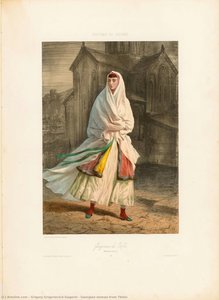
Caucasus Policeman
 Acryl op canvas
- Wanddecoratie
- Romantic Realism
 1855
1855 59.0 x 42.0 cm
 Art Palace of Georgia - Museum of Cultural History
 Lees meer
Giclée / Kunstafdrukken
Giclée- of canvasafdruk van museumkwaliteit met een snelle productie en flexibele afwerkingsmogelijkheden. ( Koop handgeschilderd kunstwerk Schakel over naar digitale afbeeldingen)




P118B €10

P118H €10

P118W €10

P438Z €10

P508JH €12

P508YH €12

P805H €10

P805Z €10

P919BZ €10

P919G €10

P919XJ €10

P959ZH €10

P968JZ €12

W106C €8

W218G €10

W218JH €8

W218Y €10

W307PJ €10

W316G €10

W316PJ €8

W316Y €10

W398PJ €8

W4111J €10

W500HY €15

W500JH €15

W692G €12

W849H €8

W940BG €15

W953PJ €8




Kies uit onze vooraf ingestelde maten die overeenkomen met de originele verhoudingen van het kunstwerk.

Voer de breedte en de hoogte in die u nodig heeft, passend bij uw lijst of uw muur. Een afdruk kan alleen worden ingekort, nooit groter worden gemaakt dan het origineel, waardoor een formaat met een andere verhouding een deel van de afbeelding verliest. Wij sturen u een digitaal mockup ter goedkeuring voordat we iets drukken. De afbeelding op deze pagina toont niet de werkelijke uitsnede — dit is alleen te zien op het mockup.
Wereldwijde levering () binnen 2 weken in plaats van de standaard 4/5 weken. (22 oktober)

Gratis wereldwijde expressverzending

Hoogwaardig linnen canvas

Volledige verzendverzekering

Garantie op terugbetaling van invoerrechten

Garantie op exacte kleurweergave

Retourbeleid van 100 dagen (alleen bij defecten)

100% Geld-terug-garantie

Korting bij meerdere afnames
 De optie voor glas is alleen beschikbaar bij een formaat kleiner dan 110 cm.

Caucasus Policeman
Giclée / Kunstafdrukken
Formaat reproductie
-


Totaalprijs
€ 71
Caucasian Policeman – A Portrait of Courage Amidst Imperial Ambition
Grigory Grigorievich Gagarin’s “Caucasian Policeman,” painted in 1855, transcends mere depiction; it embodies the spirit of a pivotal moment in Russian imperial history and artistic exploration. This striking canvas captures a young Circassian officer standing proudly amidst the arid landscape of Georgia—a testament to Gagarin's fascination with documenting the diverse cultures inhabiting the Caucasus region during his tenure as administrator for Mikhail Vorontsov.
- Subject Matter: The painting portrays a Circassian policeman, symbolizing strength and vigilance against the backdrop of Russian expansion into Georgia. His posture exudes confidence and determination, reflecting the ambition of the era.
- Style & Technique: Gagarin employed a meticulous watercolor technique—characteristic of his time—to achieve remarkable luminosity and detail. The subdued palette emphasizes the harshness of the Caucasus environment while highlighting the officer’s figure with subtle tonal variations.
- Historical Context: Created during Vorontsov's governorship, “Caucasian Policeman” reflects the broader preoccupation with portraying ‘noble savages’ – individuals embodying idealized virtues deemed absent in European society. Gagarin’s work aligns with a trend toward ethnographic realism within Russian art.
The Artist’s Vision & Influences
Born into Saint Petersburg’s aristocratic Gagarin family, Grigory Grigorievich received early artistic instruction from Karl Briullov, cementing his connection to the Romantic tradition. This formative influence is palpable in Gagarin's approach—a dedication to capturing authentic emotion and observation—evident throughout his oeuvre.
- Karl Briullov’s Legacy: Briullov championed a style prioritizing expressive brushwork and tonal harmony, mirroring Gagarin’s commitment to conveying atmosphere and psychological depth.
- Pushkin & Lermontov Connections: Gagarin's friendship with literary giants Alexander Pushkin and Mikhail Lermontov undoubtedly fueled his artistic sensibilities—inspiring him to portray characters with nuance and sensitivity.
Symbolism & Emotional Resonance
"Caucasian Policeman" speaks volumes beyond its visual representation. The officer’s unwavering gaze embodies resilience and honor, qualities valued during a period of intense geopolitical upheaval. Furthermore, the desert landscape symbolizes isolation and challenges—mirroring the heroic spirit depicted in the portrait.
- Color Palette: The muted hues contribute to an overall mood of solemn contemplation, emphasizing the officer’s dignity amidst adversity.
- Composition: Gagarin skillfully utilizes diagonal lines to convey movement and dynamism—underscoring the officer's presence within his environment.
- Emotional Impact: Ultimately, “Caucasian Policeman” evokes admiration for courage, integrity, and a profound connection to one’s heritage – themes resonating powerfully with viewers today.
A Window into Georgian Art History
The painting resides in the Art Palace of Georgia—a repository of exceptional artworks documenting Georgian culture and history. Its inclusion within this museum underscores Gagarin's contribution to preserving cultural memory and celebrating artistic excellence. Consider commissioning a high-quality reproduction to bring this evocative masterpiece into your home or workspace.
Vragen & Antwoorden
Is Grigori Grigorievich Gagarin, maker van "Caucasus Policeman", bekend onder andere namen?
Grigori Grigorievich Gagarin staat ook bekend als Grigory Gagarin.
Hoe kan ik "Caucasus Policeman" door Grigori Grigorievich Gagarin bekijken als een diavoorstelling?
"Caucasus Policeman" door Grigori Grigorievich Gagarin kan worden bekeken als een diavoorstelling op de Diavoorstelling pagina van het kunstwerk.
Tot welke periode in de carrière van Grigori Grigorievich Gagarin behoort "Caucasus Policeman"?
"Caucasus Policeman" vertegenwoordigt de Mature Period van Grigori Grigorievich Gagarin.
Biografie van de kunstenaar
Early Life and Education
Grigory Grigorievich Gagarin (1810 – 1893) was a Russian painter, Major General, and administrator whose artistic endeavors intertwined seamlessly with his distinguished diplomatic career. Born in Saint Petersburg to the noble Rurikid princely Gagarin family—his father, Prince Grigory Ivanovich Gagarin, served as Russia’s ambassador to Italy—Gagarin's upbringing instilled within him a profound appreciation for culture and intellectual pursuits. Despite lacking formal artistic training, he benefited immensely from private lessons imparted by Karl Briullov, arguably Saint Petersburg’s foremost painter at the time, fostering an early connection with Romantic ideals and techniques. This formative influence would shape his subsequent artistic vision.Artistic Career and Notable Works
Gagarin's artistic trajectory was inextricably linked to literary luminaries of his era, notably Alexander Pushkin and Mikhail Lermontov. He undertook the monumental task of illustrating Pushkin’s celebrated poems “The Queen of Spades” and “The Tale of Tsar Saltan,” capturing the dramatic spirit and vivid imagery of these iconic narratives. Furthermore, he cultivated close relationships with figures like Lermontov, contributing to the vibrant intellectual milieu of Moscow during his formative years. His artistic output encompassed a diverse range of subjects—primarily portraits of Caucasian peoples—reflecting his fascination with ethnographic studies and documenting the cultural tapestry of the Russian Empire. Among his most enduring masterpieces are “Caucasian Prince” (59 x 42 cm), “Circassian Woman” (59 x 42 cm), "A Priest from Armenia" (59 x 42 cm), “Kurds from Ararat” (59 x 42 cm), and “Georgian Man” (59 x 42 cm)—each meticulously rendered in watercolor, embodying the Romantic aesthetic’s emphasis on emotion and observation. These paintings stand as testament to Gagarin's artistic skill and his commitment to portraying the beauty of diverse cultures.Military Service and Diplomatic Engagement
Beyond his artistic pursuits, Gagarin distinguished himself as a soldier and diplomat, serving with distinction in Paris, Rome, and Constantinople—roles that exposed him to European intellectual currents and broadened his worldview. His tenure in Munich further enriched his understanding of Germanic art and society. Notably, he returned to Russia in 1839, embarking on a multifaceted administrative career that spanned decades. He played a pivotal role in revitalizing the Russian Academy of Arts, fostering artistic innovation and promoting scholarly research. Gagarin’s unwavering dedication to cultural preservation cemented his legacy as a champion of Russian heritage.Legacy and Recognition
Grigory Gagarin's contribution to Russian art is undeniable—his paintings continue to inspire admiration for their stylistic elegance and psychological depth. His work aligns perfectly with the Romantic movement, characterized by its passion for emotion, imagination, and exploration of the human condition. Moreover, his diplomatic accomplishments underscored his commitment to fostering international understanding and strengthening Russia’s position on the global stage. Gagarin's legacy persists in museums across Europe and Russia, where his paintings are treasured as emblems of artistic excellence and cultural heritage—a lasting testament to a remarkable life devoted to both art and service.
Grigori Grigorievich Gagarin
1810 - 1893 , Rusland
Snelle feiten
- Artistic Movement Or Style: Romanticism
- Artists Who Influenced This Artist: ['Karl Briullov']
- Date Of Birth: 29 april 1810
- Date Of Death: 30 january 1893
- Full Name: Grigory Grigorievich Gagarin
- Nationality: Russian
- Notable Artworks:
- Caucasian Prince
- Circassian Woman
- A Priest from Armenia
- Kurds from Ararat
- Georgian Man
- Place Of Birth: Saint Petersburg, Russia
Gerelateerde artikelen

Ivan Bilibin: A Synthesis of Folklore, Modernism & National Identity in Russian Illustration
Explore the enchanting world of Ivan Bilibin, a master Russian illustrator who synthesized folklore, Art Nouveau & national identity. Discover his iconic fairy tale illustrations and legacy with OriginalUniqueArt.

Vasily Surikov: Historical Epic & Psychological Realism in 19th-Century Russian Painting
Explore the powerful historical paintings of Vasily Surikov, a leading figure of Russian Realism. Discover his dramatic compositions, psychological depth & lasting influence on 19th-century art. Learn about collecting Surikov's masterpieces.

Top 10 Meesterwerken uit de 19e Eeuw: Kunstgeschiedenis voor uw Interieur
Ontdek de 10 meest iconische kunstwerken uit de 19e eeuw! Van romantiek tot impressionisme, leer het verhaal achter meesterwerken van Monet, Van Gogh & Delacroix. Vind museumkwaliteit reproducties en interieurinspiratie op OriginalUniqueArt.com.

Victor Vasnetsov: Myth, Nationalism & the Revival of Russian Fairy Tale Painting
Explore the captivating world of Victor Vasnetsov, a co-founder of Russian folklorist painting. Discover his iconic works, influence on national identity, and lasting legacy in this expert guide.

Vladimir Makovsky: Realism, Social Commentary & Russian Life in Late 19th-Century Painting
Explore the captivating world of Vladimir Makovsky, a leading Russian realist painter. Discover his insightful depictions of 19th-century life, social commentary & legacy with OriginalUniqueArt.