Voorvertoning
 Verstuur
 Delen
Delen
 Details bekijken

 Download
 Vergelijkbare items
 Röntgenonderzoek
 Diavoorstelling
 Statistieken
Madonna with Child
 Oil On Canvas
- WallArt
- Renaissance Humanism
 1475
1475 75.0 x 50.0 cm
 Madonna dell'Orto
 Lees meer
Giclée / Kunstafdrukken
Giclée- of canvasafdruk van museumkwaliteit met een snelle productie en flexibele afwerkingsmogelijkheden. ( Bestel handgeschilderde reproductie Schakel over naar digitale afbeelding)




P118B $10

P118H $10

P118W $10

P438Z $10

P508JH $12

P508YH $12

P805H $10

P805Z $10

P919BZ $10

P919G $10

P919XJ $10

P959ZH $10

P968JZ $12

W106C $8

W218G $10

W218JH $8

W218Y $10

W307PJ $10

W316G $10

W316PJ $8

W316Y $10

W398PJ $8

W4111J $10

W500HY $15

W500JH $15

W692G $12

W849H $8

W940BG $15

W953PJ $8




Kies uit onze vooraf ingestelde maten die overeenkomen met de originele verhoudingen van het kunstwerk.

U kunt uw eigen afmetingen opgeven om in een specifieke lijst of ruimte te passen. Als de door u gekozen maat niet overeenkomt met de proporties van het originele kunstwerk, zullen wij de afbeelding bijsnijden of uitbreiden met een gespiegelde of effen rand. Een digitaal mockup wordt ter goedkeuring naar u verzonden voordat de productie begint.
Houd er rekening mee dat de preview op het scherm de werkelijke bijsneding of uitbreiding niet weergeeft. Alleen de mockup toont de uiteindelijke compositie nauwkeurig.
Hoewel aangepaste maten beschikbaar zijn, raden wij aan een afmeting uit de vooraf bepaalde lijst te kiezen om de originele proporties te behouden.
Wereldwijde levering () binnen 2 weken in plaats van de standaard 4/5 weken. (17 september)

Gratis wereldwijde expressverzending

Hoogwaardig linnen canvas

Volledige verzendverzekering

Garantie op terugbetaling van invoerrechten

Garantie op exacte kleurweergave

Retourbeleid van 100 dagen (alleen bij defecten)

100% Geld-terug-garantie

Korting bij meerdere afnames
 De optie voor glas is alleen beschikbaar bij een formaat kleiner dan 110 cm.

Madonna with Child
Giclée / Kunstafdrukken
Afmetingen reproductie
-


Eindtotaal
$ 81
Giovanni Bellini’s Madonna with Child: A Venetian Renaissance Revelation
Giovanni Bellini stands as an undisputed titan of Venetian painting, bridging the gap between Byzantine tradition and the burgeoning humanist spirit that would define the sixteenth century. Born around 1430 – though some sources suggest 1433 – into a family deeply rooted in artistic heritage, his journey was one marked by ceaseless evolution, fueled by an unparalleled sensitivity to color, light, and the transformative currents of his time. The precise nature of his familial connections remains debated; for years Jacopo Bellini was considered his father, but modern scholarship increasingly points towards Jacopo being Giovanni’s elder half-brother, with Gentile Bellini as his nephew rather than sibling. Regardless of these intricacies, young Giovanni grew up immersed in a workshop brimming with creativity and technical expertise, absorbing the foundational principles of painting from an early age. His formative years instilled within him a profound understanding of artistic craft—a legacy that would resonate throughout his illustrious career.- Provenance: The Madonna with Child, attributed to Giovanni Bellini, began its journey as part of Niccolò d’Attimis’s collection and subsequently passed through the hands of Duveen Brothers before finding its permanent home in the Samuel H. Kress Foundation.
- Dimensions: Measuring 75 x 50 cm (approximately 29.5 x 19.7 inches), this panel exemplifies Bellini's masterful command of scale and proportion—a hallmark of Venetian Renaissance art.
- Location: Currently housed at the Madonna dell’Orto in Venice, Italy, it remains a focal point for scholarly study and artistic appreciation.
The Artistic Style of Giovanni Bellini: Venetian Innovation
Giovanni Bellini revolutionized Venetian painting through his groundbreaking use of color and composition—techniques that distinguished him from his contemporaries and established him as the foremost innovator of his era. His workshop, the Workshop Of Giovanni Bellini, played a pivotal role in shaping the stylistic landscape of Venice during the late fifteenth and early sixteenth centuries, fostering an environment conducive to experimentation and artistic excellence. Bellini’s approach departed significantly from the rigid formalism of preceding generations, embracing instead a luminous palette and dynamic spatial arrangements—influences traceable to Flemish painting and reflecting the humanist ideals prevalent throughout Europe. This stylistic boldness is particularly evident in “Madonna with Child,” where Bellini skillfully employs color to convey emotion and atmosphere—a characteristic that would become synonymous with Venetian Renaissance art.Symbolism and Narrative Depth: Layers of Meaning
“Madonna with Child” transcends mere visual representation, embodying profound symbolic significance rooted in Christian iconography and humanist thought. The depiction of Mary cradling the infant Jesus is a timeless motif—one that speaks to themes of motherhood, purity, divine grace, and spiritual contemplation. Bellini’s meticulous attention to detail—from the delicate folds of Mary's drapery to the serene expression on her face—serves not only to capture beauty but also to communicate complex theological ideas. The landscape backdrop—a stylized depiction of a Venetian hillside—adds another layer of meaning, symbolizing Paradise and representing the spiritual realm beyond earthly concerns. Furthermore, Bellini’s masterful use of light—particularly the diffused glow emanating from the Virgin's robe—creates an atmosphere of ethereal tranquility—enhancing the painting’s emotional impact and inviting viewers to contemplate its profound spiritual resonance.Technique: Tempera on Panel – A Delicate Dance of Color
Bellini’s technique—tempera paint applied to a wooden panel—represents a triumph of artistic craftsmanship and underscores the painter's dedication to achieving unparalleled visual fidelity. Tempera, known for its brilliance and permanence, demanded painstaking preparation and execution—requiring meticulous grinding of pigments and careful layering of translucent glazes to achieve luminous color effects. Bellini’s workshop employed innovative methods—incorporating techniques borrowed from fresco painting—to maximize the vibrancy and depth of his palette. The resulting surface possesses a remarkable smoothness and luster—a testament to Bellini's mastery of material science and artistic skill. This meticulous attention to detail is palpable in every brushstroke, elevating “Madonna with Child” to an exemplar of Venetian Renaissance artistry.Handmade Oil Paintings Reproductions: Bringing Bellini’s Vision to Life
For those seeking to experience the grandeur and beauty of Giovanni Bellini's masterpiece firsthand, OriginalUniqueArt.com offers exceptional reproductions crafted by skilled artisans—preserving the artist’s original vision with breathtaking accuracy. Explore the Museo Correr in Venice or delve deeper into Bellini’s oeuvre on OriginalUniqueArt.com for a comprehensive understanding of this enduring artistic legacy.Biografie van de kunstenaar
A Venetian Master: The Life and Legacy of Giovanni Bellini
Giovanni Bellini, a name inextricably linked to the heart of Venice, stands as a pivotal figure bridging the twilight of the Byzantine era and the dawn of the High Renaissance. Born around 1430 – though some sources suggest 1433 – into a family deeply rooted in the artistic traditions of the city, his life was a continuous evolution, marked by an unparalleled sensitivity to color, light, and the burgeoning humanism that would define the 16th century. The precise details of his familial relationships have long been debated; for years, Jacopo Bellini was considered his father, but modern scholarship increasingly points towards Jacopo being Giovanni’s elder half-brother, with Gentile Bellini as his nephew rather than sibling. Regardless of these intricate family dynamics, young Giovanni grew up immersed in a vibrant workshop, absorbing the foundational techniques and artistic principles from an early age. His initial training likely involved mastering the traditional tempera methods prevalent at the time, but it was his innate talent for observation, coupled with a profound emotional intelligence, that would ultimately distinguish him as a truly exceptional artist.Early Influences and Artistic Foundations
The artistic landscape of 15th-century Venice presented a fascinating confluence of influences – a unique blend of Byzantine grandeur, the emerging styles of Florence, and the distinctive Venetian tradition. The city’s position as a major trading hub exposed its artists to diverse cultural currents and ideas from across Europe and beyond. Simultaneously, the enduring legacy of Byzantium continued to exert a powerful pull on Venetian art, particularly in its use of rich colors, elaborate ornamentation, and spiritual themes. Bellini's early works reflect this complex interplay of influences. Initially, his style bore the unmistakable mark of his father, Jacopo, and his brother, Gentile, characterized by meticulous detail, a restrained emotional palette, and a focus on formal precision. However, even within these early pieces, subtle hints of his future brilliance began to emerge – a delicate handling of light, an increasing interest in naturalistic settings, and a remarkable ability to imbue religious figures with a palpable sense of human pathos and vulnerability. The influence of Andrea Mantegna, his brother-in-law, is also readily apparent during this period, particularly in the clarity of line, the monumental scale of figures, and the use of perspective – elements that would profoundly shape Bellini’s own artistic development. Bellini's early commissions often involved collaborative projects, allowing him to hone his skills alongside some of Venice’s most accomplished painters.The Revolution of Oil Paint: A New Language for Color
Giovanni Bellini’s true breakthrough came with the adoption and masterful exploitation of oil paint. While not the inventor of this technique – it had been introduced to Italy from the East earlier in the century – Bellini was among the first Venetian artists to fully embrace its potential, transforming the very language of painting. Unlike tempera, which demanded a swift, linear approach and often resulted in brittle colors, oil paint allowed for unprecedented blending, richer hues, subtle gradations of tone, and a remarkable degree of luminosity. This newfound freedom fundamentally altered Bellini’s artistic process, enabling him to create paintings that possessed an astonishing depth and vibrancy. His use of color became increasingly sophisticated, moving away from the often-harsh, overly bright palette favored by earlier Venetian painters towards a more nuanced, harmonious, and emotionally resonant range of tones. He masterfully captured the effects of light and atmosphere, imbuing his landscapes with a sense of serenity, mystery, and profound realism – a departure from the stylized representations common in previous generations. This revolutionary approach to oil paint not only transformed Bellini’s own work but also laid the foundation for the distinctive style that would come to define the Venetian school—a style celebrated throughout Europe for its sensuousness, coloristic richness, and atmospheric perspective.Major Works and Artistic Evolution
As Giovanni Bellini matured, his artistic vision continued to evolve with remarkable sophistication. His altarpieces, such as those created for the churches of San Zaccaria and Santa Corona, demonstrate his ability to construct complex compositions filled with symbolic meaning, intricate detail, and profound emotional resonance. The *Transfiguration*, now housed in the Capodimonte Museum in Naples, stands as a prime example of this artistic evolution – a serene depiction of Christ’s transformation combined with a masterful use of light, color, and perspective. He also served as conservator of the paintings within Doge's Palace, further solidifying his position as Venice’s leading artist and cultural figure. Throughout his career, Bellini explored a wide range of subjects – from religious scenes to portraits, landscapes, and mythological narratives—each imbued with his unique artistic sensibility. His later works are characterized by a heightened sense of spirituality, a greater emphasis on the emotional expression of figures, and an increasingly lyrical use of color.A Lasting Legacy: Influence and Remembrance
Giovanni Bellini’s impact extended far beyond his own lifetime. He became a mentor to a generation of younger painters, including Giorgione and Titian, who would inherit his techniques, aesthetic principles, and artistic vision—adapting them to their own individual styles and contributing to the golden age of Venetian painting. His influence can be seen in countless works created by artists throughout Europe, solidifying his place as one of the most important figures in Western art history. Bellini’s legacy is not simply one of technical brilliance; it is a testament to the power of art to transcend time and connect us to the enduring values of human experience. From the serene beauty of his Madonnas to the dramatic intensity of his religious scenes, Bellini's work continues to inspire awe and admiration centuries after its creation—a vibrant reminder of Venice’s artistic heritage and a profound exploration of the mysteries of faith, beauty, and the human spirit.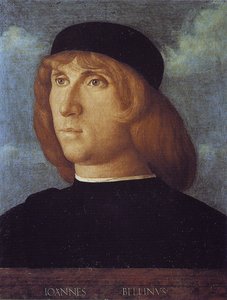
Giovanni Bellini
1433 - 1516 , Italië
Belangrijkste feiten
- Artistic Movement Or Style: Venetiaanse School
- Artists Or Movements Influenced By This Artist:
- Giorgione
- Titian
- Artists Who Influenced This Artist:
- Jacopo Bellini
- Gentile Bellini
- Mantegna
- Date Of Birth: c. 1430
- Date Of Death: 1516
- Full Name: Giovanni Bellini
- Nationality: Italiaans
- Notable Artworks:
- St. Jerome
- Transfiguratie
- Place Of Birth: Venetië, Italië
Gerelateerde artikelen
Top 25 Meesterwerken: Een Reis door de Galleria degli Uffizi, Florence | OriginalUniqueArt
Ontdek de top 25 meesterwerken van de Galleria degli Uffizi, Florence! Reis door de Renaissance met Botticelli, Leonardo da Vinci & Michelangelo. Kunst reproducties van museumkwaliteit voor uw interieur. Explore the full collection on OriginalUniqueArt.com.

Filippino Lippi: Renaissance Innovation Bridging Faith & Humanism
Explore the captivating world of Filippino Lippi, a Renaissance master bridging faith & humanism through innovative art. Discover his key works, influences, and lasting legacy with OriginalUniqueArt.
Filippo Lippi: Bridging Renaissance Devotion & Artistic Innovation
Explore the life & revolutionary art of Filippo Lippi, a pivotal Renaissance painter. Discover his masterpieces, influence on Botticelli, and investment potential. Expert analysis at OriginalUniqueArt.
Divine Love: A Curated Guide to the Most Iconic Madonna and Child Masterpieces in Art History
Embark on a sophisticated journey through art history with our curated guide to the most iconic Madonna and Child masterpieces. Discover the profound beauty, theological depth, and enduring legacy of these sacred Renaissance treasures.
Raphael's Meesterwerken: 25 Iconische Kunstwerken voor uw Interieur | OriginalUniqueArt
Ontdek de 25 meest iconische meesterwerken van Raphael! Duik in de Renaissance kunst, bewonder zijn portretten & religieuze schilderijen. Hoogwaardige reproducties voor uw interieur op OriginalUniqueArt.com.