Voorvertoning
 Verstuur
 Delen
Delen
 Details bekijken
 Gids
Gids

 Download
 Vergelijkbare items
 Röntgenonderzoek
 Diavoorstelling
 Q&A
Q&A Statistieken
Imago Pietatis
 Tempera On Panel
- Early Renaissance
 1457
1457- Renaissance
 40.0 x 50.0 cm
 Museo Poldi Pezzoli
 Lees meer
Giclée / Kunstafdrukken
Giclée- of canvasafdruk van museumkwaliteit met een snelle productie en flexibele afwerkingsmogelijkheden. ( Bestel handgeschilderde reproductie Schakel over naar digitale afbeeldingen)




P118B €10

P118H €10

P118W €10

P438Z €10

P508JH €12

P508YH €12

P805H €10

P805Z €10

P919BZ €10

P919G €10

P919XJ €10

P959ZH €10

P968JZ €12

W106C €8

W218G €10

W218JH €8

W218Y €10

W307PJ €10

W316G €10

W316PJ €8

W316Y €10

W398PJ €8

W4111J €10

W500HY €15

W500JH €15

W692G €12

W849H €8

W940BG €15

W953PJ €8




Kies uit onze vooraf ingestelde maten die overeenkomen met de originele verhoudingen van het kunstwerk.

Voer de gewenste breedte en hoogte in, passend bij uw lijst of muur. Een afdruk kan alleen worden ingekort en nooit groter worden gemaakt dan het origineel; een formaat met andere verhoudingen zal daarom een deel van de afbeelding verliezen. Wij sturen u een digitaal mockup ter goedkeuring voordat we tot drukwerk overgaan. De afbeelding op deze pagina toont niet de werkelijke uitsnede — dit is alleen te zien op het mockup.
Wereldwijde levering () binnen 2 weken in plaats van de standaard 4/5 weken. (29 oktober)

Gratis wereldwijde expressverzending

Hoogwaardig linnen canvas

Volledige verzendverzekering

Garantie op terugbetaling van invoerrechten

Garantie op exacte kleurweergave

Retourbeleid van 100 dagen (alleen bij defecten)

100% Geld-terug-garantie

Korting bij meerdere afnames
 De optie voor glas is alleen beschikbaar bij een formaat kleiner dan 110 cm.

Imago Pietatis
Giclée / Kunstafdrukken
Afmetingen reproductie
-


Eindtotaal
€ 71
A Vision of Devotion: The Soul of Bellini’s Imago Pietatis
In the quiet corridors of the Fondazione artistica Poldi Pezzoli Museum in Milan, there exists a window into the profound spiritual landscape of the Venetian Renaissance. Giovanni Bellini’s Imago Pietatis, created around 1457, is far more than a mere depiction of Christ's burial; it is an intimate, breathing meditation on faith, sorrow, and the eternal cycle of life. As the viewer approaches this masterpiece, they are not simply looking at a painting, but are invited into a sacred space where the boundaries between the earthly and the divine begin to dissolve. The central figure of Jesus, bearing the unmistakable pallor of death, rises from the stone sarcophagus, his presence commanding a heavy, reverent silence that resonates through the centuries.
Bellini’s early mastery is on full display here, showcasing a transition from the rigid, sculptural influences of Andrea Mantegna toward a more luminous, atmospheric style that would eventually define the Venetian school. The composition is structured with a breathtaking precision; the perspective of the tomb's side walls draws the eye inward, guiding the observer through a meticulously rendered landscape. Beyond the immediate tragedy of the sepulchre, one finds a world in motion—a footbridge crossing a gentle watercourse, dense forests, and a distant cityscape that stretches toward a horizon bathed in the soft, rosy light of a new dawn. This movement from the dark, enclosed space of death toward the expansive, light-filled distance serves as a visual metaphor for the journey from mortality to immortality.
Symbolic Landscapes and the Language of Light
Every element within this composition is steeped in a deliberate, symbolic language designed to stir the soul. Bellini utilizes the natural world to mirror the theological weight of the subject matter. On the right, a stark, dry tree clings to a high cliff, serving as a poignant emblem of sin and the desolation of death. In beautiful, heartbreaking contrast, the left side of the frame features lush, vibrant foliage, representing the promise of rebirth and the redemption of humankind through Christ's sacrifice. This duality—the withered against the blooming—creates a tension that is both intellectually stimulating and emotionally moving.
The technique employed, tempera on wood panel, allows for an extraordinary level of detail and a subtle, velvety texture that enhances the painting's emotional depth. Through the careful layering of pigments, Bellini achieves a soft, diffused light that seems to emanate from within the landscape itself. This light does not merely illuminate; it sanctifies, casting a gentle glow over the water and the distant hills, suggesting that even in the depths of grief, divine grace is present. For the collector or the interior designer, this artwork offers a profound sense of tranquility and intellectual richness, making it an ideal centerpiece for spaces dedicated to reflection, elegance, and timeless beauty.
An Enduring Legacy for the Discerning Collector
To possess a reproduction of Imago Pietatis is to bring a piece of Renaissance history into the modern home. The muted earth tones, punctuated by subtle blues and tender pinks, provide a sophisticated palette that complements both classical and contemporary interiors. It is a work that demands attention not through loudness, but through its quiet, persistent power. Whether placed in a study, a library, or a grand living hall, this painting serves as a constant reminder of the human capacity for resilience and the enduring beauty found in moments of profound contemplation.
Veelgestelde vragen
Hoeveel mensen bekijken "Imago Pietatis"?
Statistieken over "Imago Pietatis" door Giovanni Bellini zijn te vinden op de Statistieken-pagina van het kunstwerk: maandelijkse weergaven van het kunstwerk, weergaven van de werken van de kunstenaar en een uitsplitsing naar land en taal van recente bezoekers.
Op welke fase in de carrière van Giovanni Bellini komt de datum uit 1457 van "Imago Pietatis" overeen?
De datum uit 1457 plaatst "Imago Pietatis" in de Early Manner van de ontwikkeling van Giovanni Bellini.
Welke kleuren overheersen in "Imago Pietatis" door Giovanni Bellini?
"Imago Pietatis" wordt gekenmerkt door een Earthy palet met Walnut (#73532d) als dominante kleur.
Biografie kunstenaar
A Venetian Master: The Life and Legacy of Giovanni Bellini
Giovanni Bellini, a name inextricably linked to the heart of Venice, stands as a pivotal figure bridging the twilight of the Byzantine era and the dawn of the High Renaissance. Born around 1430 – though some sources suggest 1433 – into a family deeply rooted in the artistic traditions of the city, his life was a continuous evolution, marked by an unparalleled sensitivity to color, light, and the burgeoning humanism that would define the 16th century. The precise details of his familial relationships have long been debated; for years, Jacopo Bellini was considered his father, but modern scholarship increasingly points towards Jacopo being Giovanni’s elder half-brother, with Gentile Bellini as his nephew rather than sibling. Regardless of these intricate family dynamics, young Giovanni grew up immersed in a vibrant workshop, absorbing the foundational techniques and artistic principles from an early age. His initial training likely involved mastering the traditional tempera methods prevalent at the time, but it was his innate talent for observation, coupled with a profound emotional intelligence, that would ultimately distinguish him as a truly exceptional artist.Early Influences and Artistic Foundations
The artistic landscape of 15th-century Venice presented a fascinating confluence of influences – a unique blend of Byzantine grandeur, the emerging styles of Florence, and the distinctive Venetian tradition. The city’s position as a major trading hub exposed its artists to diverse cultural currents and ideas from across Europe and beyond. Simultaneously, the enduring legacy of Byzantium continued to exert a powerful pull on Venetian art, particularly in its use of rich colors, elaborate ornamentation, and spiritual themes. Bellini's early works reflect this complex interplay of influences. Initially, his style bore the unmistakable mark of his father, Jacopo, and his brother, Gentile, characterized by meticulous detail, a restrained emotional palette, and a focus on formal precision. However, even within these early pieces, subtle hints of his future brilliance began to emerge – a delicate handling of light, an increasing interest in naturalistic settings, and a remarkable ability to imbue religious figures with a palpable sense of human pathos and vulnerability. The influence of Andrea Mantegna, his brother-in-law, is also readily apparent during this period, particularly in the clarity of line, the monumental scale of figures, and the use of perspective – elements that would profoundly shape Bellini’s own artistic development. Bellini's early commissions often involved collaborative projects, allowing him to hone his skills alongside some of Venice’s most accomplished painters.The Revolution of Oil Paint: A New Language for Color
Giovanni Bellini’s true breakthrough came with the adoption and masterful exploitation of oil paint. While not the inventor of this technique – it had been introduced to Italy from the East earlier in the century – Bellini was among the first Venetian artists to fully embrace its potential, transforming the very language of painting. Unlike tempera, which demanded a swift, linear approach and often resulted in brittle colors, oil paint allowed for unprecedented blending, richer hues, subtle gradations of tone, and a remarkable degree of luminosity. This newfound freedom fundamentally altered Bellini’s artistic process, enabling him to create paintings that possessed an astonishing depth and vibrancy. His use of color became increasingly sophisticated, moving away from the often-harsh, overly bright palette favored by earlier Venetian painters towards a more nuanced, harmonious, and emotionally resonant range of tones. He masterfully captured the effects of light and atmosphere, imbuing his landscapes with a sense of serenity, mystery, and profound realism – a departure from the stylized representations common in previous generations. This revolutionary approach to oil paint not only transformed Bellini’s own work but also laid the foundation for the distinctive style that would come to define the Venetian school—a style celebrated throughout Europe for its sensuousness, coloristic richness, and atmospheric perspective.Major Works and Artistic Evolution
As Giovanni Bellini matured, his artistic vision continued to evolve with remarkable sophistication. His altarpieces, such as those created for the churches of San Zaccaria and Santa Corona, demonstrate his ability to construct complex compositions filled with symbolic meaning, intricate detail, and profound emotional resonance. The *Transfiguration*, now housed in the Capodimonte Museum in Naples, stands as a prime example of this artistic evolution – a serene depiction of Christ’s transformation combined with a masterful use of light, color, and perspective. He also served as conservator of the paintings within Doge's Palace, further solidifying his position as Venice’s leading artist and cultural figure. Throughout his career, Bellini explored a wide range of subjects – from religious scenes to portraits, landscapes, and mythological narratives—each imbued with his unique artistic sensibility. His later works are characterized by a heightened sense of spirituality, a greater emphasis on the emotional expression of figures, and an increasingly lyrical use of color.A Lasting Legacy: Influence and Remembrance
Giovanni Bellini’s impact extended far beyond his own lifetime. He became a mentor to a generation of younger painters, including Giorgione and Titian, who would inherit his techniques, aesthetic principles, and artistic vision—adapting them to their own individual styles and contributing to the golden age of Venetian painting. His influence can be seen in countless works created by artists throughout Europe, solidifying his place as one of the most important figures in Western art history. Bellini’s legacy is not simply one of technical brilliance; it is a testament to the power of art to transcend time and connect us to the enduring values of human experience. From the serene beauty of his Madonnas to the dramatic intensity of his religious scenes, Bellini's work continues to inspire awe and admiration centuries after its creation—a vibrant reminder of Venice’s artistic heritage and a profound exploration of the mysteries of faith, beauty, and the human spirit.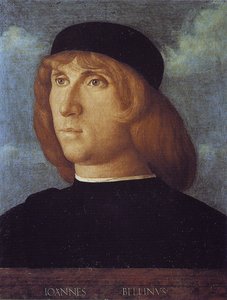
Giovanni Bellini
1433 - 1516 , Italië
Belangrijkste feiten
- Artistic Movement Or Style: Venetiaanse School
- Artists Or Movements Influenced By This Artist:
- Giorgione
- Titian
- Artists Who Influenced This Artist:
- Jacopo Bellini
- Gentile Bellini
- Mantegna
- Date Of Birth: c. 1430
- Date Of Death: 1516
- Full Name: Giovanni Bellini
- Nationality: Italiaans
- Notable Artworks:
- St. Jerome
- Transfiguratie
- Place Of Birth: Venetië, Italië
Gerelateerde artikelen

Divine Light & Golden Splendor: A Journey Through the Sacred Grandeur of High Medieval Art
Embark on a soulful journey through High Medieval art. Explore the divine light of Gothic cathedrals, Byzantine splendor, and sacred masterpieces that shaped Western history with our expert-led cultural reflections.
Illuminating Faith & Power: A Journey Through Medieval Art (c. 500 – c. 1500)
Explore the rich history of Medieval Art (c. 500 – c. 1500) with OriginalUniqueArt. Discover Byzantine mosaics, Gothic cathedrals & Renaissance masterpieces. Expert insights & museum-quality reproductions.

Sacred Symbols & Golden Light: A Journey Through the Divine Artistry of the Early Medieval Era
Embark on a visual journey through Early Medieval art. Explore the profound beauty of illuminated manuscripts, sacred symbols, and golden light through an expert historical lens, celebrating the enduring legacy of medieval craftsmanship and divine artistry.
Late Medieval Masterpieces: 10 Artworks That Defined an Era | OriginalUniqueArt
Journey through 10 defining Late Medieval masterpieces – from Giotto's frescoes to Jan van Eyck’s realism. Explore the stories, techniques & vibrant colors of Gothic art. Find museum-quality reproductions and elevate your home decor with OriginalUniqueArt.com! Discover all masterpieces on OriginalUniqueArt.com

High Medieval Art: 10 Masterpieces That Shaped an Era | OriginalUniqueArt
Journey through High Medieval Art! Explore 10 iconic masterpieces – from Giotto's frescoes to stunning Gothic cathedrals. Discover the stories behind these timeless paintings, sculptures & illuminated manuscripts. Find museum-quality art reproductions at OriginalUniqueArt.com.