

 Voorvertoning
 Verstuur
 Delen
Delen
 Details bekijken
 Gids
Gids

 Download
 Vergelijkbare items
 Röntgenonderzoek
 Diavoorstelling
 Q&A
Q&A Statistieken
Mountain Landscape with a Windmill
 Oil On Canvas
- WallArt
- Post-Impressionism
 26.0 x 35.0 cm
 National Trust
 Lees meer
De kunstwerken die op deze pagina worden weergegeven, zijn beschermd door de auteursrechtwetgeving, wat betekent dat het ons wettelijk niet is toegestaan om identieke reproducties te maken of te verkopen. Deze bescherming wordt gehandhaafd onder internationale overeenkomsten zoals de Conventie van Bern en door nationale wetgeving, waaronder de bepalingen van de Amerikaanse auteurswet - Titel 17. Alle rechten voorbehouden. Reproduceren of distribueren van afbeeldingen is niet toegestaan zonder uitdrukkelijke schriftelijke toestemming van WahooArt.com en de rechthebbenden.
Als een respectvol en legaal alternatief bieden wij op maat gemaakte, handgeschilderde kunstwerken aan die geïnspireerd zijn op het origineel. Onze bekwame en professionele kunstenaars bestuderen zorgvuldig de stijl, sfeer en artistieke essentie van het origineel om een nieuw, uniek werk te creëren dat dezelfde emotie oproept – terwijl het een op zichzelf staande, originele creatie blijft.
Deze methode voldoet volledig aan de auteursrechtwetgeving, omdat het niet gaat om het kopiëren of dupliceren van het beschermde kunstwerk. In plaats daarvan is er sprake van een creatieve herinterpretatie — een nieuw schilderij dat door het origineel wordt geïnspireerd, maar er niet identiek aan is.
Handgemaakte olieverfreproductie
Met de hand geschilderd in olieverf op canvas in uw gewenste maat en lijst, op bestelling gemaakt door onze kunstenaars. ( Schakel over naar print Schakel over naar digitale afbeeldingen)




P118B €10

P118H €10

P118W €10

P438Z €10

P508JH €12

P508YH €12

P805H €10

P805Z €10

P919BZ €10

P919G €10

P919XJ €10

P959ZH €10

P968JZ €12

W106C €8

W218G €10

W218JH €8

W218Y €10

W307PJ €10

W316G €10

W316PJ €8

W316Y €10

W398PJ €8

W4111J €10

W500HY €15

W500JH €15

W692G €12

W849H €8

W940BG €15

W953PJ €8




Kies uit onze vooraf ingestelde maten die overeenkomen met de originele verhoudingen van het kunstwerk.

Voer de breedte en hoogte in die u nodig heeft, passend bij uw lijst of uw muur. Omdat dit handgeschilderd is, kan de kunstenaar bij een afmeting met een andere beeldverhouding iets meer rondom het schilderij schilderen of juist iets meer weglaten — u kiest zelf. Wij sturen u een digitaal mockup ter goedkeuring voordat het schilderwerk begint. De afbeelding die op deze pagina wordt getoond, is niet het uiteindelijke resultaat — alleen de mockup geeft dit weer.
Na de bestelling zal het team van OriginalUniqueArt.com per e-mail contact opnemen met de klant voor instructies en een mockup-voorbeeld sturen.
Wereldwijde levering () binnen 3 tot 4 weken in plaats van de standaard 5 weken. (28 oktober). Zonder concessies aan de kwaliteit.

Gratis wereldwijde expressverzending

Hoogwaardig linnen canvas

Volledige verzendverzekering

Garantie op terugbetaling van invoerrechten

Garantie op exacte kleurweergave

Retourbeleid van 100 dagen (alleen bij defecten)

100% Geld-terug-garantie

Korting bij meerdere afnames
 De optie voor glas is alleen beschikbaar bij een formaat kleiner dan 110 cm.

Mountain Landscape with a Windmill
Druktechniek
Afmetingen reproductie
-


Eindtotaal
€ 264
A Vision of the English Countryside: Gilbert Spencer’s ‘Mountain Landscape with a Windmill’
Gilbert Spencer's “Mountain Landscape with a Windmill” isn’t merely a depiction of a rural scene; it’s an immersion into the heart of late 19th-century England. Painted around 19XX, this artwork captures a quintessential moment in time – a quiet afternoon bathed in diffused light, dominated by the steadfast presence of a traditional windmill against a backdrop of rolling hills and verdant fields. Spencer, deeply rooted in his native Cookham, eschewed grand narratives or dramatic events, instead focusing on the subtle beauty of everyday life and the enduring connection between humanity and nature. The painting speaks to a sense of tranquility and timelessness, inviting the viewer into a world where the rhythms of rural existence are both comforting and profoundly evocative.
Fauvist Echoes and Post-Impressionist Sensibilities
Spencer’s artistic approach is immediately recognizable as a synthesis of Fauvist and Post-Impressionist influences. The bold, unblended brushstrokes—a hallmark of the Fauvist movement—create a vibrant energy within the landscape, injecting color with an almost impulsive quality. Yet, these energetic marks are tempered by the more considered techniques of Post-Impressionism, evident in the careful observation of light and form. The colors aren’t realistic representations of nature; instead, they're emotionally charged – deep greens, ochres, and blues conveying a sense of atmosphere and mood rather than precise detail. The simplified forms of the windmill and hills contribute to this stylized effect, prioritizing expressive power over strict adherence to photographic accuracy.
The Symbolism of Industry and Nature
The prominent windmill itself is more than just a picturesque element; it’s a potent symbol. In rural England, windmills represented both industry – the grinding of grain, the harnessing of natural energy – and a connection to the land. Spencer masterfully balances these dualities, presenting the windmill not as a machine imposing itself upon nature, but as an integral part of its landscape. The surrounding hills, bathed in soft light, suggest a harmonious relationship between human endeavor and the natural world. The composition invites contemplation on themes of tradition, progress, and the enduring spirit of rural life.
A Legacy of English Realism
Gilbert Spencer’s “Mountain Landscape with a Windmill” stands as a testament to his commitment to realism while embracing innovative artistic techniques. His work reflects a deep understanding of the English countryside—a landscape he loved and meticulously observed throughout his life. As a brother to the renowned Stanley Spencer, Gilbert forged his own distinct path, prioritizing clarity, directness, and an honest portrayal of everyday life. This painting exemplifies his ability to capture not just the visual appearance of a scene but also its emotional resonance, solidifying his place as a key figure in British art history. Reproductions offer a beautiful way to bring this evocative landscape into your home or office, allowing you to experience the tranquility and timeless beauty of rural England.
Veelgestelde vragen
Is "Mountain Landscape with a Windmill" verkrijgbaar als fine art print?
Een print van "Mountain Landscape with a Windmill" door Gilbert Spencer kan rechtstreeks worden besteld op de Fine Art Print-pagina: een fine art print op katoenen canvas of archiefwaardig canvaspapier.
Welk gevoel roepen de kleuren van "Mountain Landscape with a Windmill" door Gilbert Spencer op?
Het Neutrals palet van "Mountain Landscape with a Windmill" door Gilbert Spencer vloeit prachtig samen met de Tranquil emotionele toon. Kleur is een van de manieren waarop een kunstwerk gevoel overbrengt.
Onder welke andere namen is Gilbert Spencer bekend?
Gilbert Spencer staat ook bekend als Stanley Spencer.
Biografie kunstenaar
Een leven geworteld in Engelse bodem: De wereld van Gilbert Spencer
Gilbert Spencer, geboren op 4 augustus 1892 in het idyllische dorpje Cookham, Verenigd Koninkrijk, was een schilder die diep verbonden was met de ritmes en nuances van het Engelse leven. Hij leefde tot 1979 en liet een oeuvre na dat op verstilde maar krachtige wijze de essentie van de landschappen en de mensen van zijn natie vastlegt. Als achtste van elf kinderen uit een groot gezin, met een vader die via zijn rol als organist en docent een liefde voor muziek in hem plantte, was de vroege jeugd van Spencer er een van bescheiden middelen maar rijke intellectuele stimulatie. Deze opvoeding voedde een gevoeligheid die zijn artistieke visie diepgaand zou vormen. Misschien wel de meest betekenisvolle familiale band was die met zijn jongere broer, Sir Stanley Spencer, een beroemde schilder wiens eigen kenmerkende stijl vaak vergelijking uitlokte; toch vond Gilbert zijn eigen pad met een onwankelbare toewijding aan het realisme en een uniek persoonlijke interpretatie van de wereld om hem heen. Hoewel zijn formele opleiding werd beperkt door financiële omstandigheden, boden de levendige gesprekken binnen zijn familie een onschatbare vervanging die een nieuwsgierige geest prikkelde, altijd hongerig naar artistieke expressie.Vormende jaren en artistiek ontwaken
De formele artistieke training van Spencer begon in 1911 aan de Camberwell School of Arts and Crafts, gevolgd door studies in houtsnijwerk aan het Royal College of Art. Het was echter zijn tijd aan de Slade School of Fine Art in Londen (1913-1915) die werkelijk bepalend zou blijken. Daar kwam hij onder de diepgaande invloed van Henry Tonks, een meesterlijke tekenaar wiens nadruk op observatie en technische vaardigheid een onuitwisbare stempel drukte op Spencers benadering van het schilderen. Hij blonk uit aan de Slade, waarbij hij in 1914 de prijs voor modeltekenen won en erkenning kreeg voor zijn ambitieuze muurschilderingproject, "The Seven Ages of Man". Dit vroege succes wees al op een talent voor grootschalige composities die later zouden tot uiting komen in zijn belangrijke werk met muurschilderingen. Naast het formele curriculum verbreedden de contacten met de Bloomsbury-groep via Lady Ottoline Morrell — een prominente mecenas van de kunsten en gastvrouw op Garsende Manor — zijn artistische horizon en introduceerden hem in een levendige intellectuele kring. Deze vroege ervaringen legden het fundament voor een carrière die werd gekenmerkt door zowel technische beheersing als een diepe betrokkenheid bij de culturele stromingen van zijn tijd.Evoluerende stijlen en blijvende thema's
De artistieke ontwikkeling van Spencer werd gemarkeerd door een verkenning van diverse stijlen, maar hij keerde altijd terug naar een kern van realisme. Zijn vroege landschappen, zoals “Sashes Meadow, Cookham” (1914), onthullen de invloed van het impressionisme in hun delicate behandeling van licht en kleur. Latere werken, zoals "Mountain Landscape with a Windmill", tonen een omarming van fauvistische en postimpressionistische elementen, gekenmerkt door dapperdere penseelstreken en vereenvoudigde vormen. Toch liet Spencer zijn toewijding aan het accuraat afbeelden van het Engelse platteland en zijn bewoners nooit volledig varen. Zijn onderwerp varieerde consistent tussen landschappen, portretten, genrescènes en muurschilderingen — alles wat een diepe verbondenheid met het rurale Engeland weerspiegelde. Hij bezat het uitzonderlijke vermogen om de stille waardigheid van het dagelijks leven vast te leggen, waardoor zelfs schijnbaar alledaagse scènes werden doordrenkt met een gevoel van schoonheid en betekenis. Deze toewijding aan het portretteren van het Engelse leven met helderheid en directheid werd het handelsmerk van zijn artistieke identiteit.Prestaties en nalatenschap
Gedurende zijn hele carrière genoot Gilbert Spencer aanzienlijke erkenning voor zijn bijdragen aan de Britse kunst. Zijn creatie van muurschilderingen in Holywell Manor (1934-136), die de stichtingslegende van Balliol College uitbeelden, toonde zijn vaardigheid in grootschalige narratieve schilderkunst. Tijdens de Tweede Wereldoorlog diende hij als officieel oorlogskunstenaar (1940–1943), waarbij hij scènes van militaire training en het leven aan het thuisfront documenteerde. Deze periode bood een unieke kans om de impact van het conflict op het Engelse landschap en zijn mensen te observeren en vast te leggen. Het talent van Spencer werd verder erkend door zijn verkiezing tot Associate Royal Academician in 1950, gevolgd door volledig lidmaatschap in 1959. Ook genoot hij een vooraanstaande carrière als docent, met professoren aan het Royal College of Art (1932-1948), de Glasgow School of Art (1948–1950) en de Camberwell School of Arts and Crafts (1950–1957). Zijn gepubliceerde werken, waaronder zijn autobiografie "Memoirs of a Painter" (1974) en een biografie van zijn broer Stanley Spencer (1961), bieden waardevolle inzichten in zijn artistieke filosofie en de creatieve dynamiek binnen zijn familie. Opmerkelijke werken omvatten “Troops in the Countryside”, dat op prachtige wijze een vreedzame coëxistentie tussen soldaten en het landelijke leven vastlegt; "Summer Evening, Durdham Downs", een dramatische weergave van een sociale bijeenkomst; en “Boy Holding a Rabbit” (1931), een tedere vertolking van kinderlijke onschuld. Gilbert Spencer wordt herinnerd als een belangrijke Britse schilder die de essentie van het Engelse leven vastlegde met helderheid, directheid en een scherp oog voor detail. Zijn werk biedt waardevolle inzichten in het sociale en rurale landschap van het 20e-eeuwse Engeland, en zijn nalatenschap blijft kunstenaars en kunstliefhebbers inspireren. Hij is eveneens van groot belang als de broer van Stanley Spencer, wat bijdraagt aan het begrip van de carrières van beide kunstenaars binnen een familiale context.
Gilbert Spencer
1892 - 1979 , Verenigd Koninkrijk
Belangrijkste feiten
- Artistic Movement Or Style: Realisme
- Artists Or Movements Influenced By This Artist: ['Impressionisme']
- Artists Who Influenced This Artist: ['Henry Tonks']
- Date Of Birth: 4 augustus 1892
- Date Of Death: 14 januari 1979
- Full Name: Gilbert Spencer
- Nationality: Britse kunstenaar
- Notable Artworks:
- Sashes Meadow, Cookham
- Troepen in het landschap
- Zomeravond Durdham Downs
- Place Of Birth: Cookham, Verenigd Koninkrijk
Gerelateerde artikelen
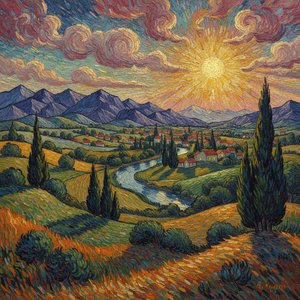
Beyond Impressionism: The Emotional Depth and Vibrant Evolution of Post-Impressionist Landscapes
Explore the profound evolution of Post-Impressionist landscapes. From Van Gogh's emotional brushwork to Cézanne's structural mastery, discover how these visionaries redefined art history through color and form in this expert guide for fine art enthusiasts.
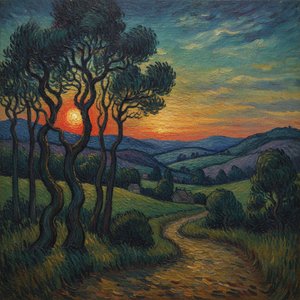
Beyond the Light: Capturing Raw Emotion and Subjective Vision in Post-Impressionist Landscapes
Explore the profound emotional depth of Post-Impressionist landscapes. Discover how masters like Van Gogh moved beyond light to capture raw human feeling through vibrant color and expressive texture in this expert art history retrospective.

Evocations of Place: A Historical Journey Through Landscape Art
Explore the rich history of landscape art with OriginalUniqueArt. Discover renowned artists, movements like Impressionism & Romanticism, and expert guidance for collecting timeless pieces. Find your perfect serene escape today!

Paul Cézanne's Top 25 Meesterwerken: Kleur, Vorm & De Basis van Modern Art | OriginalUniqueArt
Ontdek de 25 meest iconische schilderijen van Paul Cézanne! Duik in zijn kleurrijke wereld, leer over impressionisme & post-impressionisme en bewonder meesterwerken als 'De Baders'. Vind museumkwaliteit reproducties & interieurinspiratie op OriginalUniqueArt.com.
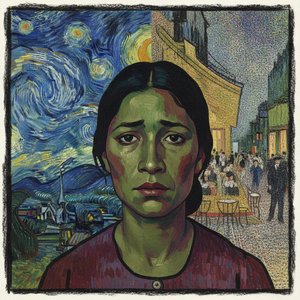
Beyond the Brush: How Post-Impressionism Recharged Modern Art with Bold Color and Raw Emotion
Dive into the high-energy revolution of Post-Impressionism. Discover how masters like Cézanne and Van Gogh traded fleeting light for bold colors and raw emotion, forever recharging modern art with the vibrant, structural intensity that defines today's most iconic visual aesthetics.
