The Impressionist Foundation: Capturing Light Before the Revolution
 Landscape painting
Landscape painting, also known as landscape art, is the depiction in painting of natural scenery such as mountains, valleys, rivers, trees, and forests, especially where the main subject is a wide view—with its elements arranged into a coherent compo...
To understand the seismic shift that occurred at the close of the nineteenth century, one must first appreciate the luminous world established by the Impressionists. In the mid-1800s, a group of rebels in France sought to dismantle the rigid, somber constraints of academic realism. Their mission was nothing less than the capture of the ephemeral: the way sunlight dances upon the Seine, the fleeting haze of a morning mist, and the transient flicker of shadows at dusk. Artists such as Claude Monet and Pierre-Auguste Renoir revolutionized the canvas by prioritizing optical truth—the immediate, sensory perception of light and color over the meticulous rendering of form.
These painters utilized short, broken brushstrokes to simulate the vibration of light, creating works that felt alive with movement. However, while their dedication to capturing the moment was profound, it inherently lacked a certain permanence. The Impressionist gaze was outward-looking, focused on the surface of the world and the atmospheric conditions of the present. This preoccupation with the purely optical left a void for those artists who yearned to explore what lay beneath the surface of the visible spectrum. It was this very limitation that paved the way for a new generation of visionaries who would look past the light to find the soul.
Breaking the Surface: The Post-Impressionist Quest for Subjective Truth
As the 1880s progressed, a collective spirit of innovation began to emerge from the foundations laid by their predecessors. This was the dawn of Post-Impressionism—a term later coined by critic Roger Fry to describe a group of artists who, while admiring the vibrant palettes of Impressionism, found its focus on fleeting moments too restrictive. These painters sought something more profound: an expression of inner emotion, symbolic meaning, and a deeper engagement with the structural essence of their subjects. They were no longer content to merely record what they saw; they felt a compulsion to paint how they felt.
This movement was not a unified school of thought but rather a diverse assembly of independent spirits, each pursuing a unique path toward authentic expression. The Post-Impressionists began to experiment with exaggerated colors and distorted forms to convey psychological depth. They moved away from the naturalism of their era, embracing a more subjective vision that allowed for personal symbolism and spiritual exploration. In doing so, they transformed the landscape from a mere backdrop into a vessel for human experience, where a swirling sky or a vibrant field could reflect the turbulent or tranquil states of the artist's own mind.
A Symphony of Color and Form: Analyzing the Masterworks of Van Gogh and Gauguin
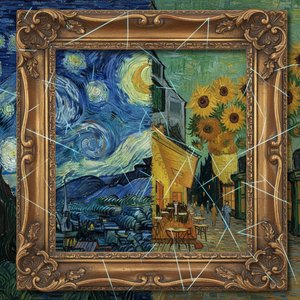 Van Gogh's Masterpieces: Explore 25 Iconic Paintings & Art for Your Home
Introduction To embark on a journey through Vincent van Gogh’s top 25 artworks is to step into a world painted with the very essence of human emotion. These canvases aren't merely depictions of landscapes, portraits, or still lifes; they are windows ...
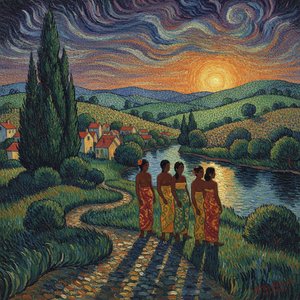
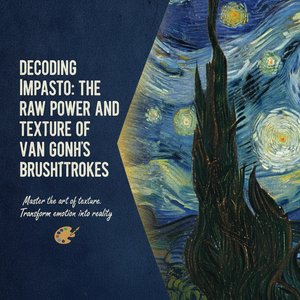
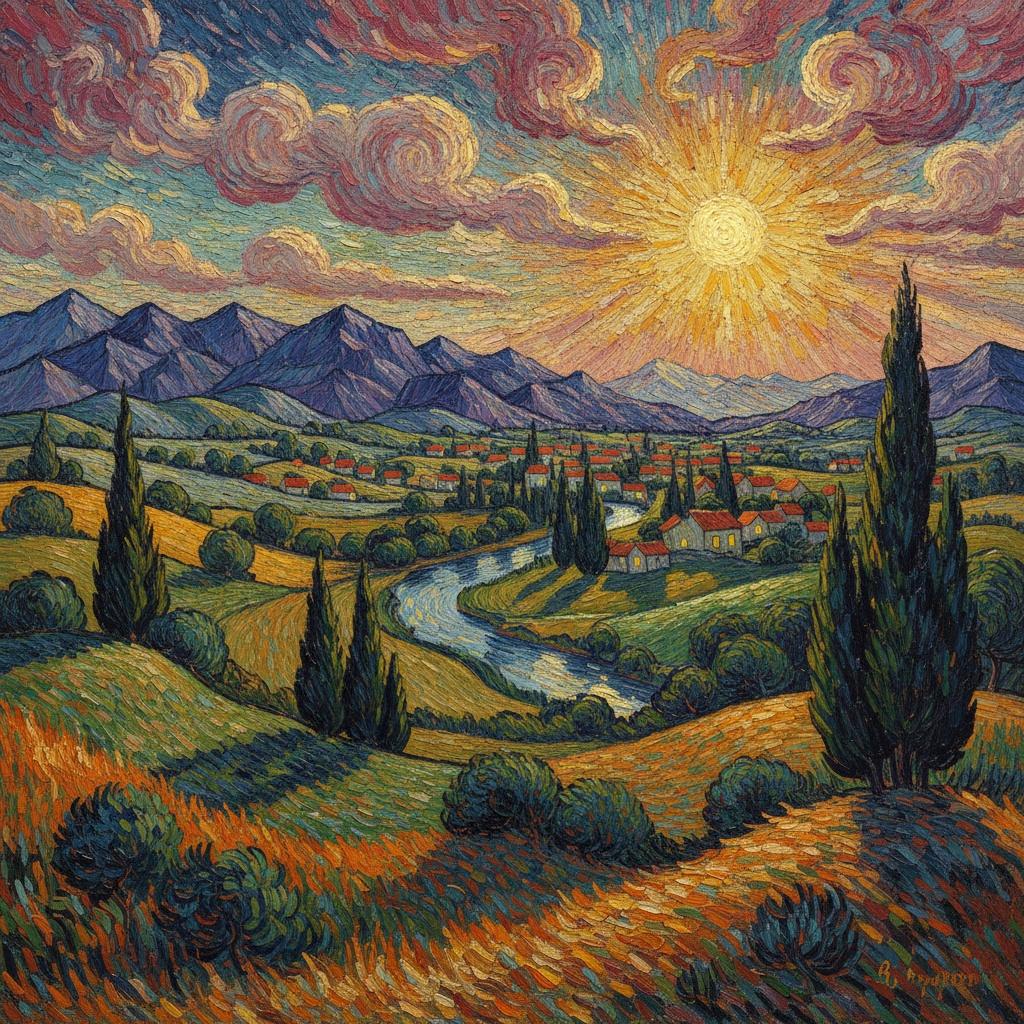
No discussion of this era is complete without invoking the name of Vincent van Gogh, an artist whose very name has become synonymous with raw, incandescent passion. Van Gogh’s journey was one of profound transformation, moving from the somber, earthy tones of his early Dutch period—characterized by a deep empathy for the hardships of peasant life—to the explosive, sun-drenched brilliance of his time in Arles and Saint-Rémy. His technique was revolutionary; he transformed short brushstrokes into thick, rhythmic, and curving lines of color that seem to vibrate with an almost tactile energy. In works like The Starry Night, the landscape is no longer a static view but a swirling, emotional tempest, where the impasto technique creates a physical presence that pulls the viewer into his inner turmoil.
Parallel to Van Gogh’s expressive intensity was the symbolic journey of Paul Gauguin. Where Van Gogh used color to convey emotion, Gauguin utilized it to explore the spiritual and the exotic. His work often featured bold, flat areas of color and simplified forms, a style that moved toward abstraction and away from traditional perspective. For Gauguin, the landscape was a stage for myth and legend, often imbued with a sense of the primordial. Together, these two masters demonstrated that color could function independently of reality, serving instead as a powerful language of the human spirit, capable of communicating truths that words often fail to capture.
Structural Landscapes: Paul Cézanne and the Geometry of Nature
--- title: Post-Impressionism | National Gallery of Art url: https://www.nga.gov/artworks/post-impressionism hostname: nga.gov description: Post-impressionists took the impressionists’ recording of light and color in nature to more emotional and spir...
While Van Gogh and Gauguin explored the emotional and symbolic reaches of the movement, Paul Cézanne pursued a different, yet equally vital, revolution. Often regarded as the father of modern art, Cézanne was preoccupied with the underlying structure of the natural world. He sought to reconcile the fleeting impressions of light with a sense of permanence and weight. To Cézanness, a landscape was not merely a collection of trees and hills, but a complex arrangement of geometric forms—the cylinder, the sphere, and the cone.
His approach was methodical and deeply analytical. By using deliberate, constructive brushstrokes, he built up the volume of mountains and valleys, creating a sense of spatial depth that felt both solid and revolutionary. He did not seek to replicate the surface appearance of nature but rather to uncover its architectural essence. This focus on form and the structural integrity of the composition provided the essential bridge between the nineteenth-century tradition and the twentieth-century advent of Cubism. Through Cézanne, the landscape became a study in balance and permanence, proving that even within the most organic subjects, there exists an enduring, mathematical beauty.
The Lasting Legacy: How Post-Impressionism Redefined Modern Visual Language
--- title: Post-Impressionism - The Metropolitan Museum of Art author: James Voorhies url: https://www.metmuseum.org/essays/post-impressionism hostname: metmuseum.org description: Through their radically independent styles and dedication to pursuing ...
The impact of the Post-Impressionists reverberates through the centuries, having fundamentally altered the trajectory of Western art. By breaking free from the constraints of realism and embracing the power of individual expression, they opened the floodgates for nearly every major movement that followed, from Fauvism and Expressionism to the abstractions of the modern era. They taught us that art need not be a mirror held up to nature, but can instead be a window into the human soul, a tool for exploring the complexities of identity, spirituality, and the very fabric of existence.
Today, we continue to find profound resonance in their works. Whether it is the emotional depth found in a hand-painted reproduction of a Van Gogh masterpiece or the structural elegance of a Cézanne landscape in a modern home, these paintings offer more than mere decoration; they offer connection. At OriginalUniqueArt.com, we celebrate this enduring legacy by providing collectors with access to museum-quality reproductions that honor the original masters. Our artists, trained in the finest academic traditions, meticulously recreate the thick impasto of Van Gogh and the structural brushwork of Cézanne on 100% cotton canvas. We invite you to bring the vibrant, transformative world of Post-Impressionism into your own space, preserving the beauty of these historical revolutions for generations to come.