

 Voorvertoning
 Verstuur
 Delen
Delen
 Details bekijken

 Download
 Vergelijkbare items
 Röntgenonderzoek
 Diavoorstelling
 Statistieken
Self-Portrait as a Young Man


 Lees meer
Giclée / Kunstafdrukken
Giclée- of canvasafdruk van museumkwaliteit met een snelle productie en flexibele afwerkingsmogelijkheden. ( Bestel handgeschilderde reproductie Schakel over naar digitale afbeelding)




P118B $10

P118H $10

P118W $10

P438Z $10

P508JH $12

P508YH $12

P805H $10

P805Z $10

P919BZ $10

P919G $10

P919XJ $10

P959ZH $10

P968JZ $12

W106C $8

W218G $10

W218JH $8

W218Y $10

W307PJ $10

W316G $10

W316PJ $8

W316Y $10

W398PJ $8

W4111J $10

W500HY $15

W500JH $15

W692G $12

W849H $8

W940BG $15

W953PJ $8




Kies uit onze vooraf ingestelde maten die overeenkomen met de originele verhoudingen van het kunstwerk.

U kunt uw eigen afmetingen opgeven om in een specifieke lijst of ruimte te passen. Als de door u gekozen maat niet overeenkomt met de proporties van het originele kunstwerk, zullen wij de afbeelding bijsnijden of uitbreiden met een gespiegelde of effen rand. Een digitaal mockup wordt ter goedkeuring naar u verzonden voordat de productie begint.
Houd er rekening mee dat de preview op het scherm de werkelijke bijsneding of uitbreiding niet weergeeft. Alleen de mockup toont de uiteindelijke compositie nauwkeurig.
Hoewel aangepaste maten beschikbaar zijn, raden wij aan een afmeting uit de vooraf bepaalde lijst te kiezen om de originele proporties te behouden.
Wereldwijde levering () binnen 2 weken in plaats van de standaard 4/5 weken. (18 september)

Gratis wereldwijde expressverzending

Hoogwaardig linnen canvas

Volledige verzendverzekering

Garantie op terugbetaling van invoerrechten

Garantie op exacte kleurweergave

Retourbeleid van 100 dagen (alleen bij defecten)

100% Geld-terug-garantie

Korting bij meerdere afnames
 De optie voor glas is alleen beschikbaar bij een formaat kleiner dan 110 cm.

Self-Portrait as a Young Man
Giclée / Kunstafdrukken
Afmetingen reproductie
-


Eindtotaal
$ 81
A Glimpse of Youth and Genius: Exploring Bernini’s Self-Portrait
Gian Lorenzo Bernini's “Self-Portrait as a Young Man,” painted in 1623, isn’t merely a likeness; it’s a carefully constructed declaration of artistic ambition and nascent genius. Captured during a pivotal period of his career – just twenty-five years old when he undertook the commission – the painting offers an intimate window into the mind of a sculptor destined to reshape the very language of Baroque art. It's a study in controlled intensity, a subtle display of confidence that belies the turbulent creative journey ahead. The portrait isn’t overtly flamboyant; instead, it favors restraint and a profound understanding of light and shadow – hallmarks of Bernini’s developing style.

Baroque Drama and the Language of Gesture
Bernini’s mastery is immediately evident in his command of Baroque technique. The painting exemplifies the style's dramatic use of chiaroscuro – the stark contrast between light and dark – to sculpt volume and create a sense of three-dimensionality. Notice how the folds of his clothing seem to ripple with an inner life, and how the subtle blush on his cheeks hints at both vitality and introspection. The composition itself is carefully balanced; the young Bernini stands slightly off-center, drawing the viewer’s eye directly into his gaze. This directness, combined with the slight tilt of his head, conveys a sense of engagement and intellectual curiosity – qualities that would become central to his artistic vision.
- The Dark Background: Serves to heighten the luminosity of Bernini’s face and clothing, emphasizing his presence.
- The White Collar: A symbol of status and perhaps a subtle nod to his noble background, hinting at the patronage that fueled his career.
- Intense Gaze: Captures the artist's focused attention and intellectual curiosity – key elements of his creative process.
Symbolism and the Artist’s Identity
Beyond a simple portrait, “Self-Portrait as a Young Man” is a statement about Bernini’s artistic identity. The painting reflects his burgeoning confidence as a sculptor, foreshadowing his later monumental works like "David" and "Ecstasy of Saint Teresa." The young man's contemplative expression suggests an artist deeply engaged with the world around him, seeking to capture its beauty and emotion through his art. Some scholars believe the subtle suggestion of a dragon in the background – barely perceptible yet undeniably present – alludes to Bernini’s ambition to transform ordinary materials into extraordinary works of art, mirroring the mythical creature's ability to breathe life into inanimate objects.
A Legacy Forged in Rome
Created during a period of immense artistic and political upheaval in Rome, this self-portrait offers a glimpse into the heart of the Baroque era. Bernini’s work was deeply intertwined with the papacy, serving as both an artist and a courtier. His ability to seamlessly blend technical skill with emotional depth – qualities brilliantly displayed in this intimate portrait – cemented his place as one of the most influential artists of all time. Reproductions of “Self-Portrait as a Young Man” allow us to appreciate not only Bernini’s extraordinary talent but also the vibrant cultural landscape that shaped his genius. It remains a powerful testament to the enduring legacy of a true Renaissance man.
Biografie van de kunstenaar
A Roman Genius: The Life and Legacy of Gian Lorenzo Bernini
Gian Lorenzo Bernini, a name synonymous with the Baroque era, was more than just a sculptor; he was an architect, painter, stage designer, and a true *uomo universale* – a Renaissance ideal embodied in 17th-century Rome. Born in Naples in 1598, his journey to becoming one of history’s most celebrated artists began within the workshop of his father, Pietro Bernini, a respected sculptor himself. This early immersion in the craft, combined with an innate talent and a deep appreciation for classical antiquity, laid the foundation for a career that would fundamentally reshape the artistic landscape of Rome and beyond. Bernini didn't simply replicate; he reimagined, injecting a dynamism and emotional intensity previously unseen in sculpture, ushering in a new era of dramatic expressionism.Sculpting Emotion: The Birth of Baroque Drama
Bernini’s genius lies not just in his technical mastery – though that was undeniably exceptional – but in his ability to imbue stone with life. He didn't merely carve figures; he captured moments, emotions, and narratives with breathtaking realism. His approach departed significantly from the idealized forms and static beauty of the Renaissance, embracing movement, theatricality, and a raw, visceral engagement with human experience. Consider *The Ecstasy of Saint Teresa*, housed within the Cornaro Chapel at Santa Maria della Vittoria – a swirling vortex of marble, bronze, and light that seems to capture a divine moment in perpetual motion. The sculpture isn’t simply a depiction of a religious vision; it's an explosion of feeling, a testament to Bernini’s understanding of human psychology and his ability to translate it into three dimensions. Similarly, *Apollo and Daphne* showcases this dynamic energy, transforming the mythic chase into a frozen tableau of transformation and poised tension. The use of contrasting textures – smooth skin against flowing hair, rough bark against delicate leaves – further enhances the sense of movement and drama. He wasn’t interested in creating mere representations; he sought to evoke an emotional response in the viewer, drawing them into the heart of the scene.Beyond Sculpture: Architecture and Urban Visions
Bernini's creative spirit extended far beyond the confines of the studio. He was a remarkably versatile artist who played a pivotal role in shaping the urban fabric of Rome. His architectural designs weren’t conceived as isolated structures but rather as integrated artistic experiences, blurring the boundaries between sculpture, architecture, and painting. The monumental Baldacchino above the high altar of St. Peter's Basilica stands as perhaps his most ambitious architectural achievement – a soaring bronze canopy that dominates the space, drawing the eye upwards in awe and creating a sense of overwhelming grandeur. He also significantly redesigned several Roman piazzas, transforming them into vibrant public spaces filled with movement and life. The Fountain of the Four Rivers in Piazza Navona is a prime example – a dynamic composition of allegorical figures representing major rivers from different continents, each rendered with astonishing detail and realism. His work on St. Peter’s Basilica itself, including the expansive colonnade that embraces visitors as they approach, dramatically altered the basilica's appearance and created a grand ceremonial space befitting the heart of Christendom.A Lasting Influence: Bernini’s Historical Significance
Gian Lorenzo Bernini’s impact on Western art is immeasurable. He didn’t simply follow established traditions; he shattered them, forging a new path for sculpture that influenced generations of artists. His innovative approach to composition, his mastery of technique, and his profound understanding of human emotion set a new standard for artistic expression. Bernini's ability to synthesize different art forms – sculpture, architecture, painting – into unified experiences demonstrated the power of art to engage all the senses and evoke profound emotions. As Howard Hibbard eloquently stated, Bernini’s influence was so significant that he stands as “the greatest sculptor of the 17th century.” His works continue to inspire awe and admiration, solidifying his place as one of history's most important artists – a true *uomo universale* whose legacy continues to resonate today.Family & Further Achievements
- Pietro Bernini: Gian Lorenzo’s father, a sculptor who provided early training and guidance.
- Cardinal Scipione Borghese: An early patron whose commissions allowed Bernini to develop his signature style.
- Pope Urban VIII: Bernini's most significant patron, providing extensive opportunities for architectural and sculptural projects in Rome.
- Architectural Projects: Beyond St. Peter’s Basilica, Bernini designed churches like Sant’Andrea al Quirinale and contributed to the design of Palazzo Barberini.
- Theatrical Designs: He was also a playwright and stage designer, creating elaborate sets and machinery for theatrical productions.

Gian Lorenzo Bernini
1598 - 1680 , Italië
Belangrijkste feiten
- Artistic Movement Or Style: Barokke beeldhouwkunst
- Artists Or Movements Influenced By This Artist:
- Barokke schilderkunst
- Europese kunst
- Artists Who Influenced This Artist:
- Pietro Bernini
- Michelangelo
- Date Of Birth: 7 dec 1598
- Date Of Death: 28 nov 1680
- Full Name: Gian Lorenzo Bernini
- Nationality: Italiaans
- Notable Artworks:
- Ecstasy Sint Teresa
- Apollo Daphne
- David
- Baldachino
- Place Of Birth: Napels, Italië
Gerelateerde artikelen

Barokke Pracht: Kunst die Grootsheid in Huis Brengt
Ontdek de barokke pracht! Leer over de geschiedenis, kenmerken en toepassingen van deze weelderige kunststijl in uw interieur. Laat u inspireren door meesters en breng grootsheid in huis.

The Dramatic Flourish: Exploring the Baroque Movement's Enduring Legacy in Art History
Explore the dramatic world of Baroque art! Discover iconic artists like Caravaggio & Rubens, defining techniques, and its lasting impact on art history. Expert insights for collectors & enthusiasts at OriginalUniqueArt.

Top 10 Barok Meesterwerken: Kunstgeschiedenis voor uw Interieur | OriginalUniqueArt.nl
Ontdek de 10 meest iconische Barok meesterwerken van Caravaggio, Rembrandt & Rubens! Duik in de geschiedenis en passie achter deze klassieke schilderijen. Vind museumkwaliteit reproducties voor uw interieur op OriginalUniqueArt.com.
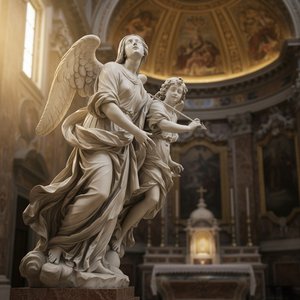
Gian Lorenzo Bernini: Sculpting Baroque Emotion & the Roman Imagination
Explore the life & revolutionary art of Gian Lorenzo Bernini, the master sculptor of the Baroque era. Discover his iconic works like David and Ecstasy of Saint Teresa – a journey into Roman artistic genius.

Theatricality & Triumph: Baroque Drama in Painting & Sculpture
Explore the dramatic world of Baroque art! Discover its history, defining characteristics, & lasting influence on painting & sculpture. Expert insights into Caravaggio, Zurbarán, and Bernini – plus high-quality reproductions at OriginalUniqueArt.
