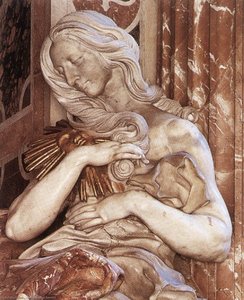
A Roman Genius: The Life and Legacy of Gian Lorenzo Bernini
Gian Lorenzo Bernini, a name synonymous with the Baroque era, was more than just a sculptor; he was an architect, painter, stage designer, and a true *uomo universale* – a Renaissance ideal embodied in 17th-century Rome. Born in Naples in 1598, his journey to becoming one of history’s most celebrated artists began within the workshop of his father, Pietro Bernini, a respected sculptor himself. This early immersion in the craft, combined with an innate talent and a deep appreciation for classical antiquity, laid the foundation for a career that would fundamentally reshape the artistic landscape of Rome and beyond. Bernini didn't simply replicate; he reimagined, injecting a dynamism and emotional intensity previously unseen in sculpture, ushering in a new era of dramatic expressionism.Sculpting Emotion: The Birth of Baroque Drama
Bernini’s genius lies not just in his technical mastery – though that was undeniably exceptional – but in his ability to imbue stone with life. He didn't merely carve figures; he captured moments, emotions, and narratives with breathtaking realism. His approach departed significantly from the idealized forms and static beauty of the Renaissance, embracing movement, theatricality, and a raw, visceral engagement with human experience. Consider *The Ecstasy of Saint Teresa*, housed within the Cornaro Chapel at Santa Maria della Vittoria – a swirling vortex of marble, bronze, and light that seems to capture a divine moment in perpetual motion. The sculpture isn’t simply a depiction of a religious vision; it's an explosion of feeling, a testament to Bernini’s understanding of human psychology and his ability to translate it into three dimensions. Similarly, *Apollo and Daphne* showcases this dynamic energy, transforming the mythic chase into a frozen tableau of transformation and poised tension. The use of contrasting textures – smooth skin against flowing hair, rough bark against delicate leaves – further enhances the sense of movement and drama. He wasn’t interested in creating mere representations; he sought to evoke an emotional response in the viewer, drawing them into the heart of the scene.Beyond Sculpture: Architecture and Urban Visions
Bernini's creative spirit extended far beyond the confines of the studio. He was a remarkably versatile artist who played a pivotal role in shaping the urban fabric of Rome. His architectural designs weren’t conceived as isolated structures but rather as integrated artistic experiences, blurring the boundaries between sculpture, architecture, and painting. The monumental Baldacchino above the high altar of St. Peter's Basilica stands as perhaps his most ambitious architectural achievement – a soaring bronze canopy that dominates the space, drawing the eye upwards in awe and creating a sense of overwhelming grandeur. He also significantly redesigned several Roman piazzas, transforming them into vibrant public spaces filled with movement and life. The Fountain of the Four Rivers in Piazza Navona is a prime example – a dynamic composition of allegorical figures representing major rivers from different continents, each rendered with astonishing detail and realism. His work on St. Peter’s Basilica itself, including the expansive colonnade that embraces visitors as they approach, dramatically altered the basilica's appearance and created a grand ceremonial space befitting the heart of Christendom.A Lasting Influence: Bernini’s Historical Significance
Gian Lorenzo Bernini’s impact on Western art is immeasurable. He didn’t simply follow established traditions; he shattered them, forging a new path for sculpture that influenced generations of artists. His innovative approach to composition, his mastery of technique, and his profound understanding of human emotion set a new standard for artistic expression. Bernini's ability to synthesize different art forms – sculpture, architecture, painting – into unified experiences demonstrated the power of art to engage all the senses and evoke profound emotions. As Howard Hibbard eloquently stated, Bernini’s influence was so significant that he stands as “the greatest sculptor of the 17th century.” His works continue to inspire awe and admiration, solidifying his place as one of history's most important artists – a true *uomo universale* whose legacy continues to resonate today.Family & Further Achievements
- Pietro Bernini: Gian Lorenzo’s father, a sculptor who provided early training and guidance.
- Cardinal Scipione Borghese: An early patron whose commissions allowed Bernini to develop his signature style.
- Pope Urban VIII: Bernini's most significant patron, providing extensive opportunities for architectural and sculptural projects in Rome.
- Architectural Projects: Beyond St. Peter’s Basilica, Bernini designed churches like Sant’Andrea al Quirinale and contributed to the design of Palazzo Barberini.
- Theatrical Designs: He was also a playwright and stage designer, creating elaborate sets and machinery for theatrical productions.
Vraag & Antwoord
Kan ik een virtueel museum bezoeken met de werken van Gian Lorenzo Bernini?
De kunstwerken van Gian Lorenzo Bernini zijn te bewonderen in een 3D-galerie op de 3D-museum pagina van de kunstenaar.
Waar zijn de kunstwerken van Gian Lorenzo Bernini ingedeeld op onderwerp?
De werken van Gian Lorenzo Bernini kunnen per onderwerp worden verkend op de Onderwerpsatlas pagina van de kunstenaar.
Wat zijn de geboorteplaats en het geboortejaar van Gian Lorenzo Bernini?
Gian Lorenzo Bernini werd geboren in Napels in 1598.