

 Voorvertoning
 Verstuur
 Delen
Delen
 Details bekijken
 Gids
Gids

 Download
 Vergelijkbare items
 Röntgenonderzoek
 Diavoorstelling
 Statistieken
Paternal Admonition (Gallant Conversation)
 Acrylic On Canvas
- WallArt
- Dutch Baroque
 1654
1654 71.0 x 73.0 cm
 Rijksmuseum
 Lees meer
Giclée / Kunstafdrukken
Giclée- of canvasafdruk van museumkwaliteit met een snelle productie en flexibele afwerkingsmogelijkheden. ( Bestel handgeschilderde reproductie Schakel over naar digitale afbeeldingen)




P118B €10

P118H €10

P118W €10

P438Z €10

P508JH €12

P508YH €12

P805H €10

P805Z €10

P919BZ €10

P919G €10

P919XJ €10

P959ZH €10

P968JZ €12

W106C €8

W218G €10

W218JH €8

W218Y €10

W307PJ €10

W316G €10

W316PJ €8

W316Y €10

W398PJ €8

W4111J €10

W500HY €15

W500JH €15

W692G €12

W849H €8

W940BG €15

W953PJ €8




Kies uit onze vooraf ingestelde maten die overeenkomen met de originele verhoudingen van het kunstwerk.

Voer de gewenste breedte en hoogte in, passend bij uw lijst of muur. Een afdruk kan alleen worden ingekort en nooit groter worden gemaakt dan het origineel; een formaat met andere verhoudingen zal daarom een deel van de afbeelding verliezen. Wij sturen u een digitaal mockup ter goedkeuring voordat we tot drukwerk overgaan. De afbeelding op deze pagina toont niet de werkelijke uitsnede — dit is alleen te zien op het mockup.
Wereldwijde levering () binnen 2 weken in plaats van de standaard 4/5 weken. (27 oktober)

Gratis wereldwijde expressverzending

Hoogwaardig linnen canvas

Volledige verzendverzekering

Garantie op terugbetaling van invoerrechten

Garantie op exacte kleurweergave

Retourbeleid van 100 dagen (alleen bij defecten)

100% Geld-terug-garantie

Korting bij meerdere afnames
 De optie voor glas is alleen beschikbaar bij een formaat kleiner dan 110 cm.

Paternal Admonition (Gallant Conversation)
Giclée / Kunstafdrukken
Afmetingen reproductie
-


Eindtotaal
€ 71
A Moment Frozen in Time: Gerard ter Borch’s “Paternal Admonition”
Gerard ter Borch's "Paternal Admonition," painted in 1654, stands as a cornerstone of Dutch genre painting and exemplifies the meticulous realism that characterized the Golden Age. More than just a portrait, it’s an exquisitely crafted tableau capturing a fleeting domestic scene—a father imparting wisdom to his son amidst a richly furnished room—and offering a glimpse into the complexities of familial relationships. The Rijksmuseum's masterful reproduction allows viewers today to appreciate the artist’s unparalleled skill in conveying atmosphere and emotion with remarkable precision.- Subject Matter: The painting depicts three figures engaged in conversation, highlighting the importance of paternal guidance within a family setting. The inclusion of a dog adds an element of warmth and familiarity to the composition, grounding the scene in everyday life.
- Style & Technique: Ter Borch’s signature style is marked by his masterful use of chiaroscuro—the dramatic interplay between light and shadow—creating depth and texture that imbues the artwork with palpable realism. Notice how he painstakingly renders fabrics like satin, capturing their subtle folds and sheen with astonishing accuracy.
- Historical Context: Painted during a period of burgeoning artistic innovation in Amsterdam, “Paternal Admonition” reflects the broader cultural preoccupation with portraying believable human experience. Ter Borch’s work aligns with the prevailing trend toward genre scenes that aimed to depict ordinary life with psychological insight.
- The Room Setting: The meticulously rendered interior—featuring two chairs and a book—serves as more than mere backdrop; it reinforces the sense of domestic tranquility and intellectual engagement.
- Detailed Observation: Ter Borch’s dedication to capturing minute details—such as the folds in clothing and the texture of surfaces—demonstrates his commitment to portraying reality with uncompromising honesty.
Veelgestelde vragen
Onder welke andere namen is Gerard ter Borch bekend?
Gerard ter Borch staat ook bekend onder de namen Gerard Terburg.
Toont "Paternal Admonition (Gallant Conversation)" sterke licht-donkercontrasten?
"Paternal Admonition (Gallant Conversation)" door Gerard ter Borch vertoont een Gentle contrast tussen de lichte en donkere partijen.
Hoe verhouden de kleuren van "Paternal Admonition (Gallant Conversation)" door Gerard ter Borch zich tot de emotie van het kunstwerk?
"Paternal Admonition (Gallant Conversation)" door Gerard ter Borch combineert een Earthy palet met een Reflective toon.
Biografie kunstenaar
Gerard ter Borch (I)
Gerard ter Borch, genoemd de Oude (Zwolle, 1582/1583 – aldaar, 20 april 1662), was een Nederlands kunstschilder. Hij was de vader van de beroemde schilder Gerard ter Borch de Jonge.
Hij was de oudste zoon van Harmen ter Borch (1550-1634), 'licentiemeester der convooien' in Zwolle, en Catharina Colen (1557-1611). Van omstreeks 1604 tot 1612 woonde hij in Rome, waar hij talloze topografische schetsen maakte, vooral van antieke ruïnes. Daarnaast maake hij tekeningen van eigentijdse figuren in het Romeinse straatbeeld. In 1618 moest hij zijn loopbaan als kunstenaar opgeven. Hij verdiende zijn brood als convooi-en licentmeester te Zwolle. Hij bleef echter het kunstenaarsvak bij de dertien kinderen die hij uit drie huwelijken kreeg stimuleren. Zijn vijf meest getalenteerde kinderen, Anna, Gesina, Harmen, Moses en Gerard, gaf hij persoonlijk les. Ook bewaarde hij veel van hun werk.
Zijn dochter Anna legde zich toe op het schoonschrijven en Gesina in het waterverftekenen. Het meest getalenteerd van de vijf was zijn zoon Gerard, die zich ontwikkelde tot een van de meest gevierde schilders van de Hollandse School. Naast werk van zijn kinderen verzamelde Ter Borch ook tekeningen en gravures van Italiaanse meesters en Haarlemse en Antwerpse graveurs.
Early Life and Influences
Gerard ter Borch's vroegste levensgeschiedenis is niet goed gedocumenteerd, maar het staat vast dat hij uitgebreid reisde door Europa, waaronder Londen, Duitsland, Frankrijk, Spanje en Italië. Deze blootstelling breidde zijn artistieke horizon uit en beïnvloedde zijn unieke stijl. Zijn zus Gesina ter Borch ook een carrière in kunst nastreefde, wat het artistieke talent van het gezin verder versterkte.
Hij studeerde onder Willem Cornelisz Duyster en Pieter Codde in Amsterdam en leerde het schildersvak van zijn vader Gerard ter Borch de Oude, die ook een kunstenaar was. Zijn vader gaf hem een uitgebreide opleiding en ontwikkelde zijn talent zeer vroeg.
Notable Works and Achievements
Ter Borch staat bekend om zijn prachtige genre schilderijen die het dagelijks leven op een zeer gedetailleerde manier weergeven, vaak met een subtiele aandacht voor licht en tekstuur. Een van zijn meest bekende werken is 'De Brief', waarin hij een complexe compositie gebruikt om emotie en psychologie te verkennen.
'De Laatste Dans' is een ander belangrijk kunstwerk dat de aandacht trekt vanwege zijn prachtige kleurgebruik en het gevoel voor beweging. Ter Borch’s stijl werd sterk beïnvloed door Pieter Bruegel de Oude, wiens werken hij vaak bestudeerde.
Hij was ook actief betrokken bij het Haarlemse kunstenaarsgilde en ontwikkelde een persoonlijke stijl die hem onderscheidt van zijn tijdgenoten. Zijn werk wordt gekenmerkt door een hoge mate van aandacht voor detail en een prachtige manier om licht en kleur te gebruiken.
Museums and Collections Featuring Ter Borch’s Work
Ter Borch's werken bevinden zich in belangrijke musea over de hele wereld, waaronder het Rijksmuseum Amsterdam, het Mauritshuis Den Haag en het Gemäldegalerie Alte Meister Dresden. Zijn kunst wordt zeer gewaardeerd door kunsthistorici en verzamelaars.
Een prachtige collectie van Ter Borch’s werken is te vinden in de Hermitage Sint Petersburg, Rusland. Ook het Getty Center in Los Angeles beschikt over een aantal belangrijke schilderijen van Ter Borch.
Legacy and Impact
Gerard ter Borch wordt beschouwd als een pionier van Nederlandse genre kunst en hij heeft een grote invloed gehad op zijn tijdgenoten, waaronder Gabriel Metsu, Gerrit Dou en Johannes Vermeer. Zijn stijl werd gekenmerkt door een hoge mate van aandacht voor detail en een prachtige manier om licht en kleur te gebruiken.
Hij wordt vaak gezien als een voorloper van het Nederlandse lichtschilderen en zijn werk heeft een blijvende waarde voor de kunstgeschiedenis.

Gerard ter Borch
1617 - 1681 , Nederland
Belangrijkste feiten
- Artistic Movement Or Style: Dutch Gouden Eeuw
- Artists Or Movements Influenced By This Artist:
- Gabriel Metsu
- Gerrit Dou
- Artists Who Influenced This Artist:
- Willem Cornelisz Duyster
- Pieter Codde
- Date Of Birth: December 1617
- Date Of Death: 8 december 1681
- Full Name: Gerard ter Borch
- Nationality: Nederlands
- Notable Artworks:
- De Brief
- Het galante gesprek
- Place Of Birth: Zwolle, Nederland
Gerelateerde artikelen

Golden Age Reflections: Dutch Baroque Painting & Cultural Innovation
Explore the Dutch Golden Age of painting! Discover key artists like Vermeer & ter Borch, their innovative techniques, and the rich cultural context behind these Baroque masterpieces. Learn about collecting & appreciating this iconic art period.

Top 10 Meesterwerken van de Gouden Eeuw: Kunst voor uw interieur | OriginalUniqueArt.nl
Ontdek de 10 meesterwerken van de Gouden Eeuw! Leer over Rembrandt, Vermeer & andere Hollandse schilders. Prachtige kunst reproducties voor uw interieur. Museumkwaliteit prints op OriginalUniqueArt.com.

Illuminating Innovation: Exploring the Dutch Golden Age of Painting
Explore the Dutch Golden Age of painting with OriginalUniqueArt. Discover Rembrandt, Vermeer & other Masters. Learn about key characteristics, iconic artworks, and lasting influence. Expert insights for collectors & enthusiasts.
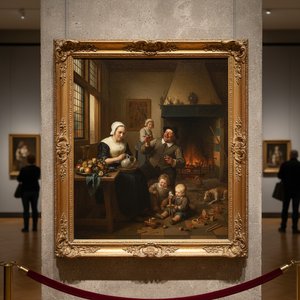
Genre Painting: A Window into Daily Life & Societal Values of the Dutch Golden Age
Explore the captivating world of Dutch Golden Age genre painting! Discover realistic depictions of daily life, masterful artists like Ostade & Metsu, and hidden symbolism. Learn about this influential art movement with OriginalUniqueArt.
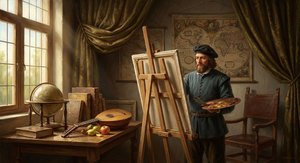
Illuminating Realism: Exploring the Dutch Golden Age of Painting (1600-1700)
Explore the Dutch Golden Age of painting (1600-1700) with OriginalUniqueArt. Discover Rembrandt, Vermeer & other masters. Learn about techniques, history & find museum-quality reproductions.


