
 Voorvertoning
 Verstuur
 Delen
Delen
 Details bekijken

 Download
 Vergelijkbare items
 Röntgenonderzoek
 Diavoorstelling
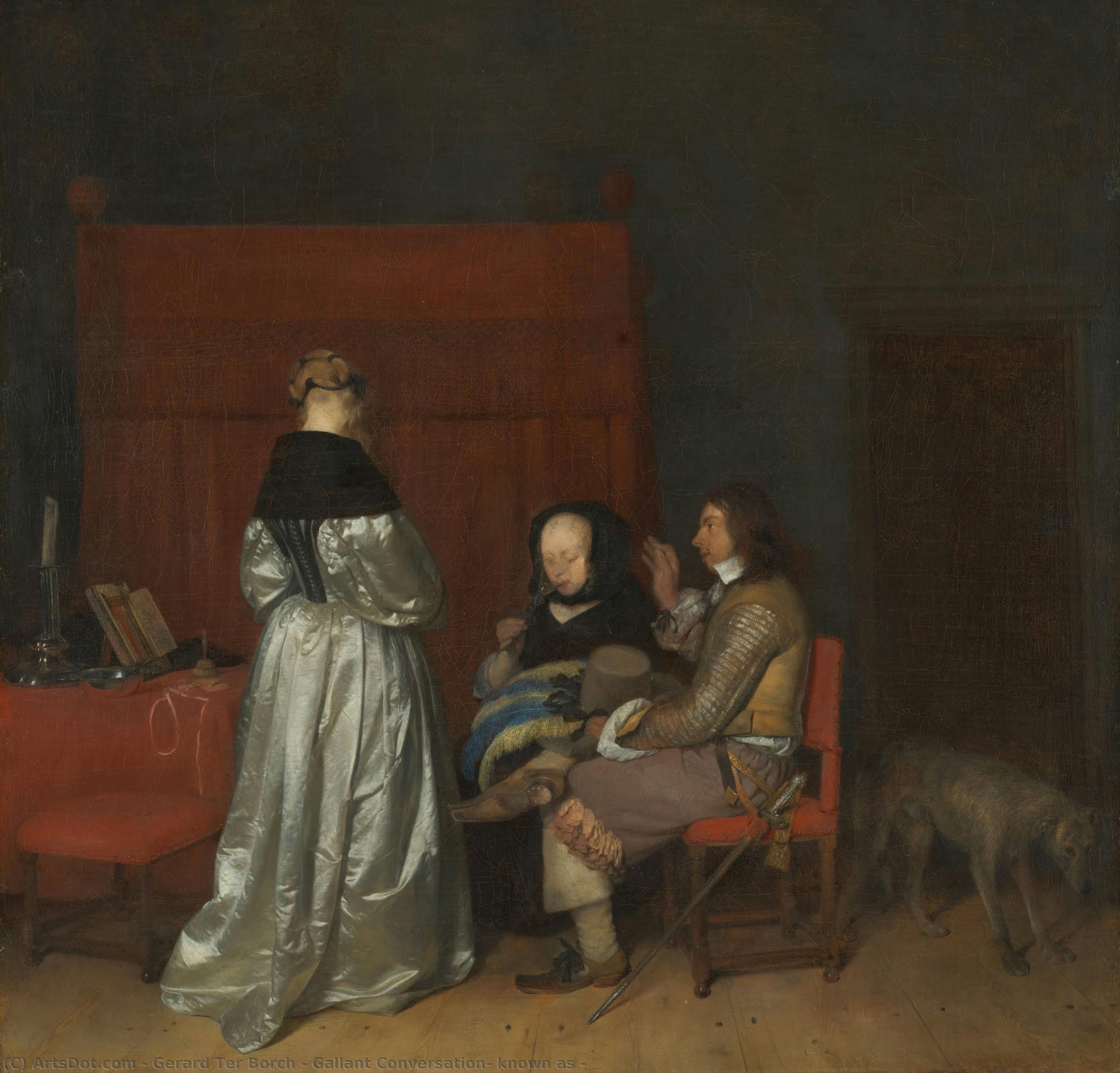
Gallant Conversation, known as
 Acrylic On Canvas
- WallArt
- Dutch Golden Age
 1655
1655 73.0 x 71.0 cm
 Rijksmuseum
 Lees meer
Handgemaakte olieverfreproductie
Met de hand geschilderd in olieverf op canvas in uw gewenste maat en lijst, op bestelling gemaakt door onze kunstenaars. ( Bestel print Koop afbeelding)




P118B $10

P118H $10

P118W $10

P438Z $10

P508JH $12

P508YH $12

P805H $10

P805Z $10

P919BZ $10

P919G $10

P919XJ $10

P959ZH $10

P968JZ $12

W106C $8

W218G $10

W218JH $8

W218Y $10

W307PJ $10

W316G $10

W316PJ $8

W316Y $10

W398PJ $8

W4111J $10

W500HY $15

W500JH $15

W692G $12

W849H $8

W940BG $15

W953PJ $8




Kies uit onze vooraf ingestelde maten die overeenkomen met de originele verhoudingen van het kunstwerk.

U kunt uw eigen afmetingen invoeren om in een specifieke lijst of ruimte te passen. Als de door u gekozen maat niet overeenkomt met de verhoudingen van het originele beeld, zullen we het kunstwerk bijsnijden of het schilderij uitbreiden met extra handgeschilderde elementen. Een digitale mockup wordt ter goedkeuring naar u verzonden voordat de productie begint.
Houd er rekening mee dat de preview op het scherm niet de werkelijke uitsnede of uitbreiding weergeeft. Alleen de mockup toont de uiteindelijke compositie nauwkeurig.
Hoewel aangepaste afmetingen mogelijk zijn, raden we aan een maat uit de vooraf gedefinieerde lijst te selecteren om de originele verhoudingen te behouden.
Na de bestelling zal het team van OriginalUniqueArt.com per e-mail contact opnemen met de klant voor instructies en een mockup-voorbeeld sturen.
Wereldwijde levering () binnen 3 tot 4 weken in plaats van de standaard 5 weken. (20 augustus). Zonder concessies aan de kwaliteit.

Gratis wereldwijde expressverzending

Hoogwaardig linnen canvas

Volledige verzendverzekering

Garantie op terugbetaling van invoerrechten

Garantie op exacte kleurweergave

Retourbeleid van 60 dagen (alleen bij defecten)

100% Geld-terug-garantie

Korting bij meerdere afnames
 De optie voor glas is alleen beschikbaar bij een formaat kleiner dan 110 cm.

Gallant Conversation, known as
Druktechniek
Afmetingen reproductie
-


Eindtotaal
$ 300
Beschrijving kunstwerk
A Shadowed Intimacy: Unraveling Gerard ter Borch’s *Gallant Conversation*
Gerard ter Borch's *Gallant Conversation*, painted in 1655, is not merely a portrait; it’s an exquisitely rendered tableau of veiled secrets and subtle anxieties. Initially known as “The paternal admonition,” the painting quickly revealed a far more complex narrative – one that challenged viewers at the time and continues to intrigue today. It's a masterful example of Dutch Golden Age genre painting, showcasing ter Borch’s unparalleled ability to capture not just appearances but the very essence of human interaction, particularly within the confines of a private, almost clandestine setting.
The scene unfolds within a modestly furnished room, bathed in a muted red light that casts long shadows and adds an air of mystery. A young soldier, strikingly handsome yet undeniably youthful, occupies a central position, engaged in conversation with a woman of considerable elegance – likely a courtesan or prostitute. A third figure, a woman holding a glass, observes the interaction from a distance, her expression hinting at both amusement and perhaps a degree of control. The inclusion of a dog, casually observing the scene, further contributes to the feeling that this is a carefully constructed tableau, a staged moment rather than an impromptu gathering. The deliberate ambiguity surrounding the relationships – who is admonishing whom? – is precisely what makes this painting so compelling.
The Delicate Dance of Light and Shadow: Ter Borch’s Technique
Ter Borch's genius lies in his painstaking attention to detail and his revolutionary approach to light. Unlike many of his contemporaries, he eschewed the dramatic chiaroscuro favored by Rembrandt, opting instead for a subtle, almost photographic realism. He meticulously built up layers of translucent glazes, creating an astonishingly delicate surface texture that captures the sheen of silk, the gleam of metal, and the softness of skin with remarkable precision. Notice how the light catches the folds of the woman’s dress, revealing the intricate weave, or how it subtly illuminates the soldier's face, highlighting his youthful features and a hint of vulnerability. This technique wasn’t simply about realism; it was about capturing the *atmosphere* of the scene – a sense of quiet contemplation punctuated by unspoken tensions.
- Glazing Technique: Ter Borch employed countless thin layers of translucent paint, building up color and depth gradually.
- Subtle Modeling: He masterfully used light and shadow to sculpt the figures, creating a sense of volume and form without resorting to harsh contrasts.
- Attention to Texture: The meticulous rendering of fabrics, metal, and skin demonstrates his dedication to capturing the tactile qualities of the scene.
A Brothel in Disguise: Historical Context and Symbolism
The painting’s true subject matter – a clandestine meeting within a brothel – was initially met with considerable debate. The original title, “The paternal admonition,” suggested a familial setting, leading to confusion about the nature of the scene. However, clues abound that point towards a more illicit reality: the bed in the background, the table with a mirror (a common feature in such establishments), and the overall atmosphere of intimacy and veiled intent. This ambiguity reflects the social realities of 17th-century Amsterdam – a city rife with wealth, commerce, and a thriving underworld. Ter Borch’s willingness to depict this darker side of society was remarkably bold for his time.
The soldier's youth is particularly significant. He isn’t a father dispensing wisdom; he’s a young man indulging in the pleasures of the flesh, suggesting themes of youthful folly and the corrupting influence of wealth. The woman observing from afar embodies a certain power – perhaps ownership or control – while the courtesan herself represents allure and danger.
Capturing Emotion: A Portrait of Quiet Tension
*Gallant Conversation* is not a painting that shouts; it whispers. It’s a study in restraint, conveying a complex web of emotions through subtle gestures and averted glances. The figures are caught in a moment of quiet contemplation, their faces betraying a mixture of curiosity, amusement, and perhaps even apprehension. The overall effect is profoundly unsettling – a reminder that appearances can be deceiving and that beneath the surface of polite conversation often lie hidden desires and unspoken truths. This painting’s enduring power lies in its ability to evoke a sense of unease and intrigue, prompting viewers to question what they are seeing and, more importantly, what they *aren't* being told.
Biografie van de kunstenaar
Gerard ter Borch (I)
Gerard ter Borch, genoemd de Oude (Zwolle, 1582/1583 – aldaar, 20 april 1662), was een Nederlands kunstschilder. Hij was de vader van de beroemde schilder Gerard ter Borch de Jonge.
Hij was de oudste zoon van Harmen ter Borch (1550-1634), 'licentiemeester der convooien' in Zwolle, en Catharina Colen (1557-1611). Van omstreeks 1604 tot 1612 woonde hij in Rome, waar hij talloze topografische schetsen maakte, vooral van antieke ruïnes. Daarnaast maake hij tekeningen van eigentijdse figuren in het Romeinse straatbeeld. In 1618 moest hij zijn loopbaan als kunstenaar opgeven. Hij verdiende zijn brood als convooi-en licentmeester te Zwolle. Hij bleef echter het kunstenaarsvak bij de dertien kinderen die hij uit drie huwelijken kreeg stimuleren. Zijn vijf meest getalenteerde kinderen, Anna, Gesina, Harmen, Moses en Gerard, gaf hij persoonlijk les. Ook bewaarde hij veel van hun werk.
Zijn dochter Anna legde zich toe op het schoonschrijven en Gesina in het waterverftekenen. Het meest getalenteerd van de vijf was zijn zoon Gerard, die zich ontwikkelde tot een van de meest gevierde schilders van de Hollandse School. Naast werk van zijn kinderen verzamelde Ter Borch ook tekeningen en gravures van Italiaanse meesters en Haarlemse en Antwerpse graveurs.
Early Life and Influences
Gerard ter Borch's vroegste levensgeschiedenis is niet goed gedocumenteerd, maar het staat vast dat hij uitgebreid reisde door Europa, waaronder Londen, Duitsland, Frankrijk, Spanje en Italië. Deze blootstelling breidde zijn artistieke horizon uit en beïnvloedde zijn unieke stijl. Zijn zus Gesina ter Borch ook een carrière in kunst nastreefde, wat het artistieke talent van het gezin verder versterkte.
Hij studeerde onder Willem Cornelisz Duyster en Pieter Codde in Amsterdam en leerde het schildersvak van zijn vader Gerard ter Borch de Oude, die ook een kunstenaar was. Zijn vader gaf hem een uitgebreide opleiding en ontwikkelde zijn talent zeer vroeg.
Notable Works and Achievements
Ter Borch staat bekend om zijn prachtige genre schilderijen die het dagelijks leven op een zeer gedetailleerde manier weergeven, vaak met een subtiele aandacht voor licht en tekstuur. Een van zijn meest bekende werken is 'De Brief', waarin hij een complexe compositie gebruikt om emotie en psychologie te verkennen.
'De Laatste Dans' is een ander belangrijk kunstwerk dat de aandacht trekt vanwege zijn prachtige kleurgebruik en het gevoel voor beweging. Ter Borch’s stijl werd sterk beïnvloed door Pieter Bruegel de Oude, wiens werken hij vaak bestudeerde.
Hij was ook actief betrokken bij het Haarlemse kunstenaarsgilde en ontwikkelde een persoonlijke stijl die hem onderscheidt van zijn tijdgenoten. Zijn werk wordt gekenmerkt door een hoge mate van aandacht voor detail en een prachtige manier om licht en kleur te gebruiken.
Museums and Collections Featuring Ter Borch’s Work
Ter Borch's werken bevinden zich in belangrijke musea over de hele wereld, waaronder het Rijksmuseum Amsterdam, het Mauritshuis Den Haag en het Gemäldegalerie Alte Meister Dresden. Zijn kunst wordt zeer gewaardeerd door kunsthistorici en verzamelaars.
Een prachtige collectie van Ter Borch’s werken is te vinden in de Hermitage Sint Petersburg, Rusland. Ook het Getty Center in Los Angeles beschikt over een aantal belangrijke schilderijen van Ter Borch.
Legacy and Impact
Gerard ter Borch wordt beschouwd als een pionier van Nederlandse genre kunst en hij heeft een grote invloed gehad op zijn tijdgenoten, waaronder Gabriel Metsu, Gerrit Dou en Johannes Vermeer. Zijn stijl werd gekenmerkt door een hoge mate van aandacht voor detail en een prachtige manier om licht en kleur te gebruiken.
Hij wordt vaak gezien als een voorloper van het Nederlandse lichtschilderen en zijn werk heeft een blijvende waarde voor de kunstgeschiedenis.

Gerard ter Borch
1617 - 1681 , Nederland
Belangrijkste feiten
- Artistic Movement Or Style: Dutch Gouden Eeuw
- Artists Or Movements Influenced By This Artist:
- Gabriel Metsu
- Gerrit Dou
- Artists Who Influenced This Artist:
- Willem Cornelisz Duyster
- Pieter Codde
- Date Of Birth: December 1617
- Date Of Death: 8 december 1681
- Full Name: Gerard ter Borch
- Nationality: Nederlands
- Notable Artworks:
- De Brief
- Het galante gesprek
- Place Of Birth: Zwolle, Nederland
Gerelateerde artikelen

Gerard ter Borch: Intimacy & Light in the Dutch Golden Age
Explore the captivating world of Gerard ter Borch, a master of Dutch Golden Age genre painting. Discover his intimate scenes, masterful light, and lasting influence on art history. Learn more at OriginalUniqueArt.

Golden Age Reflections: Dutch Baroque Painting & Cultural Innovation
Explore the Dutch Golden Age of painting! Discover key artists like Vermeer & ter Borch, their innovative techniques, and the rich cultural context behind these Baroque masterpieces. Learn about collecting & appreciating this iconic art period.
Genre Painting: A Window into Daily Life & Societal Values of the Dutch Golden Age
Explore the captivating world of Dutch Golden Age genre painting! Discover realistic depictions of daily life, masterful artists like Ostade & Metsu, and hidden symbolism. Learn about this influential art movement with OriginalUniqueArt.
Illuminating Realism: Exploring the Dutch Golden Age of Painting (1600-1700)
Explore the Dutch Golden Age of painting (1600-1700) with OriginalUniqueArt. Discover Rembrandt, Vermeer & other masters. Learn about techniques, history & find museum-quality reproductions.
Scenes of Daily Life: A Comprehensive Exploration of Genre Painting Through History
Explore the rich history of genre painting! Discover Dutch Masters & European artists who captured everyday life with stunning realism. Learn about symbolism, techniques & lasting influence.



