
 Voorvertoning
 Verstuur
 Delen
Delen
 Details bekijken
 Gids
Gids

 Download
 Vergelijkbare items
 Röntgenonderzoek
 Diavoorstelling
 Vraag & antwoord
 Statistieken
Sketch for 'The Prodigal Son'

- 34.0 x 43.0 cm


 Lees meer
Giclée / Kunstafdrukken
Giclée- of canvasafdruk van museumkwaliteit met een snelle productie en flexibele afwerkingsmogelijkheden. ( Bestel handgeschilderde reproductie Schakel over naar digitale afbeeldingen)




P118B €10

P118H €10

P118W €10

P438Z €10

P508JH €12

P508YH €12

P805H €10

P805Z €10

P919BZ €10

P919G €10

P919XJ €10

P959ZH €10

P968JZ €12

W106C €8

W218G €10

W218JH €8

W218Y €10

W307PJ €10

W316G €10

W316PJ €8

W316Y €10

W398PJ €8

W4111J €10

W500HY €15

W500JH €15

W692G €12

W849H €8

W940BG €15

W953PJ €8




Kies uit onze vooraf ingestelde maten die overeenkomen met de originele verhoudingen van het kunstwerk.

Voer de gewenste breedte en hoogte in, passend bij uw lijst of muur. Een afdruk kan alleen worden ingekort en nooit groter worden gemaakt dan het origineel; een formaat met andere verhoudingen zal daarom een deel van de afbeelding verliezen. Wij sturen u een digitaal mockup ter goedkeuring voordat we tot drukwerk overgaan. De afbeelding op deze pagina toont niet de werkelijke uitsnede — dit is alleen te zien op het mockup.
Wereldwijde levering () binnen 2 weken in plaats van de standaard 4/5 weken. (5 november)

Gratis wereldwijde expressverzending

Hoogwaardig linnen canvas

Volledige verzendverzekering

Garantie op terugbetaling van invoerrechten

Garantie op exacte kleurweergave

Retourbeleid van 100 dagen (alleen bij defecten)

100% Geld-terug-garantie

Korting bij meerdere afnames
 De optie voor glas is alleen beschikbaar bij een formaat kleiner dan 110 cm.

Sketch for 'The Prodigal Son'
Giclée / Kunstafdrukken
Afmetingen reproductie
-


Eindtotaal
€ 72
Frank Brangwyn: A Painter of Epic Visions
Sir Frank William Brangwyn (1867–1956) was a Welsh artist, painter, watercolourist, printmaker, and designer who achieved international renown for his monumental murals and captivating landscapes imbued with dramatic light and vibrant colour. Born Guillaume François Brangwyn in Bruges, Belgium, he possessed an innate fascination for the grandeur of nature and human endeavour—a passion that would fuel his prolific artistic output throughout a lifetime dedicated to capturing moments of sublime beauty and conveying powerful narratives. His father, William Curtis Brangwyn, was a successful designer who had won a competition to design a parish church in Belgium, instilling in him an early appreciation for craftsmanship and visual form. The family’s return to England in 1875 exposed young Frank to the burgeoning artistic landscape of London, fostering an independent spirit that would define his career trajectory. Early apprenticeships with Arthur Heygate Mackmurdo and William Morris honed Brangwyn's technical skills—particularly glazing, embroidery, and wallpap—providing him with a foundational understanding of traditional art practices. However, it was his self-directed exploration of museums like South Kensington, where he encountered the Impressionists and Post-Impressionists, that truly ignited his artistic vision. This formative experience cemented his belief in capturing fleeting impressions of light and atmosphere rather than striving for photographic realism—a stylistic choice that would become synonymous with his distinctive oeuvre.- Early Influences: Brangwyn’s artistic sensibilities were profoundly shaped by the Victorian Aesthetic Movement, championed by figures like Walter Pater and John Ruskin, who advocated for art as a conduit of emotion and spiritual contemplation.
- Orientalism Revisited: Returning to Spain in 1893 after his voyage to Istanbul, Brangwyn embraced Orientalist themes—a trend popular among artists of the era—drawing inspiration from exotic landscapes and cultures.
- The British Empire Panels: His most ambitious project was the creation of sixteen monumental murals commissioned by the House of Lords commemorating the First World War. These canvases exemplify Brangwyn’s masterful technique, utilizing thick impasto application of paint to convey a sense of dynamism and grandeur.
Technique & Style: Impasto and Dramatic Light
Brangwyn's artistic method—characterized by bold impasto—involved applying pigment thickly onto canvas, creating textured surfaces that captured the essence of light and movement. This technique was particularly evident in his monumental murals, where he sought to evoke a visceral response from viewers through tactile richness and luminous colour palettes. He meticulously studied the effects of sunlight on landscapes and architectural structures, translating these observations into expressive brushstrokes—a hallmark of Post-Impressionism and aligning him with the Barbizon School’s emphasis on plein air painting. His palette favoured warm hues—yellows, oranges, and pinks—balanced by cooler tones in figures' clothing and shadows, contributing to the overall mood and atmosphere of his paintings.Symbolic Resonance: Landscapes as Narratives
Brangwyn’s landscapes weren’t merely depictions of natural beauty; they functioned as narratives conveying themes of heroism, resilience, and spiritual aspiration. Recurring motifs—such as soaring mountains, turbulent seascapes, and expansive plains—served as metaphors for overcoming adversity and embracing the sublime—concepts central to Romanticism and influencing Brangwyn's artistic vision. The artist’s meticulous attention to detail—particularly in capturing the interplay of light and shadow—reinforced this symbolic dimension, inviting viewers to contemplate profound questions about humanity’s relationship with nature and its capacity for transcendence.Legacy & Influence: A Master of Colour and Texture
Frank Brangwyn's legacy extends beyond his celebrated artworks; he profoundly impacted subsequent generations of artists who embraced his bold stylistic choices and unwavering commitment to capturing the grandeur of the natural world. His influence can be discerned in the works of artists such as Stanley Spencer and Paul Cezanne, demonstrating the enduring power of Brangwyn’s artistic vision—a testament to his mastery of colour, texture, and narrative storytelling.Veelgestelde vragen
Welke afmeting van "Sketch for 'The Prodigal Son'" door Frank Brangwyn past in de aanbevolen kamer?
Voor een Living Room wordt voor "Sketch for 'The Prodigal Son'" een afdruk van Large aanbevolen.
Waar kan ik een digitale afbeelding van "Sketch for 'The Prodigal Son'" door Frank Brangwyn kopen?
Om een digitale afbeelding van "Sketch for 'The Prodigal Son'" door Frank Brangwyn te verkrijgen, kunt u een digitale afbeelding in hoge resolutie om te downloaden bestellen op de Digitale afbeelding pagina.
Welke emotie straalt "Sketch for 'The Prodigal Son'" door Frank Brangwyn uit?
De emotionele toon die is vastgelegd voor "Sketch for 'The Prodigal Son'" door Frank Brangwyn is Reflective. Het vat het gevoel samen dat het werk uitdrukt.
Biografie kunstenaar
Frank Brangwyn: Een Leven Gebeeldhouwd in Licht en Arbeid
Sir Frank William Brangwyn, geboren in Brugge, België, in 1867, was een Welsh schilder wiens artistieke reis een voortdurend onderzoek en een productieve creatie was. Zijn vader, William Curtis Brangwyn, een succesvolle ontwerper die een parochiekerk had ontworpen en gewonnen, instilledde in hem een vroege waardering voor vakmanschap en visuele vorm. De terugkeer van de familie naar Engeland in 1875 bleek cruciaal, waardoor jonge Frank werd blootgesteld aan het opkomende kunstenaarslandschap van Londen. Hoewel zijn formele opleiding enigszins verstoord was – hij slaapte vaak lessen op Westminster City School om zich te verdiepen in de werkplaats van zijn vader of zichzelf te verliezen tussen de schatten van het South Kensington Museum – bevorderde deze zelfgeleide leer een onafhankelijke geest die zijn carrière zou definiëren. Vroege stages bij Arthur Heygate Mackmurdo en William Morris, aanvankelijk gericht op praktische vaardigheden zoals glasering, borduurwerk en behang, legden een basis voor de principes van de Arts and Crafts-beweging, waarbij kunst in het dagelijks leven geïntegreerd werd. Echter, Brangwyn’s ware roeping lag in schilderen, een passie die werd aangewakkerd door zijn vroege successen, met name de medaille die hij ontving voor “Begrafde Zee” op de Salon van Parijs in 1891 – een validatie die zijn toewijding aan een artistieke weg versterkte.Van Zeegezichten tot Orientalistische Visioenen
Brangwyn’s vroege onderwerpen waren diep geworteld in de maritieme wereld, weerspiegelend zowel persoonlijke fascinatie als de heersende smaken van de tijd. Hij schilderde zorgvuldig het drama en de zwaar werkende levens op zee, demonstrerend een scherp oog voor detail en atmosferische effecten. Echter, zijn artistieke horizonen werden dramatisch uitgebreid met reizen naar Istanbul (Constantinopel), Spanje, Egypte, Turkije en Marokko gedurende de jaren 1890. Deze reisden transformatief, waardoor zijn werk levendige kleuren, exotische motieven en een nieuwe sensatie van licht werd ingegeven. De invloed van Orientalisme is voelbaar in schilderijen zoals “De Gouden Horn, Constantinopel”, die in schril contrast staat tot de sombere tonen van eerdere werken zoals "Begrafde Zee". Deze verschuiving was niet alleen esthetisch; het weerspiegelde Brangwyn’s groeiende verlangen om zich los te maken van conventionele artistieke grenzen en een expressievere palet te omarmen. Hij werd een uiterst veelzijdige kunstenaar, die zich niet liet beperken door één medium. Schilderen was zeker centraal, maar hij excelleerde ook in tekenen, gravures, illustraties, glasontwerpen, meubelontwerpen en keramiek, en zelfs architectonische projecten. Deze allesomvattende aanpak onderscheidde hem van velen van zijn tijdgenoten, waardoor hij een ware polymath van de decoratieve kunsten werd.Een Productieve Uitgave en Monumentale Opdrachten
De enorme omvang van Brangwyn’s productie is verbazingwekkend – geschat op meer dan 12.000 werken die schilderijen, tekeningen, gravures, houtsneden en lithografieën omvatten. Deze onvermoeibare productiviteit werd gevoed door een onvermoeid werkethiek en een onverzadigbare nieuwsgierigheid. Hij werd bekend om zijn monumentale muurschilderingen, gekenmerkt door hun levendige kleuren, ingewikkelde details en vaak monumentale schaal. Een bijzonder significante gebeurtenis was in 1895 toen Siegfried Bing hem vroeg om het uiterlijk van Galerie l'Art Nouveau in Parijs te decoreren, waardoor deuren naar een breder wereld van decoratieve kunsten werden geopend. Zijn illustraties voor een heruitgave van Edward William Lane’s vertaling van “One Thousand and One Nights” in 1896 toonden verder zijn talent voor narratief detail en exotische beelden. Samenwerkingen met de Japanse kunstenaar Urushibara Mokuchu op houtsneden demonstreerden zijn bereidheid om te experimenteren met verschillende technieken en culturele invloeden. Echter, misschien wel het meest ambitieuze – en uiteindelijk controversiële – project was zijn opdracht voor een reeks muurschilderingen die scènes uit het Britse Rijk weergeven voor de House of Lords in 1924. Hoewel aanvankelijk omarmd, werden de panelen uiteindelijk afgewezen door het Parlement, als ongeschikt voor hun beoogde locatie. Deze prachtige werken vonden een nieuwe thuis in de Brangwyn Hall in Swansea, waardoor ze het middelpunt vormden van de kunstenaar.Invloed en Historische Betekenis
Frank Brangwyn’s artistieke reis was diep verweven met de esthetische stromingen van zijn tijd. Zijn vroege blootstelling aan William Morris en de Arts and Crafts-beweging instilledde in hem een eerbied voor vakmanschap en integratie van kunst, terwijl zijn reizen naar het Oosten een passie ontketenden voor Orientalistische thema’s die resoneerden met de bredere Europese fascinatie met exotische culturen. Hoewel hij soms werd overzien door Britse critici die worstelden om zijn diverse stijl te categoriseren, ontving Brangwyn aanzienlijke erkenning van het buitenland en Amerikaanse publiek. Hij verbond traditioneel schilderen met moderne design, waarbij hij zowel historische onderwerpen als hedendaagse trends omarmde. Zijn muurschilderingen, in het bijzonder, hebben een blijvende stempel gedrukt op het Britse kunstenaarslandschap, waardoor openbare ruimtes werden getransformeerd tot levendige shows van kleur en verbeelding.Persoonlijke Reflecties
Naast zijn artistieke prestaties was Brangwyn’s persoonlijke leven gekenmerkt door zowel passie als complexiteit. Zijn affaire met Ellen Kate Chesterfield resulteerde in een zoon, James Barron Chesterfield-Brangwyn, terwijl zijn huwelijk met Lucy Ray, een verpleegster, in 1896 een stabiele thuisbasis bood, hoewel ze geen kinderen hadden. Hij woonde van 1900 tot ongeveer 1937/38 op Temple Lodge, Hammersmith, Londen en kocht ook The Jointure, Ditchling, Sussex in 1918, weerspiegelend zijn wens om zowel stedelijke betrokkenheid als een landelijke terugtrekking te hebben. Brangwyn’s leven was een getuigenis van de kracht van toewijding, innovatie en een onwrikbare toewijding aan artistieke expressie – een nalatenschap die vandaag de dag nog steeds bewondering en inspiratie oproept.
Frank Brangwyn
1867 - 1956 , België
Belangrijkste feiten
- Artistic Movement Or Style: Arts & Crafts, Oriëntaal
- Artists Or Movements Influenced By This Artist: ['Brangwyn']
- Artists Who Influenced This Artist: ['Morris']
- Date Of Birth: 1867
- Date Of Death: 1956
- Full Name: Sir Frank William Brangwyn
- Nationality: Britse kunstenaar
- Notable Artworks:
- Funeral at Sea
- Golden Horn
- Place Of Birth (City And Country): Bruges, België
Gerelateerde artikelen

John Constable's Top 25 Meesterwerken: Landschappen die de Ziel Raaken | OriginalUniqueArt
Ontdek de 25 mooiste schilderijen van John Constable, meester van de Engelse Romantiek. Van idyllische landschappen tot iconische Hay Wain – bewonder zijn techniek en emotie. Museumkwaliteit reproducties & decoratie op OriginalUniqueArt.com.

Cultivating Visions: A Historical Journey Through Rural Landscapes in Art
Explore the rich history of rural landscape painting with OriginalUniqueArt. Discover Impressionist masterpieces, key artists & movements. Find your perfect serene artwork and bring nature's beauty home.

Paul Cézanne's Top 25 Meesterwerken: Kleur, Vorm & De Basis van Modern Art | OriginalUniqueArt
Ontdek de 25 meest iconische schilderijen van Paul Cézanne! Duik in zijn kleurrijke wereld, leer over impressionisme & post-impressionisme en bewonder meesterwerken als 'De Baders'. Vind museumkwaliteit reproducties & interieurinspiratie op OriginalUniqueArt.com.
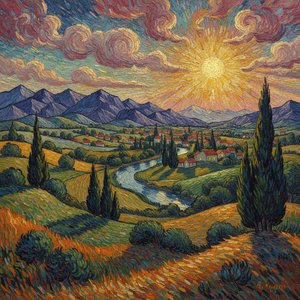
Beyond Impressionism: The Emotional Depth and Vibrant Evolution of Post-Impressionist Landscapes
Explore the profound evolution of Post-Impressionist landscapes. From Van Gogh's emotional brushwork to Cézanne's structural mastery, discover how these visionaries redefined art history through color and form in this expert guide for fine art enthusiasts.
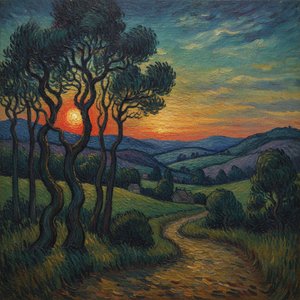
Beyond the Light: Capturing Raw Emotion and Subjective Vision in Post-Impressionist Landscapes
Explore the profound emotional depth of Post-Impressionist landscapes. Discover how masters like Van Gogh moved beyond light to capture raw human feeling through vibrant color and expressive texture in this expert art history retrospective.