() ·

Een schilderij speciaal voor u gemaakt, met de hand

Child at Table

Handgemaakte olieverfreproductie

Met de hand geschilderd in olieverf op canvas in uw gewenste maat en lijst, op bestelling gemaakt door onze kunstenaars. ( Schakel over naar print Schakel over naar digitale afbeeldingen)

Beschrijving verzamelobject

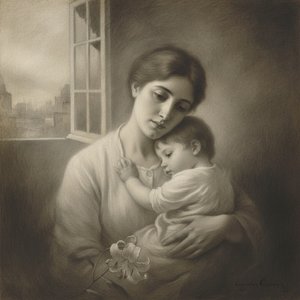
Experience Eugène Carrière’s poignant Symbolist masterpiece, Child at Table, renowned for its stark monochrome palette and luminous depiction of a baby boy. This 1880 painting evokes a mystical atmosphere through contrasting tones and captures a tender moment in the artist's son's life – discover this iconic artwork.

Biografie kunstenaar

Eugène Anatole Carrière was een Frans Symbolist kunstenaar van de fin-de-siècle periode. Zijn schilderijen staan bekend om hun bijna monochrome bruine kleur en hun etherische kwaliteit. Carrière's stijl werd sterk beïnvloed door Rubens en hij gebruikte vaak een bijna monochrome bruine kleurpalette.

vanaf ·

Hoofdstuk 1

Hoe groot moet het zijn?

Schuif om de afmetingen te wijzigen; de afbeelding aan de linkerzijde toont de lijst in de werkelijke breedte. De oorspronkelijke verhoudingen blijven behouden.

Standaardformaat
op maat gemaakt
CM
INCH

Kies uit onze vooraf ingestelde maten die overeenkomen met de originele verhoudingen van het kunstwerk.

breedte
hoogte

Voer de breedte en hoogte in die u nodig heeft, passend bij uw lijst of uw muur. Omdat dit handgeschilderd is, kan de kunstenaar bij een afmeting met een andere beeldverhouding iets meer rondom het schilderij schilderen of juist iets meer weglaten — u kiest zelf. Wij sturen u een digitaal mockup ter goedkeuring voordat het schilderwerk begint. De afbeelding die op deze pagina wordt getoond, is niet het uiteindelijke resultaat — alleen de mockup geeft dit weer.


Hoofdstuk 2

Hoe moet het worden geleverd?

Kies de randen van het canvas

Kies uw lijst

Corner sample of the WhiteWrap canvas edge finish, stretched on massief hout bars
Wit €1
Corner sample of the BlurSideWrap canvas edge finish, stretched on massief hout bars
Vervagende randen €1
Corner sample of the ExtendedWrap canvas edge finish, stretched on massief hout bars
Doorlopende rand €1
Corner sample of the P118B picture frame: gegoten polystyreen, 5 cm wide and 3 cm thick
P118B €10
Corner sample of the P118H picture frame: gegoten polystyreen, 5 cm wide and 3 cm thick
P118H €10
Corner sample of the P118W picture frame: gegoten polystyreen, 5 cm wide and 3 cm thick
P118W €10
Corner sample of the P438Z picture frame: gegoten polystyreen, 5.5 cm wide and 3.5 cm thick
P438Z €10
Corner sample of the P508JH picture frame: gegoten polystyreen, 7 cm wide and 3.5 cm thick
P508JH €12
Corner sample of the P508YH picture frame: gegoten polystyreen, 7 cm wide and 3.5 cm thick
P508YH €12
Corner sample of the P805H picture frame: gegoten polystyreen, 5 cm wide and 3.5 cm thick
P805H €10
Corner sample of the P805Z picture frame: gegoten polystyreen, 5 cm wide and 3.5 cm thick
P805Z €10
Corner sample of the P919BZ picture frame: gegoten polystyreen, 7 cm wide and 3.5 cm thick
P919BZ €10
Corner sample of the P919G picture frame: gegoten polystyreen, 7 cm wide and 3.5 cm thick
P919G €10
Corner sample of the P919XJ picture frame: gegoten polystyreen, 7 cm wide and 3.5 cm thick
P919XJ €10
Corner sample of the P959ZH picture frame: gegoten polystyreen, 5 cm wide and 3 cm thick
P959ZH €10
Corner sample of the P968JZ picture frame: gegoten polystyreen, 6 cm wide and 4 cm thick
P968JZ €12
Corner sample of the W106C picture frame: massief hout, 5 cm wide and 3 cm thick
W106C €8
Corner sample of the W218G picture frame: massief hout, 5 cm wide and 3 cm thick
W218G €10
Corner sample of the W218JH picture frame: massief hout, 5 cm wide and 3 cm thick
W218JH €8
Corner sample of the W218Y picture frame: massief hout, 5 cm wide and 3 cm thick
W218Y €10
Corner sample of the W307PJ picture frame: massief hout, 6 cm wide and 3 cm thick
W307PJ €10
Corner sample of the W316G picture frame: massief hout, 6 cm wide and 3 cm thick
W316G €10
Corner sample of the W316PJ picture frame: massief hout, 6 cm wide and 3 cm thick
W316PJ €8
Corner sample of the W316Y picture frame: massief hout, 6 cm wide and 3 cm thick
W316Y €10
Corner sample of the W398PJ picture frame: massief hout, 5 cm wide and 3 cm thick
W398PJ €8
Corner sample of the W4111J picture frame: massief hout, 6.5 cm wide and 3.5 cm thick
W4111J €10
Corner sample of the W500HY picture frame: massief hout, 7 cm wide and 5 cm thick
W500HY €15
Corner sample of the W500JH picture frame: massief hout, 7 cm wide and 5 cm thick
W500JH €15
Corner sample of the W692G picture frame: massief hout, 8 cm wide and 4 cm thick
W692G €12
Corner sample of the W849H picture frame: massief hout, 5 cm wide and 3 cm thick
W849H €8
Corner sample of the W940BG picture frame: massief hout, 7.5 cm wide and 4.5 cm thick
W940BG €15
Corner sample of the W953PJ picture frame: massief hout, 6 cm wide and 3.5 cm thick
W953PJ €8
Corner sample of the H24-GOLD picture frame: gesneden hout met gesso, 10 cm wide and 6 cm thick
H24-GOLD €30
Corner sample of the H24-SILVER picture frame: gesneden hout met gesso, 10 cm wide and 6 cm thick
H24-SILVER €30
Corner sample of the H36-GOLD picture frame: gesneden hout met gesso, 15 cm wide and 6.5 cm thick
H36-GOLD €45
Corner sample of the H36-SILVER picture frame: gesneden hout met gesso, 15 cm wide and 6.5 cm thick
H36-SILVER €45
Lijstvoorbeeld
Ingelijst

Lijstrand: . Totale afmetingen inclusief lijst: .

Hoofdstuk 3

Wie schildert het, en moet er iets veranderen?

Voorbeelden van wat aangepast kan worden: Vervang het gezicht door een foto van de klant; Voeg een huisdier toe (bijv. vervang de kat door een hond); Voeg een verborgen boodschap toe aan de achtergrond; Wijzig het landschap of de elementen in de achtergrond.
Na de bestelling zal het team van OriginalUniqueArt.com per e-mail contact opnemen met de klant voor instructies en een mockup-voorbeeld verstrekken

Wereldwijde levering () binnen 3 tot 4 weken in plaats van de standaard 5 weken. (3 november). Zonder concessies aan de kwaliteit.

Hoofdstuk 4

De laatste hand aan

Een naambordje, zoals in een museum?

Details van de gegraveerde bronzen plaat

This elegant plaque features the artist's name and the title of the artwork, finely engraved for a timeless presentation.

It is made from bronze with a refined, elegant finish. The text is precisely laser-engraved for a sharp and permanent result. Measuring 9x2 cm, the plaque is compact yet easy to read. It's built to be durable and scratch-resistant, offering a professional, museum-quality look. Mounting is simple thanks to the included adhesive backing.

Details transparante acrylplaat

The plaque includes essential engraved details such as the artist's name, the title of the artwork, the date it was created, the type of media used-like oil on canvas or watercolor-a brief description of the piece, and a QR code that links to the complete artwork information.

It is crafted from clear acrylic, offering a sleek, modern appearance. The text is UV-engraved in black to ensure strong visual contrast. With a size of 10x15 cm, it ensures optimal readability. It comes equipped with two metal hooks for secure wall mounting. The plaque is designed to be weather-resistant, making it suitable for various environments, and it includes interactive features that work seamlessly with smartphone scanning.

Details zwarte acrylplaat

This elegant plaque includes engraved information such as the artist's name, the title of the artwork, the date it was created, the type of media used (like oil on canvas or watercolor), a short description of the artwork, and a QR code for quick access to more information.

The plaque itself is made from refined black acrylic with a premium finish. The text is laser-engraved in white for high contrast and readability. Its size is 10x15 cm, designed to be easy to read. It comes with two metal hooks for professional mounting. The design is sleek and fits any interior style. It is also weather-resistant and durable, with built-in digital integration for mobile compatibility.

Een beschermende vernis?

Wanneer heeft u het nodig?

Hoofdstuk 5

Uw schilderij, zoals u het heeft besteld

Child at Table

Druktechniek

Afmetingen reproductie

-

Geselecteerde topkunstenaars

Meer detail, verfijning en extra productietijd

-

Lijst voor reproductie

-

-

Voor kunstwerken of reproducties die aan één zijde groter zijn dan 105 cm (ongeveer 41 inch), wordt de lijst als een losse set verzonden. Deze methode garandeert een veilige levering en voorkomt schade tijdens het transport.

Professionele montage vereist - dit is geen doe-het-zelfproduct.
De set moet worden gemonteerd en het canvas moet worden gespannen door een ervaren professionele lijstenmaker, met gebruik van houtlijm (niet inbegrepen), een doekspanter en klemmen om de sponningen recht te houden terwijl de lijm droogt. Onjuiste montage of een ongelijkmatige spanning op het canvas kan het kunstwerk permanent beschadigen en wordt niet gedekt door onze garantie.

  • Alle massief houten onderdelen zijn inbegrepen, nauwkeurig op maat gesneden voor montage.

  • Te monteren met de meegeleverde schroeven, plus houtlijm voor de hoekverbindingen, die niet wordt meegeleverd en door uw lijstenmaker moet worden aangeschaft.

  • Professioneel gereedschap is vereist en niet inbegrepen: een spanner voor canvas en klemmen om de latten recht te houden terwijl de lijm droogt.

Belangrijk:
De hoekverbindingen vereisen houtlijm, de latten moeten met lijmklemmen worden vastgehouden tot de lijm volledig is opgedroogd, en het spannen van het canvas op het samengestelde frame vereist een doekspanter. Geen van deze artikelen is inbegrepen in de set. Wij adviseren u om een ervaren professionele lijstenmaker te raadplegen voordat u deze maat bestelt.

Naamplaatje

-

-

Beschermende vernislaag

Glanzende vernis (versterkt de kleuren en biedt bescherming tegen licht en vocht)

-

Mijn kunstwerk aanpassen

Voorbeelden van aanpassingen: vervang het gezicht door een eigen foto; voeg een huisdier toe (bijv. vervang de kat door een hond); verwerk een verborgen boodschap in de achtergrond; wijzig het landschap of andere elementen op de achtergrond.

-

Spoedlevering

Wereldwijde levering () binnen 3 tot 4 weken in plaats van de standaard 5 weken. (3 november). Geen concessies aan de kwaliteit.

-

Spoedlevering

Wereldwijde levering naar binnen 5 weken. (10 november).

Inbegrepen

Eindtotaal

€ 268

Totaalprijs € 268

De optie voor glas is alleen beschikbaar bij een formaat kleiner dan 110 cm.

Inbegrepen bij elke bestelling

  • Gratis wereldwijde expressverzending
  • Hoogwaardig linnen canvas
  • Volledige verzendverzekering
  • Garantie op terugbetaling van invoerrechten
  • Garantie op exacte kleurweergave
  • Retourbeleid van 100 dagen (alleen bij defecten)
  • 100% Geld-terug-garantie
  • Korting bij meerdere afnames

Eugène Carrière’s ‘Child at Table’: A Monochromatic Meditation on Innocence

Eugène Anatole Carrière's Child at Table (1880) is not merely a portrait; it’s an immersion into a world of quiet contemplation, rendered with a startlingly spare palette and imbued with the profound symbolism characteristic of the Symbolist movement. Created during a period of intense artistic experimentation in France – a direct response to the Impressionists' focus on fleeting moments of light – Carrière sought to evoke deeper emotional and spiritual truths through his art. This work, depicting a young boy, likely his son Jean René, captured around 1888, exemplifies this approach with remarkable clarity.

  • A Monochromatic Universe: Carrière’s signature style is immediately apparent in the painting's stark contrast. The almost entirely monochrome palette – shades of blue, gray, and brown – creates a sense of detachment from the everyday, elevating the scene to something almost sacred. This deliberate restriction of color wasn’t simply an aesthetic choice; it was rooted in Carrière’s early experience as a lithographer, where he honed his skills in creating dramatic tonal effects.
  • The Power of Light and Shadow: Despite the lack of vibrant hues, Carrière masterfully manipulates light and shadow to generate a luminous effect. The creamy-white skin of the child is dramatically highlighted against the enveloping darkness, drawing the viewer’s eye directly to this vulnerable subject. This technique, reminiscent of Rubens' influence, suggests an almost ethereal quality, hinting at a timeless innocence.

Symbolism and Domestic Themes

Child at Table firmly places itself within the Symbolist tradition, which prioritized subjective emotion and spiritual meaning over realistic representation. The scene’s quiet intimacy – the boy seated at a table with a cup – speaks to themes of childhood, vulnerability, and perhaps even religious devotion. Carrière frequently depicted domestic scenes featuring his family, often exploring the complexities of motherhood and familial bonds. This particular work, like The Sick Child (Montargis), reflects this recurring motif, offering a poignant glimpse into the artist’s personal life.

  • A Mystical Atmosphere: The dark background isn't merely a backdrop; it actively contributes to the painting's symbolic weight. It creates an atmosphere of mystery and introspection, inviting viewers to contemplate the child’s gaze upwards – a gesture that could be interpreted as prayerful or simply filled with wonder.
  • The Artist's Lineage: The fact that Carrière was the grandson of artists further informs our understanding of this work. His artistic lineage undoubtedly influenced his approach, adding another layer of meaning to the scene’s quiet contemplation.

Technique and Historical Context

Carrière’s meticulous technique is evident in the smooth application of paint and the precise rendering of detail. The use of a glazing technique – applying thin layers of translucent color over dried underlayers – would have enhanced the luminosity of the skin tones and created subtle variations within the monochrome palette. Produced around 1880, this painting represents a pivotal moment in Carrière’s career, solidifying his reputation as a leading figure in the Symbolist movement and demonstrating his ability to create emotionally resonant works through masterful control of light, shadow, and tone.

Emotional Impact and Reproduction

Child at Table possesses an undeniable emotional power. The painting's quiet intimacy and the vulnerability of its subject evoke a sense of tenderness and nostalgia. A hand-painted reproduction captures not only the visual details but also the very essence of Carrière’s artistic vision, allowing you to experience this profound work in your own space.

Veelgestelde vragen

Wat is de kunsthistorische betekenis van "Child at Table" door Eugène Anatole Carrière?

De kunsthistorische classificatie van "Child at Table" door Eugène Anatole Carrière is Symbolist Art, uit de 19th Century-periode.

Wie heeft "Child at Table" gemaakt?

De kunstenaar achter "Child at Table" is Eugène Anatole Carrière. Het werk is gecatalogiseerd onder de naam van Eugène Anatole Carrière.

Waar wordt het Landscape-formaat van "Child at Table" aanbevolen te tonen?

Het Landscape-formaat van "Child at Table" door Eugène Anatole Carrière wordt aanbevolen voor een Dining Room. Formaat en ruimte samen bepalen de ideale plaatsing van een reproductie.

Meer over dit schilderij

Voorvertoning Bekijk in AR Schakel over naar print Schakel over naar digitale afbeeldingen Verstuur
Details bekijken Gids Toevoegen aan favorieten Download Vergelijkbare items Röntgenonderzoek Diavoorstelling Vraag & antwoord Statistieken

In cijfers

  • 1880het jaar waarin het werd geschilderd
  • 29lijsten om uit te kiezen
  • standaardmaten, in hun eigen verhoudingen
  • 5weken om te schilderen en te leveren
Eugène Anatole Carrière

Eugène Anatole Carrière

1849 - 1906, Frankrijk

Snelle feiten over Eugène Anatole Carrière

  • Artistic Movement Or Style: Symbolisme, Monochrome
  • Artists Or Movements Influenced By This Artist: ['Pablo Picasso']
  • Artists Who Influenced This Artist: ['Peter Paul Rubens']
  • Date Of Birth: 16 januari 1849
  • Date Of Death: 27 maart 1906
  • Full Name: Eugène Anatole Carrière
  • Nationality: Frans
  • Notable Artworks:
    • De Zieke Kind
    • Het Eerste Communie
  • Place Of Birth: Gournay-sur-Marne, Frankrijk

Biografie kunstenaar

**early life and training**

Eugène Anatole Carrière, a name synonymous with haunting monochrome landscapes and intimate domestic scenes, was born on January 16, 1849, in Gournay-sur-Marne, Seine-Saint-Denis. His upbringing, far from the bustling artistic centers of Paris, provided a grounding that would profoundly shape his distinctive style. Initially destined for a career in printing – a practical trade learned during his youth – Carrière’s passion for art ignited early, fueled by an encounter with the masterpieces of Peter Paul Rubens at the Louvre Museum. This pivotal experience irrevocably altered his course, leading him to pursue formal training at the École des Beaux-Arts in Paris and later under the tutelage of Alexandre Cabanel, a renowned academic painter. These formative years instilled within him both a deep respect for artistic tradition and the nascent desire to forge his own unique path.

**artistic style and influences**

Carrière’s oeuvre is instantly recognizable by its pervasive use of brown monochrome – a deliberate departure from the vibrant palettes favored by many of his contemporaries. This carefully constructed palette, often described as “almost porcelain-like,” creates an atmosphere of quiet contemplation and ethereal beauty. The influence of Rubens remains palpable in the luminous quality of Carrière’s early works, while the somber mood and psychological depth owe a debt to the Symbolist movement gaining momentum at the time. Notably, his experiences as a prisoner of war in Dresden during the Franco-Prussian War profoundly impacted his artistic sensibilities, contributing to the melancholic undertones that permeate many of his paintings. The artist’s ability to evoke emotion through subtle shifts in tone and texture is a testament to his exceptional technical skill and profound understanding of color theory.

**the young mother (1879) and other early works**

One of Carrière's most celebrated early pieces, *The Sick Child (Montargis)*, offers a poignant glimpse into the artist’s evolving artistic vision. This work, now housed at the Musée des Beaux-Arts de Rouen, marked a significant shift towards depicting scenes of domestic life – particularly those centered around motherhood and childhood. The painting captures a tender moment between a mother and child, rendered with remarkable sensitivity and realism. Similarly, *The First Communion (Toulon)* showcases Carrière’s ability to imbue seemingly ordinary subjects with profound emotional resonance. His portrait of Louis-Henri Devillez, a highly praised work from 1887, exemplifies his skill in capturing the essence of his subjects – their personalities, emotions, and inner lives. These early works established the foundation for Carrière's distinctive style and cemented his reputation as a master of psychological realism.

**influence and legacy**

Carrière’s monochrome aesthetic has resonated deeply with artists across generations. Notably, Pablo Picasso drew inspiration from Carrière’s work during his Blue Period, adopting a similar palette to convey themes of melancholy and despair. The artist's influence extends beyond individual painters; his innovative use of color and his exploration of intimate human experiences have had a lasting impact on the development of modern art. Eugène Carrière was also an influential teacher at Académie de la Palette, nurturing the talents of future artists such as Henri Matisse and André Derain. His legacy continues to inspire artists today, demonstrating the enduring power of simplicity, emotion, and artistic vision.

**notable works and exhibitions**

Beyond the pieces already mentioned, Carrière’s oeuvre includes a wealth of compelling paintings, each offering a unique perspective on the human condition. *The Sick Child (Montargis)*, *The Young Mother*, *First Communion (Toulon)*, and *Portrait of Louis-Henri Devillez* are among his most recognized works, exhibited at the Société Nationale des Beaux-Arts, which Carrière himself helped establish. His contributions to the art world extend beyond his paintings, as he also played an influential role as an art teacher at Académie de la Palette. His work is now displayed in museums across France and internationally, including the Musée d'Orsay in Paris, ensuring that his artistic legacy continues to be celebrated for generations to come.

Snelle feiten

  • Subject or theme: Domesticity, innocence
  • Title: Child at Table
  • Location: Private collection
  • Artist: Eugène Carrière
  • Influences: Rubens