
 Voorvertoning
 Verstuur
 Delen
Delen
 Details bekijken

 Download
 Vergelijkbare items
 Röntgenonderzoek
 Diavoorstelling
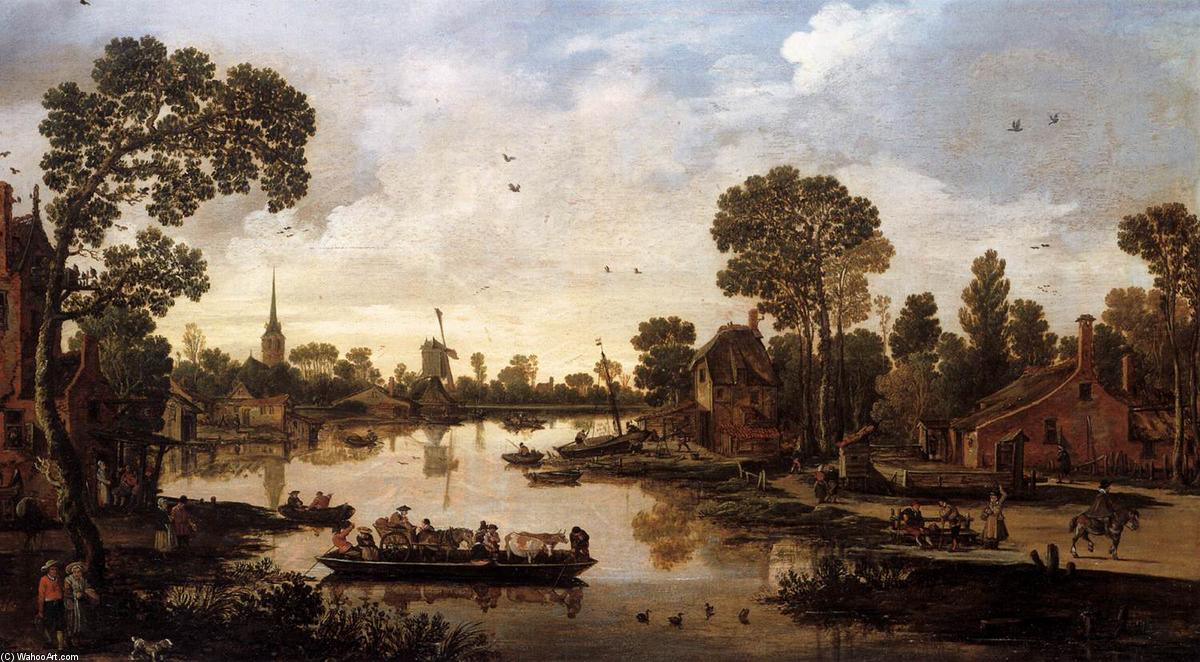
Ferry Boat
 Oil On Panel
- Baroque Landscape
 1622
1622 62.0 x 113.0 cm
 Rijksmuseum
 Lees meer
Handgemaakte olieverfreproductie
Met de hand geschilderd in olieverf op canvas in uw gewenste maat en lijst, op bestelling gemaakt door onze kunstenaars. ( Bestel print Koop afbeelding)




P118B $10

P118H $10

P118W $10

P438Z $10

P508JH $12

P508YH $12

P805H $10

P805Z $10

P919BZ $10

P919G $10

P919XJ $10

P959ZH $10

P968JZ $12

W106C $8

W218G $10

W218JH $8

W218Y $10

W307PJ $10

W316G $10

W316PJ $8

W316Y $10

W398PJ $8

W4111J $10

W500HY $15

W500JH $15

W692G $12

W849H $8

W940BG $15

W953PJ $8




Kies uit onze vooraf ingestelde maten die overeenkomen met de originele verhoudingen van het kunstwerk.

U kunt uw eigen afmetingen invoeren om in een specifieke lijst of ruimte te passen. Als de door u gekozen maat niet overeenkomt met de verhoudingen van het originele beeld, zullen we het kunstwerk bijsnijden of het schilderij uitbreiden met extra handgeschilderde elementen. Een digitale mockup wordt ter goedkeuring naar u verzonden voordat de productie begint.
Houd er rekening mee dat de preview op het scherm niet de werkelijke uitsnede of uitbreiding weergeeft. Alleen de mockup toont de uiteindelijke compositie nauwkeurig.
Hoewel aangepaste afmetingen mogelijk zijn, raden we aan een maat uit de vooraf gedefinieerde lijst te selecteren om de originele verhoudingen te behouden.
Na de bestelling zal het team van OriginalUniqueArt.com per e-mail contact opnemen met de klant voor instructies en een mockup-voorbeeld sturen.
Wereldwijde levering () binnen 3 tot 4 weken in plaats van de standaard 5 weken. (25 augustus). Zonder concessies aan de kwaliteit.

Gratis wereldwijde expressverzending

Hoogwaardig linnen canvas

Volledige verzendverzekering

Garantie op terugbetaling van invoerrechten

Garantie op exacte kleurweergave

Retourbeleid van 60 dagen (alleen bij defecten)

100% Geld-terug-garantie

Korting bij meerdere afnames
 De optie voor glas is alleen beschikbaar bij een formaat kleiner dan 110 cm.

Ferry Boat
Druktechniek
Afmetingen reproductie
-


Eindtotaal
$ 300
Beschrijving kunstwerk
A Moment Frozen in Time: Esaias van de Velde’s “Ferry Boat”
Esaias van de Velde's "Ferry Boat," painted in 1622, isn’t merely a depiction of a river crossing; it’s a carefully constructed tableau of Dutch life, imbued with the serenity and meticulous detail characteristic of the Golden Age. Housed within the Rijksmuseum in Amsterdam, this painting offers a rare glimpse into a world where commerce and community intertwined along the waterways that shaped the nation's identity. Van de Velde masterfully captures not just the physical scene but also the quiet rhythm of daily existence – a testament to his skill as a landscape artist and keen observer of human activity.
The painting immediately draws the eye to the tranquil waterway, rendered with an almost photographic precision. The water’s surface reflects the surrounding trees and buildings, creating a sense of depth that extends far into the distance. This masterful use of atmospheric perspective—a technique perfected during this period—is crucial to the work's overall effect, lending it a believable realism. At the heart of the composition lies the ferry boat itself, a sturdy vessel carrying passengers across the water with an air of effortless grace. The subtle details of its construction – the simple lines, the lack of elaborate ornamentation – speak volumes about the practicality and functionality valued by Dutch society.
The Palette of Peace: Style and Technique
Van de Velde’s artistic style is defined by a restrained palette of earthy tones—muted browns, greens, and blues—that evoke a sense of warmth and tranquility. He eschews dramatic contrasts in light and shadow, favoring instead a soft, diffused illumination that contributes to the painting's overall mood of peaceful contemplation. The brushstrokes are delicate and precise, meticulously applied to create a smooth, almost velvety surface. This technique, combined with his mastery of perspective and atmospheric effects, results in an image that is both visually stunning and emotionally resonant.
The artist’s use of oil paint allows for incredible detail and luminosity. He skillfully layered thin glazes of color to build up the forms and textures of the scene, creating a sense of depth and realism. Notice how he captures the subtle variations in tone on the water's surface—the shimmering reflections, the gentle ripples—demonstrating his deep understanding of light and its effects. The composition is carefully balanced, with the ferry boat positioned centrally to draw the viewer’s eye across the scene. The arrangement of figures along the riverbanks further enhances this sense of balance, creating a harmonious and visually pleasing whole.
A Window into 17th-Century Dutch Life
“Ferry Boat” offers a fascinating glimpse into the daily lives of people in 17th-century Holland. The figures lining the riverbanks—farmers, merchants, and laborers—engage in various activities: tending to their fields, unloading goods, or simply enjoying the scenery. Their presence adds a layer of social context to the scene, reminding us that this painting is not merely an exercise in landscape depiction but also a portrait of Dutch society. The inclusion of a horse-drawn cart suggests the importance of transportation and trade in the region’s economy.
The painting's historical context is particularly noteworthy. During the Dutch Golden Age, the country experienced a period of unprecedented prosperity and artistic innovation. Artists like Van de Velde were tasked with documenting the beauty of their homeland—its landscapes, its cities, and its people. “Ferry Boat” exemplifies this trend, capturing not only the physical reality of the scene but also the cultural values and social dynamics of the time. It’s a poignant reminder of a bygone era, offering viewers a chance to connect with the past in a meaningful way.
Bringing History Home: Reproductions and Legacy
High-quality reproductions of “Ferry Boat” are now readily available through platforms like OriginalUniqueArt.com, allowing art enthusiasts worldwide to bring this masterpiece into their homes. These meticulously crafted prints capture the essence of Van de Velde’s original painting—its serene atmosphere, its meticulous detail, and its profound sense of place. Whether displayed in a formal living room or a cozy study, a reproduction of “Ferry Boat” will serve as a timeless reminder of the beauty and artistry of the Dutch Golden Age.
For those seeking to delve deeper into the life and work of Esaias van de Velde, resources like Wikipedia and the WGA website offer invaluable information. Exploring these sources can provide further insights into his artistic influences, his techniques, and his enduring legacy as one of the most important landscape painters of the Dutch Golden Age.
Biografie van de kunstenaar
Esaias van de Velde: Meester van het Nederlandse Landschap
Esaias van de Velde (17 mei 1587 – 18 november 1630) staat als een centrale figuur in de ontwikkeling van het landschapsschilderkunst binnen de Nederlandse Gouden Eeuw. Geboren in Amsterdam, vindt zijn artistieke lijn terug bij zijn vader, Hans van de Velde, een protestantse vluchteling uit Vlaanderen die na de religieuze omwentelingen van de late 16e eeuw toevlucht zocht in Nederland. Deze familieband met de Vlaamse traditie vormde Esaias' vroege artistieke opleiding diepgaand, eerst onder zijn vader en later bij Gillis van Coninxloo, een landschapsschilder sterk beïnvloed door het werk van Pieter Bruegel de Oudere. Zijn opvoeding te midden van deze samensmelting van artistieke invloeden legde de basis voor zijn onderscheidende stijl – een stijl die uiteindelijk de mogelijkheden om de natuurlijke wereld op doek af te beelden opnieuw definieerde.Vroege Invloeden en het Artistieke Landschap van Haarlem
Van de Veldes carrière begon in Haarlem, een levendig centrum van kunst en handel gedurende de 17e eeuw, van 1610 tot 1618. Deze periode bleek cruciaal voor zijn artistieke evolutie. Hij trad in 1612 toe tot het prestigieuze Haarlemse Atelier van Sint-Lucas naast Hercules Segers, een gebeurtenis die een significante verschuiving markeerde in de perceptie van landschapsschilderkunst binnen de regio. Voorheen werden landschappen vaak beschouwd als secundaire genres, gereduceerd tot decoratieve rollen. De toelating van Van de Velde verhief deze echter tot een gerespecteerde en onafhankelijke artistieke categorie, wat een bredere trend in heel Nederland weerspiegelde. Opmerkelijk was zijn invloed van Adam Elsheimer, een Duitse schilder bekend om zijn dramatische belichting en atmosferische effecten, wat hem aanmoedigde zich te onttrekken aan de meer rigide conventies van zijn tutor en een lager standpunt te omarmen – een techniek die toeschouwers een uitgestrekt, bijna meeslepend perspectief op de tafereel voor hen bood. Deze bewuste keuze, gecombineerd met een driehoekige compositiestructuur, werd het kenmerk van zijn unieke stijl.Genre- en Militaire Scènes: Het Vergroten van Artistieke Horizonnen
Hoewel hij vooral beroemd is om zijn landschappen, strekte Van de Veldes artistiek repertoire zich uit tot voorbij het puur naturalistische. Hij integreerde meesterlijk genrescènes – afbeeldingen van het dagelijks leven – en militaire schilderijen in zijn oeuvre. Deze werken tonen een scherp oog voor observatie en een vermogen om de dynamiek en het drama van menselijke activiteit vast te leggen, zowel in landelijke als stedelijke omgevingen. Zijn “De Overval op een Karavaan” (ca. 1618) illustreert deze veelzijdigheid, waarbij hij niet alleen zijn meesterschap over het landschap tentoonstelt, maar ook zijn talent voor het portretteren van actie en narratief met boeiende details. Deze diverse onderwerpen onthullen een schilder die zich op zijn gemak voelde bij het navigeren door de complexiteit van het weergeven van menselijke ervaring in al haar vormen.Portretkunstenaar en Artistiek Erfgoed
In zijn latere jaren bekleedde Van de Velde een prestigieuze positie als hofschilder voor Prins Maurits en Frederik Hendrik te Den Haag. Deze benoeming versterkte zijn reputatie en gaf hem toegang tot een breder scala aan opdrachten, waaronder het creëren van uitgebreide gevechtsscènes en ceremoniële afbeeldingen. Zijn werk uit deze periode weerspiegelt een verfijnde artistieke gevoeligheid, gekenmerkt door minutieus detail, subtiele kleurenpaletten en een steeds verfijnder begrip van licht en schaduw. Hij werd beïnvloed door Roelant Savery en Jan van de Velde, wat een duidelijke lijn binnen het artistieke erfgoed van zijn familie aantoont.Leerlingen en Blijvend Invloed
Esaias van de Veldes invloed reikte verder dan zijn eigen creaties; hij fungeerde als mentor voor verschillende veelbelovende jonge kunstenaars, waaronder Pieter van Laer, Jan Martszen de Jonge en Anthony van de Velde (II). Zijn invloed is zichtbaar in het werk van Palamedes Palamedesz, Nicolaes de Quade van Ravesteyn en Adriaen Adriaensz Ghibons – kunstenaars die elementen van zijn stijl en compositietechnieken overnamen. Bovendien was hij een neef van Jan van de Velde, wat nog een laag toevoegde aan het artistieke erfgoed van de familie. Esaias' overlijden in Den Haag in 1630 markeerde het einde van een tijdperk, maar zijn bijdragen aan de Nederlandse landschapsschilderkunst bleven significant, en vormden de loop van het genre en inspireerden generaties kunstenaars die volgden. Zijn werk wordt vandaag de dag nog steeds bewonderd om zijn realisme, dramatische belichting en evocatieve weergave van de natuurlijke wereld.
Esaias Van De Velde
1587 - 1630 , Nederland
Belangrijkste feiten
- Artistic Movement Or Style: Haarlemschool, Landschap
- Artists Or Movements Influenced By This Artist:
- Palamedes Palamedesz
- Jan Martszen de Jonge
- Artists Who Influenced This Artist:
- Adam Elsheimer
- Roelant Savery
- Date Of Birth: 1587-05-17 (gedoopt)
- Date Of Death: 1630-11-18
- Full Name: Esaias van de Velde
- Nationality: Nederlands
- Notable Artworks:
- Winterlandschap
- De Ambush
- Het overval
- Place Of Birth: Amsterdam, Nederland
Gerelateerde artikelen

Willem van de Velde the Elder: Master of Maritime Painting & Chronicler of the Dutch Golden Age
Discover the captivating maritime paintings of Willem van de Velde the Elder, a master chronicler of the Dutch Golden Age. Explore his unparalleled realism and lasting influence on naval art history.

Jan van Goyen: Master of Dutch Landscape & Atmospheric Perspective
Discover Jan van Goyen, the master of Dutch landscape painting. Explore his subtle technique, atmospheric realism & lasting influence on art history. Learn about this 17th-century pioneer at OriginalUniqueArt.

Rembrandt's Meesterwerken: De Top 25 – Kunst voor uw Interieur | OriginalUniqueArt
Ontdek de 25 meest iconische schilderijen van Rembrandt van Rijn! Duik in de Gouden Eeuw, bewonder zijn portretten & zelfportretten. Museumkwaliteit reproducties voor uw interieur op OriginalUniqueArt.com. Bekijk de collectie!
Cornelis van Poelenburch: Bridging Mannerism & the Dutch Baroque Landscape
Discover Cornelis van Poelenburch, a pivotal Dutch Baroque landscape painter bridging Mannerism & Italianate styles. Explore his life, key works, and lasting influence on 17th-century art with OriginalUniqueArt.

Goya's Meesterwerken: 25 Iconische Schilderijen voor Kunstliefhebbers | OriginalUniqueArt
Ontdek de 25 meest iconische schilderijen van Francisco Goya! Duik in zijn Spaanse romantiek, donkere kleuren & emotionele kracht. Museumkwaliteit reproducties voor jouw interieur op OriginalUniqueArt.com.

