
 Bekijk op ware grootte
 Verstuur
 Delen
Delen
 Details bekijken
 Gids voor studentenkunstwerken

 Download
 Vergelijkbare items
 Röntgenonderzoek
 Diavoorstelling
 Statistieken
Crucifixion,
 Acrylic On Canvas
- WallArt
- Expressionist Symbolism
 1912
1912- 19th Century
 221.0 x 194.0 cm
 Lees meer
Giclée / Kunstafdrukken
Giclée- of canvasafdruk van museumkwaliteit met een snelle productie en flexibele afwerkingsmogelijkheden. ( Koop handgeschilderd kunstwerk Schakel over naar digitale afbeeldingen)




P118B €10

P118H €10

P118W €10

P438Z €10

P508JH €12

P508YH €12

P805H €10

P805Z €10

P919BZ €10

P919G €10

P919XJ €10

P959ZH €10

P968JZ €12

W106C €8

W218G €10

W218JH €8

W218Y €10

W307PJ €10

W316G €10

W316PJ €8

W316Y €10

W398PJ €8

W4111J €10

W500HY €15

W500JH €15

W692G €12

W849H €8

W940BG €15

W953PJ €8




Kies uit onze vooraf ingestelde maten die overeenkomen met de originele verhoudingen van het kunstwerk.

Type the width and the height you need, to fit your frame or your wall. A print can only be cut, never made bigger than the picture, so a size with a different shape loses a part of the image. We send you a digital mockup to approve before we print anything. The picture shown on this page does not show the real cut — only the mockup does.
Wereldwijde levering () binnen 2 weken in plaats van de standaard 4/5 weken. (14 oktober)

Gratis wereldwijde expressverzending

Hoogwaardig linnen canvas

Volledige verzendverzekering

Garantie op terugbetaling van invoerrechten

Garantie op exacte kleurweergave

Retourbeleid van 100 dagen (alleen bij defecten)

100% Geld-terug-garantie

Korting bij meerdere afnames
 De optie voor glas is alleen beschikbaar bij een formaat kleiner dan 110 cm.

Crucifixion,
Giclée / Kunstafdrukken
Formaat reproductie
-


Totaalprijs
€ 70
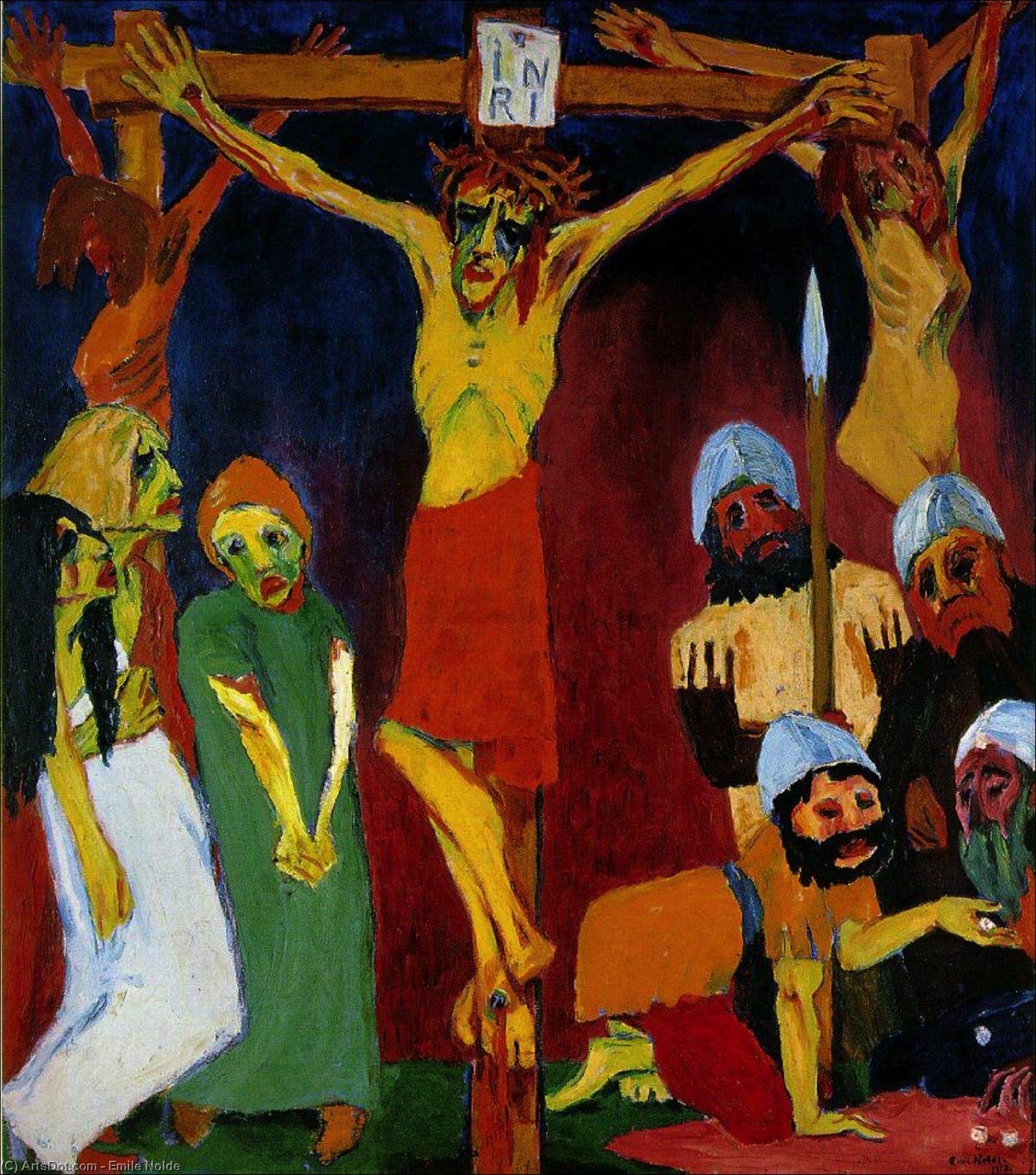
A Profound Meditation on Suffering: Emil Nolde's Crucifixion (1912)
Emil Nolde’s Crucifixion, painted in 1912, is not merely a depiction of a biblical event; it’s a visceral exploration of human suffering and faith rendered with an arresting intensity. Measuring 221 x 194 cm, this canvas immediately commands attention with its dramatic composition and the artist's signature use of bold, expressive color. Nolde, deeply influenced by the works of Van Gogh and Gauguin, alongside a fascination with primitive art forms – particularly the raw emotion conveyed through masks and carvings – sought to bypass representational accuracy in favor of conveying profound spiritual truths. The painting’s power resides not just in its subject matter but in the artist's ability to translate complex emotions onto the canvas with remarkable directness.
Subject Matter and Composition
The scene is unequivocally the crucifixion of Christ, a cornerstone event in Christian theology. Nolde meticulously portrays Jesus on the cross, his body contorted in agony, arms outstretched in a gesture both vulnerable and defiant. The surrounding figures – a solitary figure to the left and another to the right, along with a throng gathered around the base of the cross – are not simply observers; they are participants in this monumental drama. Their postures, expressions, and spatial arrangement contribute to the painting’s dynamic tension, reflecting the emotional weight of the moment. Notably, the inclusion of a knife adds an element of unsettling ambiguity, perhaps symbolizing betrayal or the inherent violence within human nature.
Technique and Color – A Language of Emotion
- Impasto Technique: Nolde employs a thick impasto technique, layering paint with considerable texture. This creates a palpable sense of physicality, emphasizing the roughness of the wood, the vulnerability of Christ’s body, and the raw emotion conveyed through the figures' expressions.
- Bold Color Palette: The artist utilizes a vibrant, almost jarring color palette – deep reds, blues, and yellows – to heighten the emotional impact. These colors are not used realistically but rather expressively, amplifying the sense of suffering and spiritual intensity.
- Simplified Forms: Nolde simplifies forms, reducing figures to their essential shapes, further intensifying the painting’s symbolic power. This stylistic choice aligns with his broader interest in exploring primal emotions and spiritual truths through a non-naturalistic lens.
Symbolism and Historical Context
Painted during a period of significant artistic experimentation and religious questioning, Crucifixion reflects the anxieties and spiritual searches of early 20th-century Europe. The painting’s raw emotionality speaks to a desire for authentic experience beyond traditional religious dogma. The scene itself is laden with symbolism – Christ's sacrifice representing redemption, faith, and hope amidst despair. Nolde’s deliberate rejection of academic conventions aligns him with the Expressionist movement, which sought to convey subjective emotions rather than objective reality. The painting was created in 1912, a year marked by social unrest and political upheaval, suggesting a deeper engagement with themes of human suffering and injustice.
Emotional Impact and Artistic Legacy
Crucifixion remains a profoundly moving work of art. Its power lies in its ability to evoke empathy and contemplation, prompting viewers to confront the fundamental questions of faith, suffering, and redemption. Nolde’s masterful use of color, texture, and composition creates an unforgettable image that continues to resonate with audiences today. This hand-painted reproduction offers a unique opportunity to experience the full force of Nolde's artistic vision – a testament to his enduring legacy as one of Germany’s most important Expressionist painters.
Vragen & Antwoorden
Wat is de dominante kleur van "Crucifixion," door Emil Nolde?
Een Golden Yellow Range tint loopt door "Crucifixion," door Emil Nolde.
Welke plaatsing past bij het formaat van "Crucifixion," door Emil Nolde?
Formaat (Portrait) en aanbevolen ruimte (Living Room) zijn de twee plaatsingskenmerken vastgelegd voor "Crucifixion," door Emil Nolde.
Zijn de kleuren van "Crucifixion," door Emil Nolde levendig of gedempt?
"Crucifixion," door Emil Nolde is vastgelegd met een Clear Color Presence verzadiging en een Balanced intensiteit.
Biografie van de kunstenaar
Early Life and Artistic Beginnings
Emil Nolde, een bekende Duitse en Deense schilder, werd geboren als Hans Emil Hansen op 7 augustus 1867 in Nolde, Schleswig-Holstein, Duitsland. Hij kwam uit een familie met sterke banden met het platteland en religieuze overtuigingen – factoren die zijn artistieke visie diepgaand zouden beïnvloeden. Ondanks de weerstand van zijn ouders, die hem graag een meer conventionele carrière wilden zien, achtervolgde Nolde onverzettelijk zijn passie voor kunst. In eerste instantie werkte hij als houtbewerker en meubelmaker voordat hij zich in de late twintiger jaren volledig aan het schilderen wijdde. Zijn jeugdige fascinatie voor kleur en vorm werd al vroeg aangewakkerd door de landelijke omgeving en de religieuze tradities van zijn familie, wat later terug zou komen in zijn werk.Artistic Development and Influences
Nolde’s artistieke reis was gekenmerkt door zelfstudie en verkenning. Hij reisde veelvuldig, waarbij hij zich liet inspireren door verschillende culturen en kunstvormen. Vroege invloeden omvatten Vincent van Gogh, Paul Gauguin en traditioneel volkskunst – met name de expressieve kracht van primitieve maskers en houtsnijwerken. Deze ontmoetingen wekten zijn interesse in felle kleuren, gestileerde vormen en emotioneel geladen thema’s op. In eerste instantie experimenteerde hij met Realisme en Impressionisme, maar verplaatste zich snel naar een meer subjectieve en expressieve stijl. Hij was gefascineerd door de werken van primitieve kunstenaars, die hij zag als een bron van onvervalste emotie en kleur. Deze invloeden zouden cruciaal zijn voor het ontwikkelen van zijn unieke visuele taal.Die Brücke and Expressionist Breakthrough
In 1905 richtte Nolde samen met andere kunstenaars de groep Die Brücke (De Brug) op, een cruciale verzamelingsplaats van Duitse expressionisten. Deze collectieve beweging streefde ernaar om zich los te maken van academische tradities en innerlijke emoties uit te drukken door radicaal artistiek experimenteren. Nolde’s bijdrage aan Die Brücke was significant; zijn intense gebruik van kleur en vervormde vormen dwong de grenzen van representatie opnieuw af. Tegelijkertijd behield hij een enigszins onafhankelijke positie binnen de groep, waarbij hij vaak afweek in onderwerpkeuze en stijlaanpak. De expressieve aard van Die Brücke was voor Nolde een manier om zijn innerlijke wereld te uiten, maar ook een uitdaging om zich te onderscheiden van de andere leden.Key Themes and Artistic Style
Nolde’s oeuvre wordt gekenmerkt door verschillende terugkerende thema's: religieuze scènes, landschappen, zeegezichten en portretten. Hij was bijzonder gefascineerd door de kracht van maskers – zowel als fysieke objecten als symbolische representaties van primitieve emoties. Zijn stijl werd gekenmerkt door:- Felle, levendige kleuren die gebruikt werden om intensiteit over te brengen
- Vervormde vormen die expressie boven realisme zetten
- Impasto-techniek – dik aanbrengen van verf waardoor textuur ontstaat
- Een focus op het vastleggen van innerlijke psychologische toestanden
Notable Works and Achievements
Gedurende zijn carrière creëerde Nolde een enorme hoeveelheid werk. Enkele van zijn meest bekende schilderijen omvatten:- Masks (1906-1907) – toonde zijn fascinatie voor primitieve kunst
- The Mocking of Christ (1909) – een krachtig en emotioneel geladen religieus schilderij
- Autumn Sea (1908) - demonstreerde zijn expressieve landschapsschilderkunst.
- Flower Garden (Girl and Washing) (1907)
- Dance around the Golden Calf (1909)
Historical Significance and Legacy
Emil Nolde’s innovatieve gebruik van kleur en expressieve penseelstreken heeft generaties kunstenaars beïnvloed. Zijn werk overbrugde de kloof tussen traditionele representatiekunst en de volgende abstracte bewegingen. Hij blijft een centrale figuur in de geschiedenis van Duitse expressionisme, geëerd om zijn intense emotie, experimentele stijl en blijvende artistieke visie. Zijn nalatenschap inspireert nog steeds kunstenaars en kunstliefhebbers wereldwijd.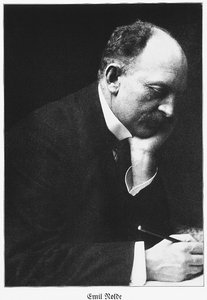
Emil Nolde
1867 - 1956 , Duitsland
Snelle feiten
- Artistic Movement Or Style: Expressionisme / Die Brücke
- Artists Or Movements Influenced By This Artist: ['Brücke']
- Artists Who Influenced This Artist:
- Van Gogh
- Gauguin
- Date Of Birth: 7 aug 1867
- Date Of Death: 15 apr 1956
- Full Name: Emil Nolde / Hans Emil Hansen
- Nationality: Duits-Denemarks
- Notable Artworks:
- Maskers
- Bekentenis van Christus
- Zee in de herfst
- Place Of Birth: Nolde, Duitsland
Gerelateerde artikelen

Top 10 Expressionistische Meesterwerken: Kunst die de Ziel Raakt | OriginalUniqueArt
Ontdek de 10 meest iconische Expressionistische meesterwerken! Duik in de emotionele wereld van Kirchner, Kandinsky & Nolde. Museumkwaliteit kunst reproducties voor uw interieur. Exploreer de collectie op OriginalUniqueArt.com.

Giclée Prints: Archival Quality & Aesthetic Nuances for the Discerning Collector
Explore the world of giclée prints with OriginalUniqueArt. Learn about archival quality, aesthetic nuances & investment potential. Expert guidance for discerning art collectors seeking museum-quality reproductions and lasting value.

The Enduring Legacy of Fine Art Prints: Technique, History & Aesthetic Impact
Explore the rich history & techniques of fine art prints. Discover investment potential, assess authenticity, and learn how to preserve your collection with expert guidance. Trusted insights for discerning collectors.

Echoes of Time: Exploring the Enduring Appeal & Historical Context of Vintage Art Prints
Explore the captivating world of vintage art prints! Discover their history, collecting tips & enduring appeal. Expert insights on chromolithography and building a legacy collection with OriginalUniqueArt.

Top 10 Kunstwerken die Durf Uitstralen | OriginalUniqueArt
Ontdek 10 iconische kunstwerken die durf en expressie belichamen! Van Van Gogh tot Picasso, leer over de verhalen achter krachtige schilderijen & vind museumkwaliteit reproducties voor jouw interieur. Explore the full collection on OriginalUniqueArt.com

