

 Voorvertoning
 Verstuur
 Delen
Delen
 Details bekijken

 Download
 Vergelijkbare items
 Röntgenonderzoek
 Diavoorstelling
Prophet Jeremiah (detail)


 Lees meer
Giclée / Kunstafdrukken
Giclée- of canvasafdruk van museumkwaliteit met een snelle productie en flexibele afwerkingsmogelijkheden. ( Bestel handgeschilderde reproductie Koop afbeelding)




P118B $10

P118H $10

P118W $10

P438Z $10

P508JH $12

P508YH $12

P805H $10

P805Z $10

P919BZ $10

P919G $10

P919XJ $10

P959ZH $10

P968JZ $12

W106C $8

W218G $10

W218JH $8

W218Y $10

W307PJ $10

W316G $10

W316PJ $8

W316Y $10

W398PJ $8

W4111J $10

W500HY $15

W500JH $15

W692G $12

W849H $8

W940BG $15

W953PJ $8




Kies uit onze vooraf ingestelde maten die overeenkomen met de originele verhoudingen van het kunstwerk.

U kunt uw eigen afmetingen opgeven om in een specifieke lijst of ruimte te passen. Als de door u gekozen maat niet overeenkomt met de proporties van het originele kunstwerk, zullen wij de afbeelding bijsnijden of uitbreiden met een gespiegelde of effen rand. Een digitaal mockup wordt ter goedkeuring naar u verzonden voordat de productie begint.
Houd er rekening mee dat de preview op het scherm de werkelijke bijsneding of uitbreiding niet weergeeft. Alleen de mockup toont de uiteindelijke compositie nauwkeurig.
Hoewel aangepaste maten beschikbaar zijn, raden wij aan een afmeting uit de vooraf bepaalde lijst te kiezen om de originele proporties te behouden.
Wereldwijde levering () binnen 2 weken in plaats van de standaard 4/5 weken. (23 augustus)

Gratis wereldwijde expressverzending

Hoogwaardig linnen canvas

Volledige verzendverzekering

Garantie op terugbetaling van invoerrechten

Garantie op exacte kleurweergave

Retourbeleid van 60 dagen (alleen bij defecten)

100% Geld-terug-garantie

Korting bij meerdere afnames
 De optie voor glas is alleen beschikbaar bij een formaat kleiner dan 110 cm.

Prophet Jeremiah (detail)
Giclée / Kunstafdrukken
Afmetingen reproductie
-


Eindtotaal
$ 81
Beschrijving verzamelobject
A Soul in Stone: Donatello’s Prophet Jeremiah
Donatello's “Prophet Jeremiah (detail),” a poignant study carved from pristine white marble around 1423-1427, transcends mere portraiture to become a profound meditation on faith, suffering, and the weight of divine prophecy. This intimate fragment, originally conceived for the north side of Giotto’s bell tower in Florence, captures a pivotal moment within the biblical narrative – Jeremiah's lamentation over the impending destruction of Jerusalem, a vision he relentlessly conveyed despite facing scorn and rejection from his people. The sculpture isn’t simply depicting a man; it embodies an entire emotional landscape, radiating a palpable sense of sorrow and quiet dignity.
The work is firmly rooted in the burgeoning Early Renaissance style that Donatello pioneered. Rejecting the overly ornate conventions of the International Gothic tradition, he embraced classical ideals of humanism and naturalism, yet infused them with an intensely personal expression. Notice how the figure’s posture – a subtle lean back, a downward gaze – immediately conveys vulnerability and introspection. This isn't a heroic depiction of a prophet; it is Jeremiah as a man grappling with his burden, a testament to Donatello’s ability to imbue stone with profound psychological depth. The musculature, subtly rendered beneath the flowing drapery, speaks to an underlying strength, a resilience forged in the face of overwhelming adversity.
The Language of Marble: Technique and Material
Donatello's mastery of marble is immediately evident. The surface possesses a remarkable smoothness, achieved through meticulous polishing – a technique that reflects both his skill and the quality of the stone itself. The folds of the garment are sculpted with astonishing precision, creating an illusion of movement and texture. Observe how light plays across the figure’s face, highlighting the wrinkles around his eyes and mouth, not as signs of age but as emblems of experience and sorrow. The use of *contrapposto*, a classical technique where the weight is shifted to one leg, creates a dynamic balance within the sculpture, lending it a sense of life and vitality despite its stillness.
Crucially, Donatello’s choice of white marble was deliberate. The purity of the material serves as a visual metaphor for Jeremiah's message – a stark contrast against the corruption and impending doom he foretold. The reflective surface also invites contemplation, encouraging viewers to engage with the sculpture on an emotional level. It is a material that speaks of both fragility and enduring strength, mirroring the themes explored within the artwork.
Symbolism and Context: A Prophet’s Lament
Jeremiah's prophecy was notoriously difficult to deliver; he warned of divine judgment against a people who refused to heed his warnings. The sculpture captures this tension perfectly. The prophet’s hand, clasped tightly over his thigh, suggests both despair and determination – a refusal to relinquish hope despite the bleakness of his situation. His downcast eyes are not simply indicative of sadness but also of a profound understanding of God's will. The cartouche held by his left hand, bearing his name, is a subtle reminder of his identity and role as a messenger of divine truth.
The sculpture’s original placement on Giotto’s bell tower underscored its significance. As one of the first freestanding nude male sculptures since antiquity, it represented a bold departure from medieval artistic conventions. It was a statement about humanity's capacity for both suffering and resilience – qualities that resonated deeply with the humanist ideals of the Renaissance. The subsequent relocation to the Cathedral’s façade further cemented its place as a powerful symbol of faith and judgment.
A Timeless Echo: Emotional Resonance
“Prophet Jeremiah (detail)” continues to resonate with viewers centuries after its creation. Its raw emotional honesty, coupled with Donatello's masterful technical skill, creates an experience that is both deeply moving and intellectually stimulating. The sculpture invites us to contemplate the nature of faith, the burden of responsibility, and the enduring power of human compassion. It’s a work that transcends its historical context, offering a timeless reflection on the complexities of the human condition – a testament to Donatello's genius and his profound understanding of the human spirit.
Biografie van de kunstenaar
Early Life and Artistic Beginnings
Donatello di Niccolò di Betto Bardi, universally known as Donatello, emerged from the bustling heart of Florence in 1386 – a city that would indelibly shape his artistic vision. His origins were modest; born into a family involved in wool trading, a profession that afforded them a respectable, though not opulent, place within Florentine society. While details about his early childhood remain somewhat elusive, it’s believed he received his initial training as an apprentice stonemason, absorbing the fundamental techniques of carving and shaping stone – skills crucial for any aspiring sculptor. This foundational period likely exposed him to the architectural grandeur of the Duomo (Florence Cathedral), a project that dominated Florentine life and provided countless opportunities for young artisans to hone their craft. Donatello’s early influences were deeply rooted in the prevailing Gothic style, yet he demonstrated an innate ability to transcend its limitations, hinting at the revolutionary approach that would define his mature work.The Influence of Ghiberti and the Dawn of a New Style
Around 1400, Donatello entered the workshop of Lorenzo Ghiberti, a master sculptor renowned for his intricate bronze doors destined for the Baptistery in Florence. This association proved pivotal to Donatello’s development. Ghiberti's style, characterized by its elegant lines and classical allusions, provided a crucial framework for Donatello’s early explorations. However, Donatello quickly distinguished himself through an unprecedented focus on human emotion and realism – a departure from the stylized figures prevalent in contemporary sculpture. He wasn’t merely replicating forms; he was striving to capture the essence of human experience, imbuing his creations with a palpable sense of life. This nascent desire for psychological depth would become a hallmark of his distinctive style. The period spent under Ghiberti also exposed Donatello to the principles of perspective and composition, laying the groundwork for his later innovations in spatial representation.Key Works and Revolutionary Techniques
Donatello’s artistic trajectory truly took flight with several groundbreaking works that cemented his reputation as a visionary artist. Perhaps most famously, his “David” (circa 1404-1407) stands as a watershed moment in sculpture history. Unlike previous depictions of the biblical hero, Donatello's David is not depicted as a triumphant warrior but rather as a youthful, vulnerable figure – a young man contemplating his destiny. This portrayal broke with centuries of tradition and established a new standard for nude male sculpture, demonstrating an unprecedented level of anatomical accuracy and psychological insight. His “Sacrifice of Isaac” (1423-1427), created for the Campanile of Santa Maria del Fiore, further showcased his mastery of relief carving, employing a technique known as *schiacciato* – essentially flattening the sculpted figures onto a shallow panel to create an illusion of depth. This innovative approach allowed him to achieve remarkable realism and dramatic intensity within a limited space. The “St. Louis of Toulouse” (1432-1438), a monumental bronze sculpture commissioned for the Medici family, exemplifies his ability to fuse classical ideals with Christian iconography, creating a figure that is both imposing and profoundly human.A Style Defined by Expressiveness and Classical Echoes
Donatello’s artistic style evolved through distinct phases, each reflecting his growing confidence and experimentation. Initially, his work was heavily influenced by the Gothic tradition, but he quickly moved towards a more expressive and dynamic approach. His figures are characterized by their powerful musculature, dramatic poses, and intense emotionality – qualities that set him apart from his contemporaries. Crucially, Donatello’s art was deeply informed by the rediscovery of classical antiquity. He meticulously studied ancient Roman sculptures, absorbing their principles of proportion, anatomy, and composition. However, he didn't simply imitate these models; instead, he skillfully integrated classical elements into his own unique style, creating a synthesis that is both innovative and profoundly resonant with the spirit of the Renaissance. His work wasn’t immediately embraced by all quarters – some critics found his innovations unsettling, while others questioned his adherence to traditional religious iconography. Yet, Donatello's bold vision ultimately prevailed, establishing him as one of the most influential sculptors in the history of Western art.Legacy and Enduring Influence
Donatello’s legacy extends far beyond his individual masterpieces. He profoundly shaped the course of Renaissance sculpture, inspiring generations of artists with his technical virtuosity, psychological insight, and unwavering commitment to realism. His emphasis on human emotion and anatomical accuracy paved the way for subsequent sculptors, including Michelangelo Buonarroti and Leonardo da Vinci. Donatello’s influence can be seen in countless works of art throughout Europe, from the grand monuments of Rome to the intimate devotional sculptures of Northern Europe. Even today, his sculptures continue to captivate viewers with their power, beauty, and enduring relevance. The Premi David di Donatello, awarded annually to celebrate excellence in Italian cinema, stand as a testament to his lasting impact on culture – a fitting tribute to the artist who dared to redefine the possibilities of sculpture.
Donatello
1386 - 1466 , Italië
Belangrijkste feiten
- Artistic Movement Or Style: Vroege Renaissance
- Artists Or Movements Influenced By This Artist: ['Italiaanse Renaissance']
- Artists Who Influenced This Artist: ['Romeinse beeldhouwers']
- Date Of Birth: c. 1386
- Date Of Death: 1466
- Full Name: Donato di Niccolò
- Nationality: Italiaans
- Notable Artworks:
- David
- St. Louis
- Sacrificie Isaac
- Place Of Birth: Florence, Italië
Gerelateerde artikelen

The Enduring Allure of Marble in Art History: From Classical Sculpture to Modern Abstraction
Explore the captivating history of marble sculpture from ancient Greece to modern art. Discover renowned artists like Canova & Michelangelo, carving techniques, and investment insights at OriginalUniqueArt.

Top 10 Bronzen Beeldhouwwerken die de Kunst Voorgoed Veranderden | OriginalUniqueArt
Ontdek de 10 meest legendarische bronzen beeldhouwwerken die kunstgeschiedenis schreven! Van Rodin tot Michelangelo, leer over hun meesterwerken & technieken. Vind museumkwaliteit reproducties en inspiratie voor uw interieur op OriginalUniqueArt.com.

The Enduring Form: Exploring Themes & Techniques in Sculpture Across Historical Periods
Explore the rich history of sculpture from ancient masterpieces to contemporary innovations. Discover key techniques, influential artists & investment potential for discerning art collectors.

Top 10 Legendarische Bronzen Meesterwerken die de Kunst Veranderden | OriginalUniqueArt
Ontdek de 10 meest legendarische bronzen meesterwerken die de kunstgeschiedenis veranderden! Van Rodin tot Michelangelo, leer over techniek & betekenis. Museumkwaliteit reproducties voor uw interieur op OriginalUniqueArt.com. Exploreer de collectie online!
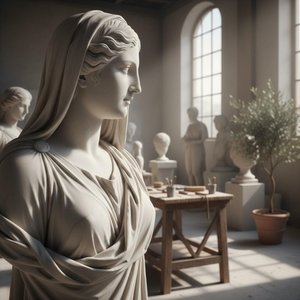
Timeless Elegance: A Complete Guide to the Sublime Beauty and Artistry of Marble Sculpture
Discover the sublime beauty of marble art through an expert exploration of Renaissance and Neoclassical masterpieces. From the delicate textures of Carpeaux to the grandeur of Sansovino, immerse yourself in a guide to timeless elegance and sculptural perfection.


