

 Bekijk op ware grootte
 Verstuur
 Delen
Delen
 Details bekijken
 Gids voor studentenkunstwerken

 Download
 Vergelijkbare items
 Röntgenonderzoek
 Diavoorstelling
 Statistieken
Het beeld van Gattamelata
 Acryl op canvas
- Wanddecoratie
- Renaissance Early
 1447
1447 340.0 x 390.0 cm
 Piazza del Santo
 Lees meer
Handgemaakte olieverfreproductie
Met de hand geschilderd in olieverf op canvas in uw gewenste maat en lijst, op bestelling gemaakt door onze kunstenaars. ( Schakel over naar print Schakel over naar digitale afbeeldingen)




P118B €10

P118H €10

P118W €10

P438Z €10

P508JH €12

P508YH €12

P805H €10

P805Z €10

P919BZ €10

P919G €10

P919XJ €10

P959ZH €10

P968JZ €12

W106C €8

W218G €10

W218JH €8

W218Y €10

W307PJ €10

W316G €10

W316PJ €8

W316Y €10

W398PJ €8

W4111J €10

W500HY €15

W500JH €15

W692G €12

W849H €8

W940BG €15

W953PJ €8




Kies uit onze vooraf ingestelde maten die overeenkomen met de originele verhoudingen van het kunstwerk.

Voer de breedte en de hoogte in die u nodig heeft, passend bij uw lijst of uw muur. Dit is handgeschilderd, dus bij een afmeting met een andere vormverhouding kan de kunstenaar iets meer rondom het schilderij schilderen of juist iets meer weglaten — u kiest zelf. Wij sturen u een digitaal mockup ter goedkeuring voordat het schilderwerk begint. De afbeelding die op deze pagina wordt getoond, is niet het uiteindelijke resultaat — alleen de mockup geeft dit weer.
Na de bestelling zal het team van OriginalUniqueArt.com per e-mail contact opnemen met de klant voor instructies en een mockup-voorbeeld sturen.
Wereldwijde levering () binnen 3 tot 4 weken in plaats van de standaard 5 weken. (22 oktober). Zonder concessies aan de kwaliteit.

Gratis wereldwijde expressverzending

Hoogwaardig linnen canvas

Volledige verzendverzekering

Garantie op terugbetaling van invoerrechten

Garantie op exacte kleurweergave

Retourbeleid van 100 dagen (alleen bij defecten)

100% Geld-terug-garantie

Korting bij meerdere afnames
 De optie voor glas is alleen beschikbaar bij een formaat kleiner dan 110 cm.

Het beeld van Gattamelata
Reproductiemethode
Formaat reproductie
-


Totaalprijs
€ 262
Een Symbool van Macht en Renaissance Innovatie: Donatello’s Gattamelata
Donatello's Equestrian Monument to Gattamelata staat symbool voor een tijdperk waarin kunstenaars opnieuw de grandeur van het klassieke gedachtengoed wilde aanschouwen, terwijl ze tegelijkertijd nieuwe technische mogelijkheden verkenden. Het beeld, geplaatst in het prachtige Piazza San Antonio in Padua, Italië, is een meesterwerk dat niet alleen een prachtige historische gebeurtenis vastlegt maar ook een diepgaande boodschap over ambitie en innovatie draagt. Een kunstwerk dat de aandacht trekt van zowel kunstgeschiedenisstudenten als liefhebbers van prachtige kunstcollecties.- Het Onderwerp: Een Militiaire Held Het beeld vertegenwoordigt Erasmo da Narni, een Venetiaanse condottiere die Padua in 1447 veroverde voor het huis Gonzaga. Gattamelata, zoals hij bekend staat onder zijn bijnaam – “Honeyed Cat” – werd een populaire figuur en een voorbeeld van militaire waardigheid en strategie. Een keuze die bewust was gemaakt om de aandacht te trekken bij een belangrijke stadstaat.
- De Stijl: Een Nieuwe Benadering van Klassieke Inspiratie Donatello’s stijl is een directe voortzetting van de klassieke sculptuurtraditie, maar hij brengt deze naar een hoger niveau door gebruik te maken van nieuwe technieken en een ongekende aandacht voor anatomische precisie. Hij wilde het beeld zo realistisch mogelijk weergeven, iets wat bij zijn tijd nog steeds uitzonderlijk was.
Techniek en Innovatie: Een Uitdaging Voor Zijn Tijd Donatello stond voor een enorme technische uitdaging bij het maken van deze monumentale sculptuur. Het casten van grote bronzen werken was al eeuwenlang verloren gegaan, waardoor hij moest terugkeren naar oude methoden en nieuwe kennis moest verwerven. Hij gebruikte een innovatieve techniek waarbij hij een kleine cannonball gebruikte als basis voor het onderste deel van het beeld – een slimme oplossing die hem in staat stelde om het gewicht van het beeld te beheersen en de stabiliteit te verzekeren.
- De Anatomische Precisie: Een Nieuwe Niveau Van Realisme Donatello’s aandacht voor anatomische details is ongeëvenaard. Hij bestudeerde uitgebreid de werken van Griekse beeldhouwers en gebruikte zijn kennis om het lichaam van Gattamelata zo realistisch mogelijk weer te geven, iets wat een belangrijke stap vooruit was in de ontwikkeling van de Renaissance kunst.
- Het Gebruik Van Bronzen: Een Symbolische Keuze Het gebruik van brons als materiaal is niet alleen een technische keuze maar ook een symbolische één. Brons staat symbool voor kracht en duurzaamheid, kwaliteiten die Donatello wilde overbrengen naar zijn beeldhouwwerk.
Symboliek en Emotionele Impact: Een Bericht Over Ambitie En Waardigheid Het beeld van Gattamelata draagt een belangrijke boodschap over ambitie en waardigheid. Het laat zien dat zelfs iemand die geboren is voor het gewone leven kan bereiken grote hoogten als hij toegewijd is aan zijn werk en zijn principes. De houding van Gattamelata – recht vooruit gekeken, met een beklemtoon op zelfvertrouwen en kracht – spreekt tot de geest van een tijd waarin kunstenaars opnieuw hoop hadden op een nieuwe toekomst.
- De Gebruik Maatwerk: Een Uitdrukking Van Waardigheid De manier waarop Gattamelata zit, laat zien dat hij niet alleen een militaire strateeg is maar ook een persoon die zich bewust is van zijn plaats in de wereld. Zijn houding straalt waardigheid en zelfrespect uit – kwaliteiten die Donatello wilde onderstrepen.
- Een Laatste Inspiratie Voor Kunstenaars Donatello’s Equestrian Monument to Gattamelata blijft een inspiratie voor kunstenaars tot op de dag van vandaag. Het bewijst dat het mogelijk is om klassieke principes opnieuw te interpreteren en nieuwe vormen aan te bieden zonder daarbij het oorspronkelijke doel te verliezen.
Een Kunstwerk Voor De Geschiedenis: Een Laatste Kijk Het beeld staat nog steeds trots in Piazza San Antonio, Padua, een prachtige herinnering aan een tijd waarin kunstenaars opnieuw de grandeur van het klassieke gedachtengoed wilde aanschouwen en nieuwe technische mogelijkheden verkenden. Een kunstwerk dat voor eeuwen zal blijven inspireren en voortreffelijke kunstcollecties verrijken.
Vragen & Antwoorden
Waar kan ik een digitale afbeelding van "Het beeld van Gattamelata" door Donatello kopen?
Om een digitaal bestand van "Het beeld van Gattamelata" door Donatello te verkrijgen, kunt u een download van een digitale afbeelding in hoge resolutie bestellen op de Digitale afbeelding pagina.
Waar komen de bezoekers van "Het beeld van Gattamelata" door Donatello vandaan?
Statistieken over "Het beeld van Gattamelata" door Donatello zijn te vinden op de Statistieken-pagina van het kunstwerk: maandelijkse weergaven van het kunstwerk, weergaven van de werken van de kunstenaar, en een uitsplitsing naar land en taal van recente bezoekers.
Hoe is "Het beeld van Gattamelata" gemaakt en wat zijn de afmetingen?
De techniek van "Het beeld van Gattamelata" door Donatello is Acryl op canvas en de afmetingen zijn 340 x 390 cm.
Biografie van de kunstenaar
Early Life and Artistic Beginnings
Donatello di Niccolò di Betto Bardi, universally known as Donatello, emerged from the bustling heart of Florence in 1386 – a city that would indelibly shape his artistic vision. His origins were modest; born into a family involved in wool trading, a profession that afforded them a respectable, though not opulent, place within Florentine society. While details about his early childhood remain somewhat elusive, it’s believed he received his initial training as an apprentice stonemason, absorbing the fundamental techniques of carving and shaping stone – skills crucial for any aspiring sculptor. This foundational period likely exposed him to the architectural grandeur of the Duomo (Florence Cathedral), a project that dominated Florentine life and provided countless opportunities for young artisans to hone their craft. Donatello’s early influences were deeply rooted in the prevailing Gothic style, yet he demonstrated an innate ability to transcend its limitations, hinting at the revolutionary approach that would define his mature work.The Influence of Ghiberti and the Dawn of a New Style
Around 1400, Donatello entered the workshop of Lorenzo Ghiberti, a master sculptor renowned for his intricate bronze doors destined for the Baptistery in Florence. This association proved pivotal to Donatello’s development. Ghiberti's style, characterized by its elegant lines and classical allusions, provided a crucial framework for Donatello’s early explorations. However, Donatello quickly distinguished himself through an unprecedented focus on human emotion and realism – a departure from the stylized figures prevalent in contemporary sculpture. He wasn’t merely replicating forms; he was striving to capture the essence of human experience, imbuing his creations with a palpable sense of life. This nascent desire for psychological depth would become a hallmark of his distinctive style. The period spent under Ghiberti also exposed Donatello to the principles of perspective and composition, laying the groundwork for his later innovations in spatial representation.Key Works and Revolutionary Techniques
Donatello’s artistic trajectory truly took flight with several groundbreaking works that cemented his reputation as a visionary artist. Perhaps most famously, his “David” (circa 1404-1407) stands as a watershed moment in sculpture history. Unlike previous depictions of the biblical hero, Donatello's David is not depicted as a triumphant warrior but rather as a youthful, vulnerable figure – a young man contemplating his destiny. This portrayal broke with centuries of tradition and established a new standard for nude male sculpture, demonstrating an unprecedented level of anatomical accuracy and psychological insight. His “Sacrifice of Isaac” (1423-1427), created for the Campanile of Santa Maria del Fiore, further showcased his mastery of relief carving, employing a technique known as *schiacciato* – essentially flattening the sculpted figures onto a shallow panel to create an illusion of depth. This innovative approach allowed him to achieve remarkable realism and dramatic intensity within a limited space. The “St. Louis of Toulouse” (1432-1438), a monumental bronze sculpture commissioned for the Medici family, exemplifies his ability to fuse classical ideals with Christian iconography, creating a figure that is both imposing and profoundly human.A Style Defined by Expressiveness and Classical Echoes
Donatello’s artistic style evolved through distinct phases, each reflecting his growing confidence and experimentation. Initially, his work was heavily influenced by the Gothic tradition, but he quickly moved towards a more expressive and dynamic approach. His figures are characterized by their powerful musculature, dramatic poses, and intense emotionality – qualities that set him apart from his contemporaries. Crucially, Donatello’s art was deeply informed by the rediscovery of classical antiquity. He meticulously studied ancient Roman sculptures, absorbing their principles of proportion, anatomy, and composition. However, he didn't simply imitate these models; instead, he skillfully integrated classical elements into his own unique style, creating a synthesis that is both innovative and profoundly resonant with the spirit of the Renaissance. His work wasn’t immediately embraced by all quarters – some critics found his innovations unsettling, while others questioned his adherence to traditional religious iconography. Yet, Donatello's bold vision ultimately prevailed, establishing him as one of the most influential sculptors in the history of Western art.Legacy and Enduring Influence
Donatello’s legacy extends far beyond his individual masterpieces. He profoundly shaped the course of Renaissance sculpture, inspiring generations of artists with his technical virtuosity, psychological insight, and unwavering commitment to realism. His emphasis on human emotion and anatomical accuracy paved the way for subsequent sculptors, including Michelangelo Buonarroti and Leonardo da Vinci. Donatello’s influence can be seen in countless works of art throughout Europe, from the grand monuments of Rome to the intimate devotional sculptures of Northern Europe. Even today, his sculptures continue to captivate viewers with their power, beauty, and enduring relevance. The Premi David di Donatello, awarded annually to celebrate excellence in Italian cinema, stand as a testament to his lasting impact on culture – a fitting tribute to the artist who dared to redefine the possibilities of sculpture.
Donatello
1386 - 1466 , Italië
Snelle feiten
- Artistic Movement Or Style: Vroege Renaissance
- Artists Or Movements Influenced By This Artist: ['Italiaanse Renaissance']
- Artists Who Influenced This Artist: ['Romeinse beeldhouwers']
- Date Of Birth: c. 1386
- Date Of Death: 1466
- Full Name: Donato di Niccolò
- Nationality: Italiaans
- Notable Artworks:
- David
- St. Louis
- Sacrificie Isaac
- Place Of Birth: Florence, Italië
Gerelateerde artikelen

Top 10 Legendarische Bronzen Meesterwerken die de Kunst Veranderden | OriginalUniqueArt
Ontdek de 10 meest legendarische bronzen meesterwerken die de kunstgeschiedenis veranderden! Van Rodin tot Michelangelo, leer over techniek & betekenis. Museumkwaliteit reproducties voor uw interieur op OriginalUniqueArt.com. Exploreer de collectie online!

The Enduring Legacy of Bronze: A Historical & Artistic Exploration for the Collector
Explore the rich history & enduring appeal of bronze sculpture with expert insights for collectors at OriginalUniqueArt. Learn about casting techniques, iconic artists, collecting tips & contemporary interpretations.

The Enduring Legacy of Bronze: History, Technique & Artistic Expression for the Collector
Explore the rich history & enduring appeal of bronze sculpture with expert insights for collectors at OriginalUniqueArt. Learn about casting techniques, iconic artists, and collecting tips.
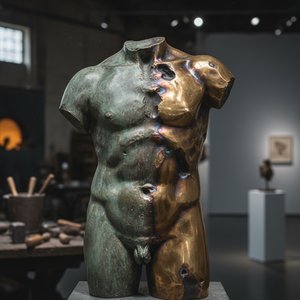
Het Duurzame Erfgoed van Bronzen Beeldhouwkunst: Geschiedenis, Technieken en Hedendaagse Interpretaties
Ontdek de rijke geschiedenis en het duurzame erfgoed van bronzen beeldhouwkunst. Van klassieke technieken tot hedendaagse interpretaties, een gids voor verzamelaars en kunstliefhebbers.

Top 10 Bronzen Beeldhouwwerken die de Kunst Voorgoed Veranderden | OriginalUniqueArt
Ontdek de 10 meest legendarische bronzen beeldhouwwerken die kunstgeschiedenis schreven! Van Rodin tot Michelangelo, leer over hun meesterwerken & technieken. Vind museumkwaliteit reproducties en inspiratie voor uw interieur op OriginalUniqueArt.com.
