

 Bekijk op ware grootte
 Verstuur
 Delen
Delen
 Details bekijken
 Gids voor studentenkunstwerken

 Download
 Vergelijkbare items
 Röntgenonderzoek
 Diavoorstelling
 Statistieken
Nine discourses on Commodus
 Oil On Canvas
- WallArt
- Abstract Expressionism
 1963
1963 134.0 x 204.0 cm
 Guggenheim Museum Bilbao
 Lees meer
Giclée / Kunstafdrukken
Giclée- of canvasafdruk van museumkwaliteit met een snelle productie en flexibele afwerkingsmogelijkheden. ( Koop handgeschilderd kunstwerk Schakel over naar digitale afbeeldingen)




P118B $10

P118H $10

P118W $10

P438Z $10

P508JH $12

P508YH $12

P805H $10

P805Z $10

P919BZ $10

P919G $10

P919XJ $10

P959ZH $10

P968JZ $12

W106C $8

W218G $10

W218JH $8

W218Y $10

W307PJ $10

W316G $10

W316PJ $8

W316Y $10

W398PJ $8

W4111J $10

W500HY $15

W500JH $15

W692G $12

W849H $8

W940BG $15

W953PJ $8




Kies uit onze vooraf ingestelde maten die overeenkomen met de originele verhoudingen van het kunstwerk.

U kunt uw eigen afmetingen opgeven om in een specifieke lijst of ruimte te passen. Als de door u gekozen maat niet overeenkomt met de proporties van het originele kunstwerk, zullen wij de afbeelding bijsnijden of uitbreiden met een gespiegelde of effen rand. Een digitaal mockup wordt ter goedkeuring naar u verzonden voordat de productie begint.
Houd er rekening mee dat de preview op het scherm de werkelijke bijsneding of uitbreiding niet weergeeft. Alleen de mockup toont de uiteindelijke compositie nauwkeurig.
Hoewel aangepaste maten beschikbaar zijn, raden wij aan een afmeting uit de vooraf bepaalde lijst te kiezen om de originele proporties te behouden.
Wereldwijde levering () binnen 2 weken in plaats van de standaard 4/5 weken. (26 september)

Gratis wereldwijde expressverzending

Hoogwaardig linnen canvas

Volledige verzendverzekering

Garantie op terugbetaling van invoerrechten

Garantie op exacte kleurweergave

Retourbeleid van 100 dagen (alleen bij defecten)

100% Geld-terug-garantie

Korting bij meerdere afnames
 De optie voor glas is alleen beschikbaar bij een formaat kleiner dan 110 cm.

Nine discourses on Commodus
Giclée / Kunstafdrukken
Formaat reproductie
-


Totaalprijs
$ 81
Nine Discourses on Commodus: A Descent into Roman Excess
Cy Twombly’s “Nine Discourses on Commodus,” painted in 1963, isn't merely a depiction of a historical event; it’s an immersive plunge into the psychological and political turmoil that consumed the late Roman Empire. This monumental work, measuring a substantial 204 x 134 cm, resides within the Guggenheim Museum Bilbao, offering viewers a visceral experience far beyond simple representation. The painting's genesis lies in Twombly’s fascination with the reign of Emperor Commodus Aurelius Antoninus, a figure notorious for his cruelty, extravagance, and ultimately, his assassination. Rather than presenting a straightforward narrative, Twombly constructs an atmosphere—a suffocating blend of anxiety, violence, and impending doom – using a deliberately fragmented and unsettling visual language. The foundation of the composition is a pale grey field, acting as a neutral backdrop against which swirling masses of pigment explode in shades of crimson, ochre, and black. These aren’t carefully blended colors; they are applied with a raw, almost violent energy, creating a sense of chaotic movement and instability. The technique itself is crucial: Twombly employed a layering process, building up the paint in thick impasto strokes, punctuated by scribbles, dashes, and even what appear to be deliberate “mistakes.” This physicality—the tangible evidence of his hand at work—adds another layer of intensity to the piece, inviting viewers to confront the act of creation alongside the subject matter. The painting’s historical context is inextricably linked to the broader anxieties of the mid-1960s – a period marked by the Cold War, the Cuban Missile Crisis, and the assassination of John F. Kennedy. Twombly, deeply influenced by Charles Olson's concept of “Projective Involvement,” sought to create works that actively engaged with contemporary experience, translating the turmoil of his time into visual form.The Language of Scribble: Style and Technique
Twombly’s distinctive style is instantly recognizable—a potent blend of calligraphic gesture and abstract expressionism. He deliberately rejected traditional representational techniques, opting instead for a system of “scribbles,” marks, and symbols that operate on a deeply personal level. These aren't random gestures; they are meticulously controlled, almost architectural in their arrangement. The recurring numerical sequences—often appearing as clusters of digits—are not merely decorative elements but rather structural components of the composition, guiding the viewer’s eye through the swirling chaos. The influence of Paul Klee is evident in Twombly's use of simplified forms and geometric patterns, while the gestural intensity of Franz Kline provides a counterpoint to the more controlled scribbles. However, Twombly transcends these influences, forging his own unique visual vocabulary—one characterized by a raw emotionality and an unsettling sense of unease. The layering of paint, achieved through multiple applications and scraping back, creates a complex surface texture that is both visually arresting and physically engaging. The deliberate imperfections – the drips, smudges, and uneven application – are not flaws but rather integral to the painting’s expressive power, reflecting the instability and violence at its core.Symbolism and Historical Allusion
“Nine Discourses on Commodus” isn't a literal depiction of the events surrounding Commodus’ reign; it’s an allegorical exploration of themes such as tyranny, excess, and decay. The title itself refers to nine distinct “discourses,” or arguments, that explore different facets of Commodus’ character and his downfall. The swirling masses of color can be interpreted as representing the chaos and instability of his rule, while the crimson hues evoke blood and violence. The numerical sequences, often referencing architectural grids and geometric patterns, suggest a sense of order imposed upon chaos—a futile attempt to control an uncontrollable situation. Furthermore, the painting draws parallels between Commodus’ excesses and the anxieties of the 1960s – a period marked by political instability, social unrest, and the threat of nuclear war. The figure of Commodus himself embodies the dangers of unchecked power and the destructive consequences of moral decay. It's important to note that Twombly frequently drew upon classical mythology and literature in his work, imbuing his paintings with layers of historical allusion and symbolic meaning.Emotional Resonance and Legacy
Despite its unsettling subject matter, “Nine Discourses on Commodus” possesses a profound emotional resonance. The painting’s raw energy and visceral intensity evoke a sense of unease and anxiety—a reflection of the turbulent times in which it was created. It's not a comfortable or easily digestible work; it demands engagement, prompting viewers to confront uncomfortable truths about human nature and the fragility of civilization. Initially met with critical derision – largely due to its unconventional style and perceived detachment from the prevailing trends of Pop Art and Minimalism – “Nine Discourses on Commodus” has since been recognized as a pivotal work in the history of postwar painting. It stands as a testament to Twombly’s unique vision and his willingness to challenge conventional artistic norms. Today, it is celebrated for its expressive power, its complex symbolism, and its enduring relevance—a haunting reminder of the dangers of excess and the cyclical nature of history. Reproductions capture only a fraction of the painting's depth; experiencing it in person within the Guggenheim Bilbao is an essential encounter with one of the 20th century’s most enigmatic artists.Biografie van de kunstenaar
Edwin Parker Twombly Jr.: Een Unieke Stem in de Kunst
Cy Twombly, geboren Edwin Parker Twombly Jr., was een uitzonderlijk kunstenaar van de 20e en begin 21e eeuw – een Amerikaanse schilder, beeldhouwer en fotograaf wiens werk zich onderscheidt door zijn onnavolgbare originaliteit. Geboren op 25 april 1928 in Lexington, Virginia, begon zijn artistieke reis met een stevige basis van klassieke opleiding en een levendige nieuwsgierigheid die hem over de hele wereld leidde. Vroege studies onder Pierre Daura aan Washington and Lee University werden gevolgd door invloedrijke ervaringen op het Arts Students League of New York en Black Mountain College, waar hij in contact kwam met belangrijke figuren zoals Robert Rauschenberg, John Cage en Merce Cunningham. Deze ontmoetingen creëerden een omgeving van experimenteren en interdisciplinaire verkenning die zijn artistieke visie diepgaand zou vormen. Echter, een reis in 1952 naar Italië en Noord-Afrika met Rauschenberg – gefinancierd door een beurs van de Virginia Museum of Fine Arts – bleek een ware keerpunt te worden. Ondergedompeld in oude ruïnes, levendige culturen en het gewicht van geschiedenis, ontdekte Twombly een bron van inspiratie die zijn esthetiek decennia lang zou definiëren.De Evolutie van een Enigmatische Stijl
Twombly’s artistieke stijl was niet geboren in een perfecte vorm; hij ontwikkelde zich door middel van een reeks verkennings- en verfijningstrajecten. Zijn vroege werken, zoals de *North African Sketchbooks* (1953), gaven al hints van zijn unieke combinatie van abstracte vormen en poëtische verwijzingen. Dit waren geen simpele reisdagboeken, maar eerder onderzoeken naar de essentie van een plaats – een distillatie van licht, textuur en herinnering. Doorheen de jaren zestig begon Twombly’s stijl te coalesceren rond een kenmerkende vocabulaire van gekrabbelde lijnen, gestileerde markeringen en fragmentarische woorden op uitgestrekte doeken. Werken zoals de *Ferragosto* serie (1961) en *The Italians* (1961) illustreren deze periode – schilderijen die lijken te bestaan tussen kalligrafie en chaos, evocatief zowel oude inschriften als de directheid van graffiti. Hij was niet geïnteresseerd in het nabootsen van de realiteit, maar eerder in het vastleggen van een gevoel, herinnering en de vlucht van de tijd. Deze aanpak daagde conventionele opvattingen over schilderkunst uit, waarbij hij zich afweek van representatie richting een meer subjectieve en emotioneel resonerende vorm van expressie. *Cold Stream* (1966), met zijn kronkelende lijnen en krachtige tekst, is een krachtig voorbeeld van deze evocatieve stijl.Invloeden en Artistieke Afstamming
Hoewel hij fier was op zijn onafhankelijkheid, werd Twombly’s werk niet in het vacuüm gecreëerd. Hij putte inspiratie uit een diverse reeks bronnen – van de rauwe energie van Jean Dubuffet en Alberto Giacometti tot de poëtische gevoelens van Stéphane Mallarmé, Rainer Maria Rilke en John Keats. Klassieke mythologie en geschiedenis speelden ook een belangrijke rol, waardoor hij een rijke mozaïek van thema’s en symbolen kon verkennen. Zijn schilderijen verwijzen vaak naar oude verhalen, waarbij hij subtiel fragmenten van mythen en legendes combineert. Twombly’s invloed op latere generaties kunstenaars is onmiskenbaar. Hij legde de basis voor schilders als Jean-Michel Basquiat, Anselm Kiefer en Francesco Clemente, die een vergelijkbare geest van experimenteren en emotionele intensiteit omarmden. Zijn bereidheid om traditionele grenzen te doorbreken en nieuwe vormen van expressie te verkennen, vond resonatie bij kunstenaars die op zoek waren naar een manier om de status quo uit te dagen. Hij liet zien dat schilderkunst meer kon zijn dan alleen representatie; het kon een voertuig worden voor het overbrengen van complexe emoties, ideeën en ervaringen.Belangrijke Prestaties en Erfgoed
Doorheen zijn carrière ontving Twombly talloze onderscheidingen, waaronder de Gouden Leeuw award op de Venetiaanse Biënnale in 2001 en de titel Chevalier van de Légion d'Honneur in 2010. Zijn werk wordt vertegenwoordigd in belangrijke museumcollecties wereldwijd, waaronder de Menil Collection in Houston, het Tate Modern in Londen en New York’s Museum of Modern Art. Een bijzonder significante prestatie was zijn opdracht om een plafondtekening te creëren voor het Louvre in Parijs – een getuigenis van zijn internationale erkenning en artistieke status. *Three studies from the Temeraire* (1998-99), nu in bezit van de Art Gallery of New South Wales, illustreert zijn latere stijl - grote werken die zowel delicaat als krachtig zijn. Twombly stierf op 5 juli 2011 in Rome na een lange strijd met kanker, waardoor een nalatenschap achterbleef die kunstenaars voor generaties te komen zal inspireren. Een plaquette in Santa Maria in Vallicella dient als een blijvende herinnering aan zijn diepe bijdrage aan de wereld van de kunst.Het Verdiepen in Twombly’s Wereld
Twombly's werk is een uitnodiging om na te denken over de complexiteit van menselijke ervaring – om jezelf onderdompeling in de riolen van herinnering, geschiedenis en emotie. Zijn schilderijen zijn niet alleen objecten die men bewondert, maar eerder poorten naar een andere wereld – een wereld waar lijnen dansen, woorden fluisteren en gevoelens vorm krijgen. Of het nu *Untitled (Peony Blossom Painting)* is met zijn levendige energie of de evocatieve abstractie van *Proteus*, elk werk biedt een uniek inzicht in de innerlijke wereld van de kunstenaar. Zijn invloed strekt zich uit tot schilderkunst, beeldhouwkunst en fotografie. Om Twombly’s genialiteit echt te waarderen, moet men zichzelf laten meeslepen door de vloeiendheid van zijn lijnen, de rijkdom van zijn kleuren en de diepte van zijn poëtische visie.- Verken Twombly's kunstwerken op OriginalUniqueArt.
- Lees meer over Cy Twombly op Wikipedia.
- Ontdek de collectie van het Louvre, met Twombly’s opdrachtwerk, op OriginalUniqueArt: Musée du Louvre.

Cy Twombly
1928 - 2011 , Verenigde Staten van Amerika
Snelle feiten
- Artistic Movement Or Style: Abstract Expressionisme
- Artists Or Movements Influenced By This Artist:
- Basquiat
- Kiefer
- Clemente
- Artists Who Influenced This Artist:
- Pierre Daura
- Dubuffet
- Giacometti
- Date Of Birth: 25 april 1928
- Date Of Death: 5 juli 2011
- Full Name: Edwin Parker Twombly Jr.
- Nationality: Amerikaans
- Notable Artworks:
- Three studies
- Apollo
- Cold Stream
- Place Of Birth: Lexington, USA
Gerelateerde artikelen

Beyond Representation: Exploring the Emotional Landscape of Abstract Expressionism
Explore the profound emotional world of Abstract Expressionism with OriginalUniqueArt. Discover key artists like Pollock & Rothko, learn about collecting, and find museum-quality reproductions to inspire your space.

Top 10 Meesterwerken van de Geometrische Abstractie | OriginalUniqueArt.nl
Ontdek de 10 meest invloedrijke meesterwerken van de geometrische abstractie! Van Mondriaan tot Malevich, leer over kunstenaars, technieken & kleuren. Museumkwaliteit reproducties op OriginalUniqueArt.com – voor een unieke interieurstijl.

Kandinsky's Meesterwerken: 25 Abstracte Kunstparels voor uw Interieur | OriginalUniqueArt
Ontdek de 25 meest iconische werken van Wassily Kandinsky! Duik in zijn abstracte wereld vol kleur, expressionisme & spirituele diepgang. Vind museumkwaliteit reproducties en interieurinspiratie op OriginalUniqueArt.com.
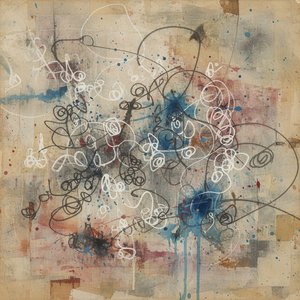
Cy Twombly: Scribbles of Emotion – Deconstructing Post-War Expressionism Through Calligraphy & Abstraction
Explore the captivating world of Cy Twombly with OriginalUniqueArt. Discover the emotional depth & artistic significance behind his abstract calligraphy. Expert insights for collectors.

Top 10 Abstract Expressionisme Meesterwerken: Kunst voor uw Interieur | OriginalUniqueArt.com
Ontdek de 10 meest invloedrijke werken van Abstract Expressionisme! Leer over Jackson Pollock, Mark Rothko & meer. Museumkwaliteit kunst reproducties voor uw interieur. Bekijk de collectie op OriginalUniqueArt.com.