

 Bekijk op ware grootte
 Verstuur
 Delen
Delen
 Details bekijken
 Gids voor studentenkunstwerken

 Download
 Vergelijkbare items
 Röntgenonderzoek
 Diavoorstelling
 Statistieken
Untitled (958)

 Lees meer
Giclée / Kunstafdrukken
Giclée- of canvasafdruk van museumkwaliteit met een snelle productie en flexibele afwerkingsmogelijkheden. ( Koop handgeschilderd kunstwerk Schakel over naar digitale afbeeldingen)




































Kies uit onze vooraf ingestelde maten die overeenkomen met de originele verhoudingen van het kunstwerk.

U kunt uw eigen afmetingen opgeven om in een specifieke lijst of ruimte te passen. Als de door u gekozen maat niet overeenkomt met de proporties van het originele kunstwerk, zullen wij de afbeelding bijsnijden of uitbreiden met een gespiegelde of effen rand. Een digitaal mockup wordt ter goedkeuring naar u verzonden voordat de productie begint.
Houd er rekening mee dat de preview op het scherm de werkelijke bijsneding of uitbreiding niet weergeeft. Alleen de mockup toont de uiteindelijke compositie nauwkeurig.
Hoewel aangepaste maten beschikbaar zijn, raden wij aan een afmeting uit de vooraf bepaalde lijst te kiezen om de originele proporties te behouden.
Wereldwijde levering () binnen 2 weken in plaats van de standaard 4/5 weken. (25 september)

Gratis wereldwijde expressverzending

Hoogwaardig linnen canvas

Volledige verzendverzekering

Garantie op terugbetaling van invoerrechten

Garantie op exacte kleurweergave

Retourbeleid van 100 dagen (alleen bij defecten)

100% Geld-terug-garantie

Korting bij meerdere afnames
 De optie voor glas is alleen beschikbaar bij een formaat kleiner dan 110 cm.

Untitled (958)
Giclée / Kunstafdrukken
Formaat reproductie
-


Totaalprijs
$ 81
A Delicate Bloom: Exploring Mackintosh's "Untitled (958)"
This captivating artwork, currently known as “Untitled (958),” offers a glimpse into the refined aesthetic of Charles Rennie Mackintosh, a pivotal figure in the Glasgow Style movement. While lacking a formal title from the artist’s hand, its visual impact speaks volumes about his mastery of decorative arts and his unique approach to floral representation. The painting presents a close-up study of pink flowers interwoven with lush green foliage, creating an intimate and visually rich composition. The presence of three small white dots adds a subtle layer of intrigue – perhaps representing dewdrops or simply serving as delicate accents within the overall design.Style & Technique: Echoes of Art Nouveau
Mackintosh’s style is instantly recognizable, firmly rooted in the Art Nouveau movement but infused with his distinct Scottish sensibility. Unlike the more overtly ornate and flowing forms often associated with Art Nouveau, Mackintosh favored a restrained elegance characterized by geometric precision and simplified lines. This piece exemplifies this approach; while depicting natural forms – flowers and leaves – they are rendered with a clarity and linearity that borders on abstraction. The technique appears to be executed in oil paint, allowing for subtle gradations of color within the petals and leaves, creating depth and texture despite the relatively flat perspective. The close cropping of the subject matter is also characteristic of his work, focusing attention entirely on the beauty of the floral arrangement.Historical Context & The Glasgow Style
Created during Mackintosh’s prolific period (likely around the turn of the 20th century), “Untitled (958)” reflects the burgeoning artistic scene in Glasgow. The "Glasgow Style" was a unique blend of Art Nouveau, Celtic Revival influences, and Scottish vernacular architecture and design. Mackintosh spearheaded this movement, leaving an indelible mark on interior design, furniture making, and decorative arts. His work aimed to create harmonious environments – total works of art encompassing architecture, furnishings, and decorative elements. This painting can be seen as a smaller-scale manifestation of that holistic vision, demonstrating his ability to translate the principles of good design into a captivating floral study. His collaborations with his wife, Margaret Macdonald Mackintosh, were also crucial in shaping this distinctive style; her own symbolic and often mystical imagery frequently complemented his architectural designs.Symbolism & Emotional Impact
While seemingly straightforward in its depiction of flowers, the painting likely carries deeper symbolic weight within the context of Mackintosh’s broader artistic philosophy. Flowers often represent themes of growth, beauty, and transience – concepts that resonate with the Art Nouveau fascination with nature. The restrained palette of pinks and greens evokes a sense of tranquility and understated elegance. The overall effect is one of quiet contemplation; the viewer is invited to appreciate the delicate details and subtle harmonies within this miniature floral world. It’s a piece that inspires serenity and offers a moment of respite from the complexities of modern life, embodying Mackintosh's desire to create spaces and objects that nurture the soul.Biografie van de kunstenaar
A Scottish Visionary: The Life and Art of Charles Rennie Mackintosh
Charles Rennie Mackintosh, born in Glasgow on June 7, 1868, was more than an architect; he was a philosophical artist who sought to harmonize every aspect of the built environment. From the grandest structures to the smallest details of furniture and ornamentation, his vision aimed for a holistic aesthetic experience—a distinctly Scottish interpretation of the burgeoning Art Nouveau movement. Growing up as one of eleven children in a family where his father served as a police superintendent, Mackintosh’s early life offered little indication of the artistic revolution he would ignite. His education at Reid's Public School and Allan Glen's Institution revealed an aptitude for art but also hinted at challenges with traditional academic disciplines, possibly indicative of dyslexia. This divergence from conventional learning may have fostered his unique perspective, allowing him to approach design unbound by established norms. His formative years were significantly shaped by his apprenticeship under architect John Hutchison, coupled with evening classes at the Glasgow School of Art—a crucible where he forged crucial relationships with fellow students Herbert McNair, Margaret Macdonald, and Frances Macdonald, collectively known as “The Four.” These connections weren’t merely professional; they were deeply collaborative, influencing each other's artistic trajectories and forming the core of what would become the Glasgow Style.Forging a New Aesthetic: The Glasgow Style and Architectural Masterpieces
By the 1890s, Mackintosh had emerged as a leading figure in the “Glasgow Style,” an Art Nouveau variant infused with Celtic symbolism, Japanese aesthetics, and the principles of the Arts and Crafts movement. This wasn’t simply about applying decorative motifs; it was about creating a total work of art—where architecture, furniture, interiors, and even textiles were conceived as interconnected elements of a unified design. His architectural philosophy centered on rejecting Victorian grandeur and embracing simplicity, functionality, and organic forms. He believed that buildings should respond to the natural environment and foster human connection—a conviction that profoundly shaped his approach to construction and spatial organization. Consider Windyhill, Kilmacolm (1899–1901), a stunning country house nestled amidst rolling hills and mature woodlands; its façade is characterized by horizontal bands of stone and timber, reflecting Mackintosh’s fascination with elemental materials and geometric precision. Similarly, Hill House (1902) exemplifies his mastery of domestic architecture—a dwelling designed to evoke feelings of tranquility and contemplation through careful consideration of light, color, and texture. The Glasgow School of Art itself stands as a testament to this vision—a building that revolutionized architectural education by prioritizing studio space and natural illumination. Its undulating façade, inspired by Celtic spirals and echoing the rhythms of nature, remains an iconic symbol of Mackintosh’s artistic ideals.The Influence of Celtic Symbolism and Japanese Aesthetics
Mackintosh's artistic sensibilities were deeply influenced by two distinct cultural traditions: Celtic symbolism and Japanese aesthetics. The Celtic Revival—a movement celebrating Scotland’s ancient heritage—provided him with a rich source of visual inspiration, informing his use of stylized floral motifs and geometric patterns in architectural ornamentation and furniture design. Recurring spirals and interwoven lines mirrored the patterns found in Celtic knotwork—symbols of eternity and interconnectedness that conveyed a sense of spiritual depth. Simultaneously, Mackintosh absorbed the principles of Japanese aesthetics—particularly *wabi-sabi*, which embraces imperfection and transience as sources of beauty. This philosophy encouraged him to reject polished surfaces and artificial embellishments, favoring instead materials that aged gracefully and revealed their inherent character over time. The subtle textures of hammered brass and stained glass—elements prominent in many of his projects—reflected this appreciation for naturalness and understated elegance.Collaboration with Margaret Macdonald Mackintosh: “The Four”
Mackintosh’s artistic journey was inextricably linked to his partnership with Margaret Macdonald Mackintosh, whom he married in 1900. Together, they formed “The Four”—a collective of artists who championed the Glasgow Style and challenged prevailing aesthetic conventions. Their collaborative spirit extended beyond mere professional association; it encompassed a shared intellectual curiosity and a profound emotional connection—a bond that fueled their creative endeavors and enriched the artistic landscape of Scotland. Margaret Macdonald Mackintosh possessed an exceptional talent for textile design, creating intricate patterns inspired by Celtic motifs and Japanese prints. Her designs complemented Mackintosh’s architectural creations, harmonizing color palettes and textural contrasts to achieve a cohesive visual experience. Their shared vision—a commitment to artistic innovation and a celebration of Scottish identity—established them as pivotal figures in the Glasgow Style and cemented their legacy as one of Scotland's most celebrated artistic couples.Legacy and Rediscovery: A Lasting Impact on Modern Design
Charles Rennie Mackintosh died in London on December 10, 1928, at the age of 60, leaving behind a legacy that would take decades to fully appreciate. For years after his death, his work remained largely forgotten, overshadowed by more dominant architectural trends—particularly Beaux Arts grandeur and Art Deco exuberance. However, beginning in the 1960s and 1970s, a renewed interest in Art Nouveau and early modernism led to a rediscovery of Mackintosh’s contributions. Scholars and designers began to recognize the profound influence of his work on subsequent generations, acknowledging his pioneering use of space, light, and materials. His emphasis on simplicity, functionality, and the integration of art and architecture resonated with modernist principles—a conviction that continues to inspire contemporary design practitioners. Today, Mackintosh is celebrated as one of Scotland’s most important architects and designers—a visionary artist whose unique aesthetic remains remarkably relevant in our own time. His buildings stand as testaments to his genius, while his furniture, interiors, and paintings offer a glimpse into the mind of an individual who dared to challenge convention and create a world of beauty and harmony. His enduring impact serves as a reminder that true artistic innovation lies in embracing originality—a principle that continues to guide designers and artists striving for excellence across disciplines.
Charles Rennie Mackintosh
1868 - 1928 , Verenigd Koninkrijk
Snelle feiten
- Artistic Movement Or Style: Art Nouveau, Glasgow Style
- Artists Or Movements Influenced By This Artist: ['Art Nouveau']
- Date Of Birth: June 7, 1868
- Date Of Death: December 10, 1928
- Full Name: Charles Rennie Mackintosh
- Nationality: Scottish
- Notable Artworks:
- Untitled (958)
- Untitled (592)
- Untitled (803)
- Glasgow School of Art
- Place Of Birth: Glasgow, Scotland
Gerelateerde artikelen
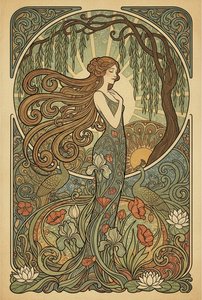
The Flowing Line & Flourishing Form: Exploring Art Nouveau's Aesthetic Legacy
Explore the captivating world of Art Nouveau! Discover its origins, key artists like Horta & Mucha, regional styles, innovative techniques, and lasting influence on architecture & design. A comprehensive guide for art enthusiasts.
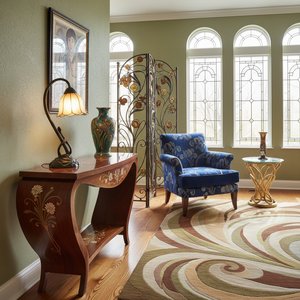
Art Nouveau Meesterwerken: Top 10 die de Beweging Definieerden | OriginalUniqueArt.nl
Ontdek de top 10 Art Nouveau meesterwerken van o.a. Mucha & Klimt! Leer over symbolisme, Jugendstil en iconische decoratieve kunst. Vind museumkwaliteit reproducties & wooninspiratie op OriginalUniqueArt.com.
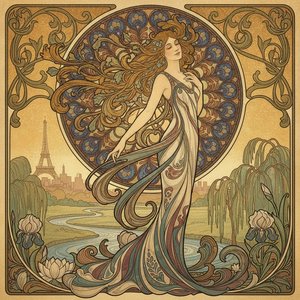
The Elegance of Art Nouveau: Embracing Nature's Fluid Beauty and the Belle Époque Spirit
Discover the enchanting world of Art Nouveau. Explore the organic beauty, flowing lines, and Belle Époque elegance that defined an era of unparalleled craftsmanship and natural inspiration.
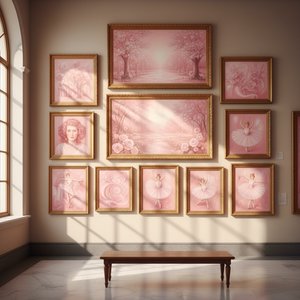
Top 10 Schilderijen Gedomineerd door Zachtroze Tinten | Kunst & Decor Inspiratie
Ontdek de top 10 beroemde schilderijen gedomineerd door zachtroze tinten! Van Monet tot Renoir, bewonder meesterwerken uit het impressionisme & romantiek. Vind kunst reproducties van hoge kwaliteit en decoratie inspiratie op OriginalUniqueArt.com.
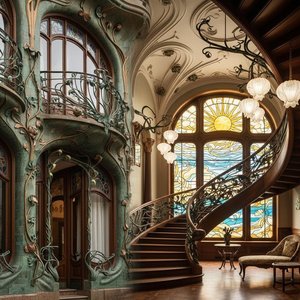
Art Nouveau: The Elegant Fusion of Nature and Design – A Journey Through Organic Sophistication
Discover the exquisite world of Art Nouveau. Explore the elegant fusion of nature and design through architectural masterpieces, organic forms, and the legendary masters of the Belle Époque. Immerse yourself in a journey of timeless sophistication and ornamental beauty.