A Scottish Visionary: The Life and Art of Charles Rennie Mackintosh
Charles Rennie Mackintosh, born in Glasgow on June 7, 1868, was more than an architect; he was a philosophical artist who sought to harmonize every aspect of the built environment. From the grandest structures to the smallest details of furniture and ornamentation, his vision aimed for a holistic aesthetic experience—a distinctly Scottish interpretation of the burgeoning Art Nouveau movement. Growing up as one of eleven children in a family where his father served as a police superintendent, Mackintosh’s early life offered little indication of the artistic revolution he would ignite. His education at Reid's Public School and Allan Glen's Institution revealed an aptitude for art but also hinted at challenges with traditional academic disciplines, possibly indicative of dyslexia. This divergence from conventional learning may have fostered his unique perspective, allowing him to approach design unbound by established norms. His formative years were significantly shaped by his apprenticeship under architect John Hutchison, coupled with evening classes at the Glasgow School of Art—a crucible where he forged crucial relationships with fellow students Herbert McNair, Margaret Macdonald, and Frances Macdonald, collectively known as “The Four.” These connections weren’t merely professional; they were deeply collaborative, influencing each other's artistic trajectories and forming the core of what would become the Glasgow Style.
Forging a New Aesthetic: The Glasgow Style and Architectural Masterpieces
By the 1890s, Mackintosh had emerged as a leading figure in the “Glasgow Style,” an Art Nouveau variant infused with Celtic symbolism, Japanese aesthetics, and the principles of the Arts and Crafts movement. This wasn’t simply about applying decorative motifs; it was about creating a total work of art—where architecture, furniture, interiors, and even textiles were conceived as interconnected elements of a unified design. His architectural philosophy centered on rejecting Victorian grandeur and embracing simplicity, functionality, and organic forms. He believed that buildings should respond to the natural environment and foster human connection—a conviction that profoundly shaped his approach to construction and spatial organization. Consider Windyhill, Kilmacolm (1899–1901), a stunning country house nestled amidst rolling hills and mature woodlands; its façade is characterized by horizontal bands of stone and timber, reflecting Mackintosh’s fascination with elemental materials and geometric precision. Similarly, Hill House (1902) exemplifies his mastery of domestic architecture—a dwelling designed to evoke feelings of tranquility and contemplation through careful consideration of light, color, and texture. The Glasgow School of Art itself stands as a testament to this vision—a building that revolutionized architectural education by prioritizing studio space and natural illumination. Its undulating façade, inspired by Celtic spirals and echoing the rhythms of nature, remains an iconic symbol of Mackintosh’s artistic ideals.
The Influence of Celtic Symbolism and Japanese Aesthetics
Mackintosh's artistic sensibilities were deeply influenced by two distinct cultural traditions: Celtic symbolism and Japanese aesthetics. The Celtic Revival—a movement celebrating Scotland’s ancient heritage—provided him with a rich source of visual inspiration, informing his use of stylized floral motifs and geometric patterns in architectural ornamentation and furniture design. Recurring spirals and interwoven lines mirrored the patterns found in Celtic knotwork—symbols of eternity and interconnectedness that conveyed a sense of spiritual depth. Simultaneously, Mackintosh absorbed the principles of Japanese aesthetics—particularly *wabi-sabi*, which embraces imperfection and transience as sources of beauty. This philosophy encouraged him to reject polished surfaces and artificial embellishments, favoring instead materials that aged gracefully and revealed their inherent character over time. The subtle textures of hammered brass and stained glass—elements prominent in many of his projects—reflected this appreciation for naturalness and understated elegance.
Collaboration with Margaret Macdonald Mackintosh: “The Four”
Mackintosh’s artistic journey was inextricably linked to his partnership with Margaret Macdonald Mackintosh, whom he married in 1900. Together, they formed “The Four”—a collective of artists who championed the Glasgow Style and challenged prevailing aesthetic conventions. Their collaborative spirit extended beyond mere professional association; it encompassed a shared intellectual curiosity and a profound emotional connection—a bond that fueled their creative endeavors and enriched the artistic landscape of Scotland. Margaret Macdonald Mackintosh possessed an exceptional talent for textile design, creating intricate patterns inspired by Celtic motifs and Japanese prints. Her designs complemented Mackintosh’s architectural creations, harmonizing color palettes and textural contrasts to achieve a cohesive visual experience. Their shared vision—a commitment to artistic innovation and a celebration of Scottish identity—established them as pivotal figures in the Glasgow Style and cemented their legacy as one of Scotland's most celebrated artistic couples.
Legacy and Rediscovery: A Lasting Impact on Modern Design
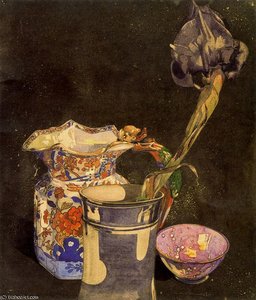
Charles Rennie Mackintosh died in London on December 10, 1928, at the age of 60, leaving behind a legacy that would take decades to fully appreciate. For years after his death, his work remained largely forgotten, overshadowed by more dominant architectural trends—particularly Beaux Arts grandeur and Art Deco exuberance. However, beginning in the 1960s and 1970s, a renewed interest in Art Nouveau and early modernism led to a rediscovery of Mackintosh’s contributions. Scholars and designers began to recognize the profound influence of his work on subsequent generations, acknowledging his pioneering use of space, light, and materials. His emphasis on simplicity, functionality, and the integration of art and architecture resonated with modernist principles—a conviction that continues to inspire contemporary design practitioners. Today, Mackintosh is celebrated as one of Scotland’s most important architects and designers—a visionary artist whose unique aesthetic remains remarkably relevant in our own time. His buildings stand as testaments to his genius, while his furniture, interiors, and paintings offer a glimpse into the mind of an individual who dared to challenge convention and create a world of beauty and harmony. His enduring impact serves as a reminder that true artistic innovation lies in embracing originality—a principle that continues to guide designers and artists striving for excellence across disciplines.