

 Bekijk op ware grootte
 Verstuur
 Delen
Delen
 Details bekijken
 Gids
Gids

 Download
 Vergelijkbare items
 Röntgenonderzoek
 Diavoorstelling
 Statistieken
Sts Michael and John Gualbert
 Acrylic On Canvas
- WallArt
- Mannerism
 1528
1528 184.0 x 172.0 cm
 Galleria degli Uffizi
 Lees meer
Giclée / Kunstafdrukken
Giclée- of canvasafdruk van museumkwaliteit met een snelle productie en flexibele afwerkingsmogelijkheden. ( Koop handgeschilderd kunstwerk Schakel over naar digitale afbeeldingen)




P118B $10

P118H $10

P118W $10

P438Z $10

P508JH $12

P508YH $12

P805H $10

P805Z $10

P919BZ $10

P919G $10

P919XJ $10

P959ZH $10

P968JZ $12

W106C $8

W218G $10

W218JH $8

W218Y $10

W307PJ $10

W316G $10

W316PJ $8

W316Y $10

W398PJ $8

W4111J $10

W500HY $15

W500JH $15

W692G $12

W849H $8

W940BG $15

W953PJ $8




Kies uit onze vooraf ingestelde maten die overeenkomen met de originele verhoudingen van het kunstwerk.

U kunt uw eigen afmetingen opgeven om in een specifieke lijst of ruimte te passen. Als de door u gekozen maat niet overeenkomt met de proporties van het originele kunstwerk, zullen wij de afbeelding bijsnijden of uitbreiden met een gespiegelde of effen rand. Een digitaal mockup wordt ter goedkeuring naar u verzonden voordat de productie begint.
Houd er rekening mee dat de preview op het scherm de werkelijke bijsneding of uitbreiding niet weergeeft. Alleen de mockup toont de uiteindelijke compositie nauwkeurig.
Hoewel aangepaste maten beschikbaar zijn, raden wij aan een afmeting uit de vooraf bepaalde lijst te kiezen om de originele proporties te behouden.
Wereldwijde levering () binnen 2 weken in plaats van de standaard 4/5 weken. (21 september)

Gratis wereldwijde expressverzending

Hoogwaardig linnen canvas

Volledige verzendverzekering

Garantie op terugbetaling van invoerrechten

Garantie op exacte kleurweergave

Retourbeleid van 100 dagen (alleen bij defecten)

100% Geld-terug-garantie

Korting bij meerdere afnames
 De optie voor glas is alleen beschikbaar bij een formaat kleiner dan 110 cm.

Sts Michael and John Gualbert
Giclée / Kunstafdrukken
Formaat reproductie
-


Totaalprijs
$ 81
A Renaissance Dialogue in Paint: Exploring Andrea del Sarto’s “Sts Michael and John Gualbert”
Andrea del Sarto's 1528 fresco, "Sts Michael and John Gualbert," residing within the Vallombrosa Altarpiece, is more than just a devotional image; it’s a carefully constructed dialogue between figures, a testament to the artist’s mastery of color and composition, and a window into the intellectual currents of the High Renaissance. The painting depicts two prominent saints – Michael the Archangel, a symbol of divine justice and protection, and John Gualbert, the founder of the Vallombrosan order, known for his asceticism and devotion – standing in contemplative communion. Their posture, almost identical, suggests a shared understanding, a silent exchange of wisdom and faith that transcends mere representation.
Del Sarto’s genius lies not simply in replicating biblical figures but in imbuing them with a palpable sense of humanity. The saints are rendered with an understated elegance; their faces possess a quiet dignity, hinting at the weight of spiritual experience. Notice the subtle play of light and shadow across their garments – a hallmark of del Sarto’s technique—that creates a remarkable illusion of volume and texture. The use of grisaille, a monochrome fresco painting technique, is particularly evident here, contributing to the painting's solemn atmosphere and emphasizing the figures’ spiritual essence rather than opulent detail.
The Context of Vallombrosa: A Monastic Commission
Understanding the context of this work is crucial. The altarpiece was commissioned for the Romitorio delle Celle, a remote monastery founded by St. John Gualbert in the hills near Florence. This austere environment profoundly shaped the painting’s character. The Vallombrosan order emphasized simplicity, contemplation, and a direct relationship with God – values reflected in the restrained elegance of “Sts Michael and John Gualbert.” The monks themselves were known for their devotion to St. Bernard of Clairvaux, whose teachings heavily influenced Gualbert's own spiritual path. The painting therefore serves as both a visual tribute to these figures and an embodiment of the monastic order’s core beliefs.
Furthermore, the fresco was part of a larger narrative cycle depicting various saints and biblical scenes. The composition of “Sts Michael and John Gualbert” is deliberately integrated into this broader scheme, creating a harmonious visual dialogue between different figures and stories. The placement within the altarpiece’s overall design underscores its importance as a central element in conveying the monastery's spiritual message.
Symbolism and Spiritual Resonance
Beyond their individual identities, Michael and Gualbert carry significant symbolic weight. Michael, with his radiant halo and commanding presence, represents divine authority and protection – a guardian against earthly temptations. His outstretched hand suggests both judgment and guidance, while his gaze is directed towards the viewer, inviting contemplation. John Gualbert, in contrast, embodies humility and self-denial. His simple robes and downcast eyes reflect his dedication to monastic life and his unwavering faith. The two figures’ clasped hands symbolize their shared commitment to spiritual values and their mutual support on a similar path.
The background, subtly rendered with an angelic figure, reinforces the painting's themes of divine grace and heavenly protection. It’s not a dramatic or overwhelming scene; rather, it provides a serene backdrop for the saints’ quiet communion, emphasizing the importance of inner devotion over outward spectacle.
A Legacy of Color and Composition
“Sts Michael and John Gualbert” stands as a remarkable achievement in Renaissance art. Del Sarto's masterful use of color—particularly his subtle gradations of tone—creates a sense of depth and realism that was revolutionary for its time. The composition, with its balanced arrangement of figures and the careful consideration of spatial relationships, is both harmonious and dynamic. The painting’s enduring appeal lies in its ability to evoke a profound sense of spirituality and contemplation – a testament to del Sarto's artistic genius and his deep understanding of human nature.
Biografie van de kunstenaar
Early Life and Training
Andrea del Sarto, a name synonymous with understated elegance and masterful technique in the Florentine Renaissance, was born on July 16, 1486, in Gualfonda, a small village near Florence. His origins were humble; his father, Agnolo, was a tailor – a profession reflected in the “del Sarto” (tailor’s son) that became his surname. Early indications suggest he received an initial apprenticeship with a goldsmith, followed by training under the painter and wood sculptor Gian Barile. This foundational period instilled within him a solid understanding of materials and craftsmanship, setting the stage for his future artistic endeavors. Later, he honed his skills working alongside Piero di Cosimo and Raffaellino del Garbo, absorbing the stylistic nuances of these prominent figures and developing his own burgeoning artistic voice. It was during this time that he began to forge a distinctive approach, one characterized by an interest in color and atmosphere – a departure from the purely linear styles prevalent at the time.Artistic Career and Notable Works
Andrea’s career truly blossomed through a collaboration with Franciabigio, resulting in their joint creation of the *Baptism of Christ* for the Compagnia dello Scalzo in Florence around 1503-1504. This fresco marked a pivotal moment, establishing his reputation and initiating a long series of monochromatic (grisaille) frescoes – a technique he would master with remarkable skill. These works, often depicting religious scenes in shades of gray, showcased his ability to create depth and form through subtle variations in tone. A particularly significant achievement is the *Cenacolo di Andrea del Sarto* (The Last Supper), a monumental fresco spanning over 40 square meters at the Museo del Cenacolo di Andrea del Sarto in Florence. This masterpiece, completed around 1507-1508, demonstrates his exceptional command of composition and his innovative use of color to convey emotion and drama. Furthermore, he created the *Holy Family*, commissioned by Zanobi Strozzi for his villa at Rovezzano, now housed in the Pinacoteca delle Gallerie Nazionali d’Arte Antica in Rome – a testament to his versatility and ability to adapt his style to diverse patrons and settings. His early work also included frescoes depicting the *Stories of Miracles of San Filippo Benizzi* for the Loggia dei Servi di Maria, revealing his initial skill with monochromatic grisaille and foreshadowing his later mastery.Influence and Style
Despite being often overshadowed by the towering figures of Leonardo da Vinci, Michelangelo, and Raphael during his lifetime, Andrea del Sarto’s artistic legacy is profound. His work embodies a unique synthesis of High Renaissance ideals and nascent Mannerist tendencies. He skillfully blended the balanced compositions and harmonious colors of the Renaissance with a subtle sense of unease and ambiguity characteristic of Mannerism – a shift away from strict realism towards expressive distortion and psychological depth. His approach to color was particularly innovative, employing a rich and nuanced palette that created a captivating sense of atmosphere and luminosity. Andrea’s influence extended beyond his own creations; he mentored younger artists like Giorgio Vasari, shaping the artistic landscape of Florence for generations to come.Legacy and Historical Significance
Andrea del Sarto's contribution to art history is often underestimated, yet it remains undeniably significant. He was a master of his craft, capable of producing works that are both technically brilliant and emotionally resonant. His frescoes, in particular, stand as remarkable achievements, demonstrating his exceptional skill in creating depth, form, and atmosphere through the manipulation of light and shadow. While he may not have achieved the same level of fame as some of his contemporaries, Andrea del Sarto’s work continues to be admired for its quiet elegance, subtle complexity, and enduring beauty. His legacy lies not only in his individual masterpieces but also in his influence on subsequent generations of artists – a testament to his lasting impact on the course of art history.
Andrea del Sarto
1486 - 1530 , Italië
Snelle feiten
- Artistic Movement Or Style: Hoge Renaissance & Manierisme
- Artists Or Movements Influenced By This Artist:
- Leonardo da Vinci
- Michelangelo Buonarroti
- Artists Who Influenced This Artist:
- Piero di Cosimo
- Raffaellino del Garbo
- Date Of Birth: 16 juli 1486
- Date Of Death: 29 september 1530
- Full Name: Andrea d'Agnolo di Francesco di Luca
- Nationality: Italiaans
- Notable Artworks:
- Het Laatste Avondmaal
- Heilig Familie
- St. Johannes de Baptist
- Place Of Birth: Florence, Italië
Gerelateerde artikelen
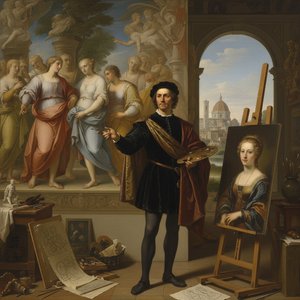
Andrea del Sarto: Florentine Grace, Technical Mastery & Artistic Ambition
Explore the life & art of Andrea del Sarto, a Florentine Renaissance master renowned for harmonious compositions & technical brilliance. Discover his frescoes, portraits, and lasting influence on art history.
Kunst die met je meeleeft: De emotionele kracht van een op maat gemaakte interieurfresco
Ontdek de emotionele kracht van een op maat gemaakt interieurfresco. Atelier Métamorphoze creëert unieke, duurzame kunstwerken voor uw woning of bedrijf. Laat u inspireren!

De Fresco als Familielegatie: Schilder Je Erfgoed op de Muren
Ontdek de fascinerende wereld van fresco schilderkunst! Leer over technieken, geschiedenis en restauratie. Expertise & hoogwaardige reproducties bij .

The Enduring Legacy of Fresco: Technique, History & Artistic Expression Across Cultures
Explore the rich history & enduring legacy of fresco painting! Discover ancient techniques, Giotto's masterpieces, and modern applications. Expert insights for art lovers & professionals.
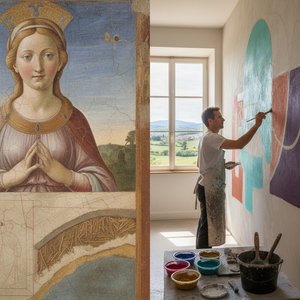
The Enduring Legacy of Fresco Painting: Techniques, History & Contemporary Relevance
Explore the rich history & enduring artistry of fresco painting – from Giotto to Michelangelo! Discover techniques, conservation efforts, & modern applications. Learn how OriginalUniqueArt brings this timeless art form to your home.