

 Bekijk op ware grootte
 Verstuur
 Delen
Delen
 Details bekijken
 Gids voor studentenkunstwerken

 Download
 Vergelijkbare items
 Röntgenonderzoek
 Diavoorstelling
 Statistieken
The Lighthouse at Collioure


 Lees meer
Giclée / Kunstafdrukken
Giclée- of canvasafdruk van museumkwaliteit met een snelle productie en flexibele afwerkingsmogelijkheden. ( Koop handgeschilderd kunstwerk Schakel over naar digitale afbeeldingen)




P118B €10

P118H €10

P118W €10

P438Z €10

P508JH €12

P508YH €12

P805H €10

P805Z €10

P919BZ €10

P919G €10

P919XJ €10

P959ZH €10

P968JZ €12

W106C €8

W218G €10

W218JH €8

W218Y €10

W307PJ €10

W316G €10

W316PJ €8

W316Y €10

W398PJ €8

W4111J €10

W500HY €15

W500JH €15

W692G €12

W849H €8

W940BG €15

W953PJ €8




Kies uit onze vooraf ingestelde maten die overeenkomen met de originele verhoudingen van het kunstwerk.

U kunt uw eigen afmetingen opgeven om in een specifieke lijst of ruimte te passen. Als de door u gekozen maat niet overeenkomt met de proporties van het originele kunstwerk, zullen wij de afbeelding bijsnijden of uitbreiden met een gespiegelde of effen rand. Een digitaal mockup wordt ter goedkeuring naar u verzonden voordat de productie begint.
Houd er rekening mee dat de preview op het scherm de werkelijke bijsneding of uitbreiding niet weergeeft. Alleen de mockup toont de uiteindelijke compositie nauwkeurig.
Hoewel aangepaste maten beschikbaar zijn, raden wij aan een afmeting uit de vooraf bepaalde lijst te kiezen om de originele proporties te behouden.
Wereldwijde levering () binnen 2 weken in plaats van de standaard 4/5 weken. (13 oktober)

Gratis wereldwijde expressverzending

Hoogwaardig linnen canvas

Volledige verzendverzekering

Garantie op terugbetaling van invoerrechten

Garantie op exacte kleurweergave

Retourbeleid van 100 dagen (alleen bij defecten)

100% Geld-terug-garantie

Korting bij meerdere afnames
 De optie voor glas is alleen beschikbaar bij een formaat kleiner dan 110 cm.

The Lighthouse at Collioure
Giclée / Kunstafdrukken
Formaat reproductie
-


Totaalprijs
€ 70
The Lighthouse at Collioure: A Fauvist Symphony of Light and Emotion
André Derain’s “The Lighthouse at Collioure,” painted in 1905, isn't merely a depiction of a coastal scene; it’s an immersive experience—a vibrant explosion of color and movement that encapsulates the heart of the Fauvist movement. Housed within the Musée d’art Moderne de la Ville de Paris, this oil on canvas transports the viewer to the picturesque harbor village of Collioure in southern France, capturing not just a landscape but also a fleeting moment of intense feeling. The painting immediately assaults the senses with its audacious palette: searing yellows and oranges dominate the sky and buildings, juxtaposed against deep ultramarine blues and greens of the sea and surrounding vegetation. This deliberate departure from naturalistic color was a defining characteristic of Fauvism – a rebellion against academic tradition where color served not to represent reality but to express emotion directly.
Derain’s technique is equally striking. He employs loose, expressive brushstrokes, applying paint with a visible and energetic hand. The forms are simplified and flattened, prioritizing the impact of color and light over meticulous detail. Notice how he uses broken color—small dabs of contrasting hues layered upon each other—to create shimmering effects on the water and to suggest the play of sunlight. This technique, combined with his use of bold outlines, contributes to a sense of dynamism and immediacy, as if the scene is constantly shifting and evolving before our eyes. The lighthouse itself, rendered in stark white against the vibrant backdrop, acts as a focal point, drawing the viewer’s gaze into the heart of the composition.
A Window into Fauvism's Soul
To understand “The Lighthouse at Collioure,” it’s crucial to grasp the context of its creation. The late 1890s and early 1900s witnessed a profound shift in artistic sensibilities, fueled by advancements in color theory and a growing dissatisfaction with the constraints of academic art. Derain, along with Henri Matisse, spearheaded the Fauvist movement – a short-lived but hugely influential period characterized by its unrestrained use of color, often divorced from naturalistic representation. The term “Fauves” (wild beasts) was initially applied derisively by critic Louis Vauxcelles, reflecting the critics’ perception of the artists' work as chaotic and primitive. However, the Fauves embraced this label, recognizing it as a badge of rebellion against established artistic norms.
The painting reflects the Fauvist fascination with light and atmosphere. Derain wasn’t simply recording what he saw; he was attempting to capture the *feeling* of being present in that particular moment – the warmth of the sun, the freshness of the sea air, the vibrant energy of the harbor. The inclusion of multiple smaller lighthouses scattered throughout the scene adds a layer of complexity and reinforces this sense of movement and visual richness. The composition itself is deliberately unbalanced, creating a dynamic tension that mirrors the emotional intensity of the subject matter.
Symbolism and Emotional Resonance
Beyond its purely aesthetic qualities, “The Lighthouse at Collioure” carries significant symbolic weight. The lighthouse, a traditional symbol of guidance and safety, can be interpreted as representing hope and stability amidst the chaos of life. Its stark white form stands in contrast to the swirling colors of the surrounding landscape, suggesting a desire for clarity and direction. The harbor itself, with its bustling activity and diverse elements – boats, buildings, people – embodies the complexities and contradictions of human experience. The painting’s overall mood is one of joyful exuberance tempered by a subtle undercurrent of melancholy—a recognition that even in moments of beauty and vibrancy, there exists an underlying sense of transience.
The choice of Collioure as the setting for this pivotal work is also noteworthy. The village, with its distinctive architecture and stunning coastal scenery, provided Derain with a perfect canvas for his artistic experiments. It was a place where he could freely explore color and form without the constraints of traditional expectations. “The Lighthouse at Collioure” remains a powerful testament to Derain’s genius—a vibrant celebration of light, color, and emotion that continues to captivate viewers over a century later.
Vragen & Antwoorden
Hoe oud was André Derain bij het creëren van "The Lighthouse at Collioure" in 1905?
André Derain was 25 jaar oud bij het creëren van "The Lighthouse at Collioure" in 1905. De leeftijd is berekend op basis van het geboortejaar van de kunstenaar, 1880.
Welk palet en welke hoofdkleur bepalen "The Lighthouse at Collioure"?
De kleuridentiteit van "The Lighthouse at Collioure" door André Derain: een Earthy palet, gedomineerd door Orange (#e8a716).
Kan ik "The Lighthouse at Collioure" door André Derain onder ander licht bekijken?
De röntgenweergave van "The Lighthouse at Collioure" door André Derain is te vinden op de Röntgenanalyse-pagina van het kunstwerk: een interactieve verkenning van het beeld door middel van elf optische lagen.
Waarvan is "The Lighthouse at Collioure" gemaakt en in welke stijl?
"The Lighthouse at Collioure" door André Derain combineert de Oil On Canvas-techniek met de Fauvism-stijl. Techniek en stroming beschrijven de vervaardiging en de stijl van het werk.
Waar kan ik het originele werk "The Lighthouse at Collioure" door André Derain bewonderen?
Het originele werk "The Lighthouse at Collioure" is te bewonderen in Musée d'Art Moderne de la Ville de Paris, Parijs, Frankrijk.
Is "The Lighthouse at Collioure" in zijn geheel eerder licht of donker?
De vastgestelde waarden voor "The Lighthouse at Collioure" door André Derain zijn: brilliant helderheid, Bright Balance luminantie.
Welke afmeting van "The Lighthouse at Collioure" door André Derain past in de aanbevolen kamer?
Voor een Living Room is de aanbevolen afmeting voor de print van "The Lighthouse at Collioure" door André Derain Medium.
Welke afmeting en oriëntatie worden aanbevolen voor een print van "The Lighthouse at Collioure" door André Derain?
Formaat Medium, Landscape oriëntatie: dit is de aanbevolen printinstelling voor "The Lighthouse at Collioure" door André Derain.
Biografie van de kunstenaar
Early Life and the Seeds of Fauvism
André Derain, geboren in 1880 in het charmante dorpje Chatou nabij Parijs, was aanvankelijk niet bestemd voor een leven doordrenkt met verf en doek. In tegenstelling tot sommige verhalen die suggereren dat hij een onmiddellijke artistieke ontwaking ervoer door ontmoetingen met collega’s zoals Vlaminck of Matisse, begon Derain zijn artistieke reis in 1895 vrijwel onafhankelijk. Deze vroege verkenningsritten werden vaak samen met Pater Jacomin en zijn zonen ondernomen tijdens landelijke excursies – een vormende ervaring die een diepe waardering voor de natuurlijke wereld instilled. Hij volgde kortstondig de Academie Camillo in 1898, waar hij toevallig Henri Matisse ontmoette, wat leidde tot een cruciale artistieke partnerschap. Verder studies onder Eugène Carrière scherpten zijn fundamentele vaardigheden, maar militaire dienst van 1901 tot 1904 onderbrak zijn opkomende carrière tijdelijk. Na zijn terugkeer, overtuigd door het onwrikbare geloof van Matisse, liet Derain engineering definitief varen en stortte zich volledig in de schilderkunst, waarbij hij zijn opleiding voortzetten aan de Académie Julian. Dit engagement markeerde een keerpunt, waardoor hij op weg werd gesteld om een centrale figuur te worden in één van de meest revolutionaire bewegingen van moderne kunst.The Explosive Birth of Color: Fauvism
De zomer van 1905 bleek een explosieve periode voor Derain en Matisse terwijl ze samenwerkten in het zonnige kustdorp Collioure. Deze periode gaf werken als “Mountains at Collioure” tot gevolg, gekenmerkt door een radicale afwijking van representatiekleur. De landschappen waren niet alleen afbeeldingen van plaatsen; ze waren expressies van gevoel, weergegeven door intens levendige, niet-natuurlijke tinten. Toen hun werk datzelfde jaar werd tentoongesteld op het Salon d’Automne, veroorzaakte het verrukking en verbazing. Kunstcriticus Louis Vauxcelles noemde hen in eerste instantie spottend “Les Fauves”—de wilde dieren—een naam die aanvankelijk bedoeld was als belediging, maar uiteindelijk werd geaccepteerd door de kunstenaars zelf. Derain’s bijdrage aan deze beweging ging verder dan alleen stijlinvloeden; hij bezat een unieke vaardigheid om emotionele intensiteit te vertalen in pure kleur. In 1906 huurde Ambroise Vollard hem in om Londen te schilderen, wat resulteerde in een reeks opvallende doeken die de Theems en Tower Bridge vastlegden – een frisse kijk op een iconische stad. Dit was niet een conventionele stadslandschap; het was een gedurfde interpretatie, die de energie en sfeer van Londen vastloodert door een onconventionele lens - een getuigenis van Derain’s innovatieve visie. Beïnvloed door kunstenaars als Van Gogh en Cézanne, daagde hij de grenzen van kleur en vorm uit, waardoor toekomstige generaties expressionistische schilders werden beïnvloed.Beyond Fauvism: A Shifting Aesthetic
De initiële euforie van Fauvisme definieerde echter niet Derain’s hele artistieke traject. Rond 1907 begon zijn stijl een significante evolutie te doormaken, weg van de ongebreidelde chromatische exuberantie naar meer ingetogen tonen en een grotere nadruk op vorm. Deze periode, vaak aangeduid als zijn “gothic” fase (1911-1914), weerspiegelde een groeiend belang in structuur en compositie. Hij verdiepte zich in het bestuderen van oude meesters, waarbij hij elementen van Cubisme integreerde terwijl hij tegelijkertijd inspiratie opzocht uit klassieke vormen. Dit was geen afwijzing van zijn eerdere werk, maar eerder een uitbreiding van zijn artistische woordenschat. Derain’s veelzijdigheid strekte zich verder uit dan schilderkunst; in 1919 ontwierp hij de ballet “La Boutique Fantasque” voor Sergei Diaghilev’s Ballets Russes, wat zijn talent voor theatrale vormgeving demonstreerde en verder toonde dat hij een diverse set van vaardigheden bezat. Belangrijke werken uit deze periode, zoals "Harlequin and Pierrot" en de monumentale muurschildering “Return of Ulysses”, illustreren deze stilistische verschuiving - een beweging naar een meer gecontroleerde en intellectueel rigoureuze benadering van kunst maken.Legacy and Complexities
André Derain’s plaats in de kunstgeschiedenis is verzekerd als mede-oprichter van Fauvisme, een beweging die het verloop van moderne schilderkunst onherstelbaar heeft veranderd. Zijn unieke visie op Londen, vastgelegd in zijn levendige doeken, bood een frisse kijk op een iconische stad. Na de Eerste Wereldoorlog kreeg hij hernieuwde erkenning voor zijn bijdragen aan een wederopstanding van classicisme, wat zijn aanpasbaarheid en blijvende artistieke relevantie demonstreerde. Desondanks was Derain’s latere leven gekenmerkt door controverse. Tijdens de Tweede Wereldoorlog trok zijn aanwezigheid in Duitsland kritiek uit zich, wat leidde tot uitsluiting van voormalige aanhangers na de oorlog. Ondanks deze schaduw blijft zijn invloed op toekomstige generaties kunstenaars onmiskenbaar. Hij stierf in 1954, waardoor een oeuvre achterbleef dat nog steeds fascineert en inspireert. *Zijn nalatenschap is niet alleen die van gedurfde kleuren en expressieve penseelstreken, maar ook die van een kunstenaar die zichzelf voortdurend uitdaagde, nieuwe creatieve paden verkende en een onuitwisbare stempel drukte op het landschap van moderne kunst.* Hij staat als getuigenis van de kracht van artistieke innovatie en de complexiteiten die inherent zijn aan het navigeren door een snel veranderende wereld. Derain’s reis herinnert ons eraan dat ware kunst niet draait om het vasthouden aan één stijl, maar om de voortdurende zoektocht naar artistieke waarheid.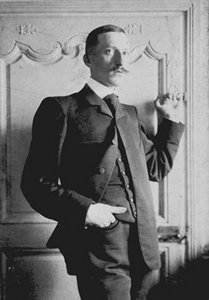
André Derain
1880 - 1954 , Frankrijk
Snelle feiten
- Artistic Movement Or Style: Fauvisme, Cubisme
- Artists Or Movements Influenced By This Artist:
- Matisse
- Cubisme
- Artists Who Influenced This Artist:
- Van Gogh
- Cézanne
- Date Of Birth: 10 juni 1880
- Date Of Death: 8 september 1954
- Full Name: André Derain
- Nationality: Frans
- Notable Artworks:
- Bergen aan Zee
- Collioure
- Harlequin
- Place Of Birth: Chatou, Frankrijk
Gerelateerde artikelen
André Derain: Fauvism's Bold Visionary & the Evolution of Modern Color
Explore the revolutionary art of André Derain, co-founder of Fauvism. Discover his bold use of color, evolution from radical expressionism to classicism, and lasting influence on modern art history. Learn more at OriginalUniqueArt.

The Gilded Age Reimagined: Exploring the Aesthetic Principles & Enduring Legacy of Art Deco
Explore the captivating world of Art Deco! Discover its origins, defining features, cultural impact & enduring legacy. Expert insights for collectors and design enthusiasts. Shop handmade reproductions at OriginalUniqueArt.
Top 10 Fauvistische Meesterwerken: Kleur & Expressie voor uw Interieur | OriginalUniqueArt.com
Ontdek de 10 meest iconische Fauvistische meesterwerken van kunstenaars als Matisse & Derain. Leer over kleur, expressie en hun invloed op moderne kunst. Museumkwaliteit reproducties voor uw interieur? Bekijk ze nu op OriginalUniqueArt.com!

Top 10 Impressionistische Meesterwerken: Kleur, Licht & Emotie voor uw Interieur
Ontdek de top 10 impressionistische meesterwerken van Monet, Renoir & meer! Duik in kleur, licht en emotie met deze iconische schilderijen. Vind museumkwaliteit kunst reproducties voor uw interieur op OriginalUniqueArt.com.
Top 10 Fauvist Meesterwerken: Kleur & Expressie voor uw Interieur | OriginalUniqueArt
Ontdek de 10 meest iconische Fauvist meesterwerken van kunstenaars als Matisse & Derain. Duik in expressieve kleuren en baanbrekende technieken! Museumkwaliteit reproducties voor uw interieur op OriginalUniqueArt.com


