
 Voorvertoning
 Verstuur
 Delen
Delen
 Details bekijken
 Gids
Gids

 Download
 Vergelijkbare items
 Röntgenonderzoek
 Diavoorstelling
 Vraag & antwoord
 Statistieken
Adam and Eve

- 252.0 x 194.0 cm


 Lees meer
Ontvang een bestand dat klaar is voor drukwerk en de kwaliteit van het online voorbeeld ver overstijgt. Elke digitale afbeelding die wij verkopen, is afkomstig van een high-resolution master uit onze database — meestal tussen de 5.000 en 15.000 pixels breed — zodat u met vertrouwen groot kunt afdrukken, nauwkeurig kunt bijsnijden of fijne details kunt reproduceren.
Geen enkel bestand verlaat ons atelier onbewerkt. Een digitaal expert controleert de kleuren aan de hand van het originele schilderij en corrigeert deze indien nodig, om vervolgens de helderheid en details te verbeteren met professionele retoucheertechnieken — waarbij de penseelstreek en stijl van de kunstenaar altijd strikt worden gerespecteerd. Het resultaat is een afbeelding die oogt als het schilderij zelf, en niet als een gescande foto met een filter.
U keurt de afbeelding goed voordat de bestelling wordt afgerond: onze expert stuurt u binnen 72 uur een e-mail ter beoordeling. Niet tevreden? Vraag om aanpassingen of correcties, of vraag een terugbetaling aan als de kwaliteit niet aan de verwachtingen voldoet.
Dit is de kwaliteit waarop uitgevers, designstudio's, galeries en drukkerijen vertrouwen.
Digitale afbeeldingen
Download een bestand met hoge resolutie voor persoonlijke weergave, afdrukken en creatieve projecten. ( Schakel over naar print Bestel handgeschilderde reproductie)
Inbegrepen bij elke bestelling van een digitale afbeelding
Professionele digitale levering, gegarandeerd
Wanneer u kiest voor OriginalUniqueArt.com, ontvangt u niet alleen een afbeelding – u krijgt een professioneel verbeterd digitaal kunstwerk, met precisie vervaardigd en voorzien van een tevredenheidsgarantie. Dit is alles wat automatisch bij uw bestelling is inbegrepen:

Snelle levering per e-mail
Uw hoogwaardige digitale afbeeldingsbestand wordt binnen 72 uur na bestelling naar u gemaild – klaar voor direct gebruik.

AI-verbeterd digitaal bestand
Uw kunstwerk wordt professioneel geoptimaliseerd met behulp van geavanceerde AI-tools en handmatige bewerkingen, waardoor maximale details, helderheid en kleurnauwkeurigheid worden gegarandeerd.

Gratis levenslange herlevering van digitale bestanden
Je bestand per ongeluk verwijderd of kwijtgeraakt? Geen zorgen – we sturen het u op elk gewenst moment gratis opnieuw toe.

Geen invoerkosten – nooit
Geniet direct van uw kunstwerk zonder invoerrechten, belastingen of verzendkosten – digitale downloads zijn altijd belastingvrij.

Garantie op kleurgetrouwheid
Met behulp van professionele hulpmiddelen en kleurbeheer zorgen wij ervoor dat uw digitale afbeelding de originele kleuren zo nauwkeurig mogelijk weergeeft.

100 dagen tevredenheidsgarantie
Mocht u niet tevreden zijn met uw digitale afbeelding, dan passen wij deze aan of storten wij 100% terug binnen 100 dagen – zonder vragen te stellen.

100% Geld-terug-garantie
Niet tevreden? Ontvang een volledige terugbetaling binnen 100 dagen na ontvangst van uw digitale bestand – zonder vragen te stellen.

Korting bij grote bestellingen
Koop 3 afbeeldingen, bespaar 10% - Koop 5, bespaar 15% - Koop 10+, bespaar 20%. Ideaal voor creatieve projecten, galerieën en bureaus.
A Moment Frozen in Paradise: Albrecht Dürer’s “Adam and Eve”
Albrecht Dürer's "Adam and Eve," completed in 1504, is more than simply a depiction of the biblical narrative; it’s a profound meditation on humanity’s origins, innocence lost, and the burgeoning awareness of both beauty and transgression. This monumental work, measuring an impressive 252 x 194 cm, transcends its subject matter to become a cornerstone of Renaissance art, embodying the era's fascination with classical ideals, meticulous observation, and deeply layered symbolism. Dürer, born in Nuremberg in 1471, meticulously crafted this image during a period of immense artistic and intellectual ferment – a time when the rediscovery of ancient Greek and Roman texts fueled a renewed interest in humanism and a desire to understand humanity’s place within the cosmos.
The Anatomy of Innocence and Temptation
Dürer's masterful rendering of Adam and Eve is immediately striking. The figures, rendered with an almost photographic realism for their time, are depicted in a state of pristine innocence. Their nudity isn’t presented as overtly sexual; rather, it represents vulnerability, exposure to the divine, and a fundamental connection to nature. Adam, standing on the left, holds the forbidden fruit – an apple whose form is subtly suggestive of both knowledge and danger. Eve, positioned on the right, gazes at the fruit with a mixture of curiosity and apprehension. Dürer’s attention to detail is breathtaking; observe the delicate veins in their hands, the subtle shading that defines their musculature, and the realistic rendering of their skin tones. This commitment to anatomical accuracy was revolutionary for its time, reflecting Dürer's deep understanding of human form and his desire to portray figures with unparalleled lifelikeness.
A Garden Transformed: Symbolism and Composition
The setting itself is crucial to the painting’s meaning. The lush, vibrant garden of Eden isn’t merely a backdrop; it's an active participant in the drama. The trees, rendered with meticulous detail, create a sense of depth and enclosure, mirroring the feeling of being trapped within paradise. The two birds, one perched high on a branch and another flitting near the top left corner, are often interpreted as symbols of temptation and divine observation – watchful guardians of humanity’s fate. The placement of these elements is deliberate, guiding the viewer's eye through the scene and reinforcing the narrative’s central themes. The overall composition—a carefully balanced arrangement of figures and foliage—evokes a sense of harmony and order, subtly disrupted by the introduction of the apple.
Dürer’s Technique: A Masterclass in Printmaking
“Adam and Eve” is not an oil painting but a woodcut, a technique Dürer mastered with unparalleled skill. This medium demanded a radically different approach to rendering form and color. Instead of layering pigments, Dürer used meticulously carved blocks of wood to create multiple prints from a single design. The resulting monochrome image possesses a remarkable clarity and precision—a testament to his extraordinary technical abilities. The subtle gradations of tone are achieved through careful manipulation of the wood grain, creating an illusion of depth and volume that belies the limitations of the medium. Dürer’s mastery of woodcut allowed him to produce multiple copies of this iconic image, disseminating its profound message throughout Europe and cementing his legacy as one of the greatest artists of the Renaissance.
OriginalUniqueArt offers exquisite, hand-painted reproductions of Albrecht Dürer's “Adam and Eve,” capturing the essence of this seminal work with unparalleled fidelity. Each reproduction is created by skilled artisans using traditional techniques, ensuring that you receive a timeless piece of art that will grace your home or office for generations to come. Explore our collection today and bring the beauty and complexity of Dürer’s “Adam and Eve” into your world.
Veelgestelde vragen
Waar kan ik statistieken vinden over "Adam and Eve" door Albrecht Dürer?
De Statistieken-pagina van "Adam and Eve" door Albrecht Dürer toont statistieken over de publieksbezoeken: het aantal maandelijkse bezoeken aan dit kunstwerk, een vergelijking met de meest bekeken werken van de kunstenaar en de herkomst van de bezoekers.
Wat is het formaat van "Adam and Eve"?
"Adam and Eve" door Albrecht Dürer heeft een Portrait-formaat. Het formaat beschrijft de verhoudingen van de compositie.
Wanneer en met welke materialen is "Adam and Eve" gemaakt?
"Adam and Eve" werd in 1504 vervaardigd met de Acrylic On Canvas-techniek. Materiaal en datum beschrijven hoe en wanneer het origineel is gemaakt.
Kunstenaarsbiografie
A Life Forged in Nuremberg: The Early Years and Apprenticeship
Albrecht Dürer, a name synonymous with the German Renaissance, emerged from the bustling artisan city of Nuremberg in 1471. His father, Albrecht Dürer the Elder, was a successful goldsmith who had immigrated from Hungary, bringing with him a lineage steeped in craftsmanship. It was within this environment—the scent of metal and the meticulous precision of handiwork—that young Albrecht’s artistic inclinations first took root. Though his father envisioned a similar path for him, apprenticing him initially in the family trade, it soon became undeniable that Albrecht possessed an exceptional gift for drawing. At thirteen, he transitioned to the workshop of Michael Wolgemut, Nuremberg's leading artist at the time. This was no mere technical training; it was immersion into a world of illuminated manuscripts, painted panels, and—crucially—the burgeoning art of woodcut illustration. The sheer volume of work produced by Wolgemut’s workshop, including the extensive illustrations for the *Nuremberg Chronicle*, provided Dürer with an unparalleled foundation in design, composition, and the mechanics of image-making. A remarkable silverpoint self-portrait from 1484, created when he was barely a teenager, stands as astonishing evidence of his precocious talent—a testament to a burgeoning artistic identity already taking shape.
The Italian Influence and Artistic Maturation
Dürer’s ambition extended far beyond the confines of Nuremberg. Driven by an insatiable curiosity and a desire to master the art of painting, he embarked on his first journey to Italy in 1494. This was not simply a sightseeing trip; it was a pilgrimage to the heart of the Renaissance. He encountered the works of masters like Raphael, Giovanni Bellini, and Leonardo da Vinci—artists who were redefining the possibilities of form, perspective, and human expression. The impact of this exposure was profound. Dürer absorbed the classical motifs, harmonious compositions, and subtle sfumato techniques that characterized Italian art, yet he never abandoned his Northern European sensibility for meticulous detail and symbolic depth. A second sojourn to Italy between 1505 and 1507 further solidified these influences, allowing him to study ancient Roman ruins and refine his understanding of anatomy and proportion. This synthesis of Northern precision and Italian grace became the hallmark of Dürer’s unique artistic style.
Mastering the Mediums: Painting, Engraving, and Woodcut
Dürer was a master of multiple mediums, each offering him distinct avenues for creative expression. His paintings, though fewer in number than his prints, demonstrate a remarkable command of oil paint and an ability to capture both physical likeness and psychological depth. Works like the *Feast of the Rose Garlands* reveal a vibrant palette influenced by Venetian colorism. However, it was in the realm of printmaking—particularly engraving and woodcut—that Dürer truly revolutionized artistic practice. He elevated these techniques from mere reproductive methods to independent art forms, capable of conveying complex narratives and profound emotions. The *Apocalypse* series (1498), a collection of fourteen woodcuts illustrating the Book of Revelation, showcased his mastery of this medium despite its inherent limitations. Later engravings like *Melencolia I* (1514) and *Saint Jerome in His Study* (1514) are testaments to his unparalleled skill—intricate compositions filled with symbolic meaning and executed with breathtaking precision. He didn’t just depict reality; he imbued it with layers of intellectual and spiritual significance.
A Theorist and Innovator: The Legacy of Albrecht Dürer
Dürer was not merely an artist; he was a scholar, a theorist, and an innovator who sought to understand the underlying principles governing artistic creation. He believed in the mathematical foundations of art and dedicated himself to establishing a scientific approach to representation. His treatises on geometry, proportion, and human anatomy—most notably *Four Books of Human Proportion* (1528)—were groundbreaking for their time, demonstrating his commitment to rigorous observation and rational analysis. These writings were not simply academic exercises; they were intended to elevate the status of artists from mere craftsmen to intellectual practitioners. Dürer’s legacy extends far beyond his individual artworks. He bridged the gap between Northern European traditions and Italian Renaissance ideals, introducing classical motifs into Northern art while maintaining its distinctive character. His theoretical contributions helped establish a new framework for artistic practice, inspiring generations of artists with his technical skill, innovative spirit, and profound vision. He remains, to this day, one of the most important figures in the history of Western art.
Influences and Enduring Impact
- Michael Wolgemut: Dürer’s initial mentor, providing foundational skills in drawing, painting, and woodcut techniques.
- Leonardo da Vinci: Inspired Dürer’s exploration of anatomy, perspective, and sfumato—the subtle blending of tones.
- Raphael: Influenced Dürer’s compositional harmony and idealized forms.
- Giovanni Bellini: Contributed to Dürer's understanding of color and Venetian painting traditions.
Dürer’s influence reverberates through centuries of art history. His meticulous realism, his innovative use of printmaking, and his theoretical writings continue to inspire artists and scholars alike. He demonstrated that art could be both technically masterful and intellectually rigorous—a legacy that continues to shape the artistic landscape today. His work stands as a testament to the power of observation, the pursuit of knowledge, and the enduring human desire to create beauty and meaning.
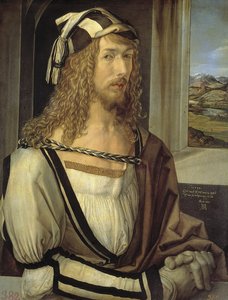
Albrecht Dürer
1471 - 1528 , Duitsland
Belangrijkste feiten
- Artistic Movement Or Style: Renaissance
- Artists Or Movements Influenced By This Artist:
- Wolgemut
- Nuremberg
- Artists Who Influenced This Artist:
- Leonardo da Vinci
- Raphael
- Bellini
- Date Of Birth: 21 mei 1471
- Date Of Death: 6 april 1528
- Full Name: Albrecht Dürer
- Nationality: Duits
- Notable Artworks:
- Apocalypse
- Melencolia I
- St. Jerome
- Place Of Birth: Nuremberg, Duitsland