Voorvertoning
 Verstuur
 Delen
Delen
 Details bekijken
 Gids
Gids

 Download
 Vergelijkbare items
 Röntgenonderzoek
 Diavoorstelling
 Q&A
Q&A Statistieken
Pope Leo X

- 15.0 x 12.0 cm


 Lees meer
Giclée / Kunstafdrukken
Giclée- of canvasafdruk van museumkwaliteit met een snelle productie en flexibele afwerkingsmogelijkheden. ( Bestel handgeschilderde reproductie Schakel over naar digitale afbeeldingen)




P118B €10

P118H €10

P118W €10

P438Z €10

P508JH €12

P508YH €12

P805H €10

P805Z €10

P919BZ €10

P919G €10

P919XJ €10

P959ZH €10

P968JZ €12

W106C €8

W218G €10

W218JH €8

W218Y €10

W307PJ €10

W316G €10

W316PJ €8

W316Y €10

W398PJ €8

W4111J €10

W500HY €15

W500JH €15

W692G €12

W849H €8

W940BG €15

W953PJ €8




Kies uit onze vooraf ingestelde maten die overeenkomen met de originele verhoudingen van het kunstwerk.

Voer de gewenste breedte en hoogte in, passend bij uw lijst of muur. Een afdruk kan alleen worden ingekort en nooit groter worden gemaakt dan het origineel; een formaat met andere verhoudingen zal daarom een deel van de afbeelding verliezen. Wij sturen u een digitaal mockup ter goedkeuring voordat we tot drukwerk overgaan. De afbeelding op deze pagina toont niet de werkelijke uitsnede — dit is alleen te zien op het mockup.
Wereldwijde levering () binnen 2 weken in plaats van de standaard 4/5 weken. (2 november)

Gratis wereldwijde expressverzending

Hoogwaardig linnen canvas

Volledige verzendverzekering

Garantie op terugbetaling van invoerrechten

Garantie op exacte kleurweergave

Retourbeleid van 100 dagen (alleen bij defecten)

100% Geld-terug-garantie

Korting bij meerdere afnames
 De optie voor glas is alleen beschikbaar bij een formaat kleiner dan 110 cm.

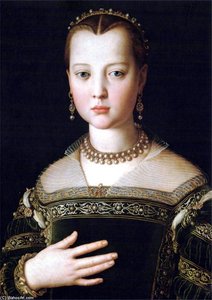
Pope Leo X
Giclée / Kunstafdrukken
Afmetingen reproductie
-


Eindtotaal
€ 72
The Regal Presence of Pope Leo X
To gaze upon this portrait of Pope Leo X is to encounter a moment suspended in the opulent grandeur of the Italian Renaissance. Agnolo Bronzino, master chronicler of aristocratic and papal life, has captured not merely a likeness, but an embodiment of temporal power mingled with spiritual authority. The subject, depicted here in rich vestments—the deep crimson of his hat and robe accented by shimmering gold trim—commands attention. His bearing suggests the weight of immense responsibility; the beard and mustache lend him an air of seasoned gravitas. Though rendered in a palette that evokes classic black and white studies, one can almost feel the texture of the velvet and the gleam of the embroidery, hallmarks of Bronzino’s meticulous hand.
A Masterclass in Mannerist Elegance
Bronzino's signature style, often described as reserved elegance, is on full display here. He eschews the dramatic emotionalism found in some of his contemporaries, opting instead for a cool, almost sculptural composure. This restraint is itself a profound statement—a hallmark of Mannerism that favors artifice and polished refinement over raw emotion. The technique employed speaks to an unparalleled technical skill; every fold of fabric, every strand of hair, seems rendered with painstaking precision. It is the portraiture of status, where the sitter’s identity is inseparable from their magnificent presentation.
Historical Echoes and Symbolism
Pope Leo X reigned during a period of immense cultural ferment in Rome, a time when papal power intersected dramatically with burgeoning Renaissance humanism. The inclusion of background elements, perhaps script or architectural details visible faintly behind the figure, anchors the portrait within its specific historical moment. These subtle cues invite contemplation on the intersection of earthly politics and divine mandate. Owning a reproduction of this piece is to possess a tangible link to the powerful patronage systems that fueled the artistic explosion of 16th-century Florence and Rome.
Bringing Renaissance Authority Home
For the discerning collector or designer, this artwork offers more than mere decoration; it provides an atmosphere. Its sophisticated formality elevates any space—be it a formal drawing-room, a library, or a gallery wall dedicated to history. The controlled drama inherent in Bronzino’s work adds depth and intellectual weight to an interior design scheme. A high-quality reproduction allows one to integrate the cool, authoritative grace of Renaissance portraiture into contemporary life, making a statement of cultivated taste and historical appreciation.
Veelgestelde vragen
Welke sfeer brengt "Pope Leo X" in een ruimte?
De Elegant sfeer van "Pope Leo X" door Agnolo Bronzino past perfect bij de aanbevolen ruimte: een Living Room.
In welk jaar werd "Pope Leo X" door Agnolo Bronzino gemaakt?
"Pope Leo X" dateert uit 1555. Deze datum plaatst het werk binnen de carrière van Agnolo Bronzino en het betreffende tijdperk.
Hoe groot is het contrast in "Pope Leo X" door Agnolo Bronzino?
"Pope Leo X" door Agnolo Bronzino vertoont een Statement contrast tussen de lichte en donkere partijen.
Biografie kunstenaar
Agnolo Bronzino: The Sculptor's Touch in Florentine Portraiture
Agnolo di Cosimo, known to history as Bronzino, emerged from the vibrant artistic landscape of Renaissance Florence in 1503, a period already brimming with genius. Born the son of a butcher, his path diverged sharply from familial trade, guided instead by an innate talent that would see him become one of the most sought-after portraitists of his era and a defining figure of Mannerism. His early training began with Raffaellino del Garbo, but it was under the tutelage of Jacopo da Pontormo that Bronzino’s artistic sensibilities truly took shape. While absorbing Pontormo's innovative style—characterized by expressive distortions and dramatic lighting—he ultimately forged his own distinct voice—one characterized by a cool composure and refined detail markedly different from his teacher’s often emotionally charged works. This early period was also influenced by studies with Andrea del Sarto, exposing him to the legacies of Michelangelo and Leonardo da Vinci, foundational influences that would subtly permeate his mature style. The young Bronzino quickly demonstrated an aptitude for capturing not just physical likeness but a certain psychological depth, even in his earliest commissions.Early Influences and Artistic Formation
Pontormo’s impact on Bronzino's artistic development was profound. Recognizing Pontormo’s pioneering use of expressive distortion—a technique that would become synonymous with Mannerism—Bronzino skillfully adapted it to create a brilliant, precisely linear style of his own. This stylistic choice wasn’t merely an imitation; it represented a deliberate rejection of the prevailing humanist aesthetic of the High Renaissance, favoring instead a more cerebral and emotionally restrained approach. Furthermore, Bronzino's exposure to Michelangelo’s monumental sculptures—particularly *David*—and Leonardo da Vinci’s meticulous anatomical studies instilled in him a deep understanding of human form and perspective. These influences shaped his artistic vision and informed his technique throughout his career. He wasn’t interested in portraying emotion; rather, he sought to convey an idealized sense of dignity and composure—a hallmark of Mannerist portraiture.The Medici Patronage and Artistic Flourishing
Bronzino's ascent to prominence coincided with the ascendancy of Cosimo I de’ Medici, Duke of Tuscany, who recognized his exceptional talent and bestowed upon him the prestigious role of court painter. This patronage provided Bronzino with unparalleled access to resources and opportunities—allowing him to undertake ambitious commissions that solidified his reputation as Florence’s foremost artistic innovator. The wedding celebrations of Cosimo and Eleonora di Toledo in 1539 served as a catalyst for Bronzino's creative output, resulting in lavish decorations that showcased his mastery of fresco painting and sculptural modeling. These projects demanded meticulous attention to detail—reflecting Bronzino’s unwavering commitment to stylistic perfection. He skillfully employed Pontormo’s expressive distortions alongside Leonardo da Vinci’s anatomical precision—creating a visual language that was both intellectually stimulating and aesthetically captivating.Venus, Cupid, Folly & Time: A Symbol of Florentine Idealism
Perhaps Bronzino's most iconic work is *Venus, Cupid, Folly and Time* (c. 1544–45), now housed in London’s National Gallery. This allegorical masterpiece exemplifies the core tenets of Mannerist art—characterized by stylized poses, flattened perspective, and a deliberate avoidance of naturalistic representation. Bronzino skillfully employed Pontormo's expressive distortions to convey an idealized vision of beauty and desire—a reflection of Florentine humanist ideals during Cosimo’s reign. The painting’s composition is meticulously balanced—creating a harmonious visual experience despite its inherent complexity. Furthermore, the incorporation of mythological symbolism—drawing upon classical traditions—elevates *Venus, Cupid, Folly & Time* beyond mere portraiture—transforming it into a profound meditation on human nature and artistic aspiration.Legacy and Enduring Influence
Bronzino’s influence extended far beyond his own lifetime, shaping the trajectory of European art for decades to come. His cool composure and refined technique became models for subsequent generations of portraitists—establishing Mannerist aesthetics as dominant in aristocratic circles across Europe. He championed a stylistic approach that prioritized intellectual rigor over emotional expression—challenging the prevailing humanist conventions of the time. Despite criticisms leveled against Mannerism during the Romantic era, Bronzino’s work has experienced a resurgence in appreciation in recent decades—scholars recognizing his innovative technique and profound artistic vision. His legacy as Florence's premier portraitist continues to inspire artists today—demonstrating the enduring power of stylistic refinement and intellectual complexity. He passed away in Florence in 1572, leaving behind a body of work that embodies the spirit of Mannerism—a testament to his singular genius and lasting contribution to art history.
Agnolo Bronzino
1503 - 1572 , Italie
Belangrijkste feiten
- Artistic Movement Or Style: Manierisme
- Artists Who Influenced This Artist:
- Jacopo da Pontormo
- Michelangelo
- Leonardo da Vinci
- Date Of Birth: November 17, 1503
- Date Of Death: November 23, 1572
- Full Name: Agnolo di Cosimo
- Nationality: Italiaans
- Notable Artworks:
- Venus, Cupid en Tijd
- *Portret van Guidobaldo della Rovere*
- *Het Heilige Familie*
- Place Of Birth: Florence, Italy
Gerelateerde artikelen

The Enduring Legacy of Fine Art Prints: Technique, History & Aesthetic Impact
Explore the rich history & techniques of fine art prints. Discover investment potential, assess authenticity, and learn how to preserve your collection with expert guidance. Trusted insights for discerning collectors.

Giclée Prints Explained: The Ultimate Guide to Museum-Quality Art Reproductions
Master the nuances of Giclée printing with our expert guide. Discover how pigment-based inks and museum-grade substrates create fade-resistant, high-fidelity art reproductions designed for discerning collectors seeking unparalleled quality and longevity.
The Enduring Legacy of Printmaking: Techniques, Themes & Artistic Innovation Across Centuries
Explore the rich history of printmaking with OriginalUniqueArt. Discover techniques from intaglio to lithography, learn about collecting valuable prints & find museum-quality reproductions. Expert insights for art enthusiasts and collectors.

Echoes of Time: Exploring the Enduring Appeal & Historical Context of Vintage Art Prints
Explore the captivating world of vintage art prints! Discover their history, collecting tips & enduring appeal. Expert insights on chromolithography and building a legacy collection with OriginalUniqueArt.

Giclée Prints: Archival Quality & Aesthetic Nuances for the Discerning Collector
Explore the world of giclée prints with OriginalUniqueArt. Learn about archival quality, aesthetic nuances & investment potential. Expert guidance for discerning art collectors seeking museum-quality reproductions and lasting value.