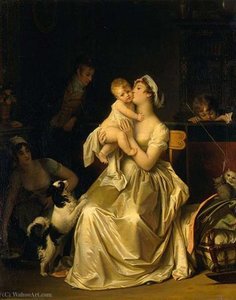
Marguerite Gérard portretas

44 garsiausių Marguerite Gérard paveikių – kiekvienas yra unikalus

Atnaujinta lapkritis 2026 · pagal mūsų populiarumumo koeficientą (paieškos, lankytojai ir užsakymai kiekvienam kūriniui) · 45 Marguerite Gérard darbai mūsų kataloge

Trumpai tariant

A Young Woman who has just Received a Letter from her Husband. Her Father is looking on a Globe for the Distance from Which the Letter Came (1808) yra viena矚 most žiūrėlių pritraukiančių Marguerite Gérard tapierių; originalas saugomas Nationalmuseum, Stokholmas. Po to akmuo patenka į The Reader (1817) ir The Reader (1783). Iš 45 Marguerite Gérard darbų mūsų kataloge šios 44 yra garsiausios – kiekvienas yra unikali originali dai̇lia, pateikta su jos metais, muziejumi ir priežastimi, kodėl ji išlieka per amžius.

1761 – 1837, Gras Neoclassicism Daugiausia darbų: Villa Fragonard

10 geriausių Marguerite Gérard paveikslų: galerijos akimais

1
A Young Woman who has just Received a Letter from her Husband. Her Father is looking on a Globe for the Distance from Which the Letter Came (1808) aut. Marguerite Gérard

A Young Woman who has just Received a Letter from her Husband. Her Father is looking on a Globe for the Distance from Which the Letter Came

1808 · Oil On Canvas · Nationalmuseum, Stokholmas

The air in the room feels heavy with the weight of unspoken words. A young woman stands poised, her silhouette framed by the soft, luminous glow of an unseen light source. She holds a letter, her fingers brushing the paper as she absorbs the news within. Her expression is serene, yet there is a quiet intensity in her gaze that suggests the contents of the parchment have momentarily stilled the…

3
The Reader (1783) aut. Marguerite Gérard

The Reader

1783 · Oil On Canvas · Fitzwilliam Museum

The Reader is an oil on canvas painted by Marguerite Gérard. Executed in Paris about 1817, the work captures a quiet moment within a refined indoor setting. A woman sits amidst the stillness, her presence anchored by a table laden with papers and a book. Nearby, a child and a cat inhabit this private sphere, their forms softened by the domestic atmosphere. The scene is a study of texture and…

4
Portrait of a Man in his Study (1785) aut. Marguerite Gérard

Portrait of a Man in his Study

1785 · Oil On Panel · Museum of Fine Arts, Bostonas

In Marguerite Gérard's Portrait of a Man in his Study, a young man sits within a quiet, scholarly sanctuary. The composition presents a full-length view, positioning the subject slightly off-center to create a balanced yet dynamic arrangement between the figure and the objects of his study. He is surrounded by the tools of a curious mind, specifically a globe and a large, open book. These elements suggest a life dedicated…

5
The Triumph of Minette (1785) aut. Marguerite Gérard

The Triumph of Minette

The Triumph of Minette is a Neoclassical genre painting by Marguerite Gérard. Executed around 1785, the work reflects the artist's established reputation as a gifted painter of domestic scenes. Gérard, born in Grasse, France, achieved significant recognition during this period, becoming one of the first French women to specialize in the genre of everyday life.

6
Presumed Portrait of Jean-Jacques Lagrenée, also known as Portrait of a Man in a Double-Breasted Coat (1787) aut. Marguerite Gérard

Presumed Portrait of Jean-Jacques Lagrenée, also known as Portrait of a Man in a Double-Breasted Coat

1787 · Oil On Canvas · Musée Cognacq-Jay, Paris

A single light source descends from the upper left, carving a face out of the darkness. The man sits in a green upholstered chair, his body angled toward a wooden desk. He is draped in a heavy, double-breasted coat, the fabric catching the light in thick, sculptural folds. His hands rest near a large, open book, the white pages acting as a bright anchor amidst the surrounding gloom. This is…

7
Portrait of Læticia Bonaparte with Her Two Daughters (1786) aut. Marguerite Gérard

Portrait of Læticia Bonaparte with Her Two Daughters

1786 · Oil On Canvas

The oil on canvas titled Portrait of Læticia Bonaparte with Her Two Daughters captures a quiet moment of domesticity. Painted by Marguerite Gérard in 1786, the work centers on a mother and her two young children. The scene is set within an intimate interior, where the figures are gathered in a soft, shared space. It is a study of familial connection through the lens of Neoclassical poise.

8
Portrait of Claude-Nicolas Ledoux (1787) aut. Marguerite Gérard

Portrait of Claude-Nicolas Ledoux

1787 · Oil On Board · Musée Cognacq-Jay, Paris

The Portrait of Claude-Nicolas Ledoux presents a formal encounter with the celebrated architect, capturing him in a moment of professional poise. Marguerite Gérard, the artist behind this work, renders the subject with a clarity that speaks to his intellectual stature. The sitter is positioned within a studio setting, surrounded by the tools of his trade that hint at the structural precision of his life's work. Every line of his period…

9
Portrait of Jean-Honoré Fragonard (1788) aut. Marguerite Gérard

Portrait of Jean-Honoré Fragonard

1788 · Oil On Canvas

In this three-quarter length portrait of Jean-Honoré Fragonard, Marguerite Gérard presents the sitter in a moment of quiet, intellectual repose. Seated slightly off-center, the subject gazes toward the viewer with a slight, knowing smile. He holds a writing implement, a detail that suggests an artistic or scholarly persona. The composition is set against a dark, atmospheric background that pushes the figure into the foreground, creating a sense of immediate presence.

10
I Reread them with Pleasure (1787) aut. Marguerite Gérard

I Reread them with Pleasure

1787 · Oil On Canvas · Bavarijos valstybinės paveikslų kolekcijos, Miunchas

The air in the room feels heavy with the scent of old paper and the soft rustle of satin. A young man and woman sit in a shared, intimate silence, their bodies angled toward one another in a gentle triangular arrangement that pulls the viewer into their private world. They are lost in the act of reading, perhaps sharing the same letters or perhaps lost in their own separate reflections…

žinomi Marguerite Gérard paveikslai, nuo 11 iki 44 numerio

11The Song (1795) aut. Marguerite GérardThe Song1795 · Villa Fragonard 12Portrait of doctor François Thiery (1787) aut. Marguerite GérardPortrait of doctor François Thiery1787 13A Young Lady and a Little Girl (1790) aut. Marguerite GérardA Young Lady and a Little Girl1790 · Holburne Museum 14Head of a Blond Child (Évariste Fragonard) (1800) aut. Marguerite GérardHead of a Blond Child (Évariste Fragonard)1800 · Villa Fragonard 15Portrait of Madame Gérard, wife of Henri Gérard (1799) aut. Marguerite GérardPortrait of Madame Gérard, wife of Henri Gérard1799 · Villa Fragonard 16A Woman Seated Holding a Young Girl on Her Lap (1799) aut. Marguerite GérardA Woman Seated Holding a Young Girl on Her Lap1799 · Musée des Beaux-Arts de Dijon 17Unknown woman (1800) aut. Marguerite GérardUnknown woman1800 · Nationalmuseum 18Bad news (1804) aut. Marguerite GérardBad news1804 19The Nursing Mother (1804) aut. Marguerite GérardThe Nursing Mother1804 20Portrait of Henri Gérard, the artist's brother (1799) aut. Marguerite GérardPortrait of Henri Gérard, the artist's brother1799 · Villa Fragonard 21Jeune femme à la rose (1797) aut. Marguerite GérardJeune femme à la rose1797 · Musée Antoine Vivenel 22Petite fille au panier de fleurs (1797) aut. Marguerite GérardPetite fille au panier de fleurs1797 · Musée Antoine Vivenel 23The Hussar and His Family (1800) aut. Marguerite GérardThe Hussar and His Family1800 · Denver Art Museum 24Clemency of Napoleon (1806) aut. Marguerite GérardClemency of Napoleon1806 · Musée national de Malmaison et Bois-Préau 25Portrait of a Young Girl (1820) aut. Marguerite GérardPortrait of a Young Girl1820 26La Lecture d'une lettre (1817) aut. Marguerite GérardLa Lecture d'une lettre1817 · Musée Thomas-Henry 27La Visite (1815) aut. Marguerite GérardLa Visite1815 · Musée des Augustins 28The Summer (1820) aut. Marguerite GérardThe Summer1820 · Musée Hyacinthe Rigaud 29Artist Painting a Portrait of a Musician (1803) aut. Marguerite GérardArtist Painting a Portrait of a Musician1803 · Ermitažas 30Artist Painting a Portrait of a Musician (1796) aut. Marguerite GérardArtist Painting a Portrait of a Musician1796 · Ermitažas 31An Architect and His Family aut. Marguerite GérardAn Architect and His FamilyThe Baltimore Museum of Art 32Lady Reading in an Interior (1795) aut. Marguerite GérardLady Reading in an Interior1795 33The Beloved Child (L (1790) aut. Marguerite GérardThe Beloved Child (L1790 34Prelude to a Concert (1810) aut. Marguerite GérardPrelude to a Concert1810 · National Museum of Women in the Arts 35Portrait of Maréchale Lannes, Duchesse de Montebello with Her Children (1814) aut. Marguerite GérardPortrait of Maréchale Lannes, Duchesse de Montebello with Her Children1814 · Houston meno muziejus 36The Drawing Lesson aut. Marguerite GérardThe Drawing LessonVilla Fragonard 37Sleep my child aut. Marguerite GérardSleep my childStaatliche Kunsthalle Karlsruhe 38Gift (1788) aut. Marguerite GérardGift1788 · Ermitažas 39The Duchess of Abrantes and General Junot aut. Marguerite GérardThe Duchess of Abrantes and General Junot 40Motherhood aut. Marguerite GérardMotherhood 41Madame de Stael and her daughter aut. Marguerite GérardMadame de Stael and her daughter 42The first steps aut. Marguerite GérardThe first stepsErmitažas 43Young Girl Giving Milk to Her Cat aut. Marguerite GérardYoung Girl Giving Milk to Her CatVilla Fragonard 44The Interesting Student (1786) aut. Marguerite GérardThe Interesting Student1786

Temos, kurios domino Marguerite Gérard

Ketverios temos, dažniausiai pasikrausto originaluose, kiekvienos su savo puikiausiu pavyzdžiu.

Muziejai, kuriuose saugomi Marguerite Gérard originalūs darbai

8 muziejai, kuriuose saugoma daugiausia šioje pusėje esamų paveikslų.

Muzejaus Miestas Marguerite Gérard darbai Šiojo sąrašo paveikslai
Villa Fragonard, GrasseVilla Fragonard Grasse 6 The Song, Head of a Blond Child (Évariste Fragonard), Portrait of Madame Gérard, wife of Henri Gérard
Ermitažas, Šv. PeterburgasErmitažas Šv. Peterburgas 4 Artist Painting a Portrait of a Musician, Artist Painting a Portrait of a Musician, Gift
Nationalmuseum, StokholmasNationalmuseum Stokholmas 2 A Young Woman who has just Received a Letter from her Husband. Her Father is looking on a Globe for the Distance from Which the Letter Came, Unknown woman
Musée Cognacq-Jay, ParisMusée Cognacq-Jay Paris 2 Presumed Portrait of Jean-Jacques Lagrenée, also known as Portrait of a Man in a Double-Breasted Coat, Portrait of Claude-Nicolas Ledoux
Musée Antoine Vivenel, CompiègneMusée Antoine Vivenel Compiègne 2 Jeune femme à la rose, Petite fille au panier de fleurs
Barber Institute of Fine Arts, BirminghamasBarber Institute of Fine Arts Birminghamas 1 The Reader
Fitzwilliam MuseumFitzwilliam Museum 1 The Reader
Museum of Fine Arts, BostonasMuseum of Fine Arts Bostonas 1 Portrait of a Man in his Study

Marguerite Gérard per dešimtmečius: vieniškas originalas kiekvienam

Darbai pagal dešimtmečius

Pasirinkite dešimtmetį, kad pamatytėte jį apibrėžusį originalą.

Marguerite Gérard tapų klausimai galerijai

Koks yra garsiausias Marguerite Gérard kūrinys?Atsakymas

A Young Woman who has just Received a Letter from her Husband. Her Father is looking on a Globe for the Distance from Which the Letter Came (1808), Nationalmuseum, Stokholmas. Toliau seka The Reader (1817) ir The Reader (1783).

Kuriuo amžiaus atσταση Marguerite Gérard sukūrė A Young Woman who has just Received a Letter from her Husband. Her Father is looking on a Globe for the Distance from Which the Letter Came?Atsakymas

47 metų amžiaus: A Young Woman who has just Received a Letter from her Husband. Her Father is looking on a Globe for the Distance from Which the Letter Came sukurta 1808 m. Nr. Marguerite Gérard gimė 1761.

Kurios Marguerite Gérard dešimt paveikslų yra garsiausi?Atsakymas

A Young Woman who has just Received a Letter from her Husband. Her Father is looking on a Globe for the Distance from Which the Letter Came, The Reader, The Reader, Portrait of a Man in his Study, The Triumph of Minette, Presumed Portrait of Jean-Jacques Lagrenée, also known as Portrait of a Man in a Double-Breasted Coat, Portrait of Læticia Bonaparte with Her Two Daughters, Portrait of Claude-Nicolas Ledoux, Portrait of Jean-Honoré Fragonard ir I Reread them with Pleasure. Viršuje esančioje reitingo sąraše nurodyta kiekvieno kūrinio metis ir muziejus.

Kiek žinoma Marguerite Gérard darbų?Atsakymas

Mūsų kataloge yra 45 Marguerite Gérard darbų, skirtų laikotarpiui nuo 1783 iki 1820.

Kur galima pamatyti garsiausių Marguerite Gérard originalų?Atsakymas

Daugiausia – Villa Fragonard (Grasse), Ermitažas (Šv. Peterburgas) ir Nationalmuseum (Stokholmas). Viršuje esančiame muziejų sąraše yra visi jie.

Kuriuo laikotarpiu Marguerite Gérard sukūrė savo žymiausias paveikslus?Atsakymas

1780s laikotarpiu: 11 iš 44 šioje pusėje esančių darbų buvo sukurtos tada, iš jų The Reader.

Kuris iš garsių Marguerite Gérard paveikslų yra pirmasis, o kuris – paskutinis?Atsakymas

Šioje pusėje seniausias darbas yra The Reader (1783), o naujausias – Portrait of a Young Girl (1820).

Kokia temos Marguerite Gérard mėgavosi?Atsakymas

Woman (23), Man (13) ir Child (10) iš 44 šioje pusėje esamų darbų.

Kuriomis medžiagomis Marguerite Gérard tapė dažniausiai?Atsakymas

Oil On Canvas, iš 44 šios puslapio darbų – 21.

Kelią meno kryžkelę priklauso Marguerite Gérard kūryba?Atsakymas

Neoclassicism, vadovaujantis šios puslapio originalais kūriniais.

Kurius Marguerite Gérard originalius galėčiau pamatyti Villa Fragonard?Atsakymas

The Song, Head of a Blond Child (Évariste Fragonard) ir Portrait of Madame Gérard, wife of Henri Gérard: Villa Fragonard, Grasse kolekcijoje yra 6 šioje pusėje esančių darbų.

Marguerite Gérard: meno kūrinys – autoportretas

Gyvenimas, skirtas menui

Marguerite Gérard iškrito kaip stulbinanti figūra vėlyvojo XVIII–pradžiurnio XIX amžiaus Prancūzijoje – pionieriškė, kuri sukūrė sėkmingą karjerą kaip žanro maldinė, nors tuo metu meno pasaulį dominuojali vyrai. 1761 m. gimusi kvapriame Grasės miestelyje, ji savo meninę pažangą pradėjo ne šventybėse akademijos salėse – kurioms daugumai jos\|_{\text{erų}} moterų būti uždarytos – o per šeimyninius ryšius ir nuošprengtą savo apyvatos sutuøktinio, garsiojo rokoko meistro Jean-Honoré Fragonard globą. Vos sulaukusi aštuonių metų, kelionė į Paris, kartu su seserimi Marie-Anne, ištekėjusia už Fragonard, negrabaliai pakeitė jaunosios Marguerite gyvenimo kursą. Šis persikraustymas įdūrė ją Paryžiaus meno scenos šerdu ir suteikė neįkainojamą galimybę mokytis iš vieno šio miesto šviesiausių švytulių.

Formatyviniai metai ir meniška bendradarbiavimas

Fragonard šeimos namuose atmosfera buvo neabejotinai įkvepianti – tai buvo tikras kūrybos tyngis, kurioje meninis talentas galėjo lajęti. Marguerite greitai tapo neoficialia mokine, prad_{\text{i}}m 【initially】 aš honing her skills by studying Fragonard piešinius ir kurdamas etingus (stambius graviravimus) remdamasis jo darbių pavyzdžiais. Šis ankstyvasis bendradarbiavimo etapas kulminavo 1778 metais devynių etingų kūrimu – projekte, kuris, kaip dabar žinoma, buvo didžiąja dalimi vadovaujamas pačios Gérard. Istorikai tikisi, kad ji buvo pagrindinė penkių šių darbų autorė, o Fragonard tik tikriausiai suteikė pagalbą arba sukūrė dubliatus mokymosi tikslams. Šis bendradarbiavimo dvasių nebuvo tik techninis procesas; jis sukūrė gilią meninę gimtinenę, kuri vėliau pamaldas Gérard stiliui ir temoms. Tačiau, dėl nebuvimo oficialaus akademinio išsilavinimo – ypač galimybės studijuoti žmogaus kūną išties – ji sąmoningai kreipėsi at away nuo istorinių ar mitologinių temų, vietoj to susitelkdama dėmę į intymią kasdienybės pasaulį.

Išskirtinis stilius: Buitis ir olandų įtakos

Gérard meninė raida buvo unikaliai lemia jos gyvenimo aplinkybės. Negalėdama studijuoti nuogos formos, ji kreipėsi į žanrinę tapybą – namų interjerų, šeimelliškų santykių bei ramių apmąstymų akimirkų vaizdavimą. Jos stilius išsiskampa aiškia skola XVII amžiaus olandų meistrams, tokiems kaip Gerard ter Borch ir Gabriel Metsu – menininkams, garsėjantiems itin kruoprius dėsiui, subtilaus šviesos naudojimo ir meistriškai išsmeigtų brushstrokes. Neprieina daugeliui moterų painerių, kurios siekė pripažinimą per klasikinę antikos temas, Gérard tyčia pasirinko vaizduoti praėjusius amžius, sukuriant nostalgijos ir intymumo pojūtį. Dažniausiai pasikra repeating motyvai jos darbuose – naminių šunų ir katinų, muzikinių instrumentų bei knygų presence – pabrėžia motiškumo, vaikystės, moteriškos draugystės bei paprastų šeimelliškos kasdienybės malonių temas. Jos paveikslai nėra grandioškių pareiškimų, tai eher tylios stebėsenės, prisidėjusios šilumą ir gilią psichologinę įžvalgą.

Pripažinimas ir palikimas

Marguerite Gérard kūrybinis kelias tęsėsi daugiau nei penkiasdešimt metų, tapdamas tikru jos atsidavimo ir talento įrodymu. Nuo 1799 iki 1824 metų ji reguliariai dalyvavo Paryžiaus Salone, pelnėdama tris medalius už savo darbus ir įsidėgint sudaužydama duris į įtakingiausių rėmėjų pasaulį. Ypač reikšminga yra ta akimirka, kai pats imperatorius Napoleonas 1808 metais įsigijo *Napoleono gailestį*, kas tapo didžiuli jos augančios reputacijos patvirtinimu. Jos paveikslai buvo itin troškimai turtingų kolekcionerių, o jos kūrinių angraipos leido stangiai išplėsti auditoriją, pasiekdama dar plačius masės lygmenis. Tokios darbai kaip *Motuoja skaitytoja interjere* (1795), pasižyminti neoklasicistine elegancija ir ramiu intelektualizmu, bei *Maršalo Lannes ž monosūros Montebelio, su savo vaikais* (1814) demonstruoja jos meistriškumą tiek žanro tapyboje, tiek portretiniame mene. Galbūt vienas jautriausių jos stiliaus pavyzdžių yra *Miegok, mano vaike* – e óleo tapyba, kurioje motiškumas ir muzika persipina su neoklasicistine šviesa ir elegancija. Istorinė Marguerite Gérard svarba slypi ne tik jos meniniuose pasiekimuose, bet ir tai, kad ji sėkmingai baria ramybės ir galimybių barjerus moterims menininkėms. Ji įrodė, kad sėkmė yra įmanoma ir už tradicinio akademinis sistemos ribų, atvėrędama kelią būsimoms kartoms siekti savo kūrybinių ambicijų. Jos įtaka pasiekė net ir šeimyninius sausmuius; ji tapo mentorė savo nepilniečiui, Alexandre-Évariste Fragonardui, puosomėdama jo talentą tuo pačiu rūpestingumu ir atsidavimu, kuriuos kadaise suteikė jai pati. Marguerite Gérard palikimas gyvena kaip tvirtas įrodymas perseveroncijos, meninės vizijos ir nieko didingo, bet jautraus kasdienybės prasmės, amžinoji galia.