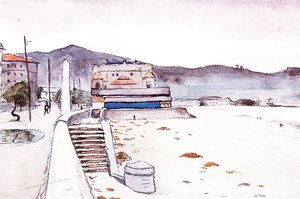
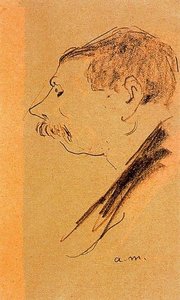
Albert Marquet portretas

100 garsiausių Albert Marquet paveikių rinkinys: galerijos išboru

Atnaujinta lapkritis 2026 · pagal mūsų populiarumumo koeficientą (paieškos, lankytojai ir užsakymai kiekvienam kūriniui) · 296 Albert Marquet darbai mūsų kataloge

Trumpai tariant

Iš visų paliktų originalų kūrinių Albert Marquet garsiausias yra National Holiday at Le Havre (1906), esantis Villa Flora kolekcijoje, Winterthur. Tiesiog už jų seka Louvre Embankment and the New Bridge (1906) ir Argel. La Plaza del Gobierno. Mūsų kataloge yra 296 darbų autoriaus Albert Marquet; galerija išsaugojo 100 labiausiai pasaulyje žyminiausių kūrinių – kiekvienas jų pateikiamas su datos, muziejaus ir istorijos aprašymu.

1875 – 1947, Bordo Fauvism Daugiausia darbų: Ermitažas

Albert Marquet geriausios 10 paveikslų: galerijos pasirinkimas

1
National Holiday at Le Havre (1906) aut. Albert Marquet

National Holiday at Le Havre

1906 · Oil On Panel · Villa Flora, Winterthur

In 1906, the waterfront of Le Havre became a stage for a quiet, collective joy. This painting captures a national holiday, a moment where the rhythm of the city slows to accommodate the festivities. Along the river, boats sit docked, their presence grounding the scene in the reality of maritime life. People gather in small groups, some lingering near the water's edge while others move along the sidewalks. There is…

2
Louvre Embankment and the New Bridge (1906) aut. Albert Marquet

Louvre Embankment and the New Bridge

1906 · Oil On Canvas

To stand before Albert Marquet’s Louvre Embankment and the New Bridge is to be instantly transported into the vibrant, exhilarating heart of Paris at the turn of the 20th century. This oil on canvas, dating from 1906, is far more than a mere depiction of an urban vista; it is a captured moment of life—a symphony played out across the cobblestones and along the Seine. Marquet masterfully arrests the energy…

3
Argel. La Plaza del Gobierno aut. Albert Marquet

Argel. La Plaza del Gobierno

Lithograph

The artwork Argel. La Plaza del Gobierno is a creation by Albert Marquet. Born in 1875, the artist lived until 1947, leaving behind a vision shaped by the light of North Africa and the harbors of Europe. This specific piece captures a moment in Algiers, a place of movement and stone. It is also known by the title Alger, Le Palais Consulaire et La Place du Gouvernement. The work carries…

4
Academia en el taller de Gustave Moreau aut. Albert Marquet

Academia en el taller de Gustave Moreau

Charcoal

Academia en el taller de Gustave Moreau by Albert Marquet presents a scene centered on the practice of academic study. The subject matter focuses on a single figure positioned within a studio environment. This setting, which suggests a space dedicated to art history or the study of sculpture, contains a shelf populated with various objects that recede into the background. The arrangement of these elements creates a sense of a…

5
Window at Goulette aut. Albert Marquet

Window at Goulette

Oil

A vase of tulips sits upon a windowsill, their red and yellow petals catching the light. Beyond the glass, the world opens into a quiet expanse of water. A single boat sails across the distant blue, a small shape moving through the stillness. The scene is a quiet intersection of the domestic and the infinite. Inside, the flowers remain rooted and still; outside, the sea carries the vessel toward an…

6
Fruit, Knife and Napkin (1898) aut. Albert Marquet

Fruit, Knife and Napkin

1898 · Oil

In this 1898 still life, we find a moment of profound stillness captured on a table. The composition is anchored by a collection of fruit—apples, oranges, and pears—arranged with a sense of natural ease. Three apples are positioned across the scene, one to the left, one in the center, and a third toward the right, creating a rhythmic movement for the eye to follow. Two oranges provide weight to the…

7
Fishing Boats Returning, Collioure (1914) aut. Albert Marquet

Fishing Boats Returning, Collioure

1914 · Oil

The sea carries the weight of the day in its heavy, shifting tones. In this 1914 scene, the water is a vast expanse of color, holding several boats that drift upon its surface. Two sailboats dominate the view, one leaning toward the left and another anchored near the center, their forms cutting through the liquid light. Smaller vessels are scattered like debris across the swells, caught in the quiet rhythm…
8
Tempestad en La Goulette aut. Albert Marquet

Tempestad en La Goulette

Oil On Canvas

The composition of Tempestad en La Goulette is organized into distinct horizontal bands that define the landscape. At the base, a sandy beach meets the shoreline, where turbulent waves crash against the coast. A weathered wooden pier extends from the foreground into the water, creating a sharp linear element that cuts through the organic movement of the sea. In the distance, a mountain range rises against the horizon, its forms…

10
The Minaret at Sidi Bou Saïd aut. Albert Marquet

The Minaret at Sidi Bou Saïd

Oil On Canvas

The sun hangs suspended over a Mediterranean landscape, casting a soft, diffused glow across a coastal settlement. In this view of Sidi Bou Saïd, the architecture clings to the terrain, a cluster of geometric forms that seem to grow directly from the earth. A minaret rises above the rooftops, its silhouette a quiet anchor amidst the arrangement of buildings. The sea stretches toward a distant mountain range, where the colors…

Albert Marquet darba rinkinys tęsiamas, nuo 11 iki 100

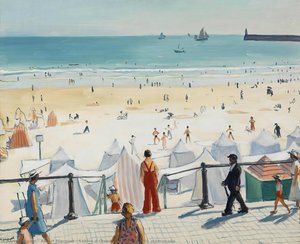
11Party in Sables d´Olonne aut. Albert MarquetParty in Sables d´Olonne 12The Louvre Embankment and the Pont-Neuf in Paris (1906) aut. Albert MarquetThe Louvre Embankment and the Pont-Neuf in Paris1906 · Museum Boijmans Van Beuningen 13Portrait of Clémentine (1895) aut. Albert MarquetPortrait of Clémentine1895 14Girl Embroidering, Seated in a Garden (1896) aut. Albert MarquetGirl Embroidering, Seated in a Garden1896 15Nude Lying on a Flowered Drapery (1913) aut. Albert MarquetNude Lying on a Flowered Drapery1913 16Nude with Raised Arms (1912) aut. Albert MarquetNude with Raised Arms1912 17Standing Nude (1913) aut. Albert MarquetStanding Nude1913 18Posters at Trouville (1906) aut. Albert MarquetPosters at Trouville1906 · National Gallery of Art 19Women of Laghouat (1921) aut. Albert MarquetWomen of Laghouat1921 · Centre Pompidou 20The Woman in Blue (1928) aut. Albert MarquetThe Woman in Blue1928 · Musee d'art Moderne de la Ville de Paris 21Bay of Naples (1909) aut. Albert MarquetBay of Naples1909 · Ermitažas 22An Alley in the Jardin du Luxembourg (1901) aut. Albert MarquetAn Alley in the Jardin du Luxembourg1901 · Ermitažas 23View from a Balcony (1945) aut. Albert MarquetView from a Balcony1945 · Metropolitano meno muziejus 24Paris, Le Pont de l'Institut aut. Albert MarquetParis, Le Pont de l'Institut 25Samois aut. Albert MarquetSamois 26View of Saint-Jean-de-Luz (1907) aut. Albert MarquetView of Saint-Jean-de-Luz1907 · Ermitažas 27Pont-Neuf in the Snow (1910) aut. Albert MarquetPont-Neuf in the Snow1910 28The Garden at Pyla aut. Albert MarquetThe Garden at Pyla 29View of the Seine and the Monument to Henry IV (1906) aut. Albert MarquetView of the Seine and the Monument to Henry IV1906 · Ermitažas 30The port of Hamburg 2 aut. Albert MarquetThe port of Hamburg 2 31La Rochelle aut. Albert MarquetLa Rochelle 32La carreterra de La Frette aut. Albert MarquetLa carreterra de La Frette 33The port of Hamburg aut. Albert MarquetThe port of HamburgErmitažas 34Sables d'Olonne beach from the promenade aut. Albert MarquetSables d'Olonne beach from the promenade 35Milliners aut. Albert MarquetMillinersErmitažas 36The Village of Vosges (1892) aut. Albert MarquetThe Village of Vosges1892 37Young Girl on the Beach (1898) aut. Albert MarquetYoung Girl on the Beach1898 · Saint Louis Art Museum 38Le jardin de Saint-Cloud (1906) aut. Albert MarquetLe jardin de Saint-Cloud1906 · Los Angelos apygardos meno muziejus 39Bouquet of Flowers, 1898 (1898) aut. Albert MarquetBouquet of Flowers, 18981898 40Parisian suburb (1897) aut. Albert MarquetParisian suburb1897 · Musée des Beaux-Arts et d'Archéologie 41Dock at Havre (1906) aut. Albert MarquetDock at Havre1906 · Centre Pompidou 42Quai des Grands Augustins (1905) aut. Albert MarquetQuai des Grands Augustins1905 · Musée des Beaux-Arts 43The Port of Algiers (1900) aut. Albert MarquetThe Port of Algiers1900 44The Gate of St. Cloud, Paris (1904) aut. Albert MarquetThe Gate of St. Cloud, Paris1904 · Cleveland Museum of Art 45The Apse of Notre Dame (1902) aut. Albert MarquetThe Apse of Notre Dame1902 · Musée des Beaux-Arts et d'Archéologie 46Le Port de la Ponche (1905) aut. Albert MarquetLe Port de la Ponche1905 47Notre Dame under Snow (1905) aut. Albert MarquetNotre Dame under Snow1905 · Lozanos kantono dailės muziejus 48Le Pont-Neuf par temps gris (1905) aut. Albert MarquetLe Pont-Neuf par temps gris1905 49Outskirts of Paris (1905) aut. Albert MarquetOutskirts of Paris1905 50Rue Norvins and Place du Tertre in Montmartre (1905) aut. Albert MarquetRue Norvins and Place du Tertre in Montmartre1905 51View of Agay, the Red Rocks (1905) aut. Albert MarquetView of Agay, the Red Rocks1905 52The Billancourt Bridge (1904) aut. Albert MarquetThe Billancourt Bridge1904 53The Seine and the Apse of Notre Dame (1901) aut. Albert MarquetThe Seine and the Apse of Notre Dame1901 · Musée d'Art Moderne de Troyes 54Farmyard at La Percaillerie (1901) aut. Albert MarquetFarmyard at La Percaillerie1901 55Pot of Flowers (1900) aut. Albert MarquetPot of Flowers1900 56Perspective Notre-Dame (1904) aut. Albert MarquetPerspective Notre-Dame1904 · Musée des Beaux-Arts de Pau 57Snowscene at Porte de Versailles (1904) aut. Albert MarquetSnowscene at Porte de Versailles1904 · Nacionalinis Vakarų meno muziejus 58The Port (1905) aut. Albert MarquetThe Port1905 · Kunstmuseum Den Haag 59Portrait of Aldre Rouveyre (1904) aut. Albert MarquetPortrait of Aldre Rouveyre1904 60Port of Hamburg (1909) aut. Albert MarquetPort of Hamburg1909 · Musée d'Art Moderne de Troyes 61Naked in the Stove aut. Albert MarquetNaked in the Stove 62Landscape with a Ferry Boat (1911) aut. Albert MarquetLandscape with a Ferry Boat1911 · Musee d'art Moderne de la Ville de Paris 63Le Havre (1906) aut. Albert MarquetLe Havre1906 · Foundation E.G. Bührle Collection 64Vedette in Hamburg (1909) aut. Albert MarquetVedette in Hamburg1909 · Yale University Art Gallery 65Vue de Paris, le quai du Louvre (1906) aut. Albert MarquetVue de Paris, le quai du Louvre1906 66Honfleur (1911) aut. Albert MarquetHonfleur1911 · Pushkinio valstybinis dailės muziejus 67The Port of Naples (1909) aut. Albert MarquetThe Port of Naples1909 · Musée des Beaux-Arts et d'Archéologie 68Le port de Fécamp (1906) aut. Albert MarquetLe port de Fécamp1906 · Musée des Beaux-Arts de Quimper 69Le Louvre, Cour du Carrousel (1909) aut. Albert MarquetLe Louvre, Cour du Carrousel1909 · Bavarijos valstybinės paveikslų kolekcijos 70The Boardwalk at Sainte-Adresse (1906) aut. Albert MarquetThe Boardwalk at Sainte-Adresse1906 · Houston meno muziejus 71Louvre Embankment and the New Bridge (1906) aut. Albert MarquetLouvre Embankment and the New Bridge1906 · Ermitažas 72Louvre Embankment, Summer (1906) aut. Albert MarquetLouvre Embankment, Summer1906 · Ermitažas 73Place de la Trinity in Paris (1911) aut. Albert MarquetPlace de la Trinity in Paris1911 · Ermitažas 74Le Pont Saint-Michel (1910) aut. Albert MarquetLe Pont Saint-Michel1910 · Los Angelos apygardos meno muziejus 75Pont Saint Michel, Paris (1910) aut. Albert MarquetPont Saint Michel, Paris1910 · Art Institute of Chicago 76Pont-Neuf in Sunshine (1906) aut. Albert MarquetPont-Neuf in Sunshine1906 · Art Gallery of Ontario 77View of the beach at Hendaya aut. Albert MarquetView of the beach at Hendaya 78Two Women aut. Albert MarquetTwo Women 79Ribera de la Mancha aut. Albert MarquetRibera de la Mancha 80Mujer de espaldas aut. Albert MarquetMujer de espaldas 81Desnudo de pie aut. Albert MarquetDesnudo de pie 82Nude of a woman aut. Albert MarquetNude of a woman 83Fabrica del extrarradio aut. Albert MarquetFabrica del extrarradio 84El descanso de la modelo aut. Albert MarquetEl descanso de la modelo 85En el muelle de Hamburgo aut. Albert MarquetEn el muelle de Hamburgo 86El Zuavo aut. Albert MarquetEl Zuavo 87The port of Boulogne aut. Albert MarquetThe port of Boulogne 88Port of Hamburg aut. Albert MarquetPort of Hamburg 89Nápoles-El velero aut. Albert MarquetNápoles-El velero 90André Rouveyre aut. Albert MarquetAndré RouveyreCentre Pompidou 91Puerta de Saint Cloud aut. Albert MarquetPuerta de Saint Cloud 92Tempest on the sea aut. Albert MarquetTempest on the sea 93Mujer en la calle aut. Albert MarquetMujer en la calle 94Mujer cosiendo aut. Albert MarquetMujer cosiendo 95El muelle Conti bajo la nieve aut. Albert MarquetEl muelle Conti bajo la nieve 96Desnudo sobre fondo azul aut. Albert MarquetDesnudo sobre fondo azul 97Personaje de perfil aut. Albert MarquetPersonaje de perfil 98Un hombre feliz aut. Albert MarquetUn hombre feliz 99Hombre en la calle aut. Albert MarquetHombre en la calle 100Mujer de cabellos largos aut. Albert MarquetMujer de cabellos largos

žymios Albert Marquet tapiojamos, pagal laikotarpį

Temos, kurios domino Albert Marquet

Ketverios temos, dažniausiai pasikrausto originaluose, kiekvienos su savo puikiausiu pavyzdžiu.

Muziejai, kuriuose saugomi Albert Marquet originalūs darbai

8 muziejai, kuriuose saugoma daugiausia šioje pusėje esamų paveikslų.

Muzejaus Miestas Albert Marquet darbai Šiojo sąrašo paveikslai
Ermitažas, Šv. PeterburgasErmitažas Šv. Peterburgas 11 Bay of Naples, An Alley in the Jardin du Luxembourg, View of Saint-Jean-de-Luz
Centre Pompidou, ParisCentre Pompidou Paris 14 Women of Laghouat, Dock at Havre, André Rouveyre
Musée des Beaux-Arts et d'Archéologie, BezonjonasMusée des Beaux-Arts et d'Archéologie Bezonjonas 6 Parisian suburb, The Apse of Notre Dame, The Port of Naples
Musee d'art Moderne de la Ville de Paris, ParyžiusMusee d'art Moderne de la Ville de Paris Paryžius 6 The Woman in Blue, Landscape with a Ferry Boat
Nacionalinis Vakarų meno muziejus, TokijasNacionalinis Vakarų meno muziejus Tokijas 3 Sitting Nude, Snowscene at Porte de Versailles
Los Angelos apygardos meno muziejus, Los AnželesasLos Angelos apygardos meno muziejus Los Anželesas 2 Le jardin de Saint-Cloud, Le Pont Saint-Michel
Musée d'Art Moderne de Troyes, TroMusée d'Art Moderne de Troyes Tro 2 The Seine and the Apse of Notre Dame, Port of Hamburg
Pushkinio valstybinis dailės muziejus, MaskvaPushkinio valstybinis dailės muziejus Maskva 6 Honfleur

Albert Marquet dešimtmetėms po dešimtmetės: originalus kūrinys, apibūdinantis kiekvieną iš jų

Darbai pagal dešimtmečius

Pasirinkite dešimtmetį, kad pamatytėte jį apibrėžusį originalą.

Kolekcjonerų klausimai apie Albert Marquet paveikslus

Kuriu darbu Albert Marquet yra labiausiai garsus?Atsakymas

National Holiday at Le Havre (1906), Villa Flora, Winterthur. Toliau seka Louvre Embankment and the New Bridge (1906) ir Argel. La Plaza del Gobierno.

Kokia buvo Albert Marquet amžius, kai buvo sukurtas National Holiday at Le Havre?Atsakymas

31 metų amžiaus: National Holiday at Le Havre sukurta 1906 m. Nr. Albert Marquet gimė 1875.

Kokie yra 10 garsiausių Albert Marquet paveikslų?Atsakymas

National Holiday at Le Havre, Louvre Embankment and the New Bridge, Argel. La Plaza del Gobierno, Academia en el taller de Gustave Moreau, Window at Goulette, Fruit, Knife and Napkin, Fishing Boats Returning, Collioure, Tempestad en La Goulette, Sitting Nude ir The Minaret at Sidi Bou Saïd. Viršuje esančioje reitingo sąraše nurodyta kiekvieno kūrinio metis ir muziejus.

Kiek paveikslų paliko Albert Marquet?Atsakymas

Mūsų kataloge yra 296 Albert Marquet darbų, skirtų laikotarpiui nuo 1892 iki 1945.

Kuriuose muziejuose eksponuojami Albert Marquet šedevrai?Atsakymas

Daugiausia – Ermitažas (Šv. Peterburgas), Centre Pompidou (Paris) ir Musée des Beaux-Arts et d'Archéologie (Bezonjonas). Viršuje esančiame muziejų sąraše yra visi jie.

Kuriomis metais Albert Marquet tapo savo garsiausius kūrinius?Atsakymas

1900s laikotarpiu: 39 iš 100 šioje pusėje esančių darbų buvo sukurtos tada, iš jų National Holiday at Le Havre.

Kokie yra pirmasis ir paskutinis garsieji Albert Marquet originalūs darbai?Atsakymas

Šioje pusėje seniausias darbas yra The Village of Vosges (1892), o naujausias – View from a Balcony (1945).

Kurią temą Albert Marquet rinkosi dažniausiai?Atsakymas

Sky (9), People (8) ir Woman (8) iš 100 šioje pusėje esamų darbų.

Kurią techniką Albert Marquet naudojo dažniausiai?Atsakymas

Oil On Canvas, iš 100 šios puslapio darbų – 18.

Kelią meno kryptį priklauso Albert Marquet?Atsakymas

Fauvism, vadovaujantis šios puslapio originalais kūriniais.

Kurių Albert Marquet darbai eksponuojami Ermitažas?Atsakymas

Bay of Naples, An Alley in the Jardin du Luxembourg ir View of Saint-Jean-de-Luz: Ermitažas, Šv. Peterburgas kolekcijoje yra 9 šioje pusėje esančių darbų.

Albert Marquet: gyvenimas ir kūryba

Gyvenimo ir Kūrėjo Kelias: Albertas Marquet

Albertas Marquet (1875–1947) – prancūzų dailininko, kurio kūryba subtiliai perėjo nuo ekspresionistinio Fauvizmo iki intymios natūralizmo formos, gyvenimo ir meno kelias buvo nuolatinis šviesos ir spalvos tyrinėjimas. Gimęs Bordo mieste Prancūzijoje, jis anksti pajuto potraukį piešimui, o penkiolikos metų amžiaus persikėlė į Paryžių, kur įstojo į École des Arts Décoratifs mokyklą. Čia jo keliai susikirto su Henri Matisse – draugyste, kuri turėjo didžiulės reikšmės jaunų menininkų kūrybai. Abu dalijosi ne tik bičiulystę, bet ir studiją, sukurdami aplinką, skatinančią mainus ir naujų idėjų gimimą. Vėliau Marquet tęsė mokslus prestižinėje École des Beaux-Arts mokykloje Gustave Moreau vadovavimu, įsisavinant simbolizmo estetiką, tačiau kartu ieškodamas savito kelio moderniosios dailos erdvėje. Šie formavimo metai padėjo pamatus jo dalyvavimui parodose, kurios turėjo iššūkių tradicinėms meno normoms ir perrašyti meno istorijos puslapius.

Nuo Fauvistinio Ugnės iki Ramių Peizažų

Marquet pasirodė dailos pasaulyje kartu su Fauvizmo gimimu – judėjimu, garsėjančiu drąsiu spalvų naudojimu ir ekspresyviu potepiu. 1905 metais Salon d'Automne parodoje jis eksponavo savo darbus kartu su Matisse, André Derain, Maurice de Vlaminck ir kitais, o kritikai juos derisiai pavadino “les fauves” – laukiniais žvėrimis. Nors Marquet priėmė Fauvistinę paletę, jo požiūris išliko unikalus. Skirtingai nuo kai kurių kolegų, mėgavusiųsi neribota spalvine intensyvumu, jis turėjo nepaprastą kontrolę piešime ir šviesoje, subtiliai moduliuodamas spalvas harmoningoms kompozicijoms kurti. Šis įgimtas susilaikymas užsiminė apie vėlesnį jo poslinkį link natūralistinio stiliaus. Apie 1910 metus Marquet ėmė atitolėti nuo grykai ekspresyvaus Fauvizmo, vis daugiau dėmesio skirdamas peizažams kaip pagrindiniam savo kūrybos objektui. Jis leidosi į išsamią kelionę po Europą ir Šiaurės Afriką, ieškodamas įkvėpimo uostuose, paplūdimiuose ir miesto vaizduose, kurie vėliau tapo jo brandaus laikotarpio vizitine kortele. Šios kelionės nebuvo tik vietų atvaizdavimas; tai buvo atmosferos, šviesos ir kasdienio gyvenimo subtilios poezijos tyrinėjimas.

Atmosferos ir Šviesos Meistras

Marquet’s meno vizija buvo giliai įsišaknijusi jautrumui šviesai ir atmosferai. Jo peizažai nėra tik vietų reprezentacijos, o veikiau nuotaikos ir pojūčio atspindys. Jis meistriškai perteikė vandenį spindintį atspindį, rūko pro saulės spindulius sklindančią šviesą ir subtilius spalvos niuansus, apibrėžiančius tam tikrą paros laiką ar sezoną. Jis dažnai grįždavo į tas pačias vietas pakartotinai, stebėdamas, kaip šviesa kito bėgant laikui – tai liudija jo atsidavimą trumpalaikių efektų užfiksavimui. Tai ryškiai matoma jo daugybėje Senos upės Paryžiuje vaizdų, Normandijos uostų ir Šiaurės Afrikos pakrančių peizažų. Jo technika apėmė santrumpintus potepius ir prislopintą paletę – pilkus, mėlynus ir ochros spalvas, leidžiančias perteikti formą ir atmosferą nepaprasta ekonomija. Pats Matisse pripažino giminingumą tarp Marquet’s darbo ir japonų meistrų, tokių kaip Hokusai, pastebėdamas bendrą pabrėžimą kaligrafiniam paprastumui ir linijos raiškos galią. Dailininkui nerūpėjo tik atkurti tai, ką jis matė; jis siekė užfiksuoti buvimo ten jausmą.

Palikimas ir Nuolatinis Poveikis

Albertas Marquet mirė 1947 metais, palikęs kūrybos palikimą, kuris ir toliau žavi publiką savo tyra grožiu ir subtiliu emociniu gylumu. Jo paveikslai saugomi prestižiniuose muziejuose visame pasaulyje, įskaitant Musée National d'Art Moderne Paryžiuje, liudijant jo nuolatinę reikšmę moderniosios dailos istorijoje. Nors iš pradžių jis buvo pripažintas kaip svarbi Fauvizmo figūra, Marquet’s ilgalaikis palikimas slypi jo gebėjime peržengti stilistines etiketes ir sukurti unikalų asmeninį vizualinį pasaulį. Jis įrodė, kad galima apimti modernumą neatsisakant tradicinių vertybių, tokių kaip piešimo menas ir kompozicija. Jo poveikis matomas vėlesnių kartų peizažistų darbuose, kurie siekė užfiksuoti natūralaus pasaulio trumpalaikį grožį jautrumu ir susilaikymu. Marquet’s menas primena apie stebėjimo galią, šviesos svarbą ir ramus ir kontempliatyvaus vizualinio pasaulio patrauklumą. Jis išlieka įrodymu dailininko gebėjimo rasti gilų prasmiškumą kasdienybėje.

Pagrindinės Marquet’s Stiliaus Savybės

  • Fauvistinis Pradėtas: Ankstyvieji darbai demonstruoja drąsius spalvų tonus, būdingus Fauvizmui, nors ir su didesniu susilaikymu nei kai kuriems kolegoms.
  • Pabrėžimas Šviesai ir Atmosferai: Apibrėžiančią jo brandaus laikotarpio savybę, sutelkiant dėmesį į šviesos kokybių užfiksavimą ir jos poveikį peizažams.
  • Prislopinta Paletė: Pirmenybė pilkoms, mėlynoms ir ochros spalvoms atmosferai ir formai perteikti ekonomija.
  • Santrumpinti Potepiai: Technika, naudojama detalėms nurodyti, o ne apibrėžti, stiprinant judėjimo ir šviesos pojūtį.
  • Japonų Meno Poveikis: Pastebėtas dėmesys kaligrafiniam paprastumui ir linijos raiškos galiai, randamas japonų atspauduose.